
Middle Garden
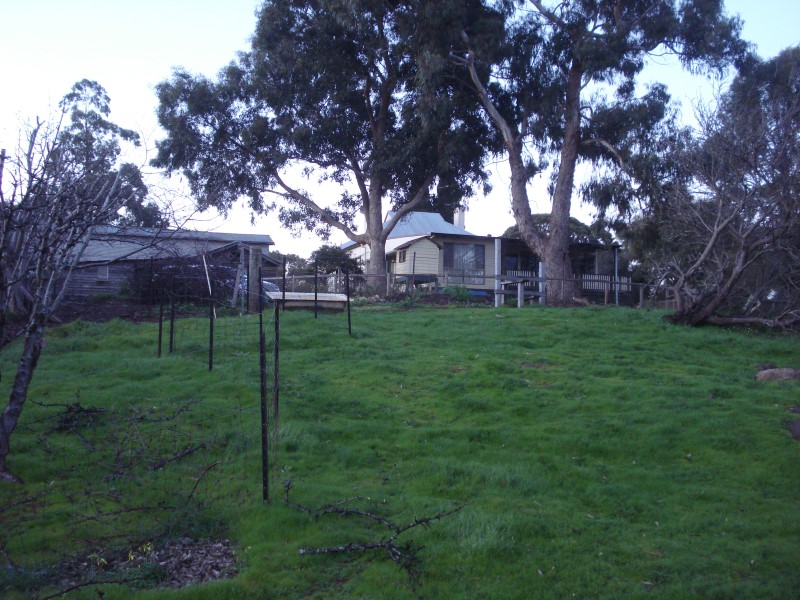
House and top of middle garden


Top of middle garden
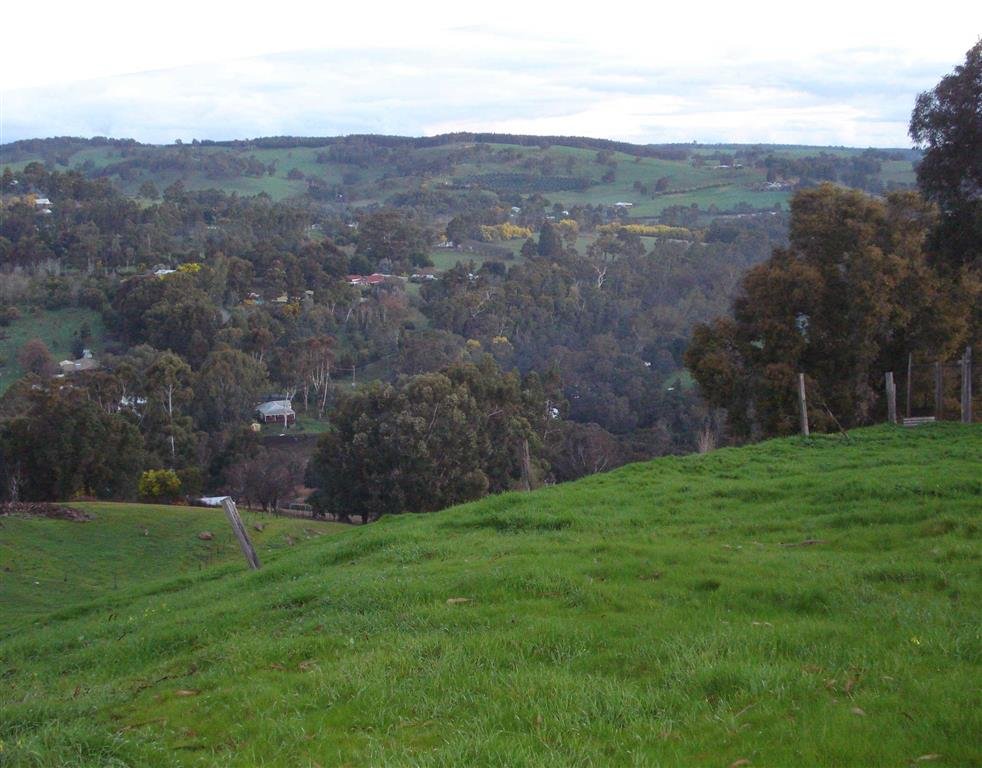
Natural garden - south view
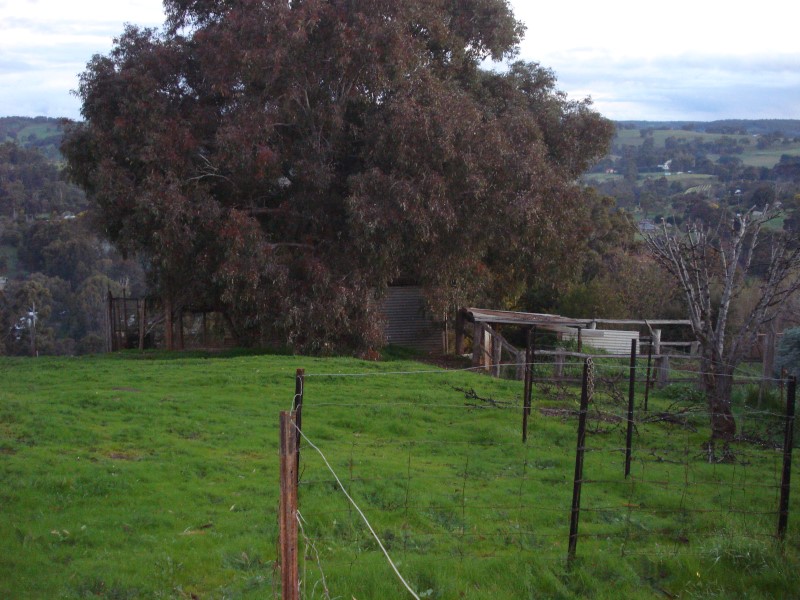
Top of middle garden
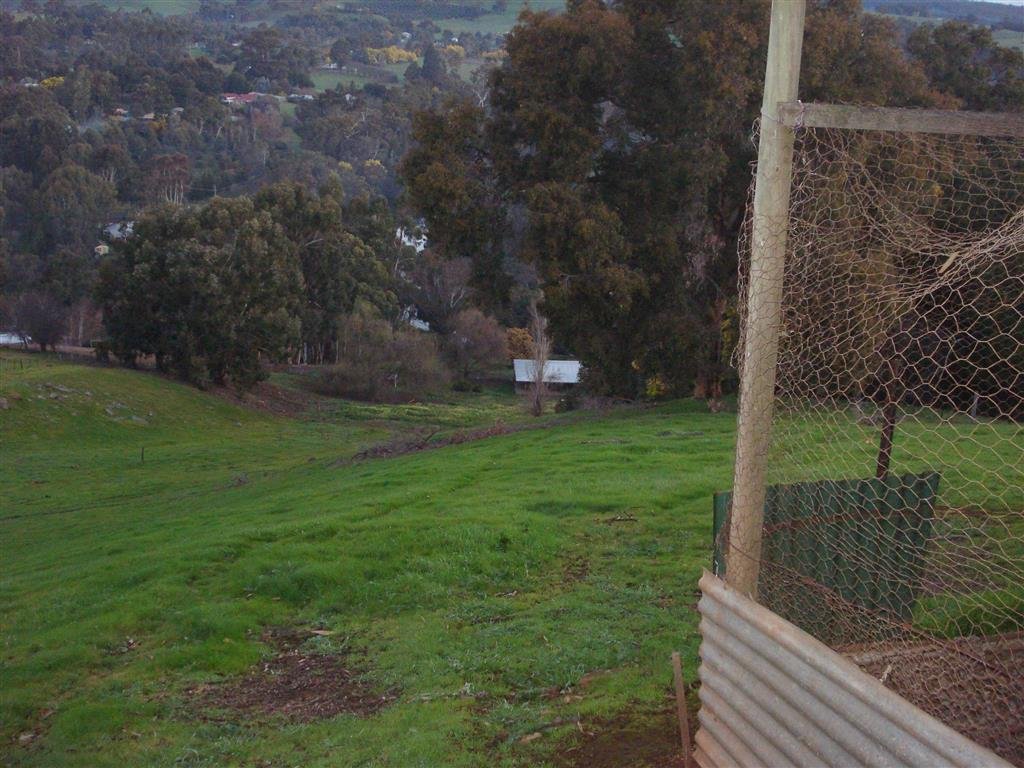
Natural garden - south view
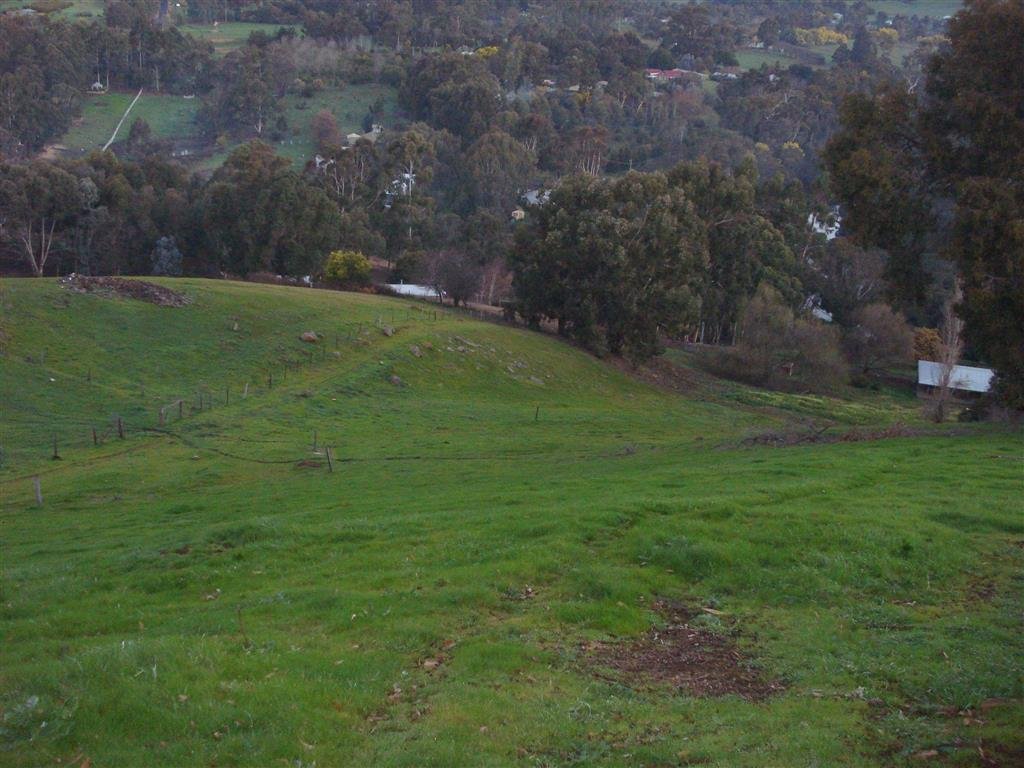
Natural garden - south view
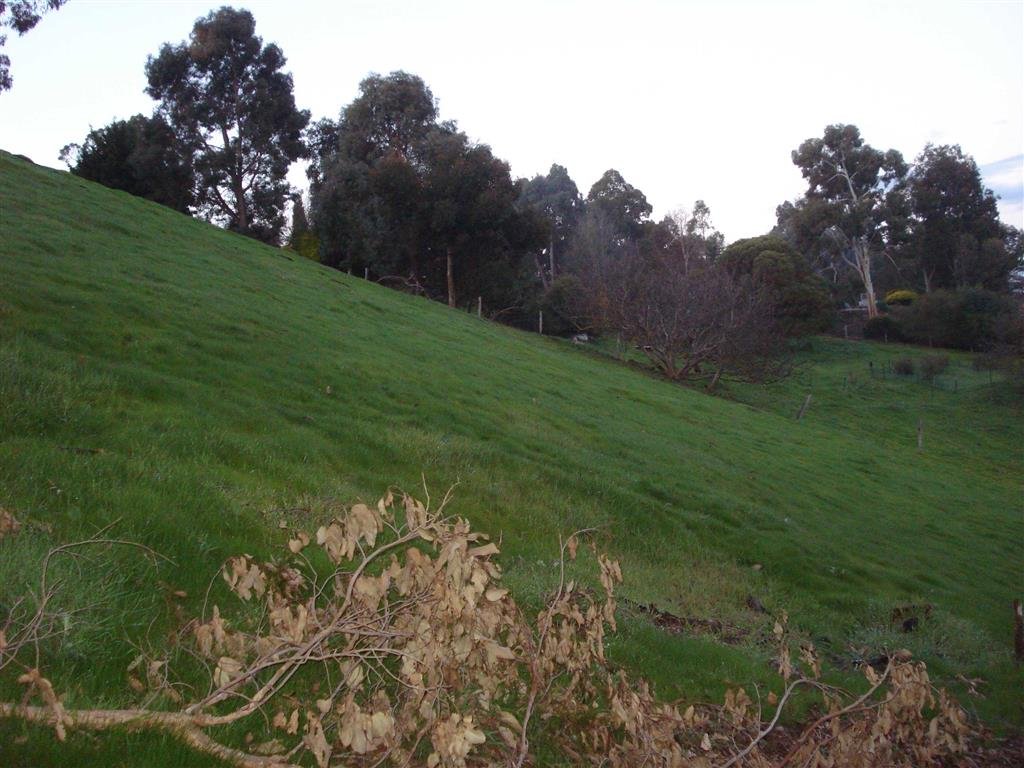
Natural garden - east view
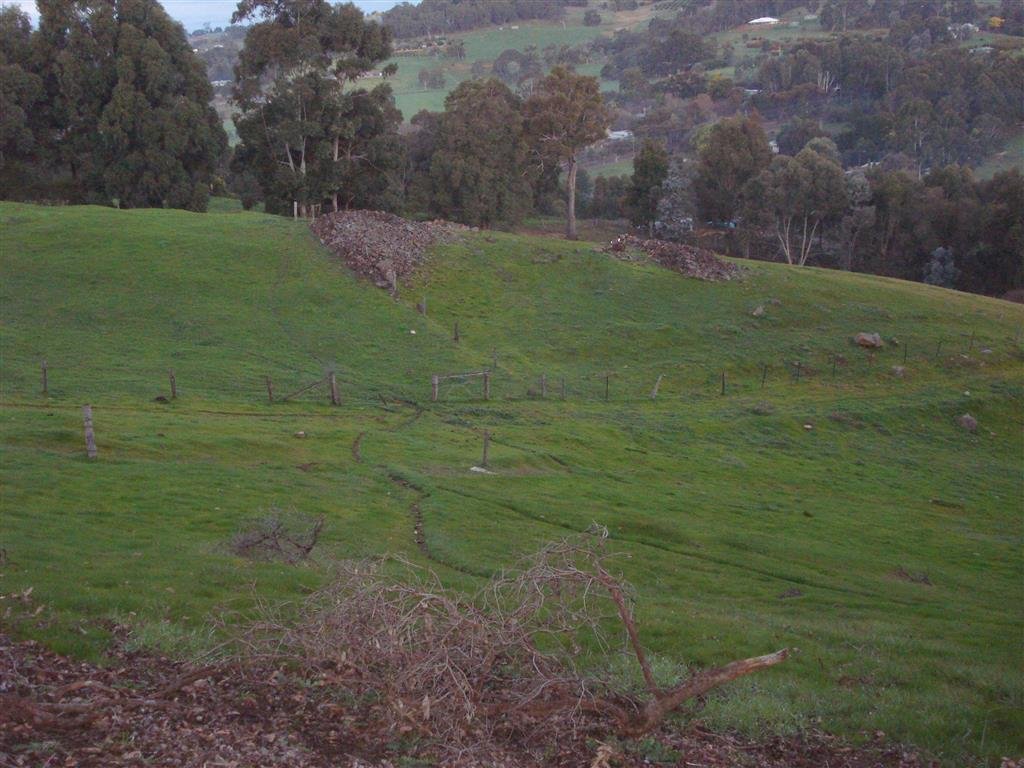
Natural garden - east view
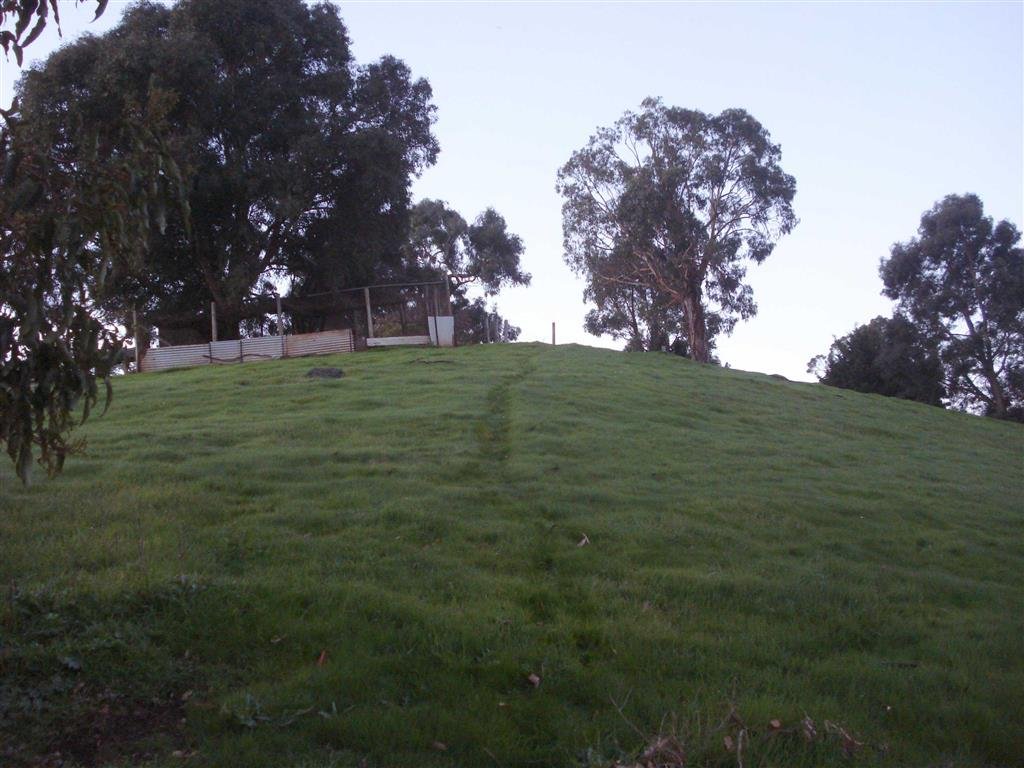
Natural - north view

Middle Garden - NW view
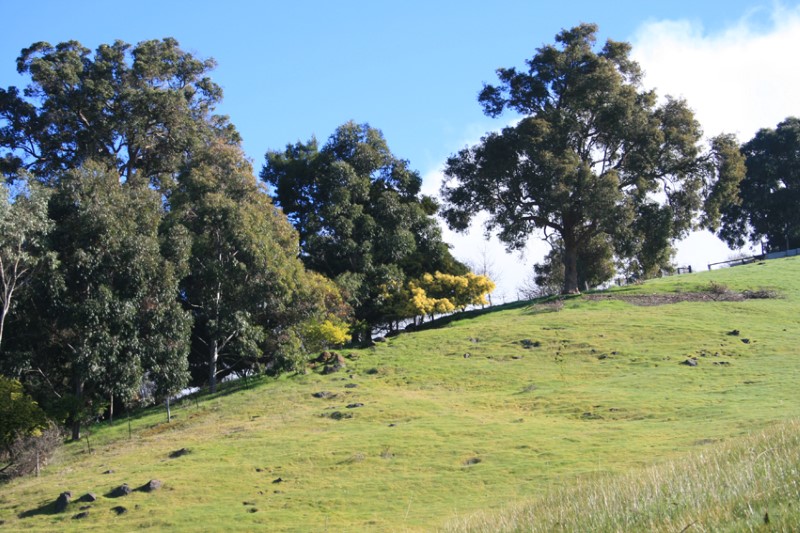
Natural garden - NW view
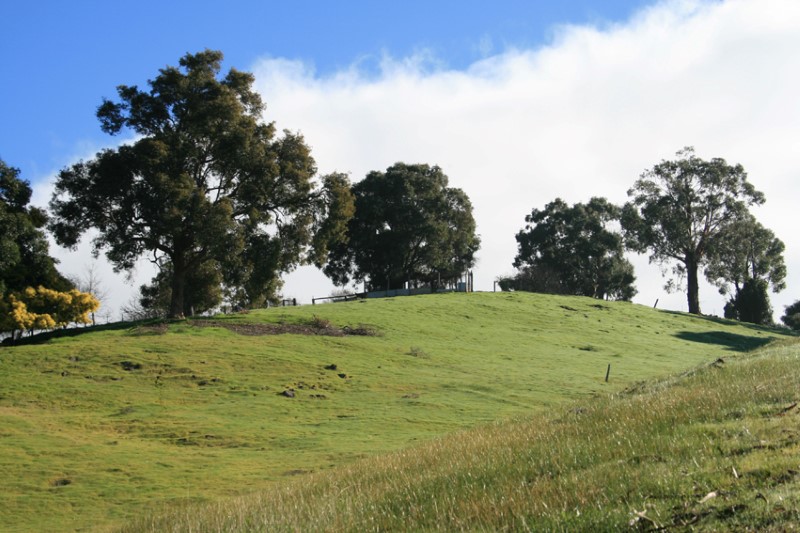
Natural garden - north view
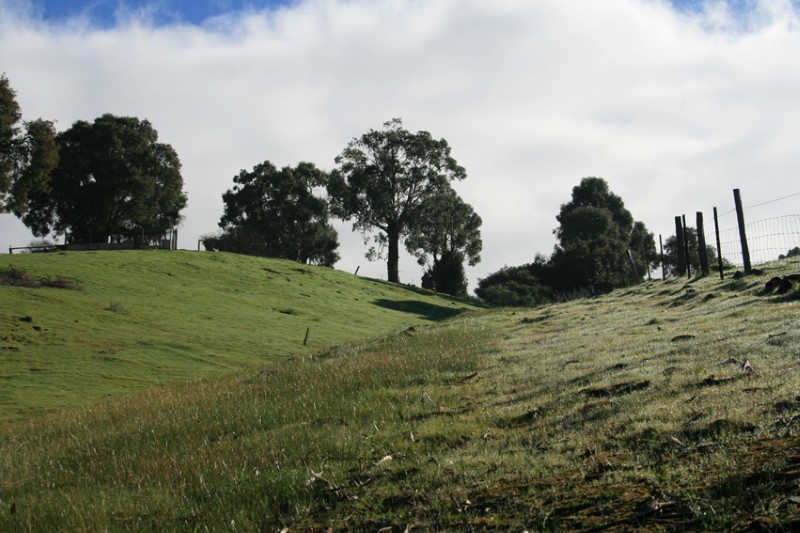
Natural garden - north view
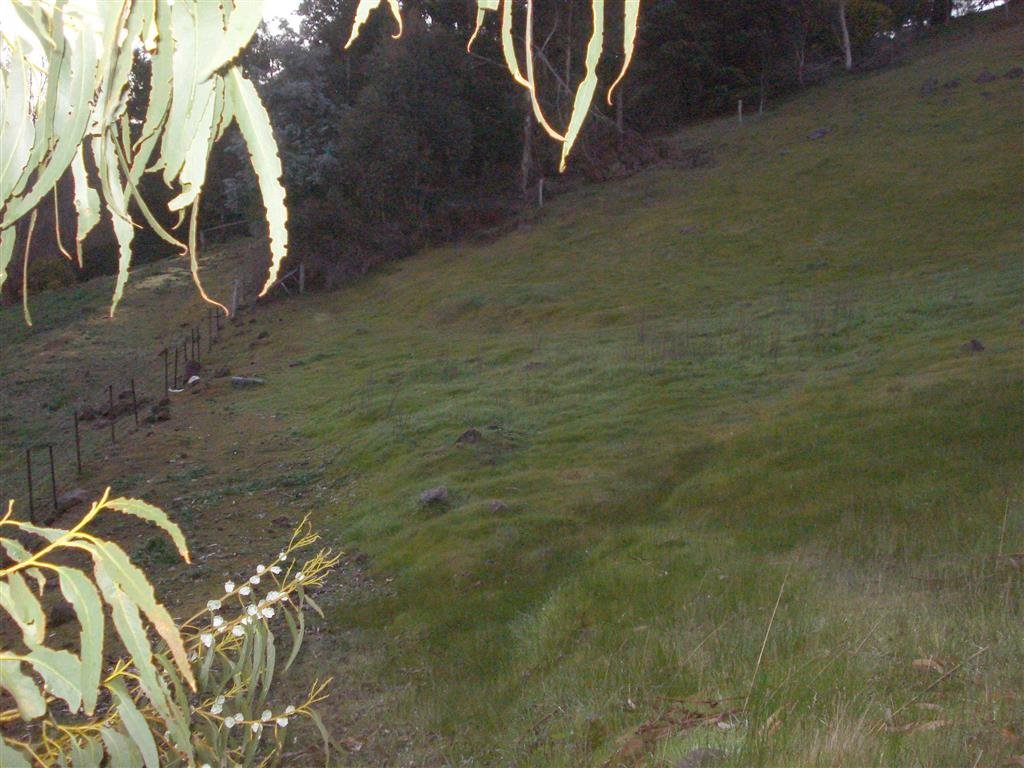
Natural garden - south fence
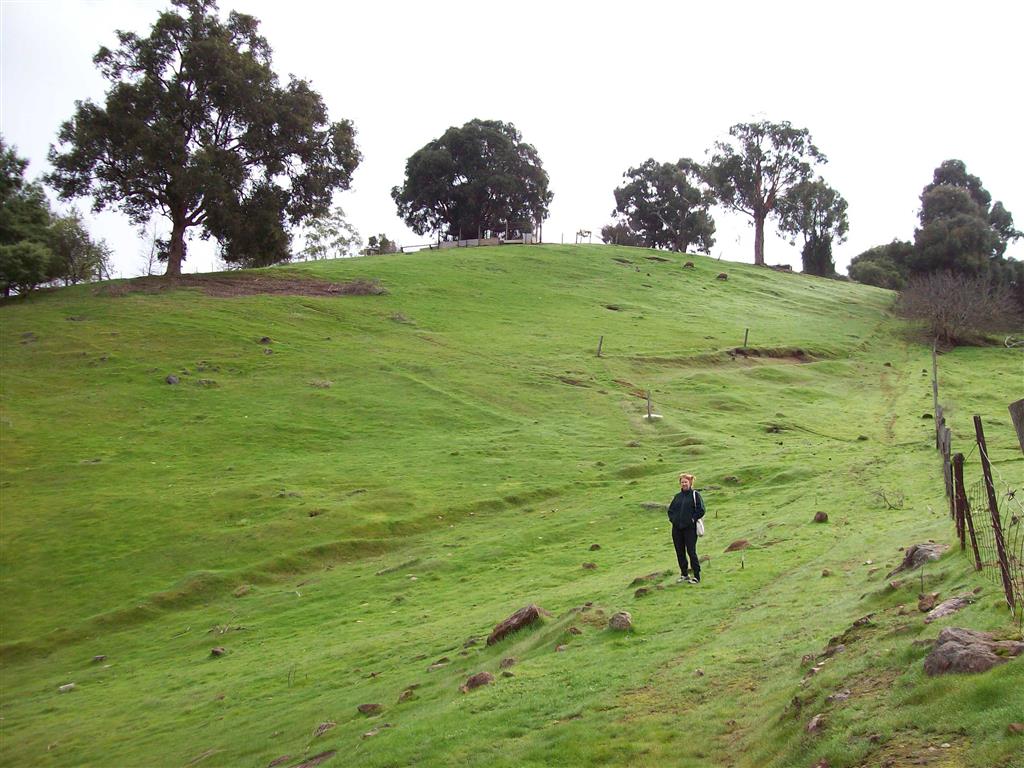
Nirada mid garden nature
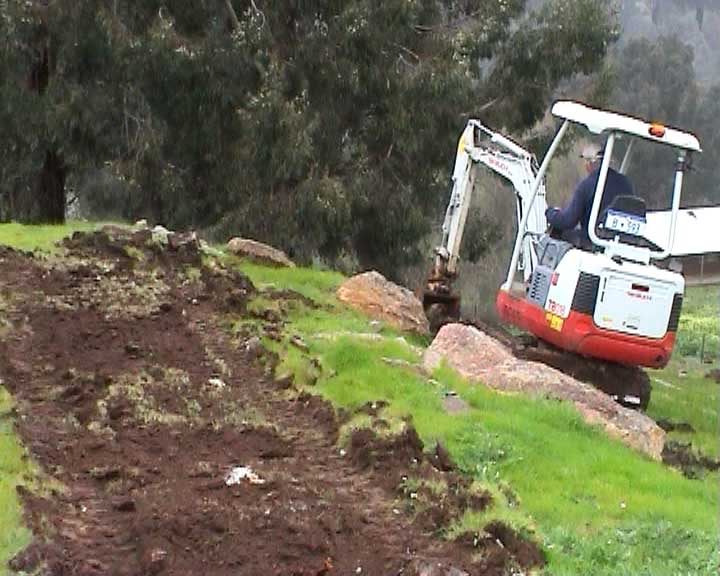
Path dig 1
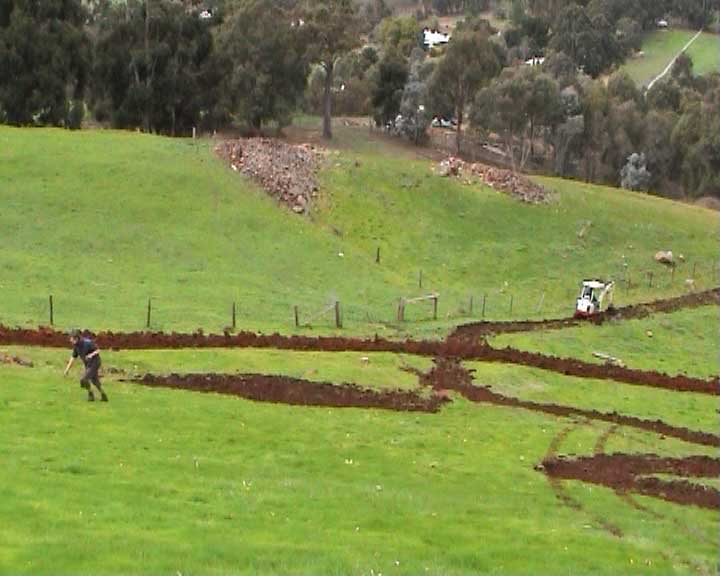
Path dig 2
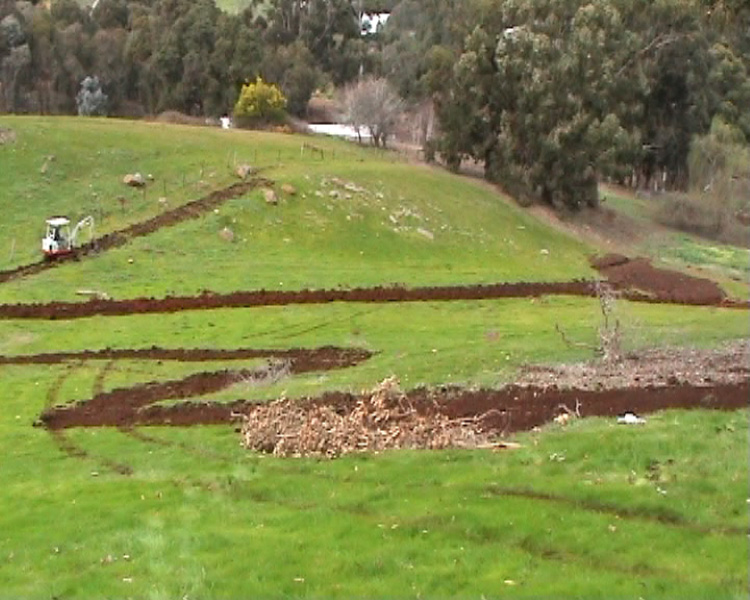
Path dig 3
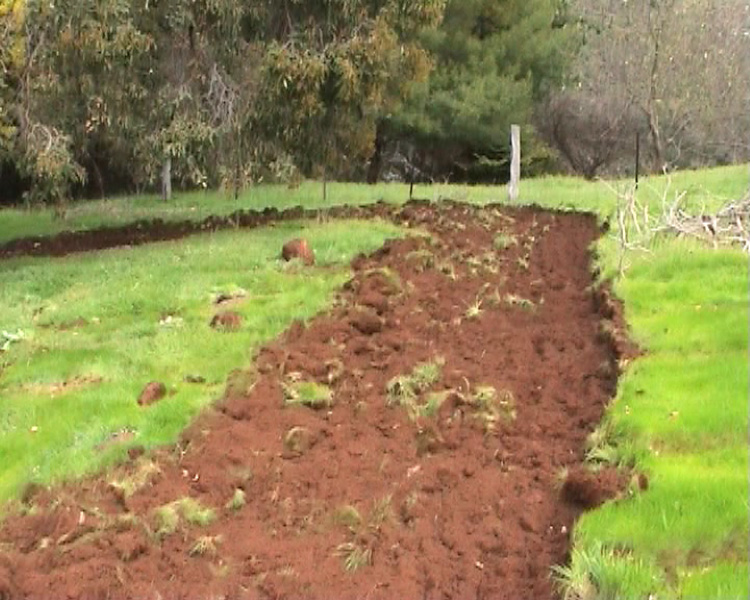
Path dig 4
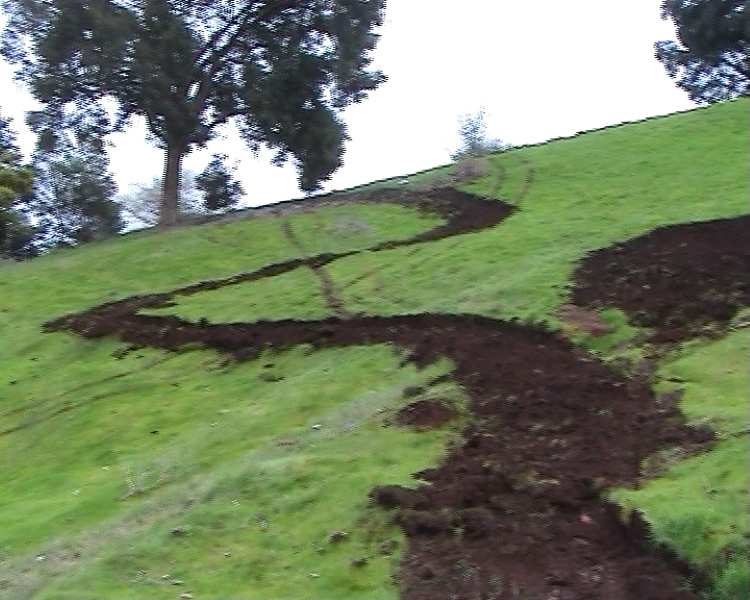
Path dig 5
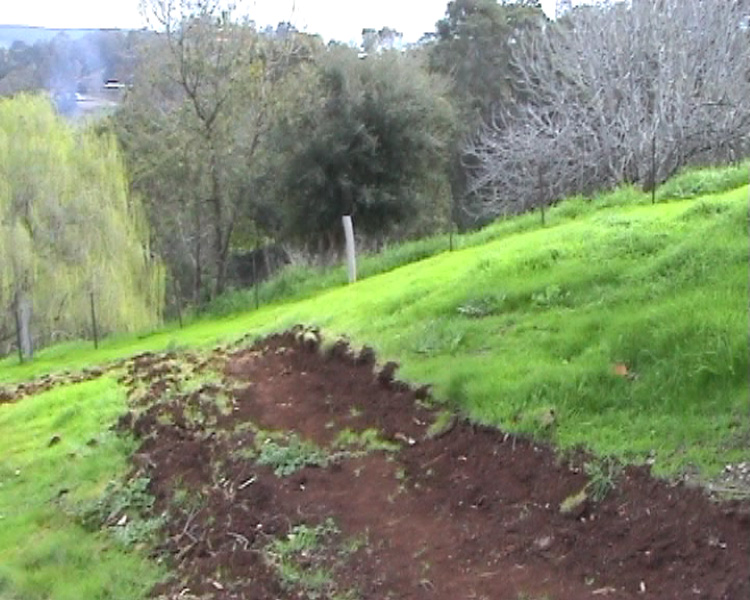
Path dig 6
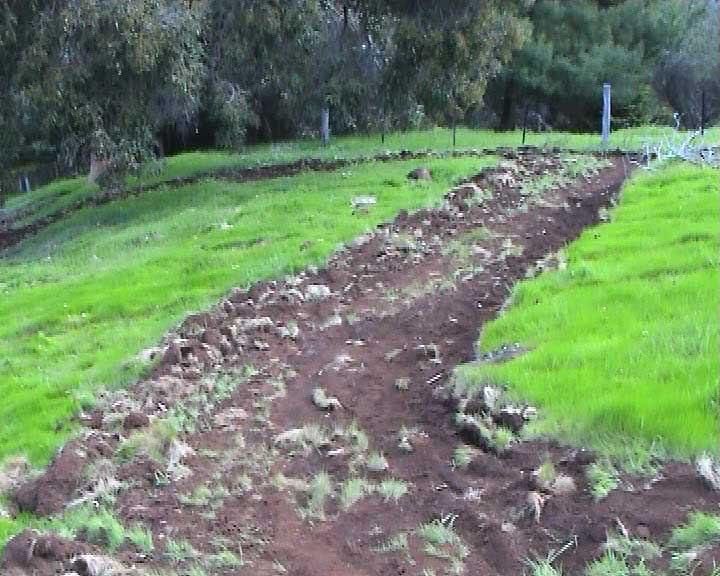
Path dig 7
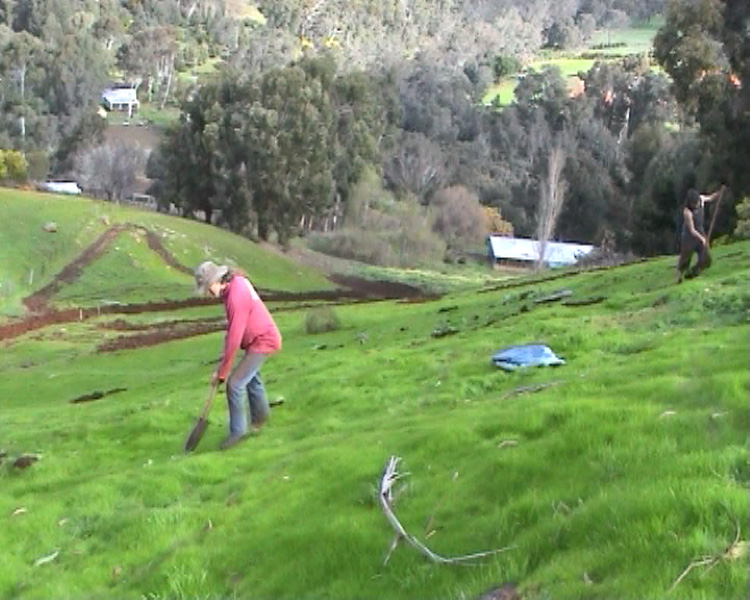
Dig hole
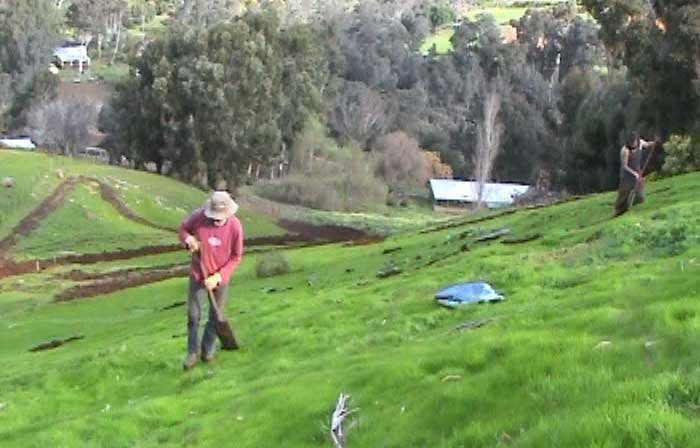
Terrace cut
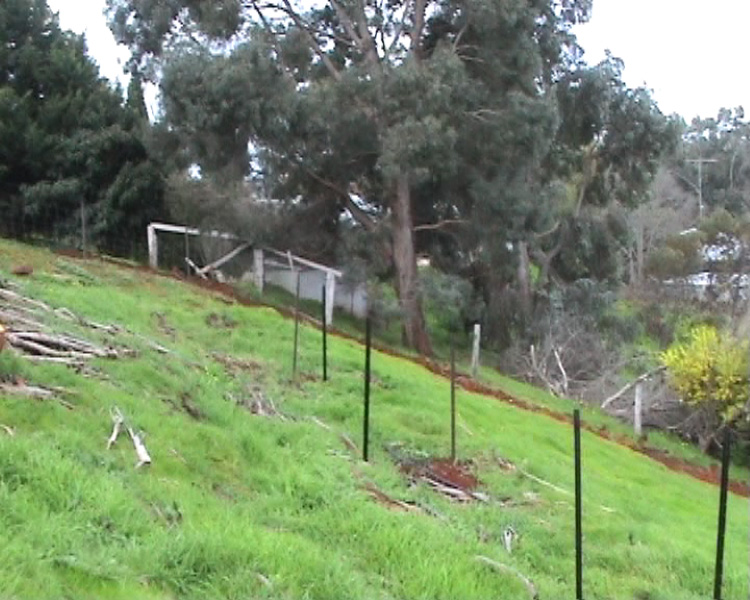
Terrace cut 1
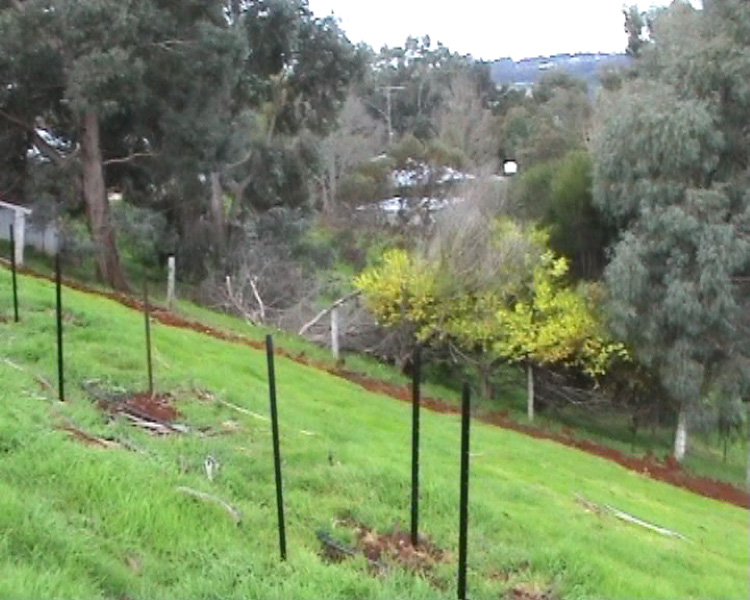
Terrace cut 2
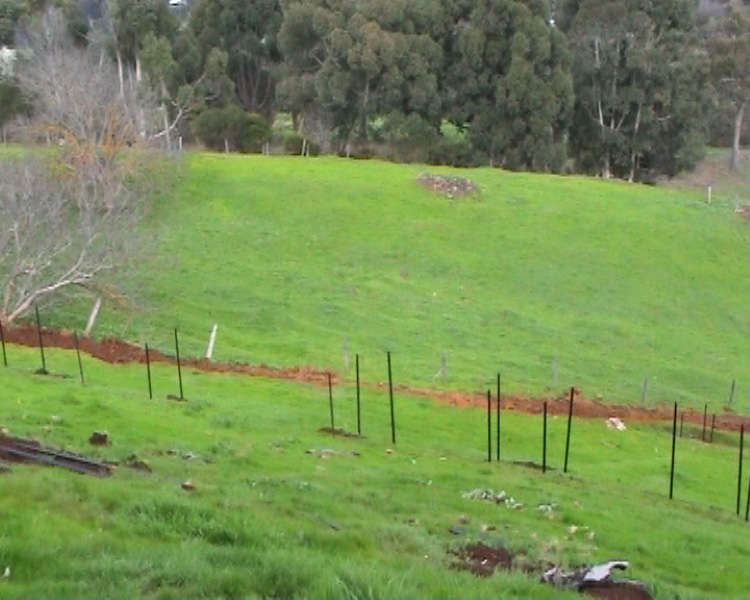
Terrace cut 3
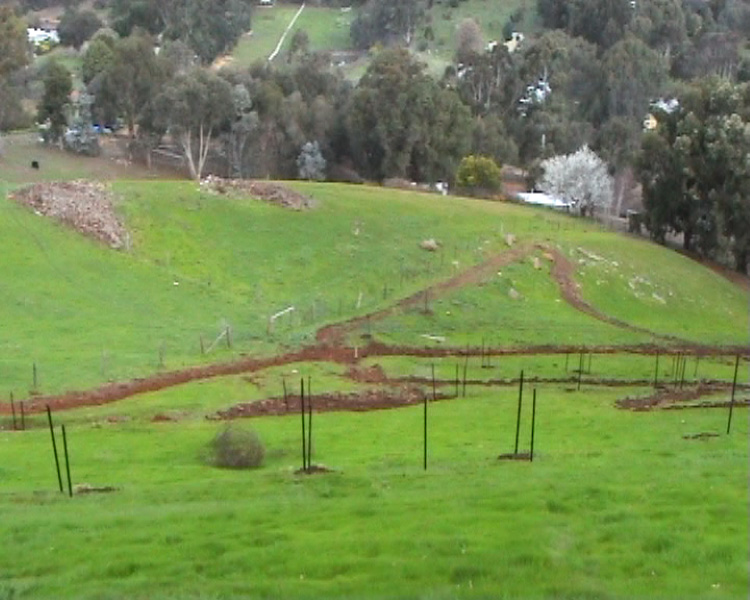
Terrace cut 4
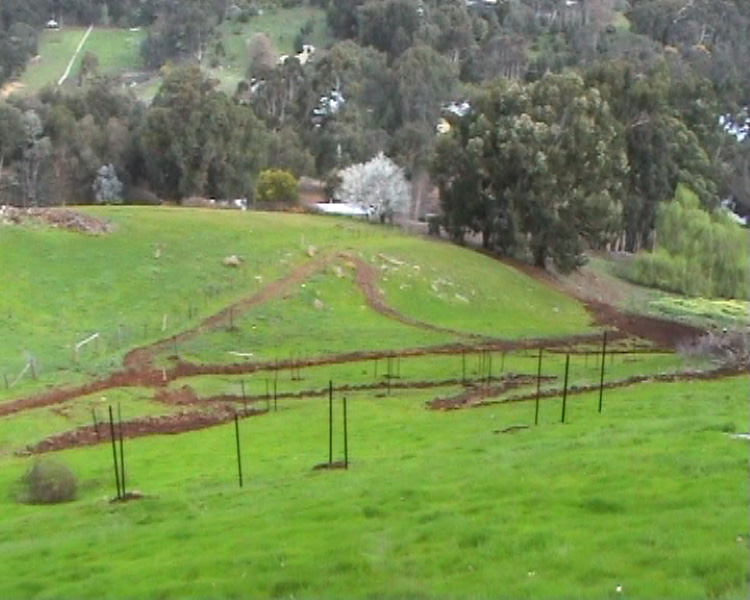
Terrace cut 5
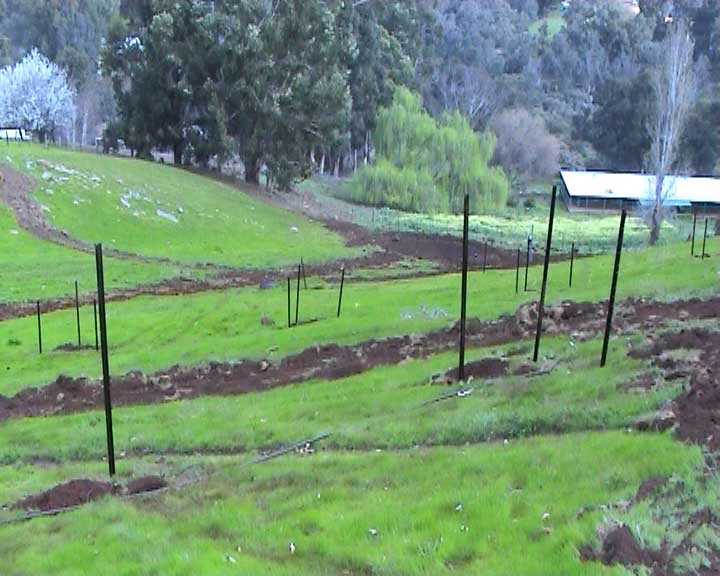
Terrace cut 6
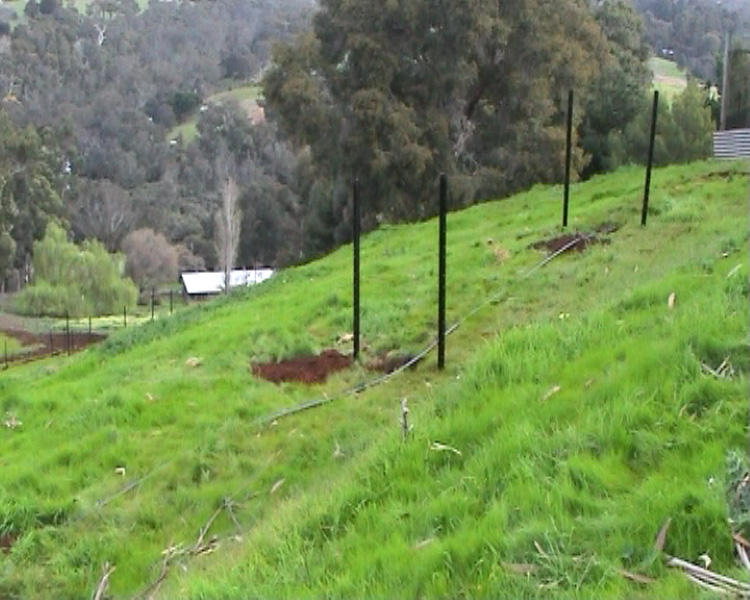
Terrace cut 7
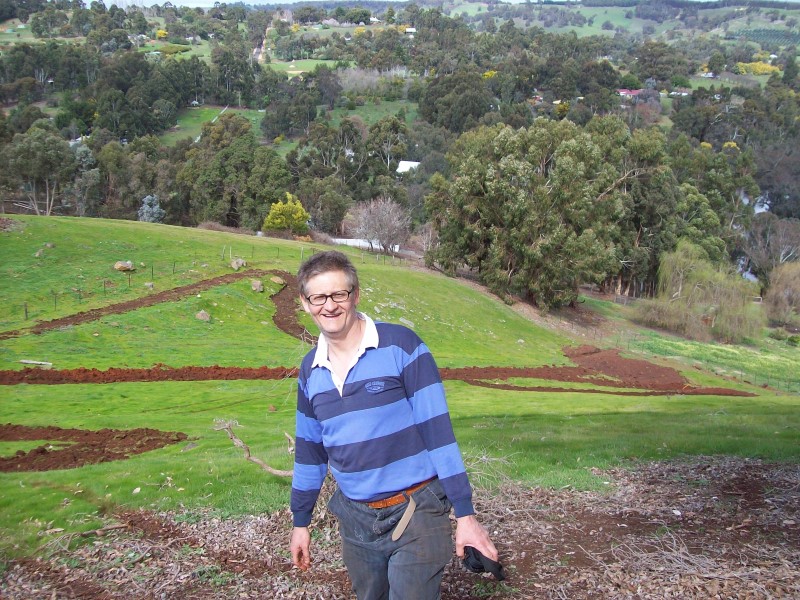
Rowland
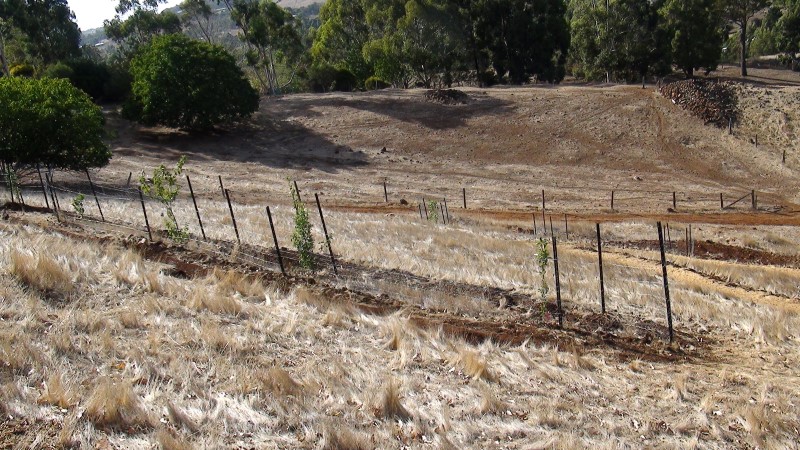
Row 4 construction
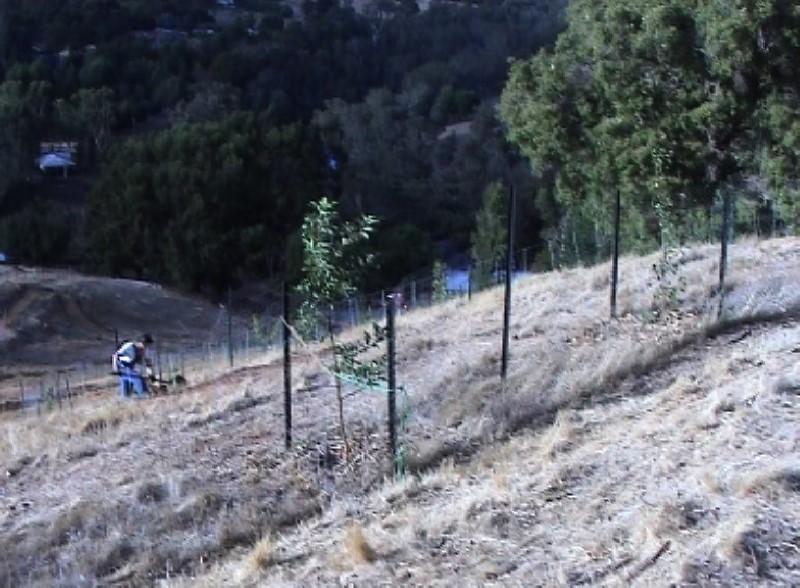
Row 3 construction

Row 3 path construction

Terrace row 3

Row 2 fence construction
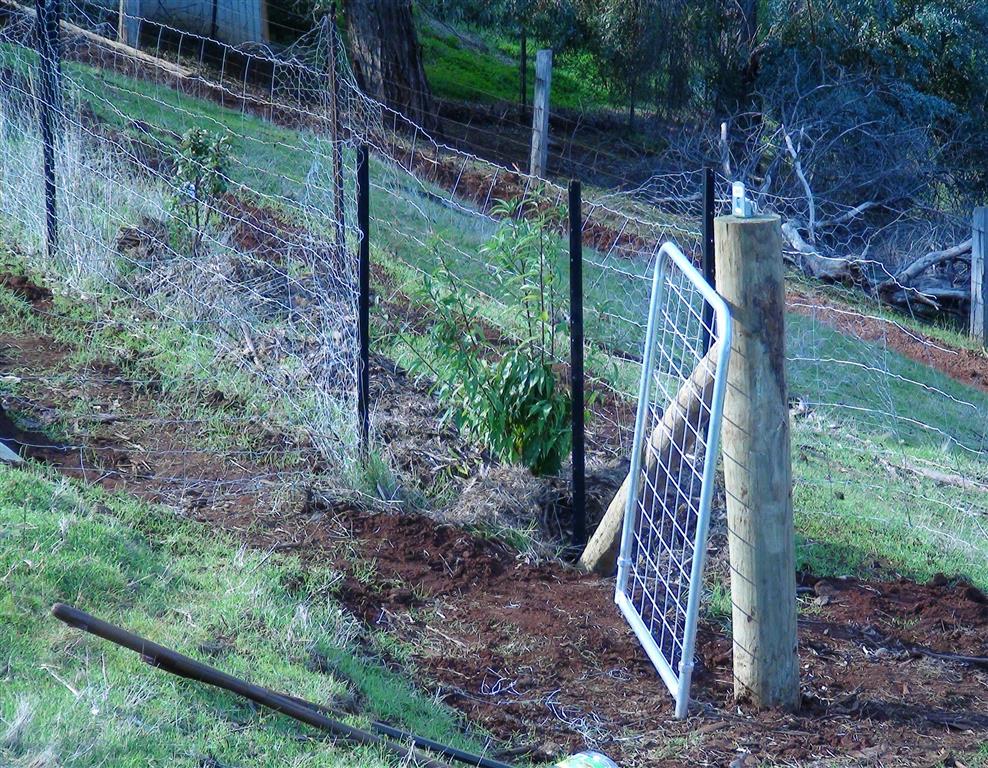
Row 2 fence construction
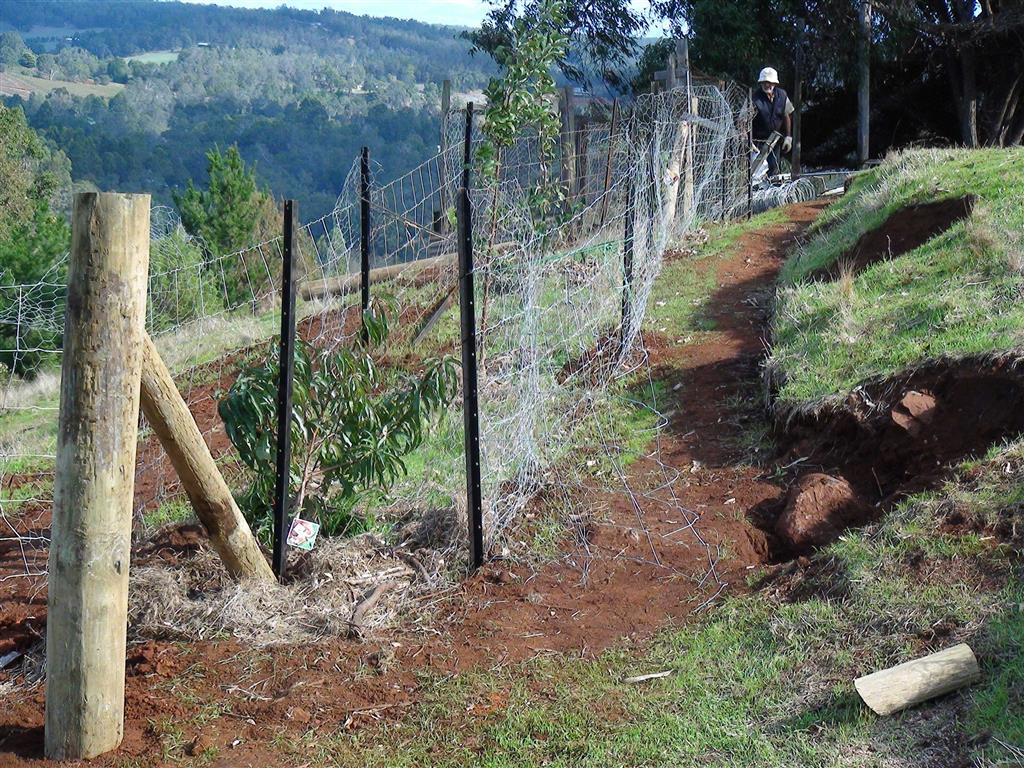
Row 2 fence construction
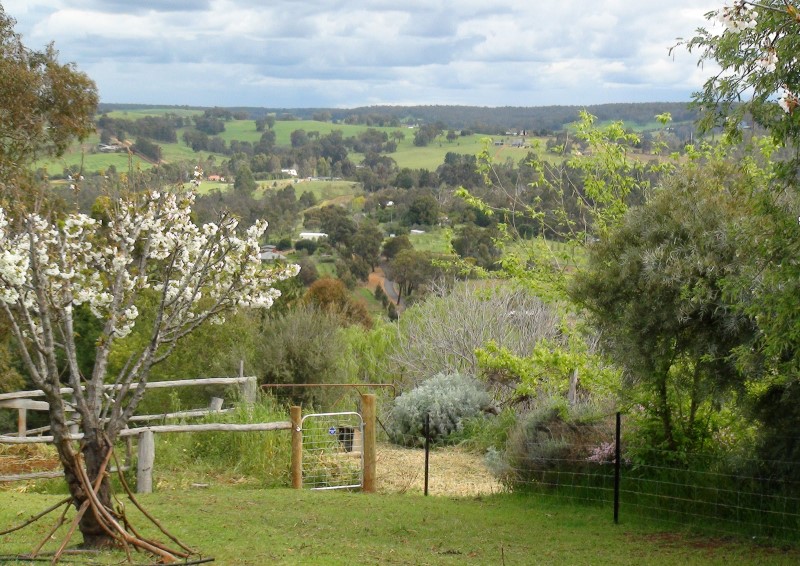
Old cherry tree & sheep pen
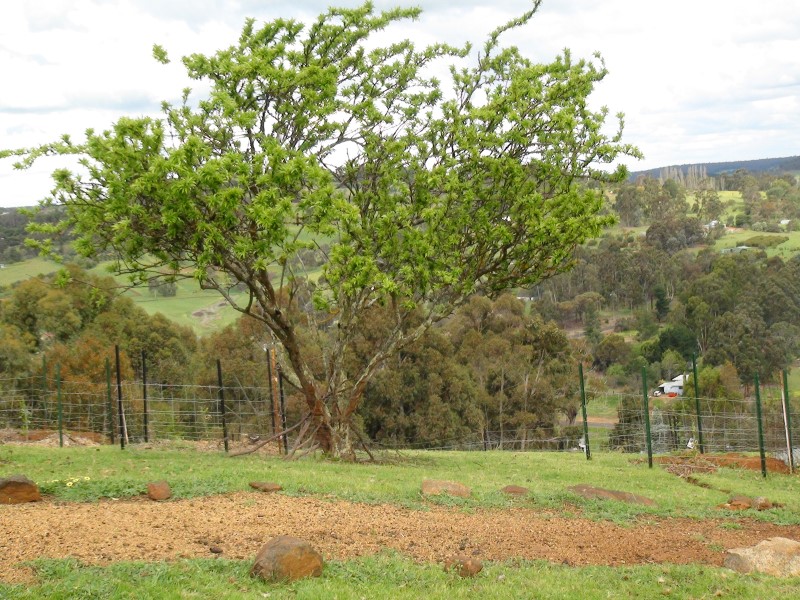
Old plum tree
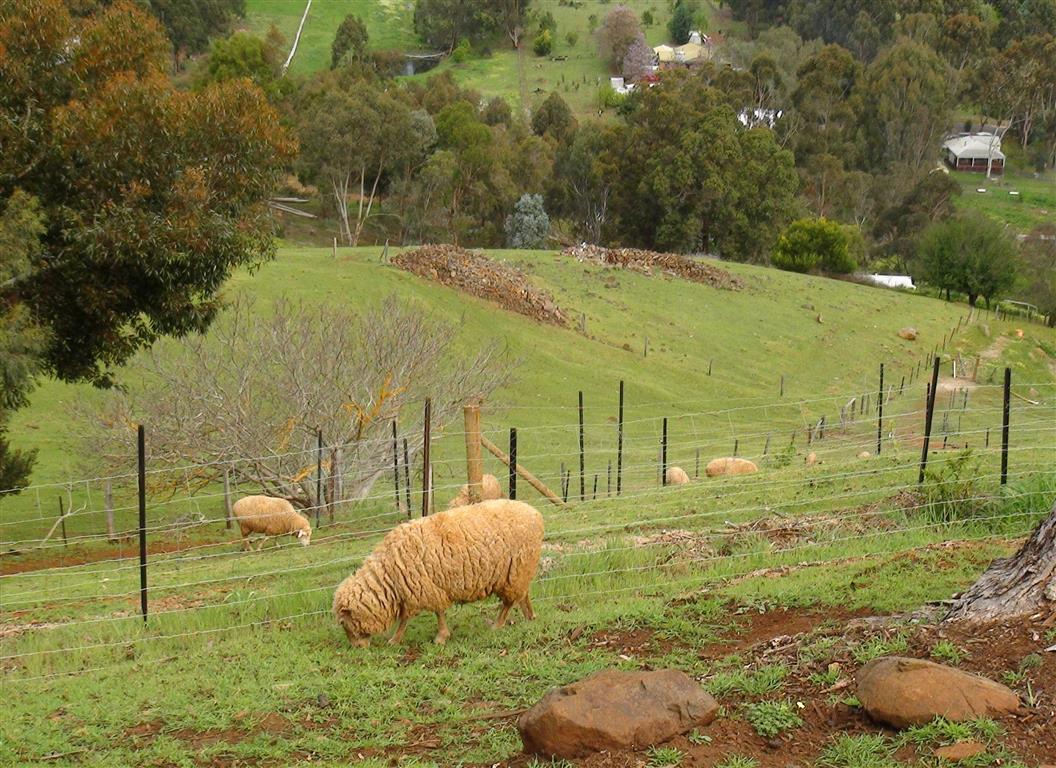
Sheep grazing middle garden 1
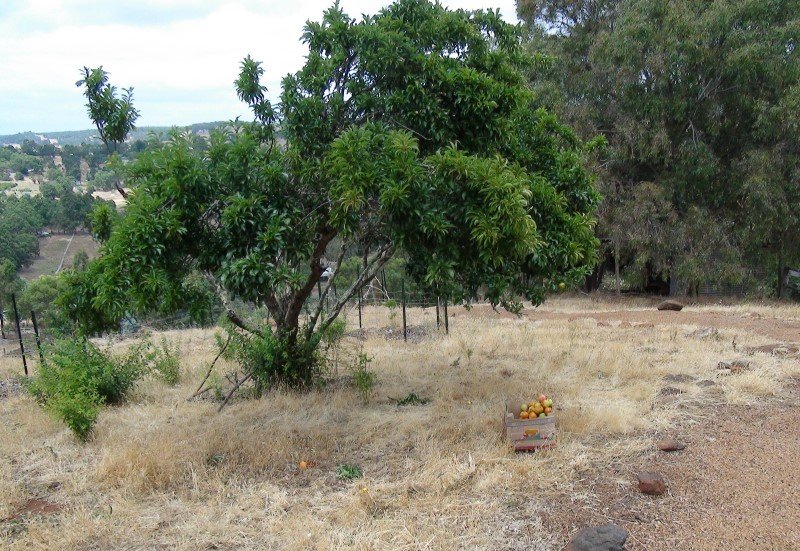
Old plum tree and fruit

Planting berries in row 7
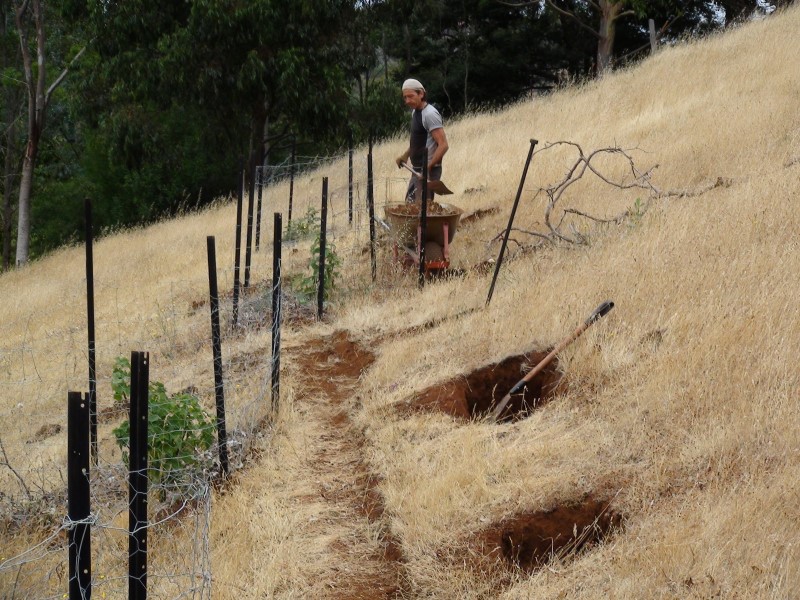
Planting berries
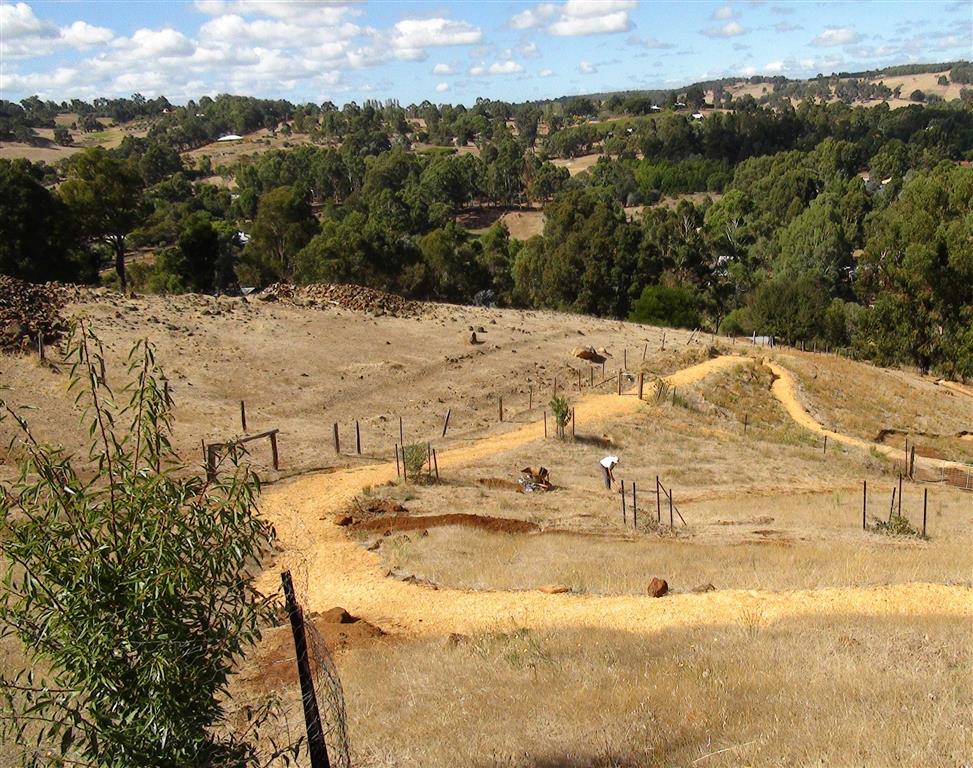
Bottom of middle garden 1
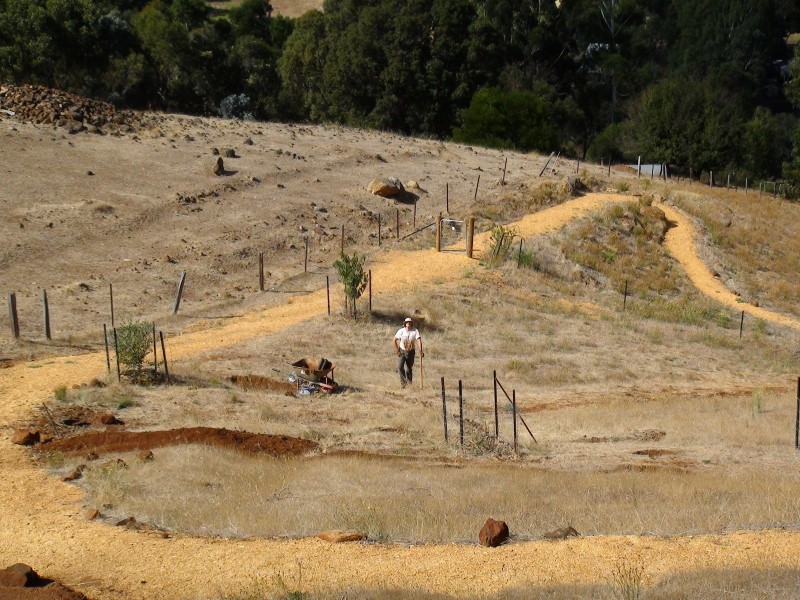
Bottom of middle garden 2

View of middle garden from the bottom
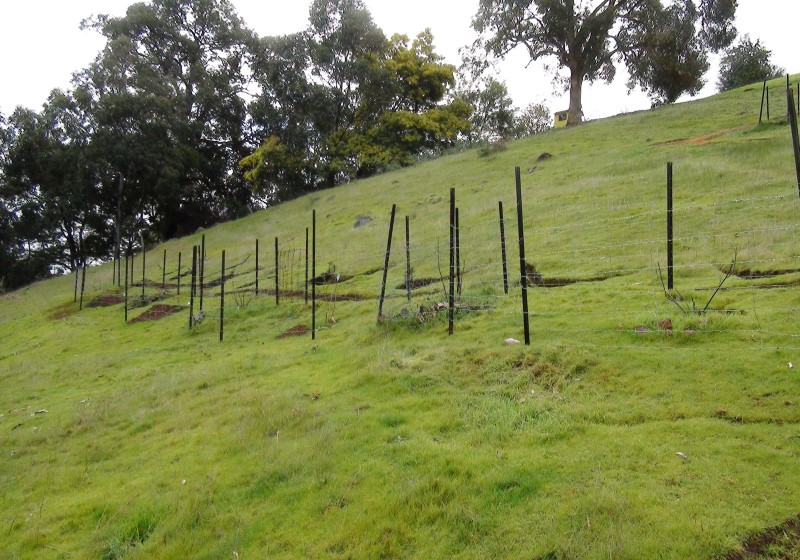
Row 7 - berries
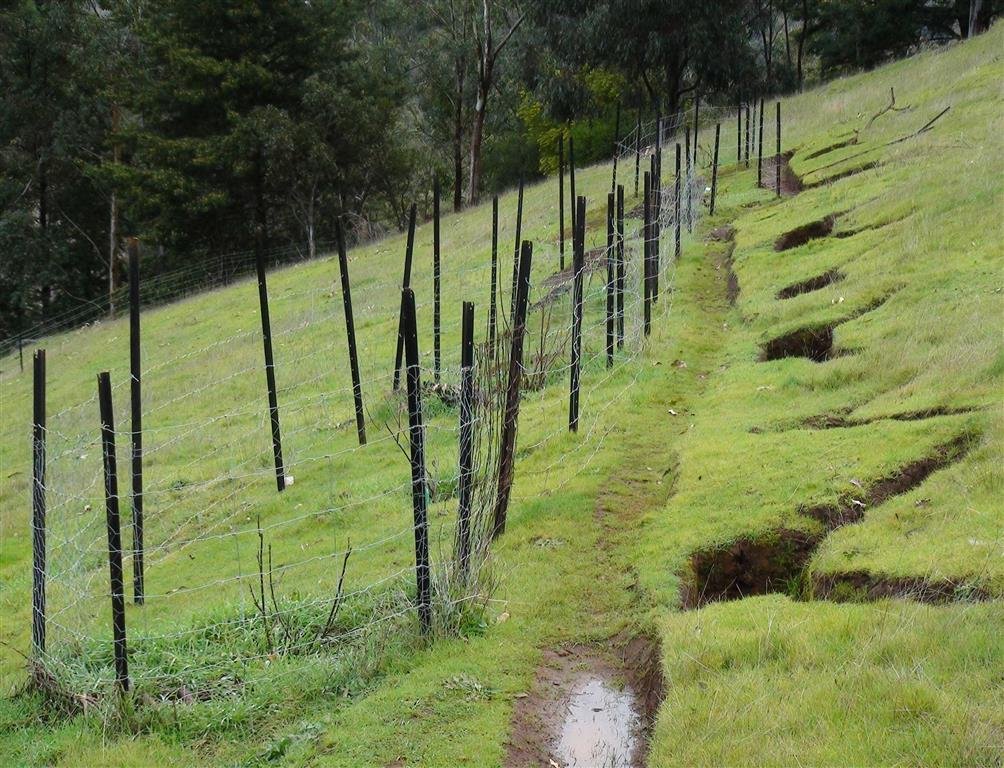
Bottom terrace - row 7
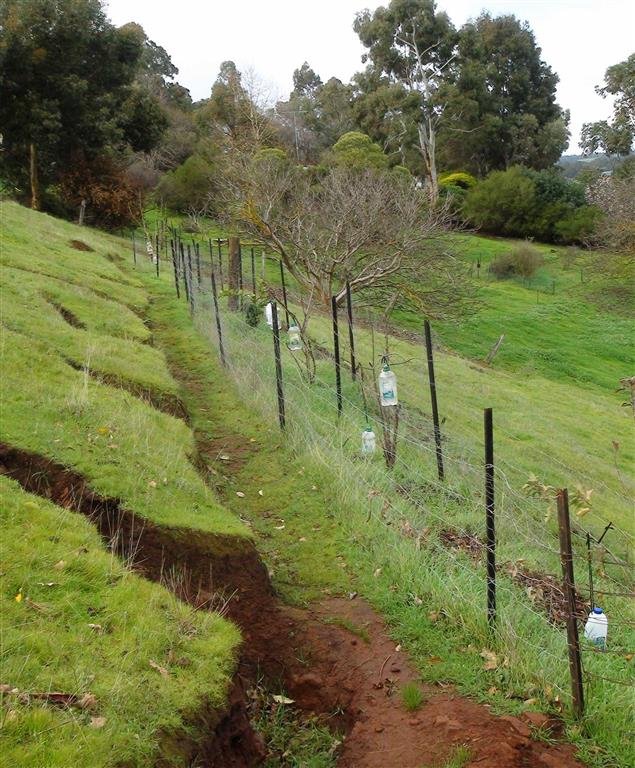
Row 4
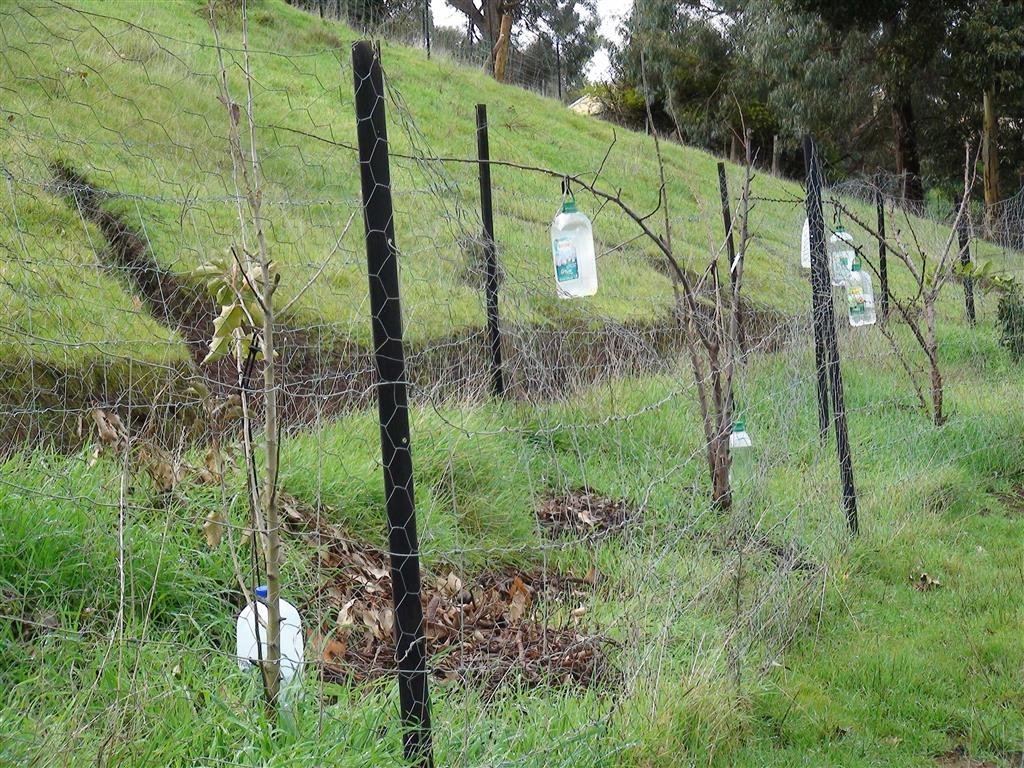
Bending branches - row 4
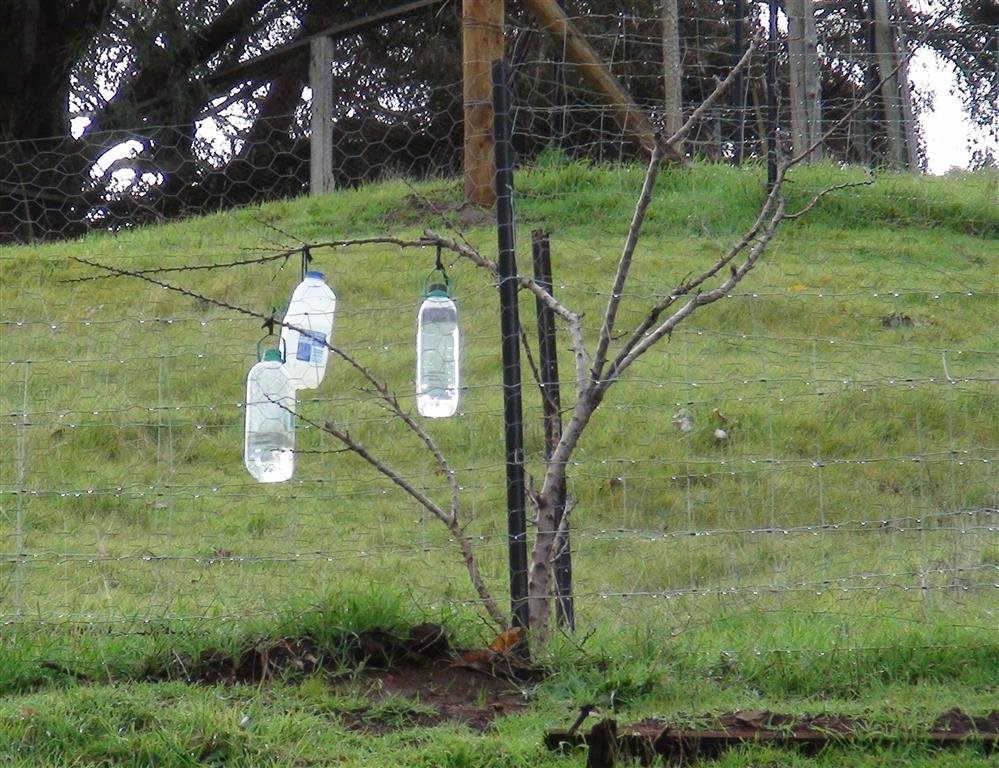
Bending branches
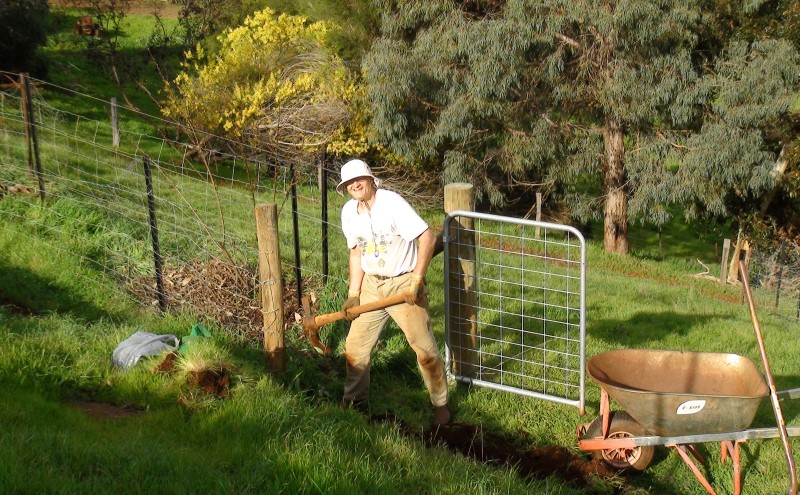
Widening the path in row 2
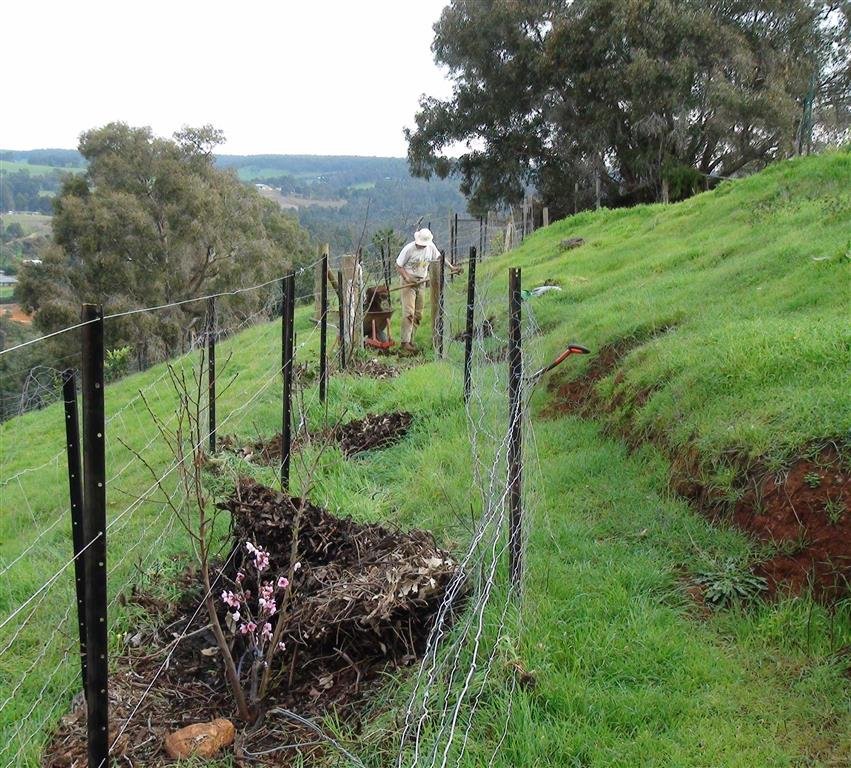
Row 2
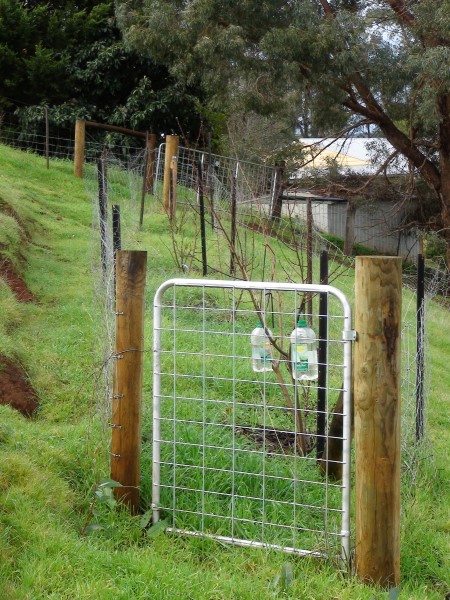
Row 2
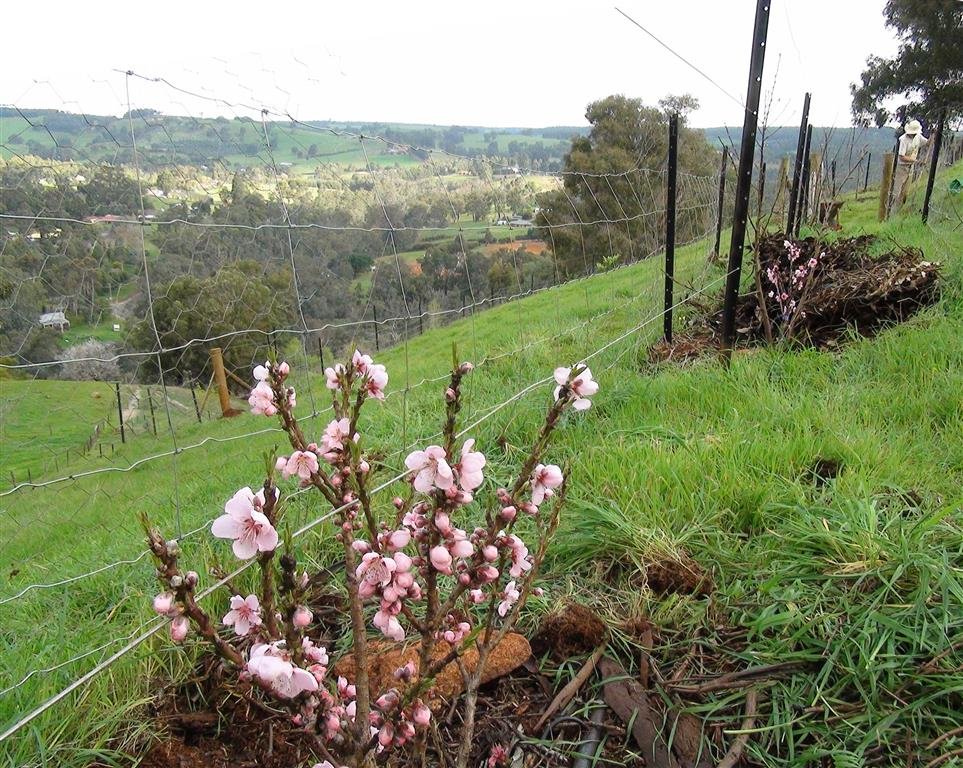
Row 2
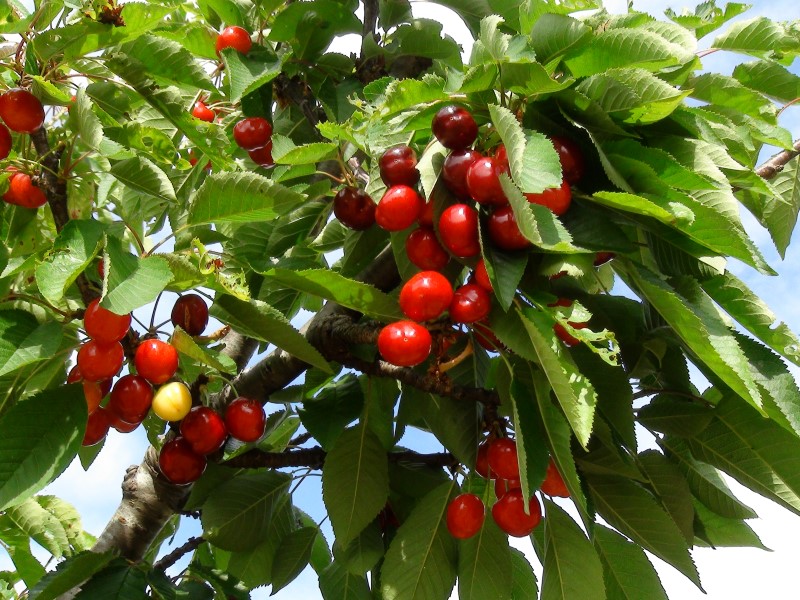
Cherries on old cherry tree
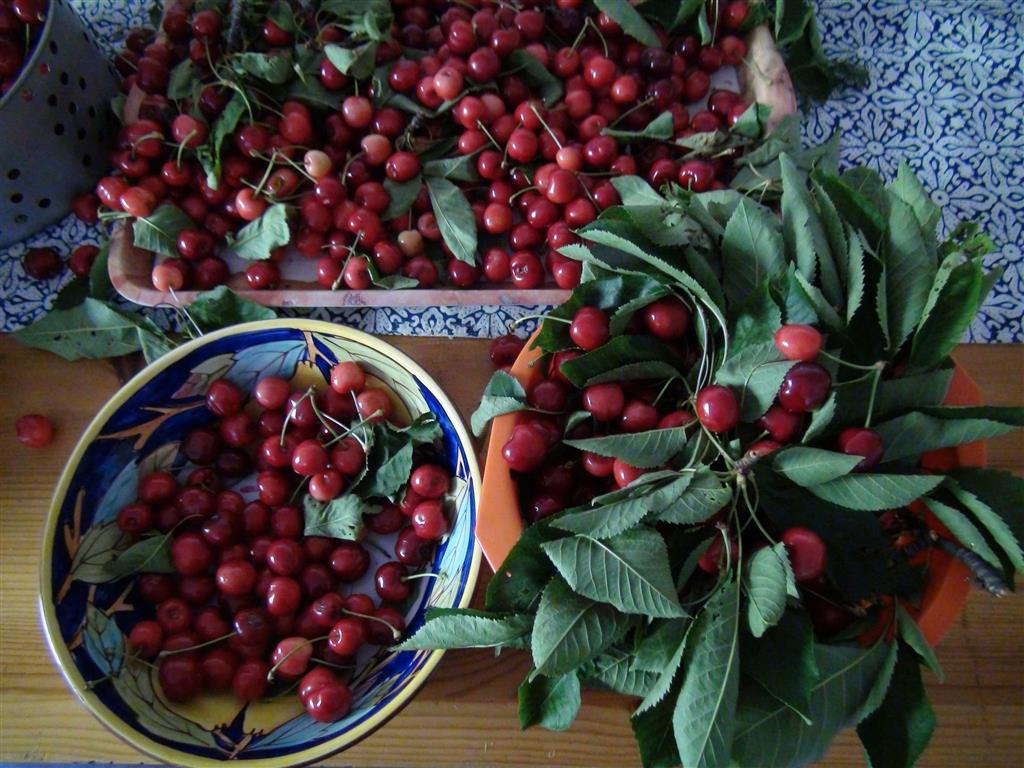
Cherries on plate

All Garden 1
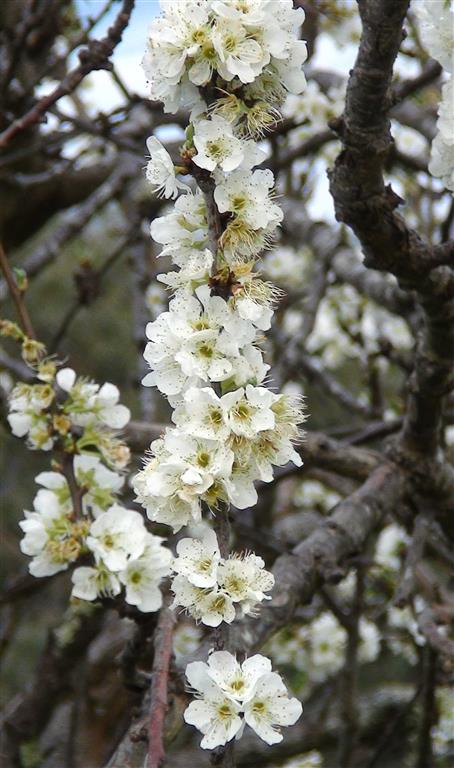
Plum Blossom 1

Row 3 various
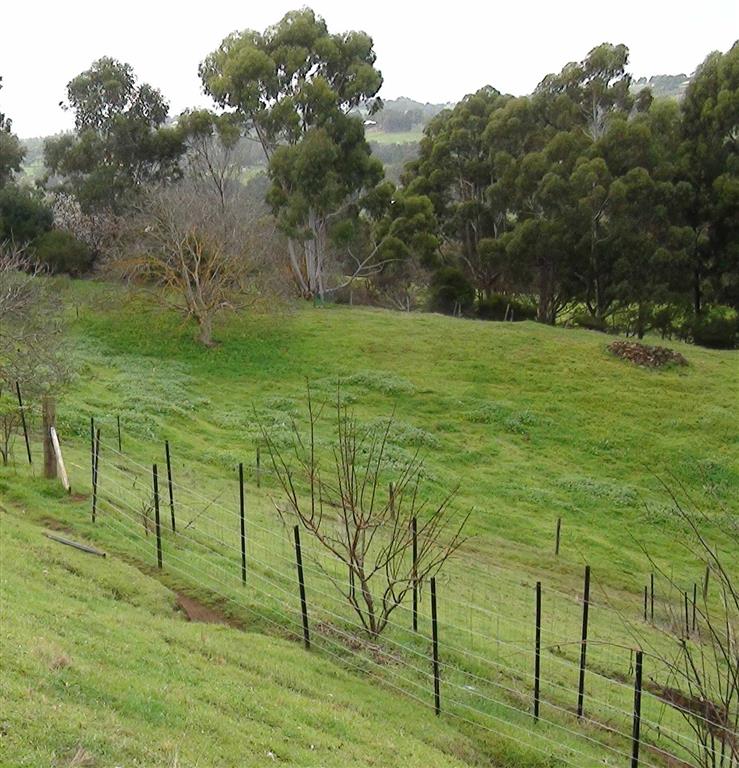
Row 4
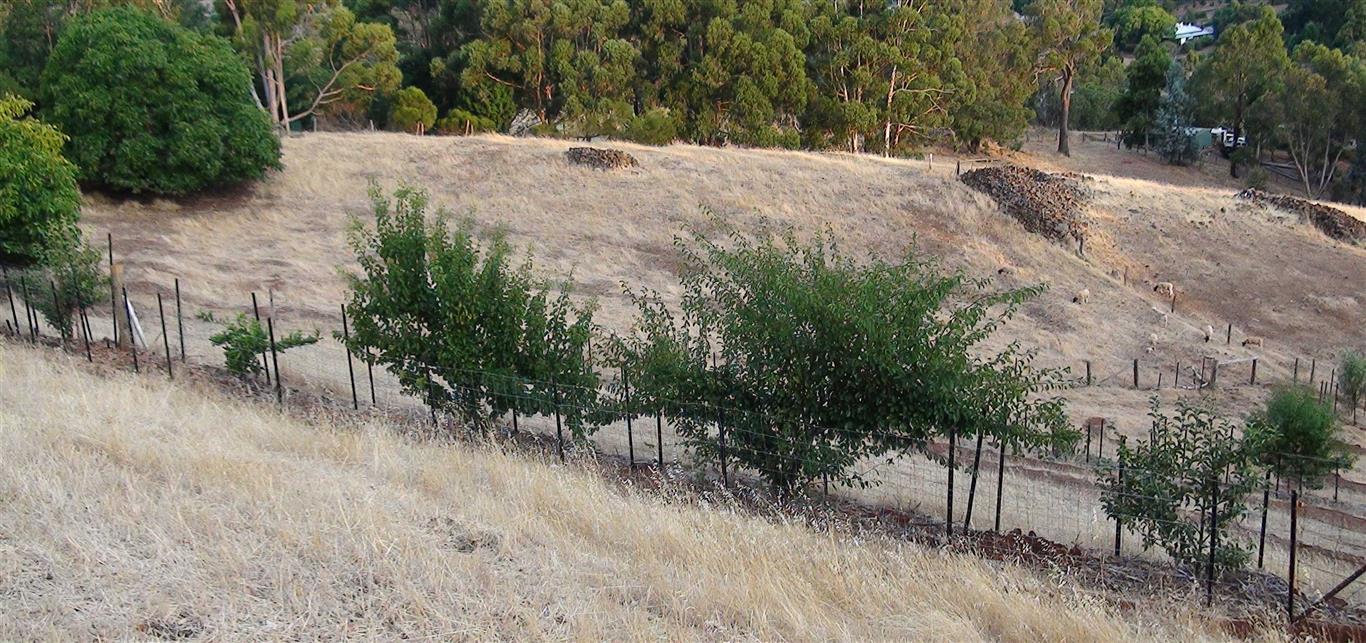
Row 4-2
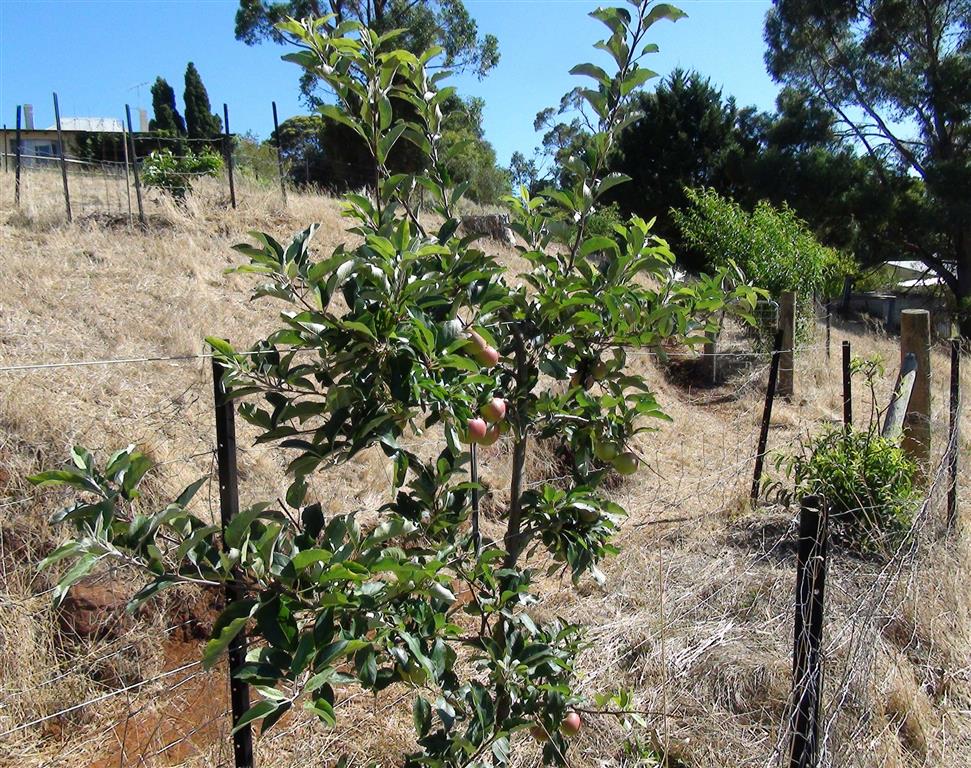
Apple 1
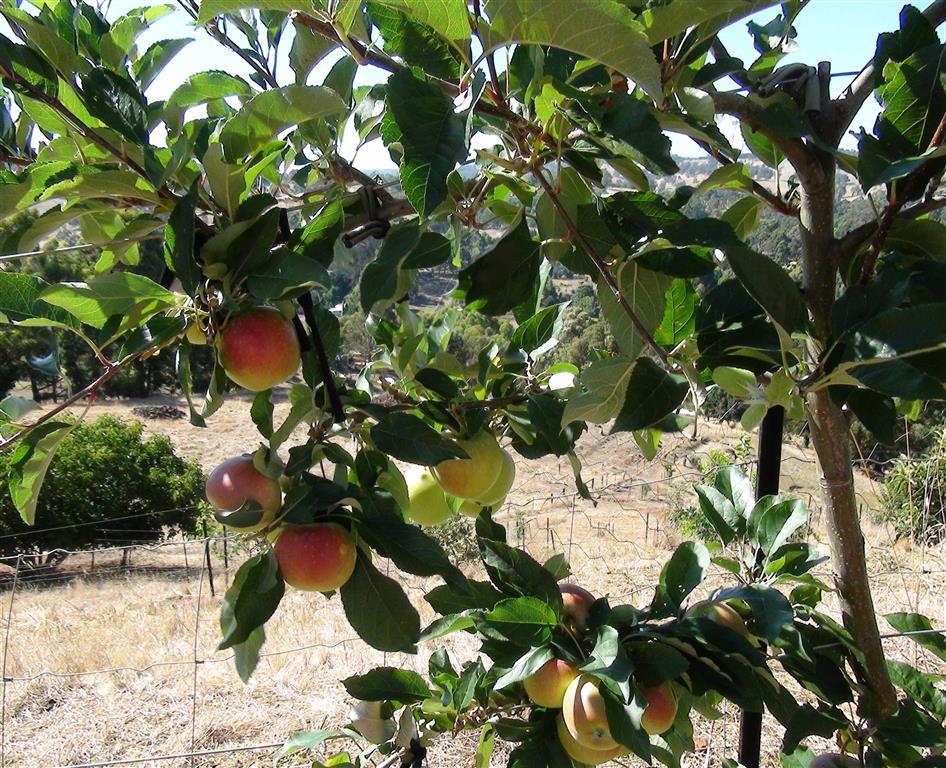
Apple 3
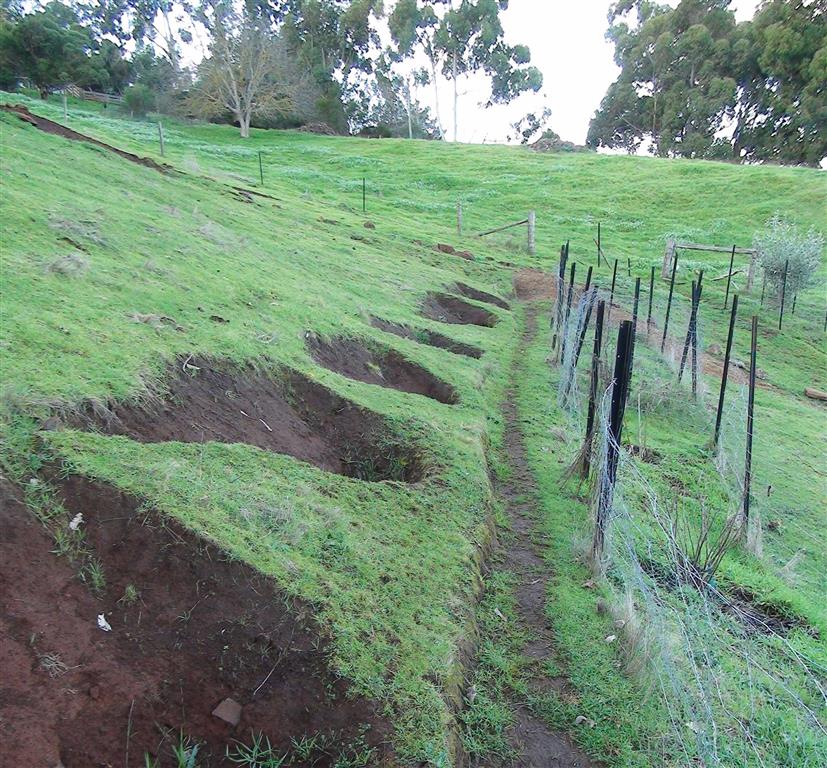
Berries
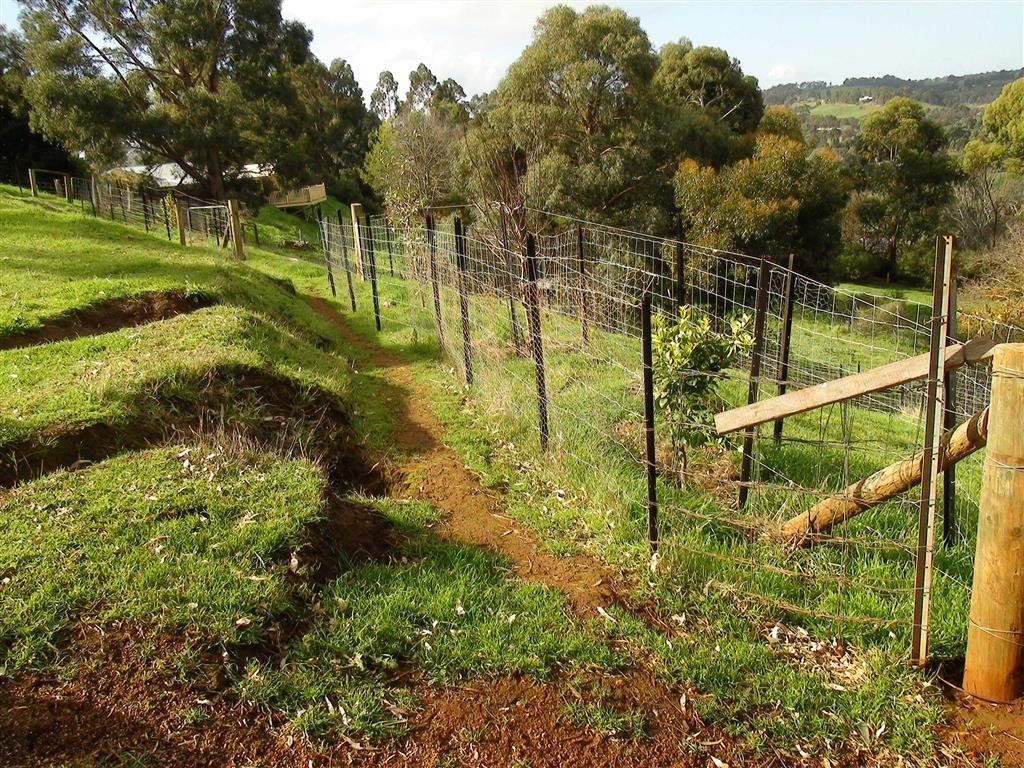
Terrace 1
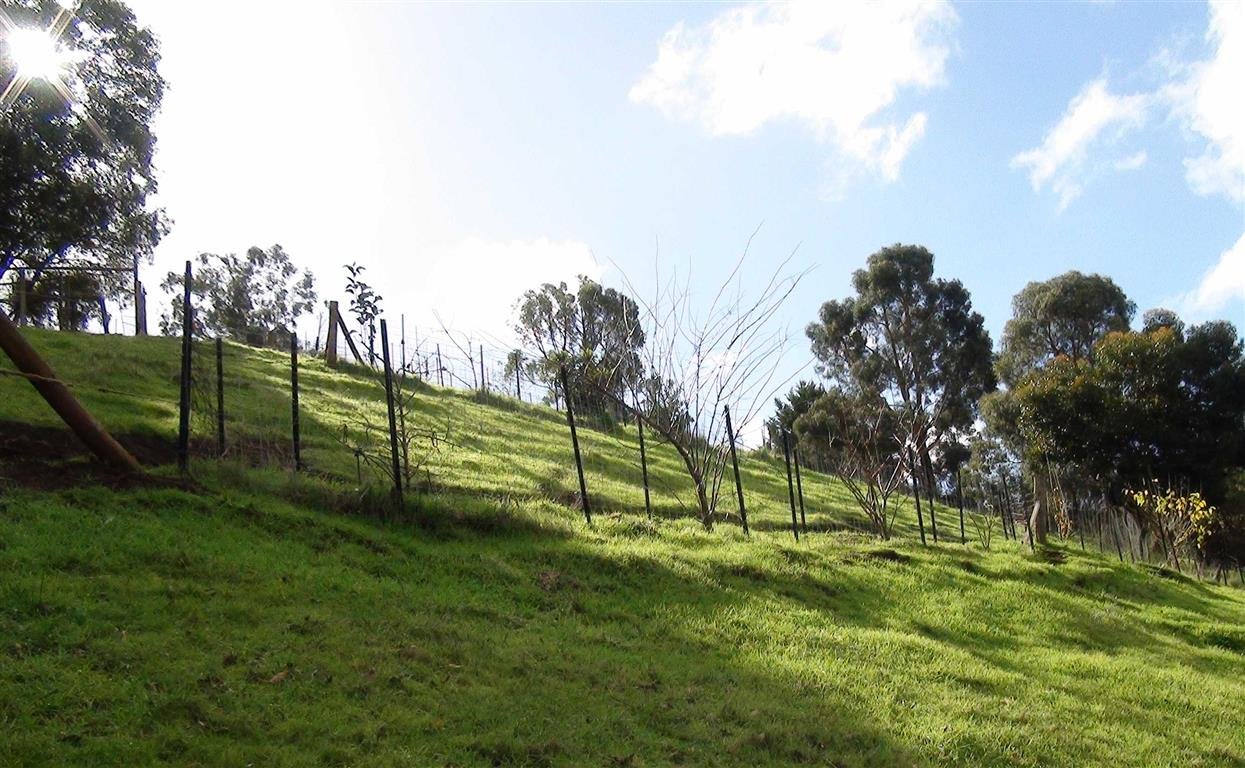
Terrace 2
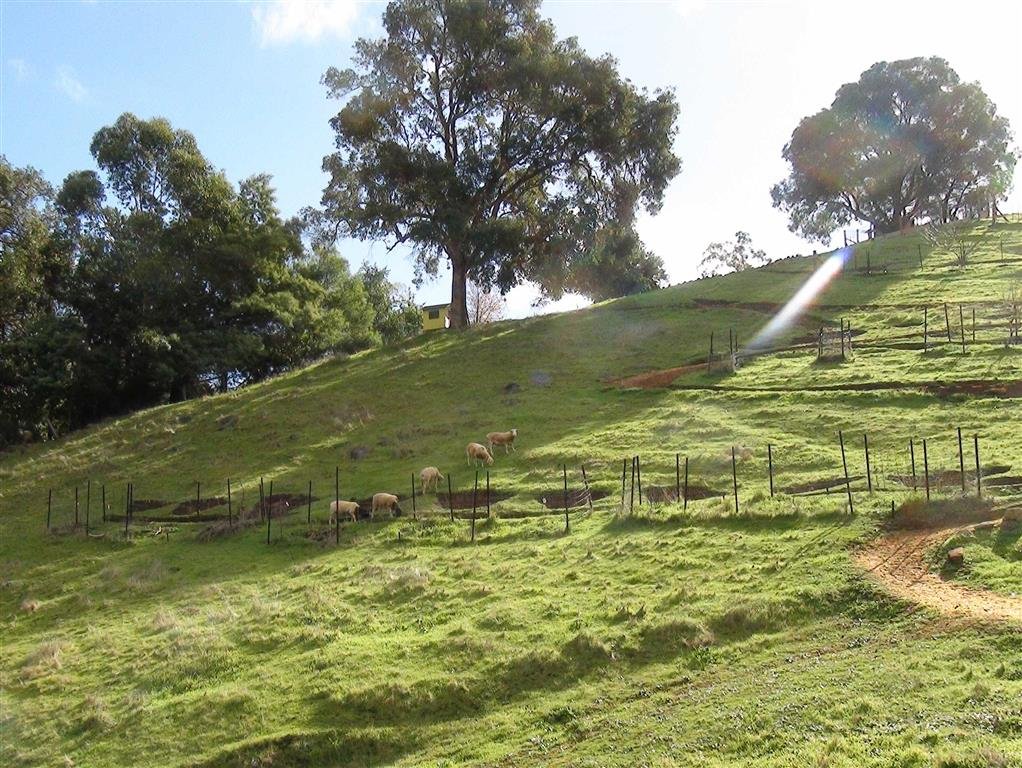
Terrace 3
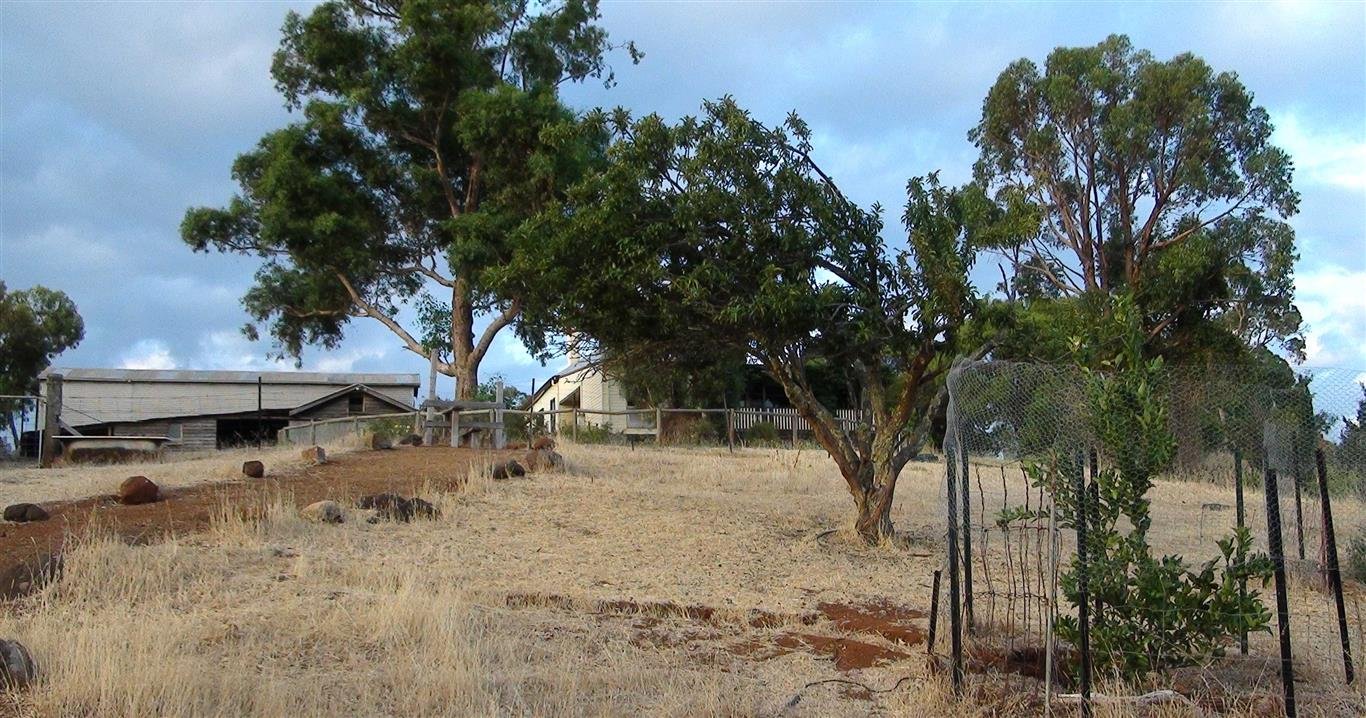
Garden house shed
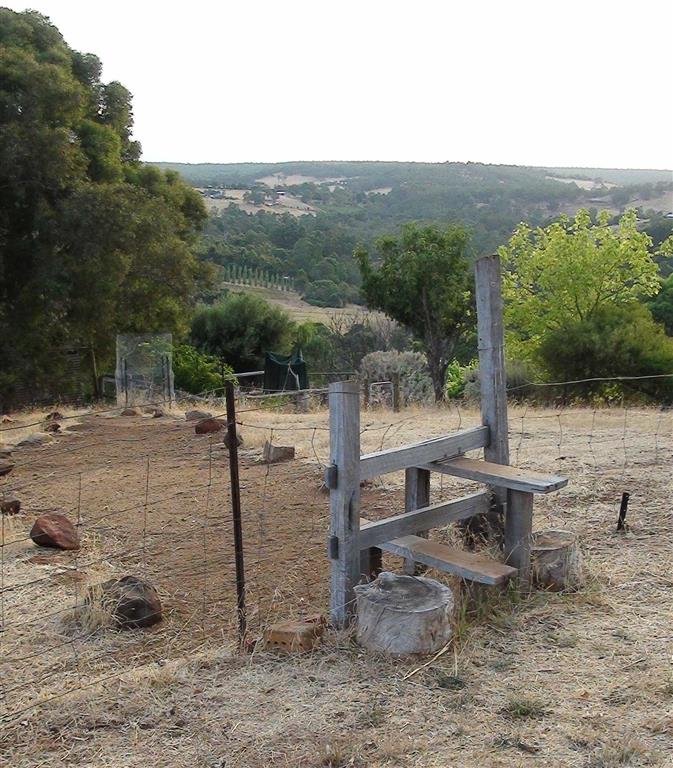
Garden Stile
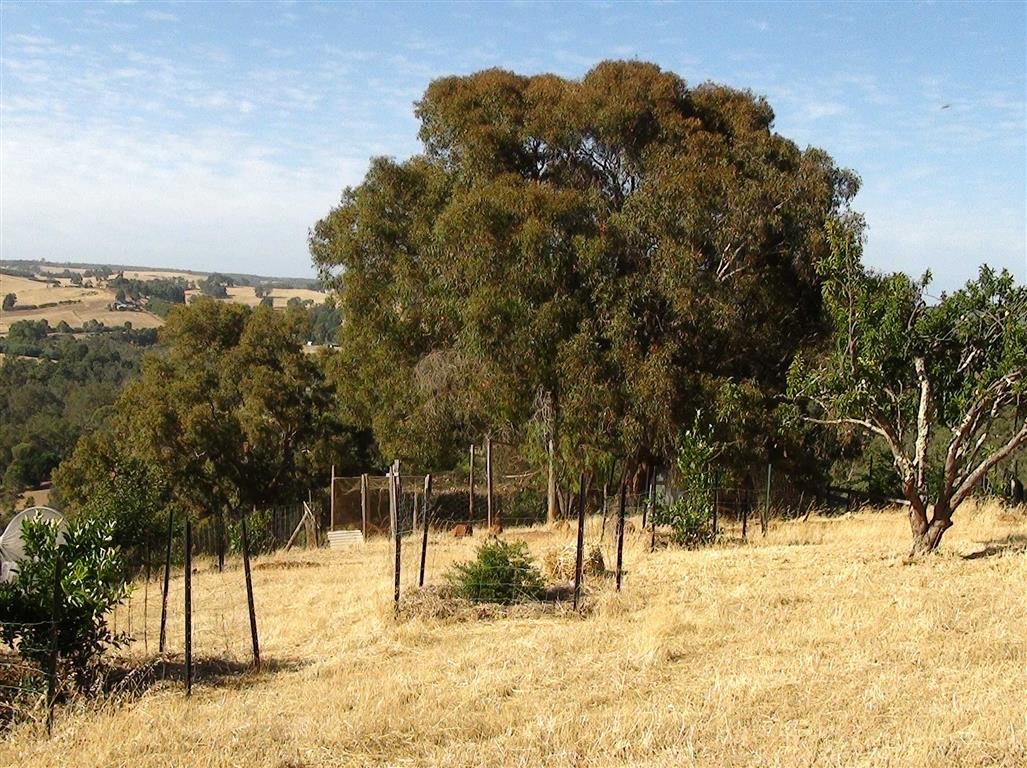
Row 1
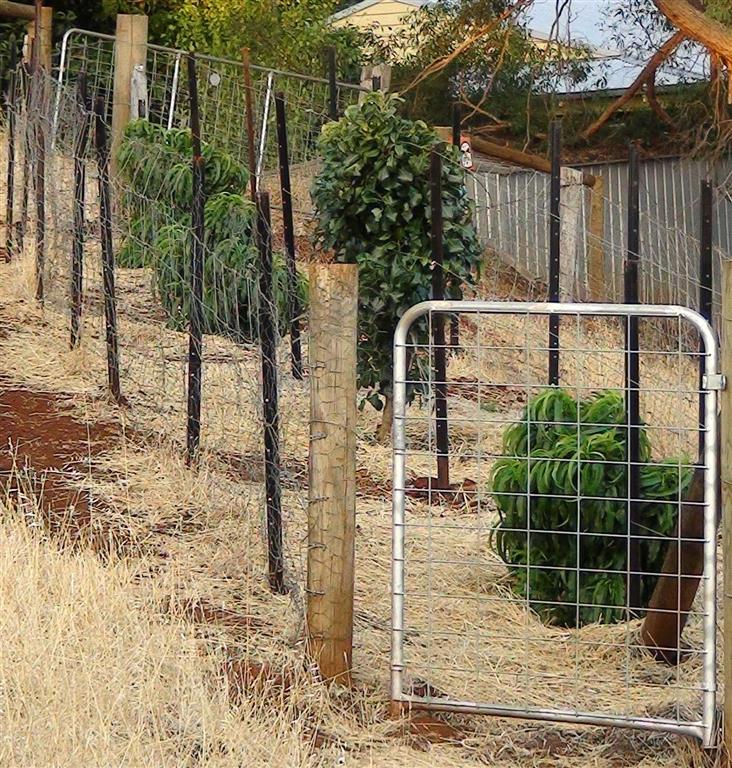
Row 2
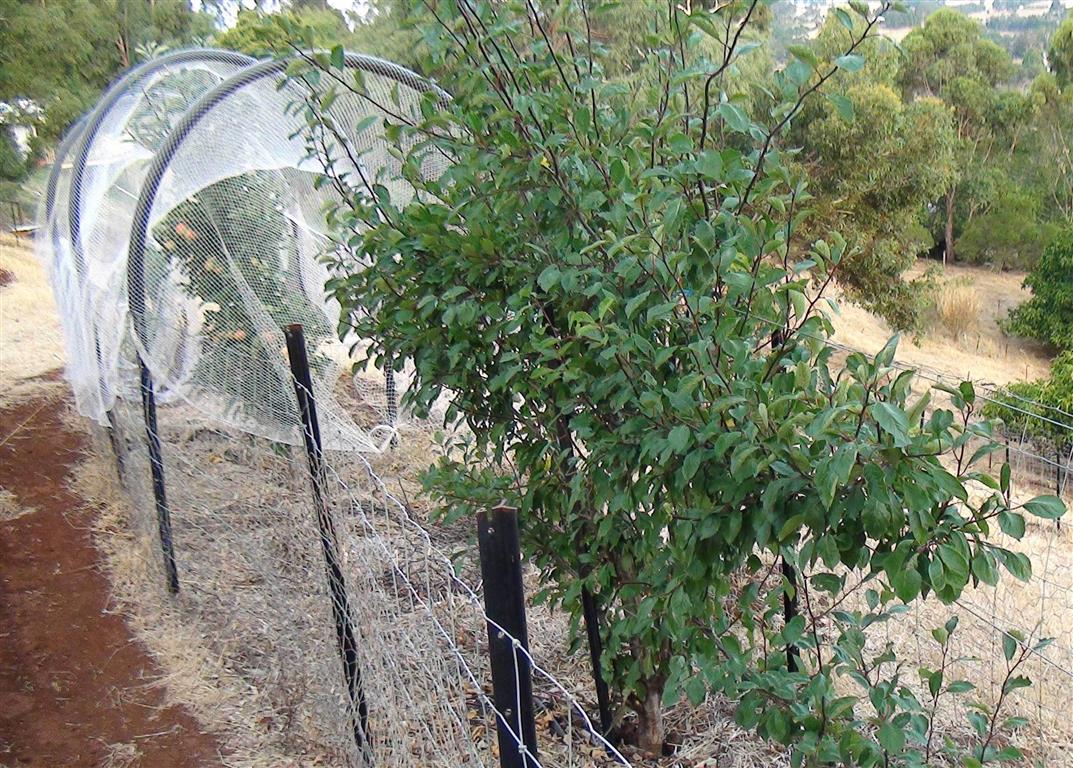
Row 2 apple prune
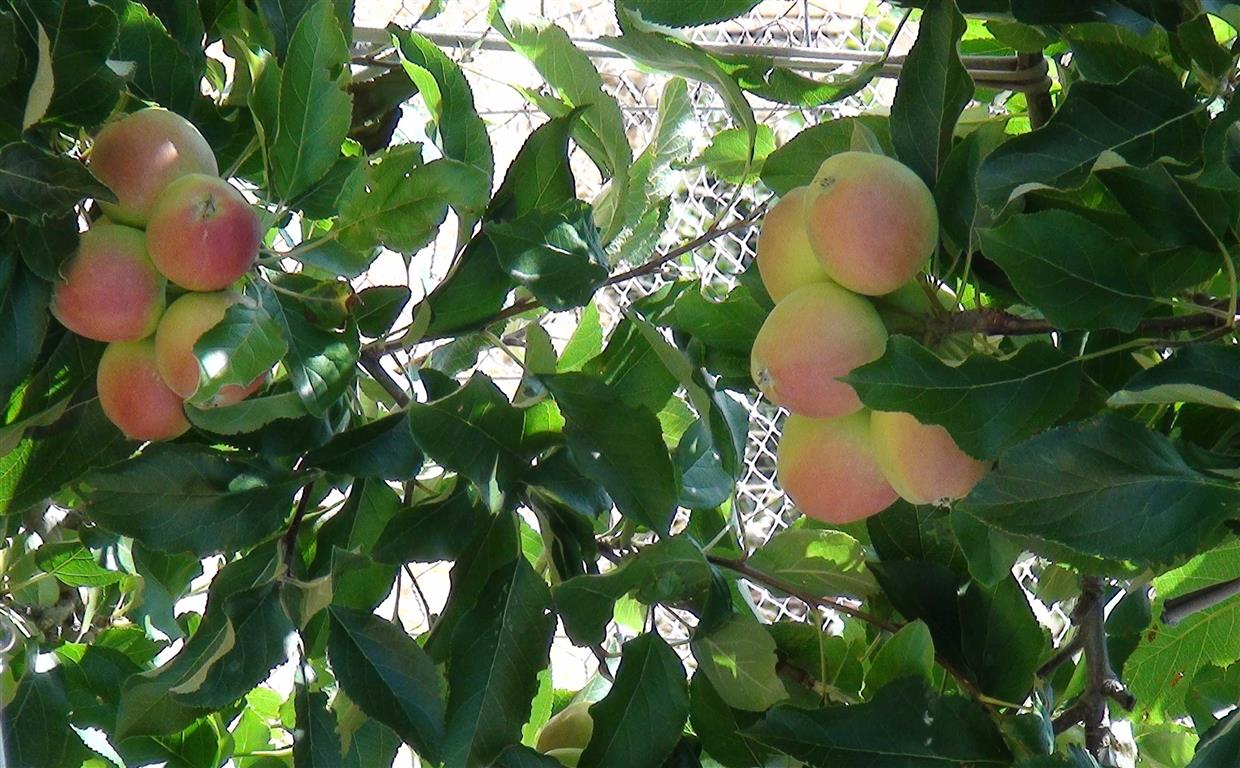
Row 2 apples
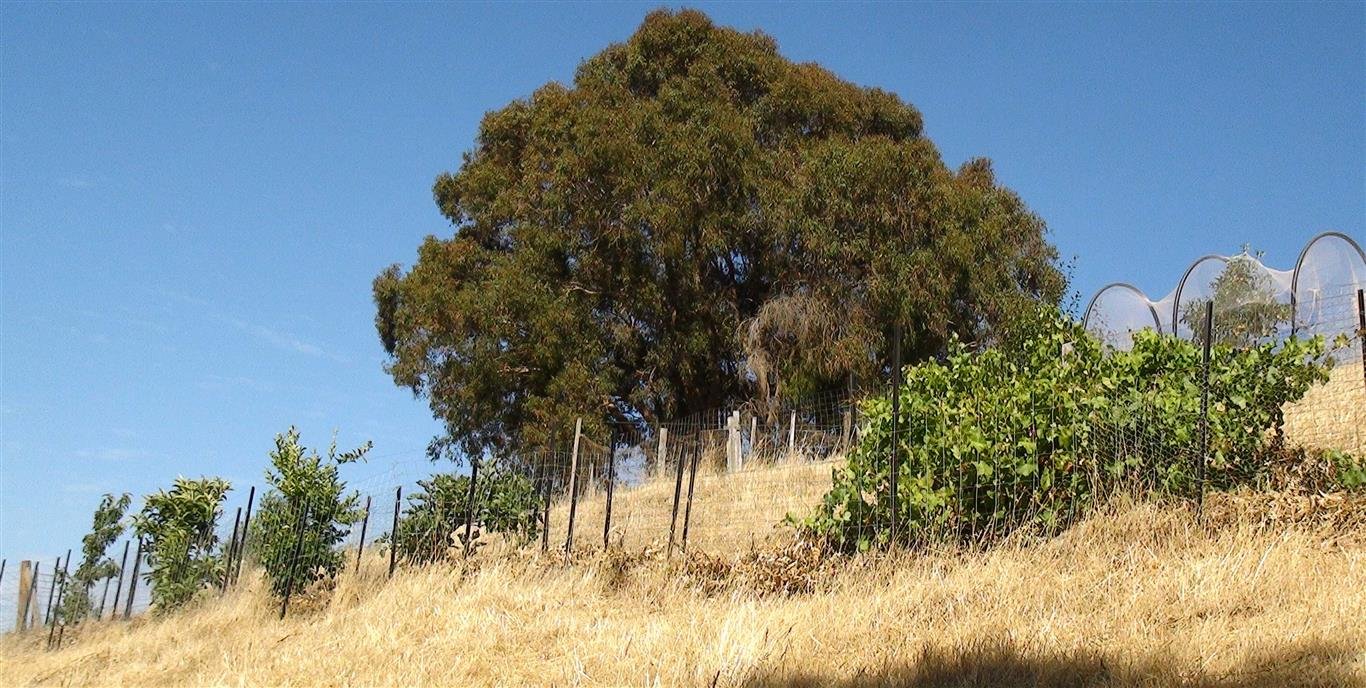
Row 3
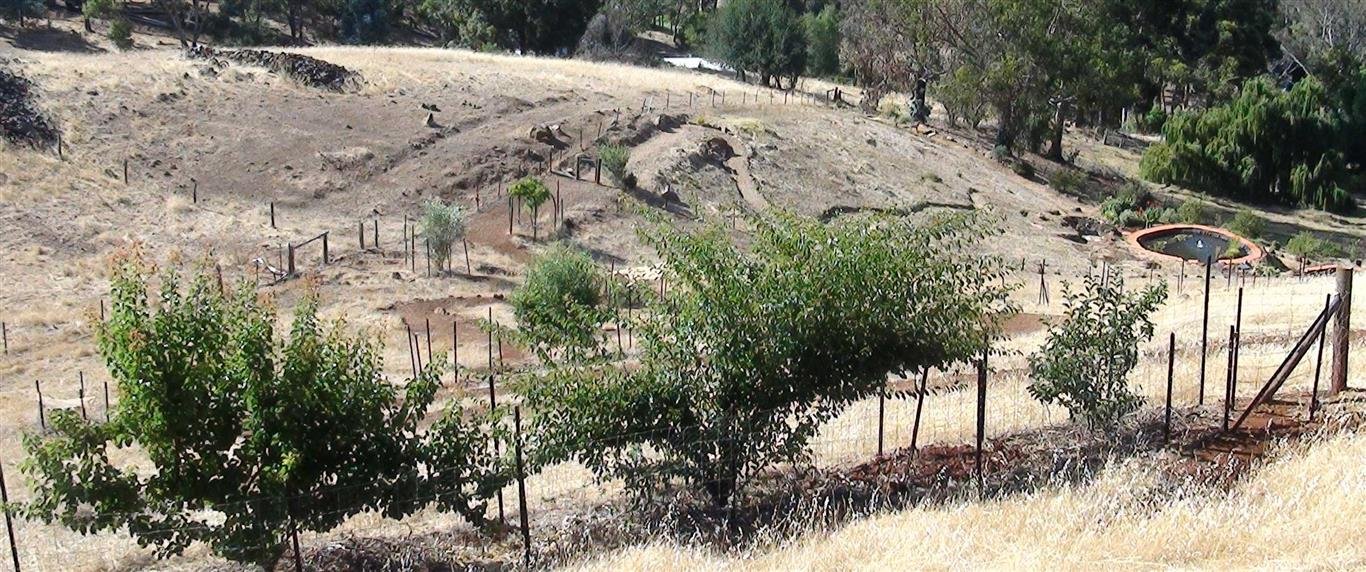
Row 4
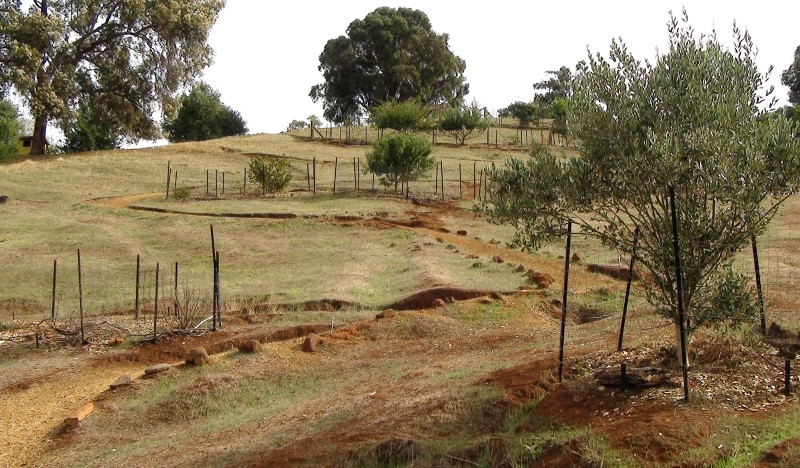
Orchard from below

Top of orchard with mist below

Orchard from bottom garden
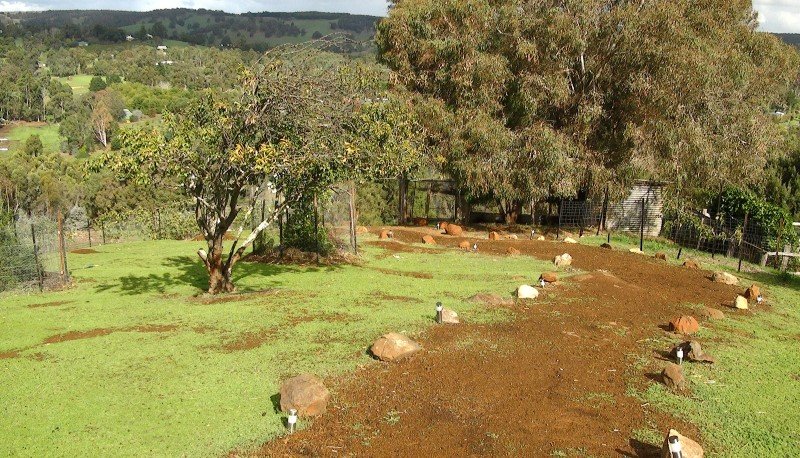
Path at top of orchard
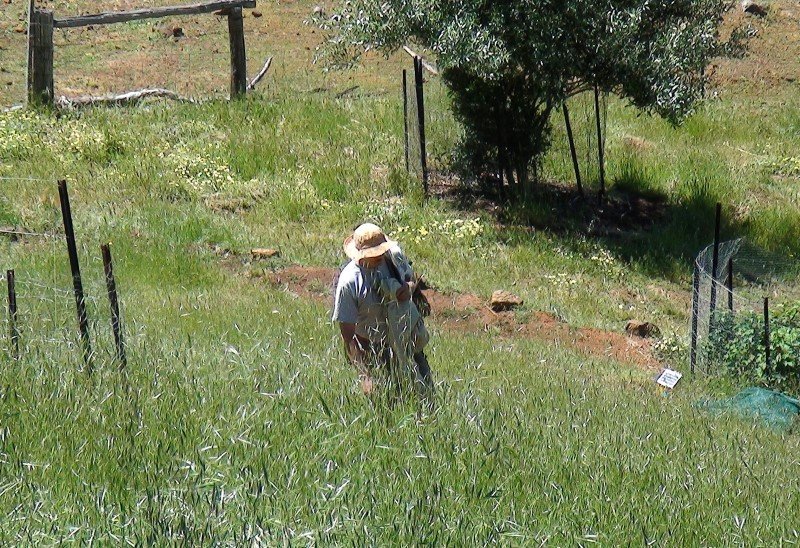
Long grass
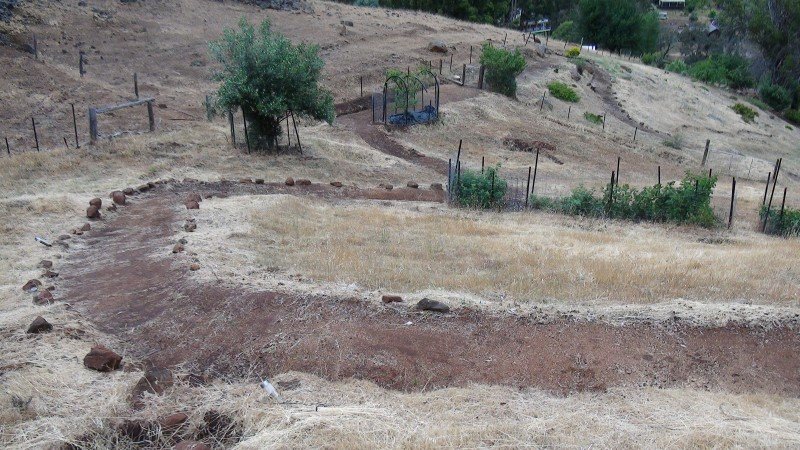
Grass cut and dry 1
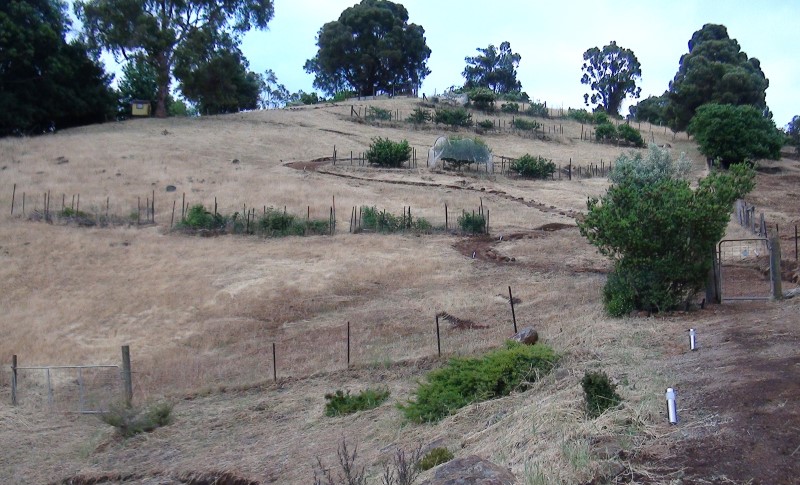
Grass cut and dry 2
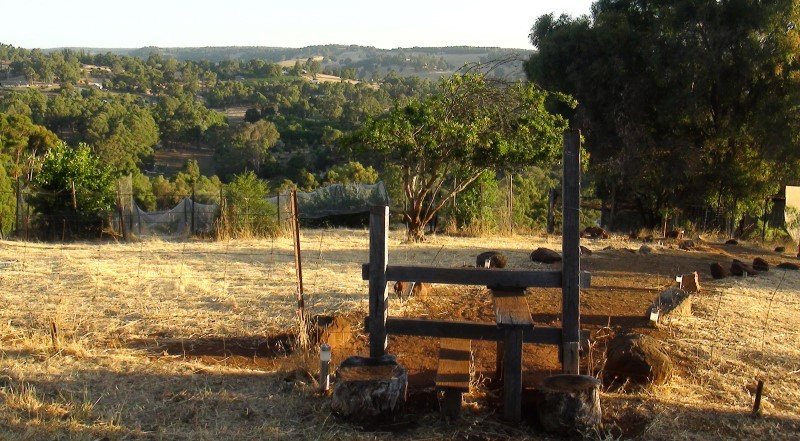
Stile and top of orchard
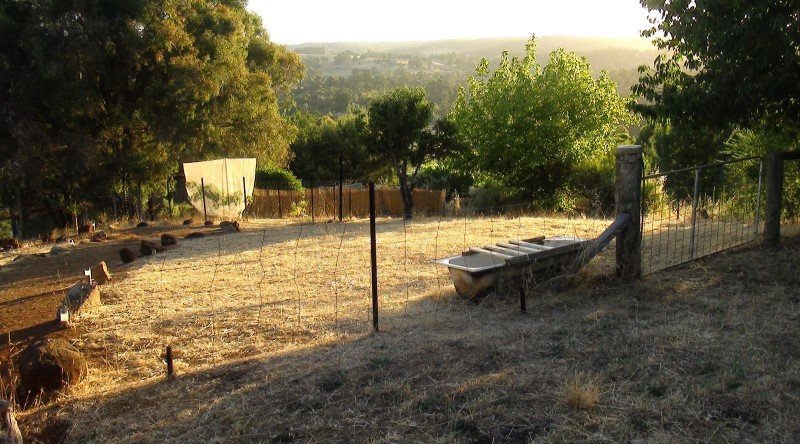
Top of orchard
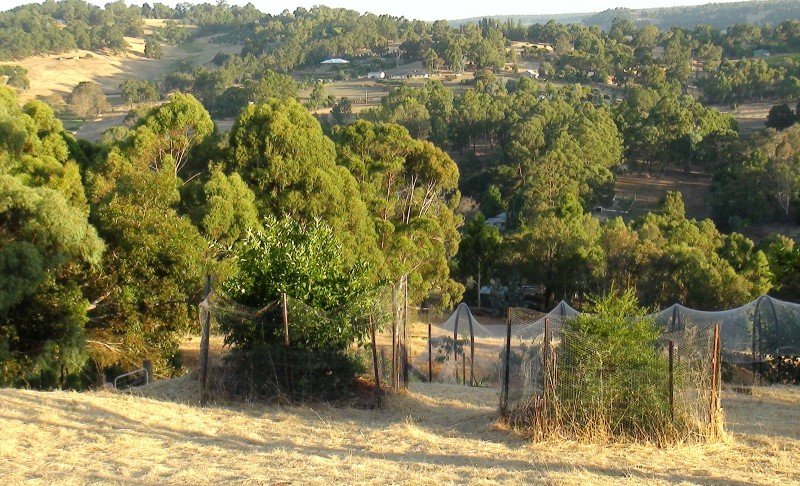
Citrus at top of hill 1
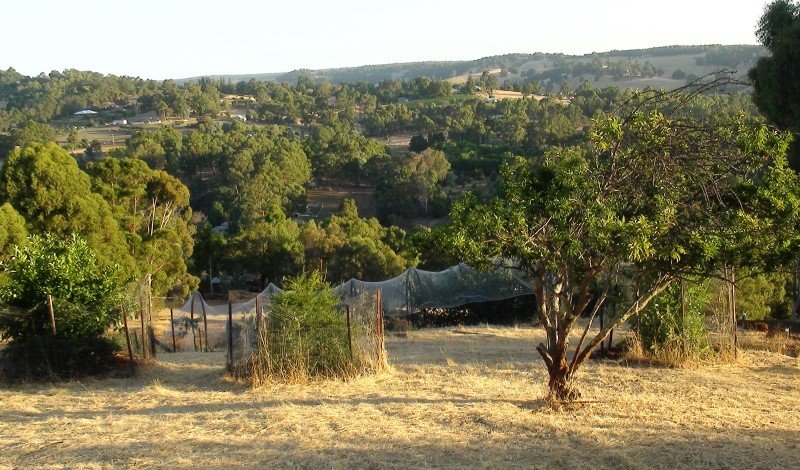
Citrus at top of hill 2
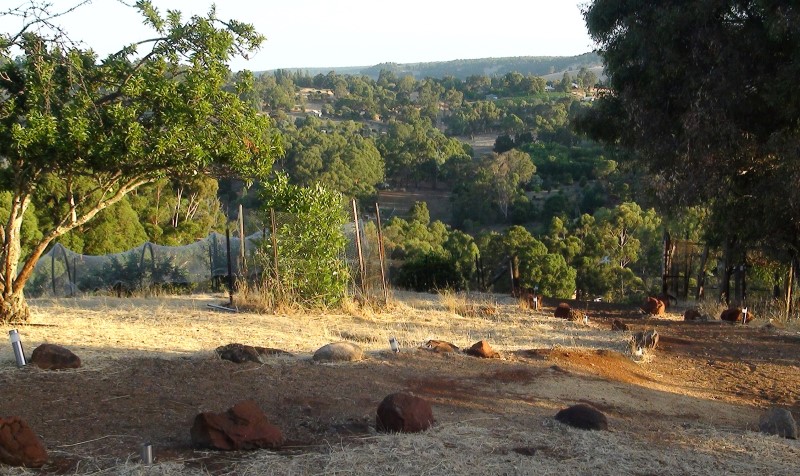
Citrus at top of hill 3
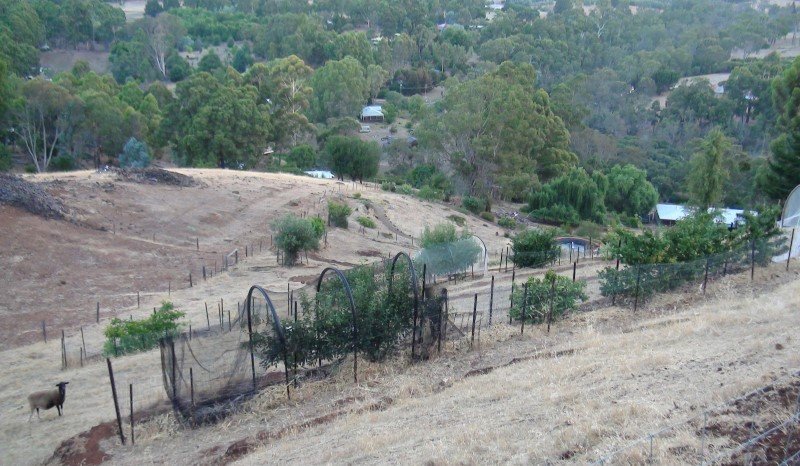
Pear and row 4
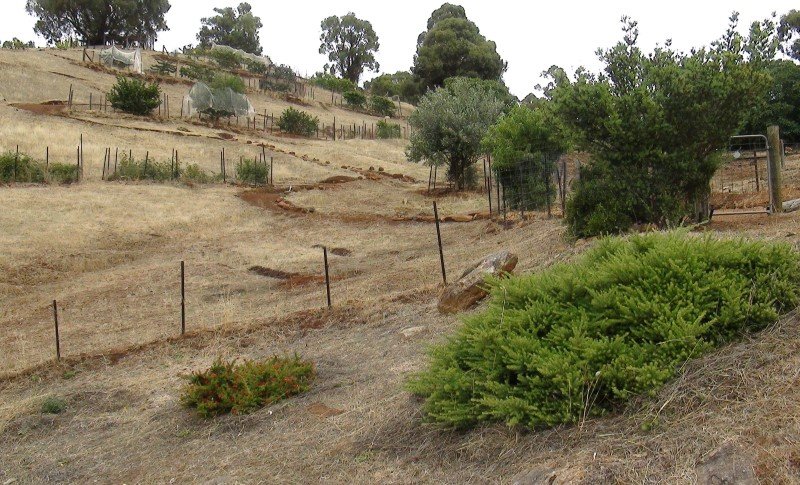
Hillside from bottom garden
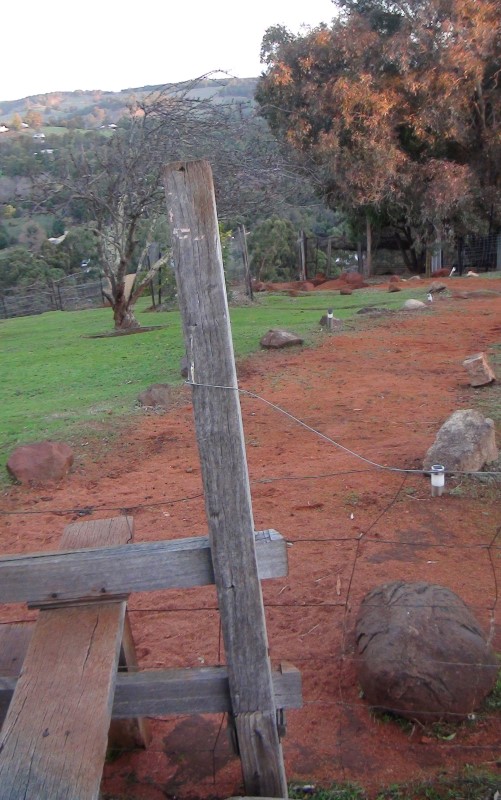
Stile and path
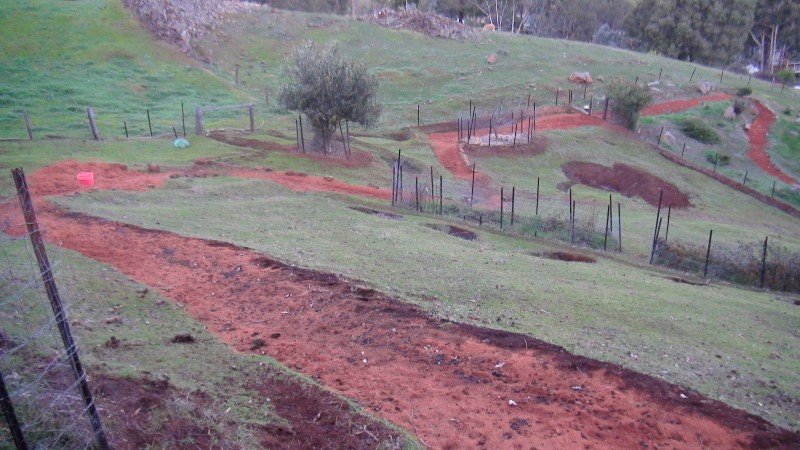
Path down hill
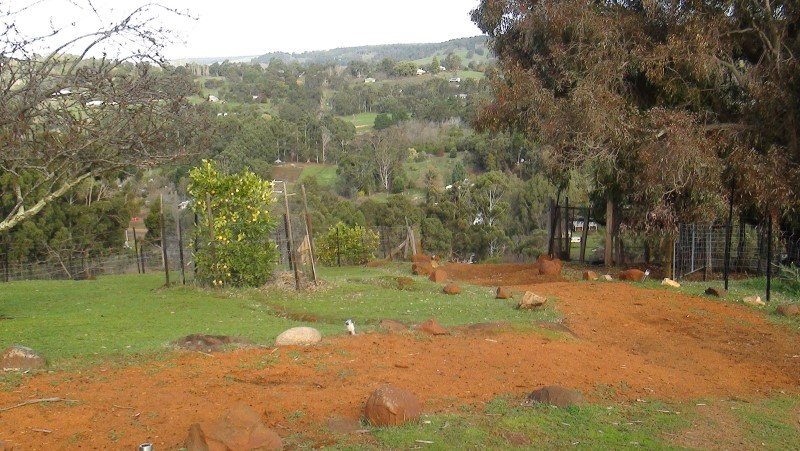
Path at top of hill
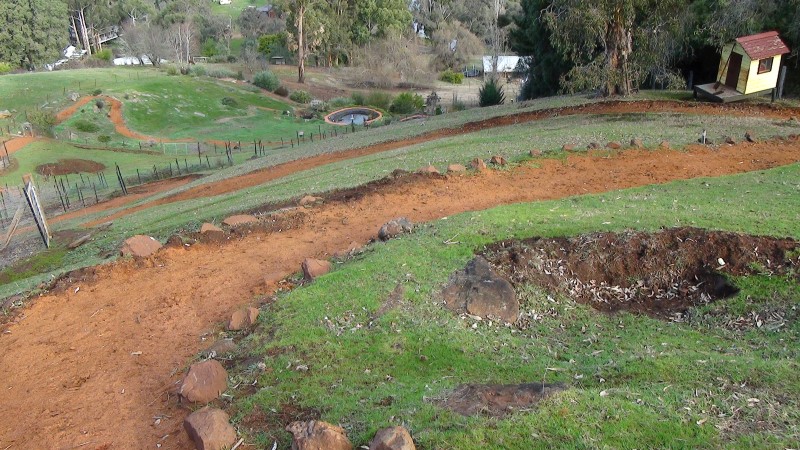
Path and little house
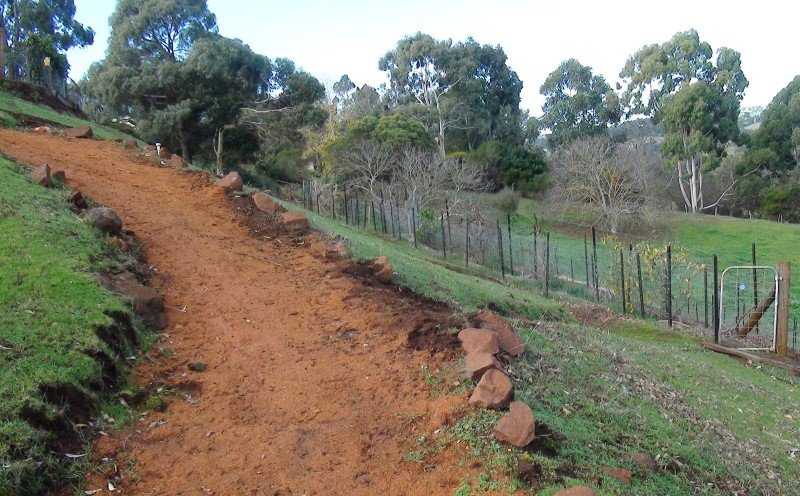
Looking up path
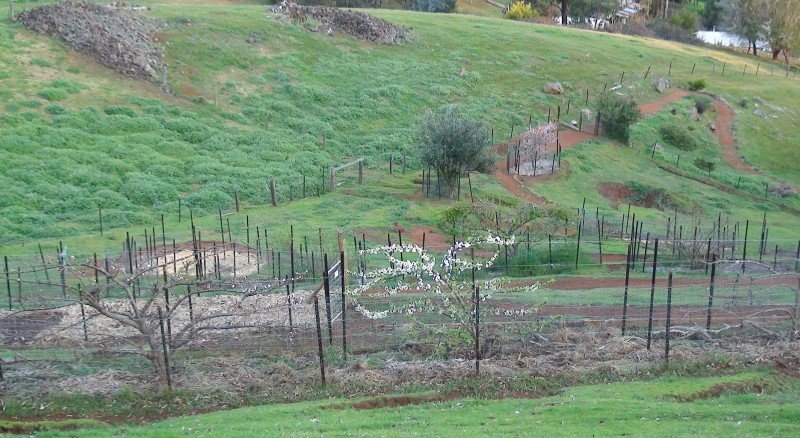
Row 4 from above
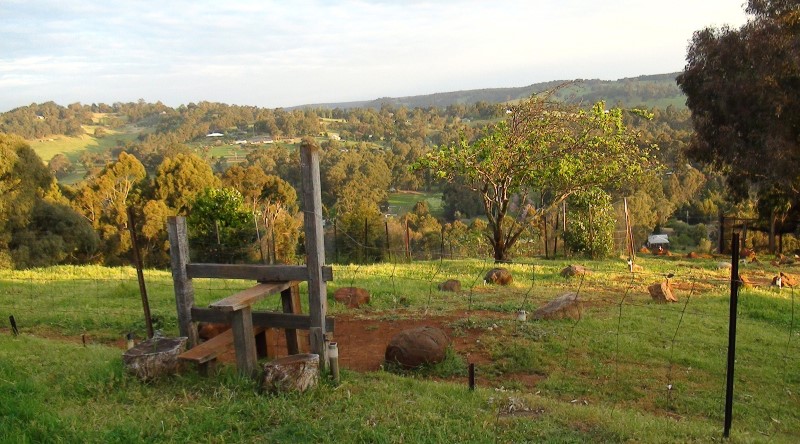
Stile and top of orchard
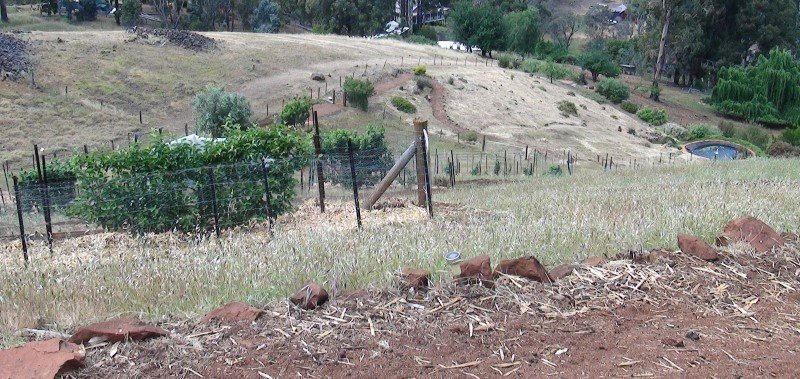
Lower orchard 1
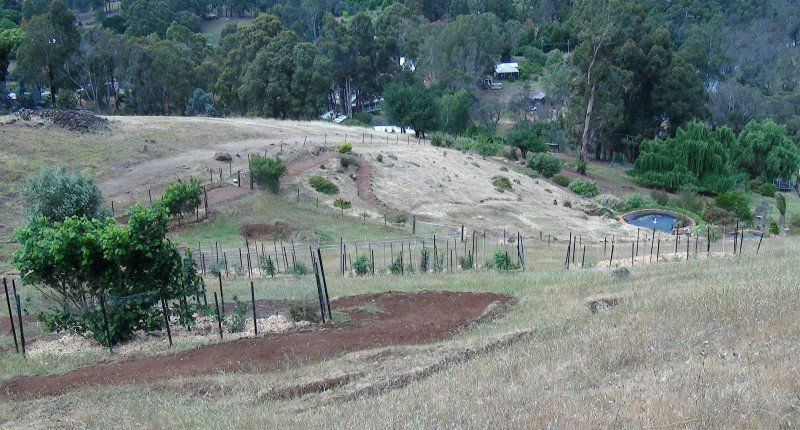
Lower orchard 2
The middle garden is on the steepest part of the hill and contained the orchard, terraces, swales, water channels, a chook pen, a zigzag sawdust path, part of the access road to the bottom garden, and two large trees. It is also the main grazing area for the sheep.
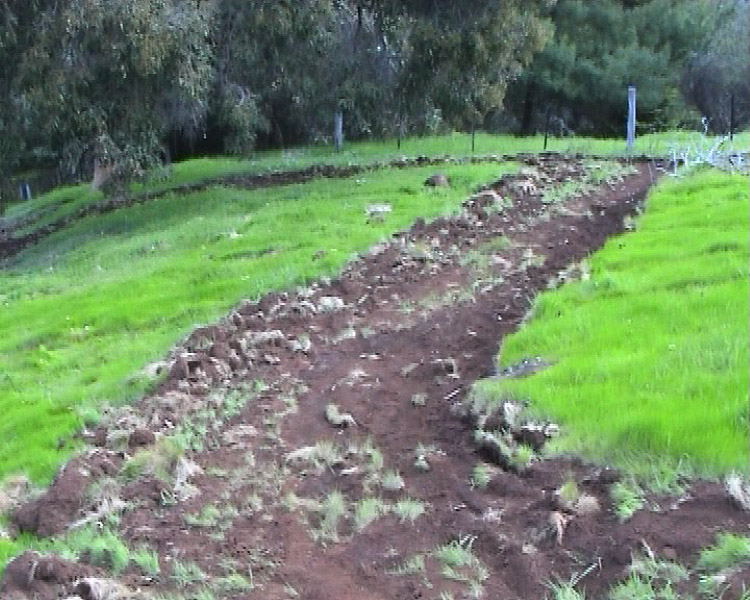
Seven terraces have been cut into the hillside. To prevent erosion the terraces were kept as narrow as possible – just wide enough for an access path and the trees. I designed them so that they drained backwards and into swales. I built channels to take water coming down the hill into swales or horizontally along the hillside. After disturbing the soil with my digging I planted grass seed and encouraged the original grass and dandelions to grow back as quickly as possible. Rocks were incorporated into the terrace wall to increase its structural integrity.A deep trench was dug from the house, under the road down the east side of the middle garden to the bottom of the bottom garden for electric power, irrigation and to supply water for the ponds. The power would be for lighting and the pumping of water up the hill to the top pond and the top of the waterfall.In addition to the electric cable, two rural pipes were placed in the trench. One rural pipe split into smaller pipes that went along the terraces to irrigate the fruit trees through drip lines – two to each tree. The other rural pipe supplied water to the ponds and to the bottom garden. Drip irrigation was selected as the most efficient way of delivering water to the plants. It works by slowly taking a trickle of water to the root zone of plants, drop by drop, reducing evaporation and runoff. As the pressure will vary down a steep slope a series of pressure reduction valves and pressure compensating drippers were used.I planted dwarfing varieties of fruit trees and where dwarfing varieties were not available planted regular fruit trees and kept them low by regular pruning. They would need to be espaliered, pruned in such a way that they grew along the length of the terrace.Espaliering is training trees for easier management especially with regards to picking and netting against birds and other pests. Along the terrace above the fruit trees I cut in a pathway wide enough for a wheel barrow access to the trees.To take advantage of the cold climate I selected deciduous fruit trees which require a long cold spell to set fruit. Dwarf varieties were chosen so that the fruit can be picked easily and nets can be used over the trees to act as a barrier against parrots which are a big problem in Bridgetown.I calculated how far apart to plant my fruit trees – the horizontal tree spacing. The distance was based on the shape and size of the mature tree and its root system after several seasons of growth and pruning. Most of the trees were planted about 6 metres apart. I calculated how far apart to place my terraces – the vertical tree spacing? I did this by working out the angle of the hill and the angle of the sun at different times of the year and depending on these I calculated out how much light would be getting to the tree. As the hill is south facing a shadow cast over a fruit tree by the hill or other nearby trees would obviously affect growth and productivity.The steepness of the hill varied throughout the property with the greatest incline at the top of the hill and the least incline towards the bottom. This was taken into consideration when the tree spacing was determined. (See diagram) At the less steep area at the bottom of the garden I decided to build the waterfall and ponds. I reasoned that they would function well here but be more stable than on a very steep hillside. In addition I saw the boundary fence at the end of the garden would be a good place for a row of trees that, when mature would act as a sun trap creating a micro climate for the area around the ponds. The ponds would also help by reflecting sun light into the trees which would bounce back into the area.

Small House 1
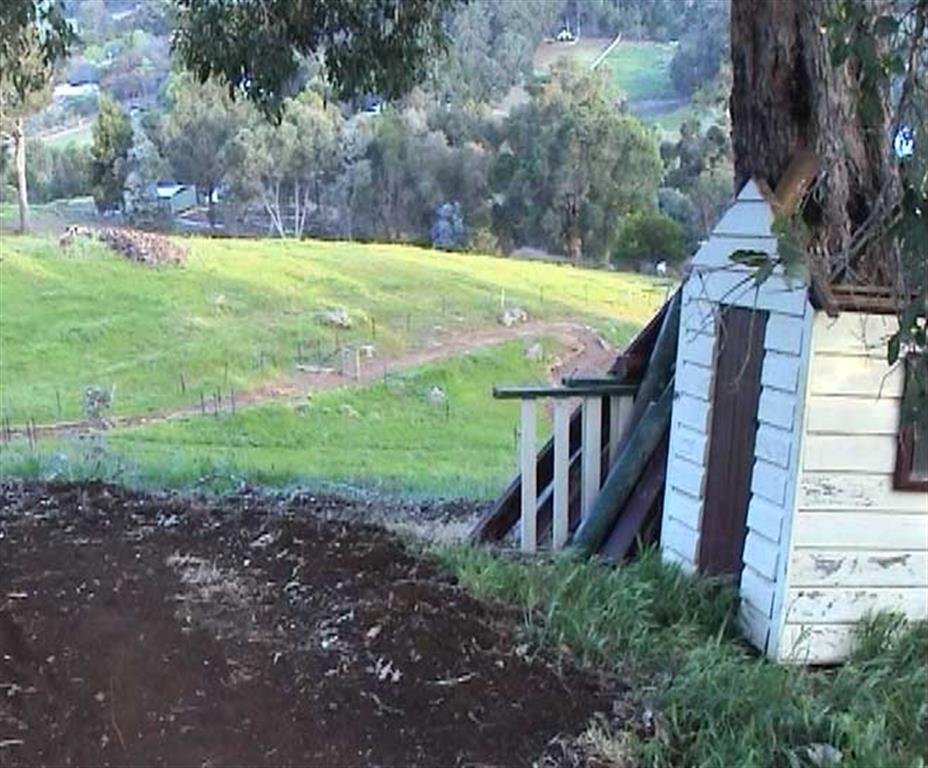
Small House 2
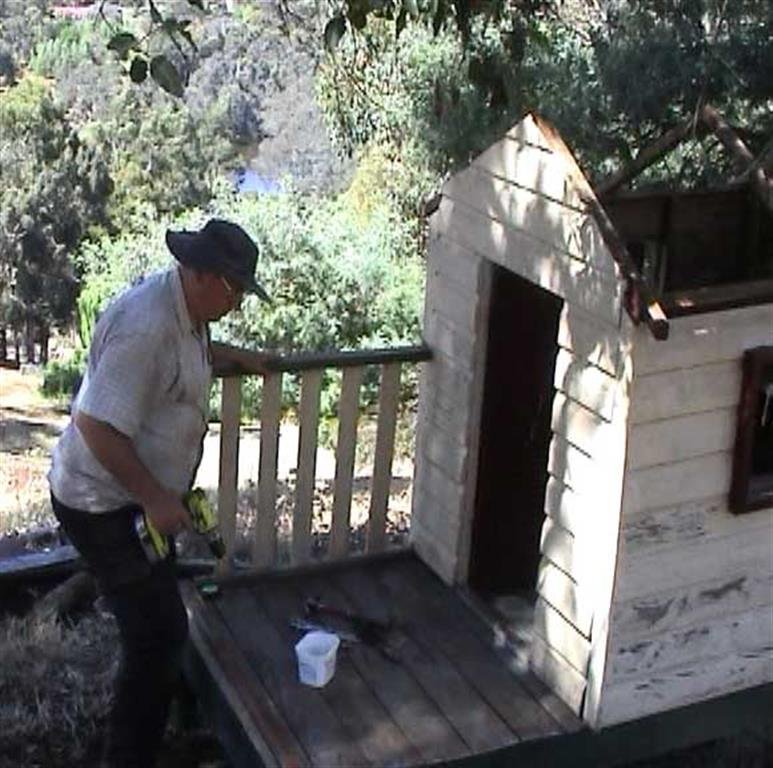
Small House 3
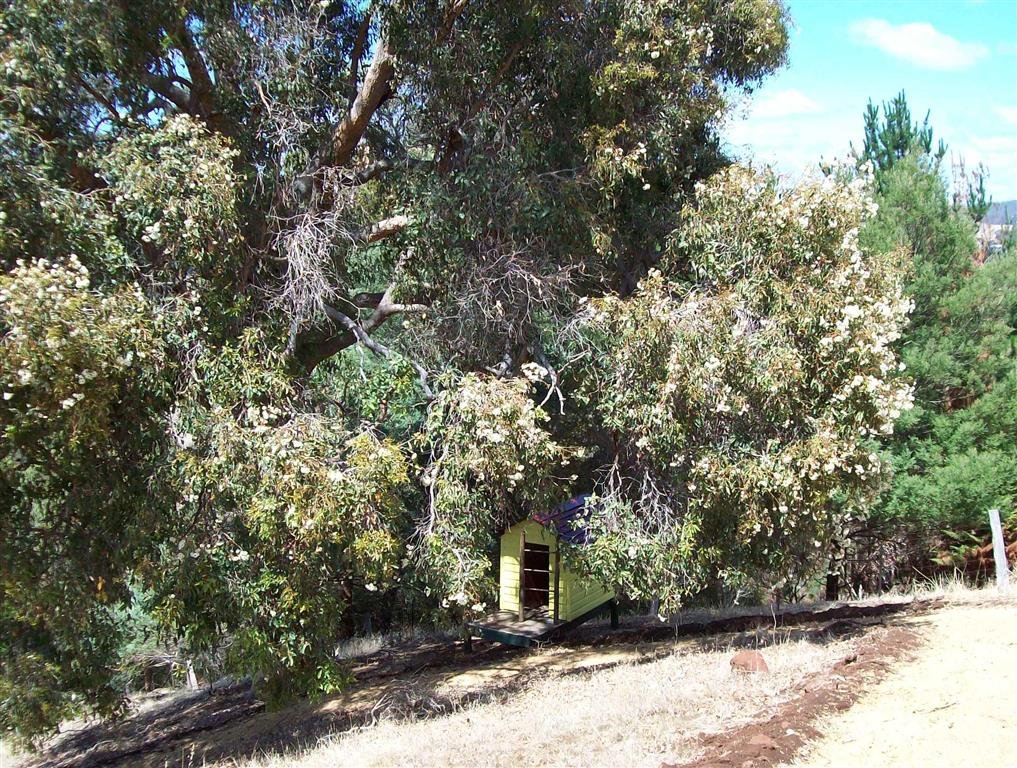
Small House 4
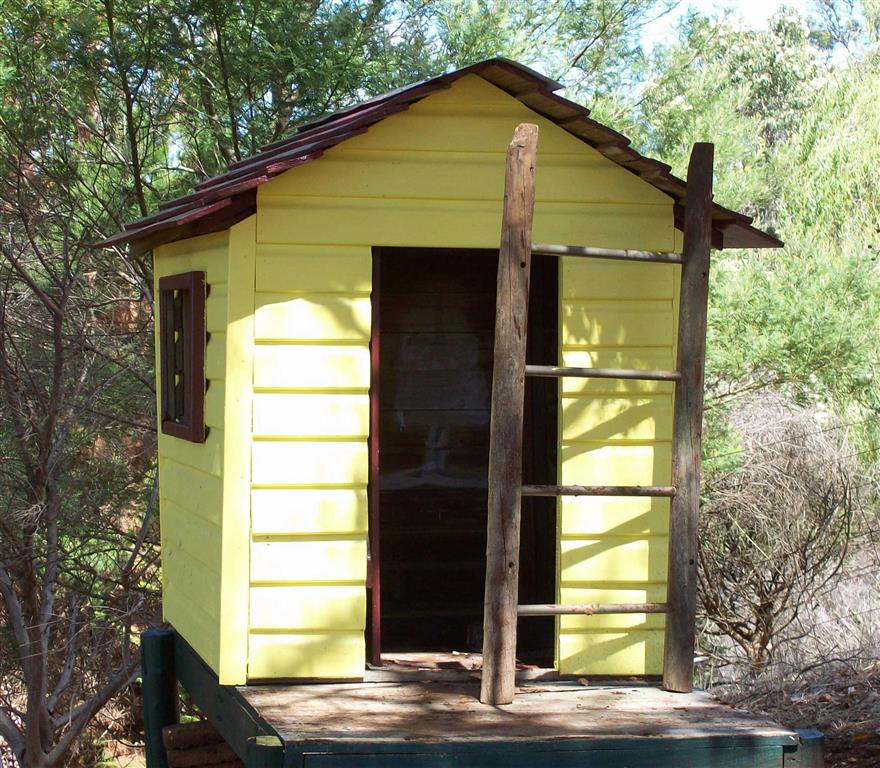
Small House 5
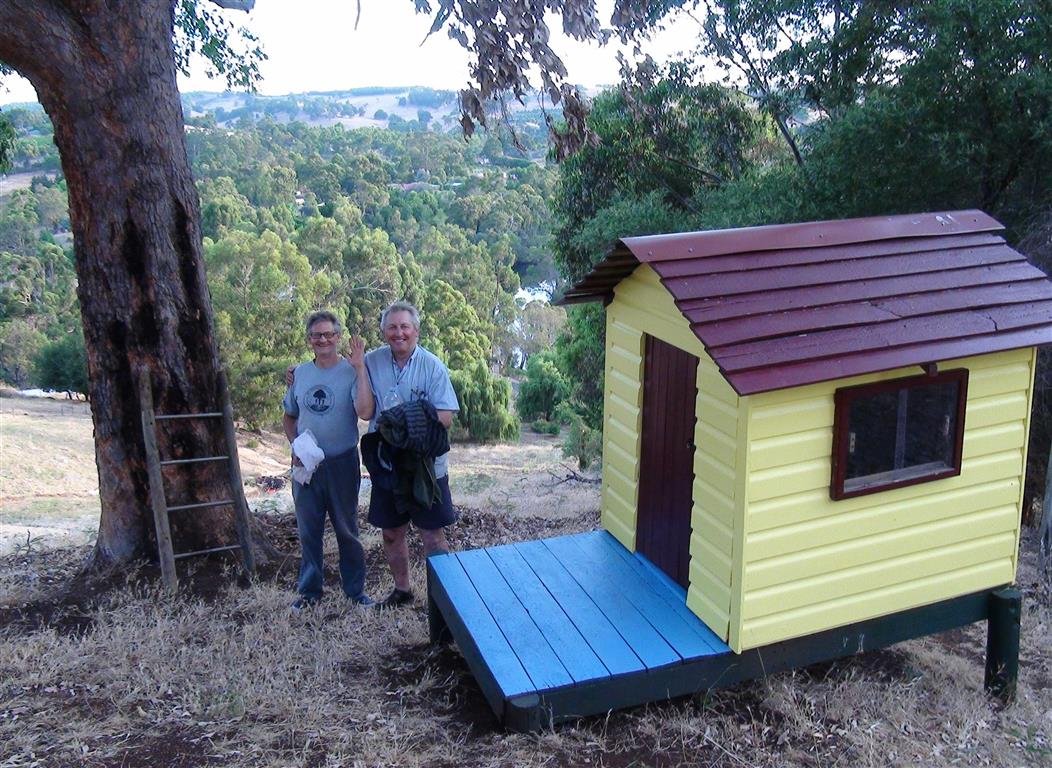
Small House 6
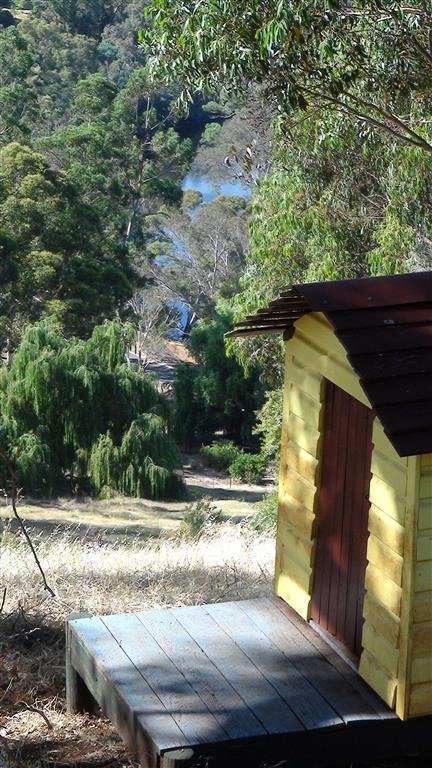
Small House 7
Title
Title
Title
Title
Title
Title
Title
Title
Title
Title
Title
Title
Title
Title
Title
Title
Title
Title
Title
Title
Title
Title
Title
Title
Title
Title
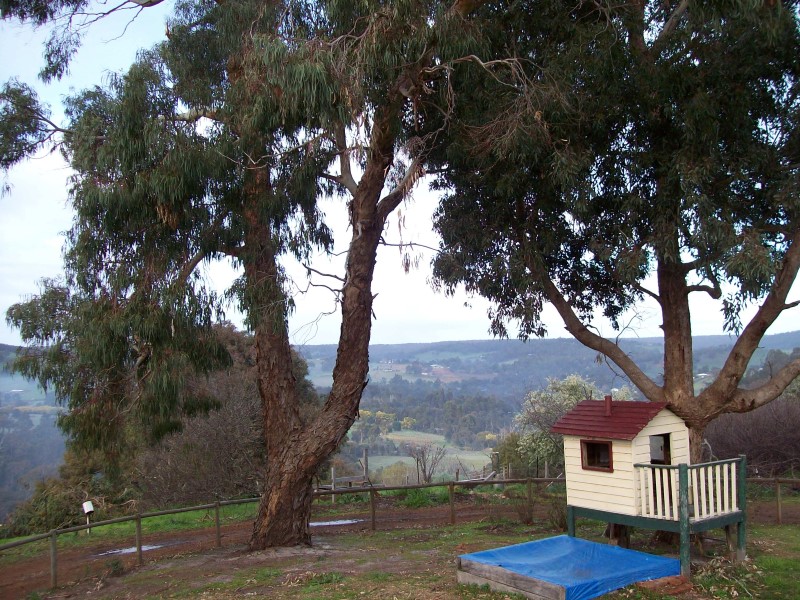
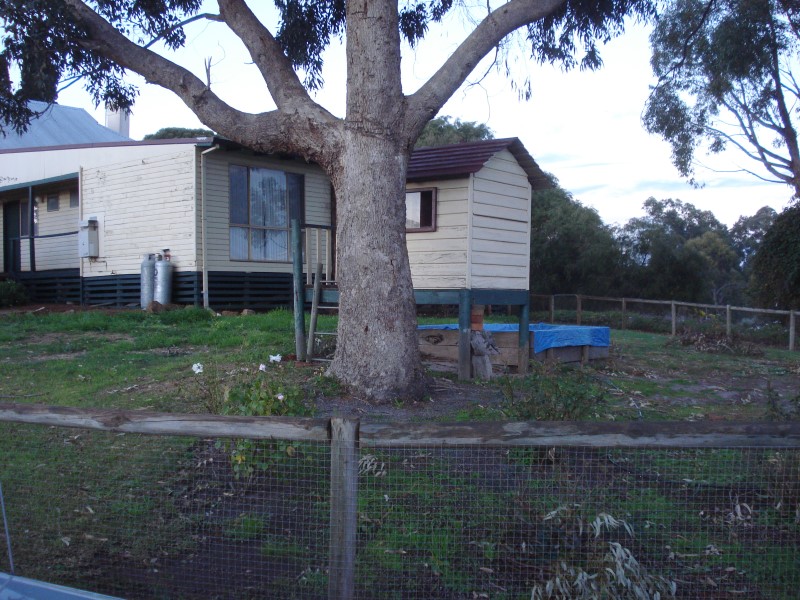
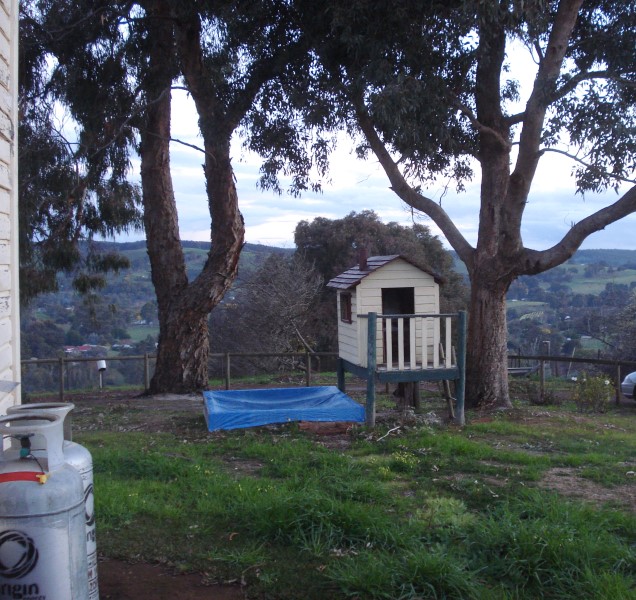
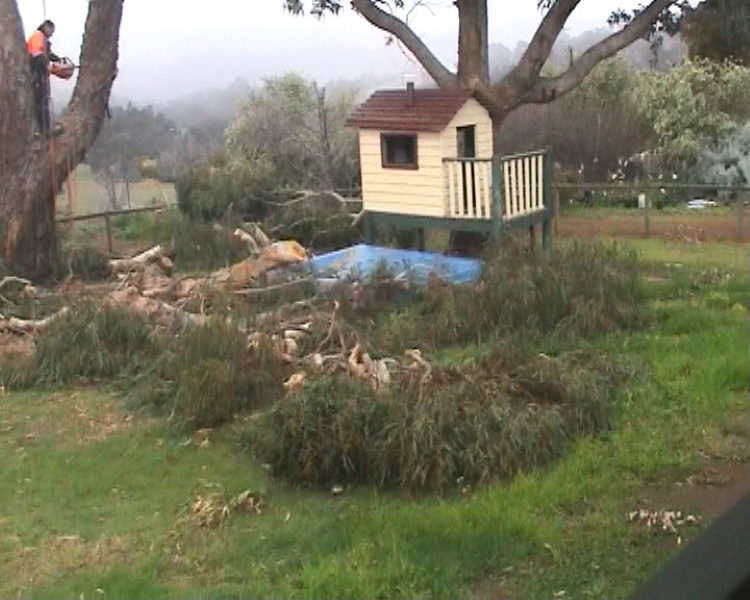
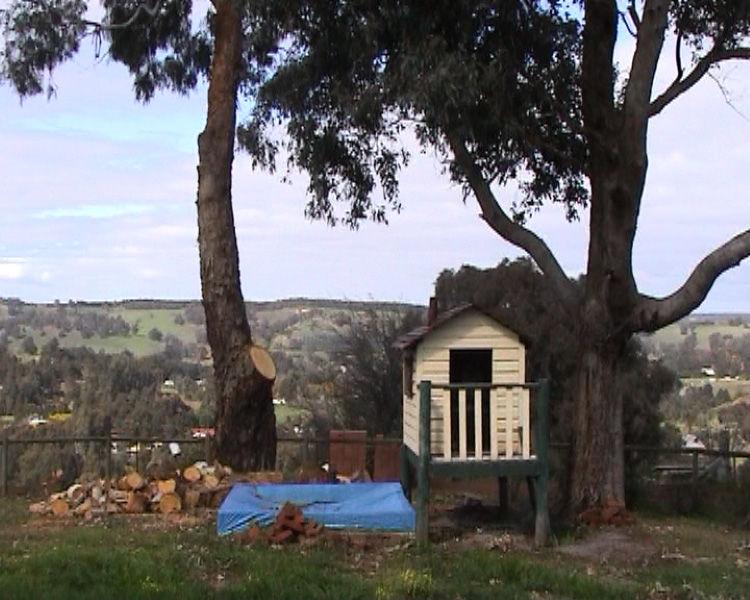
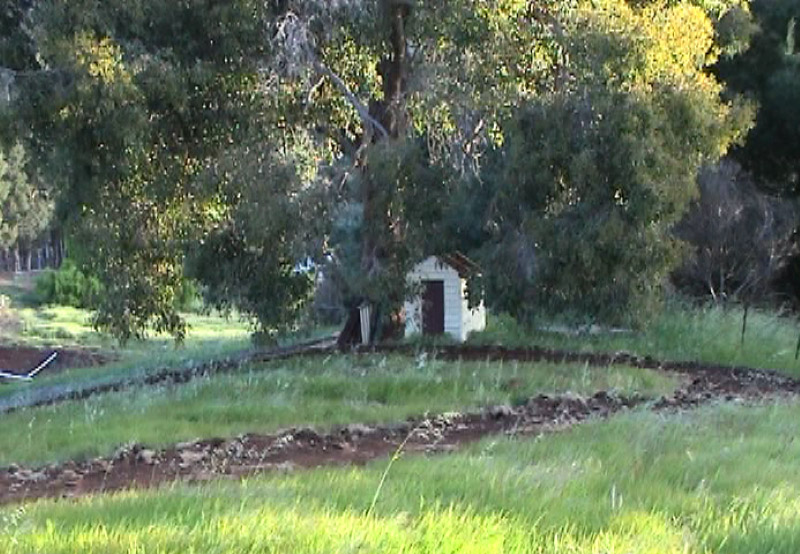
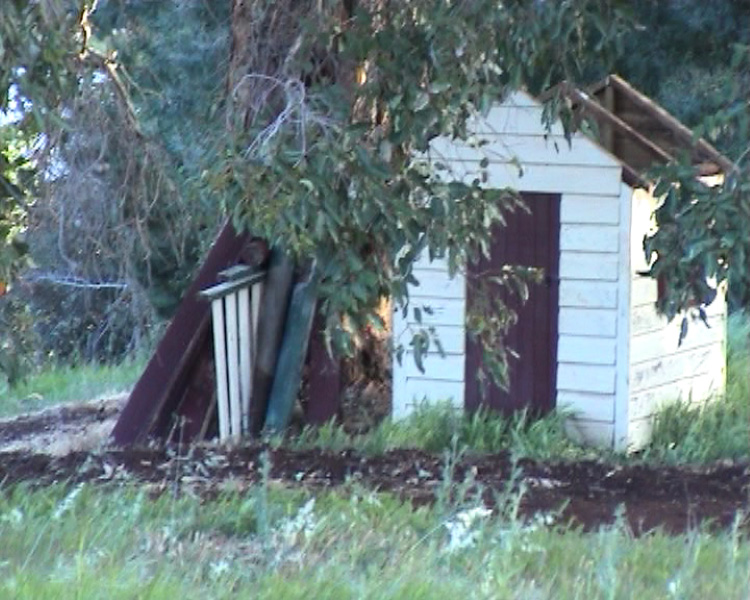
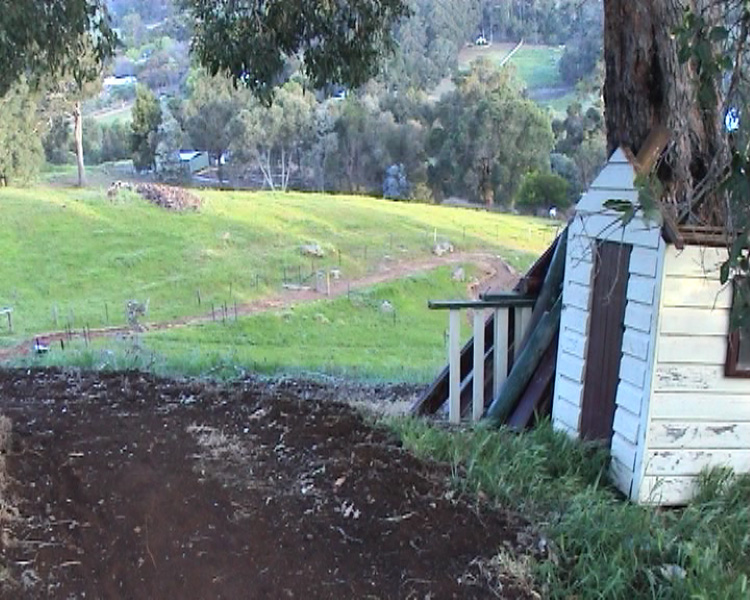
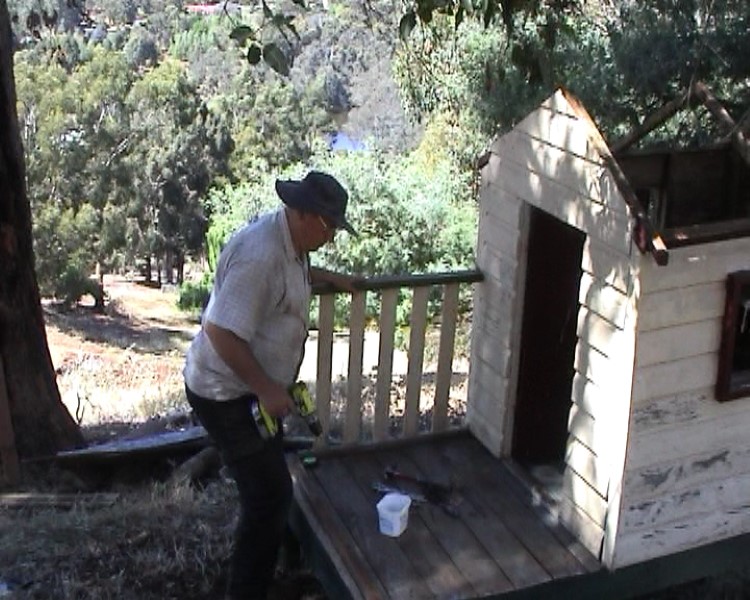
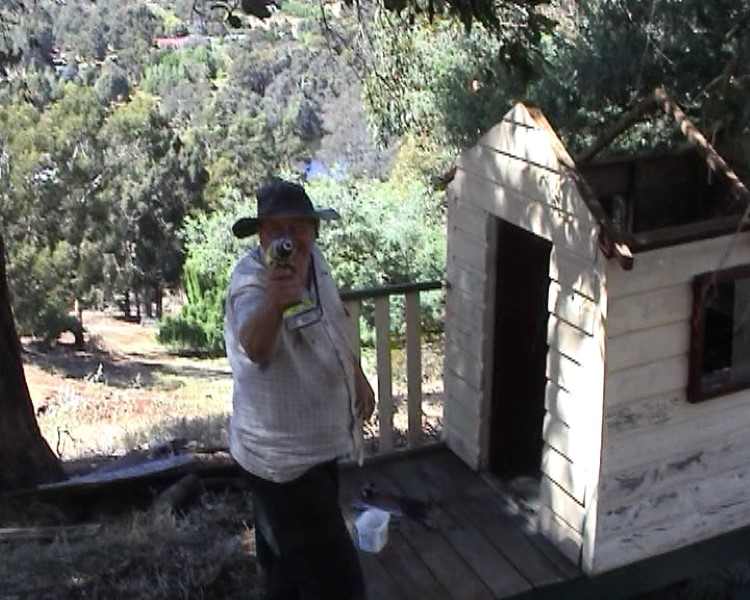
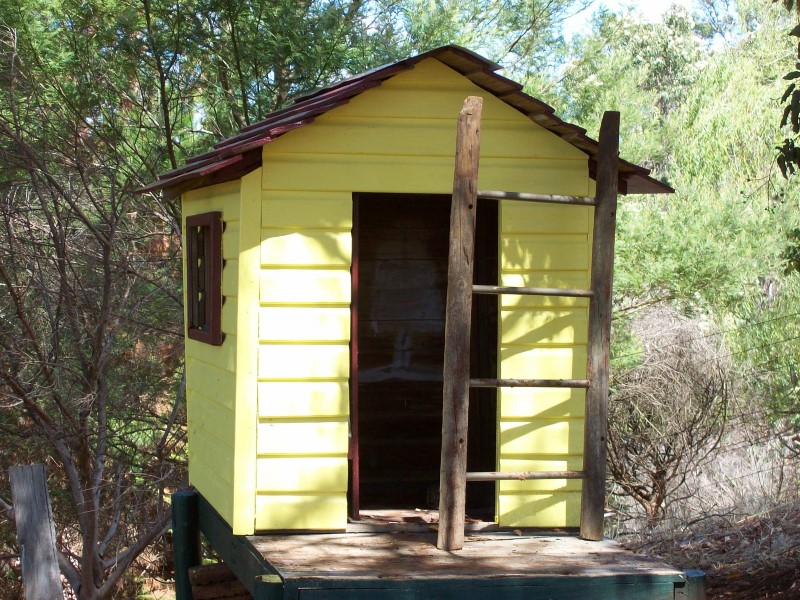
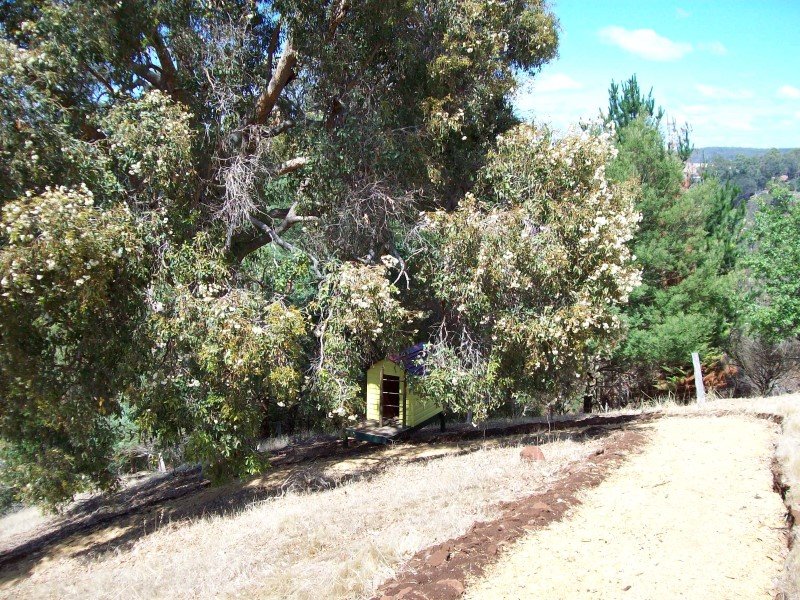
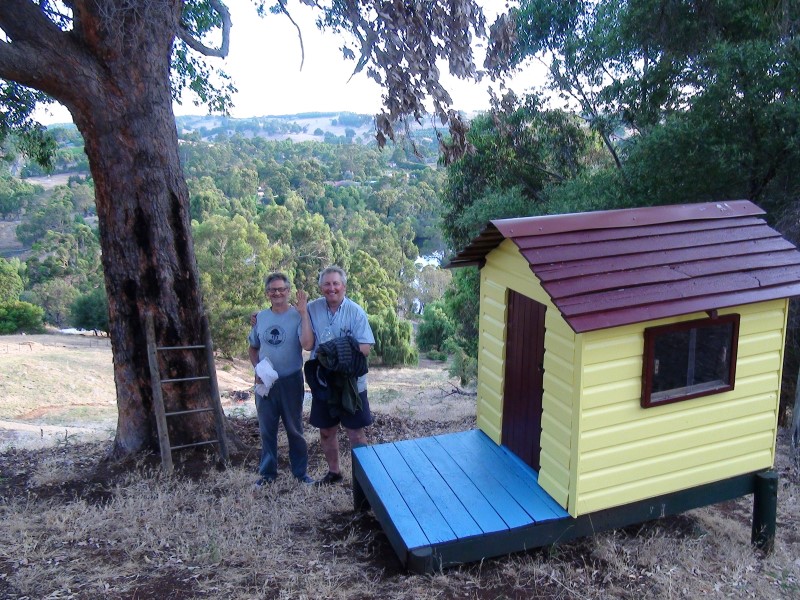
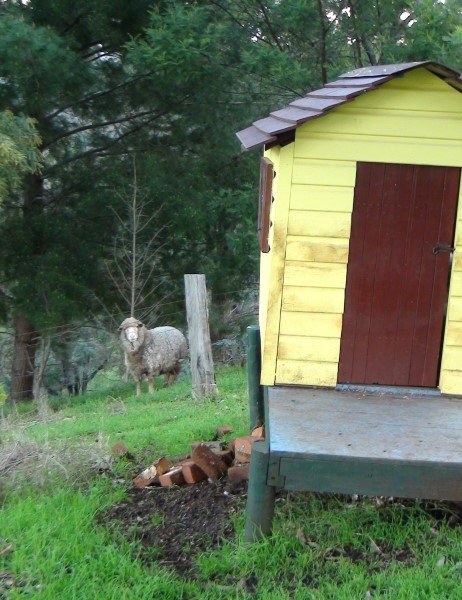
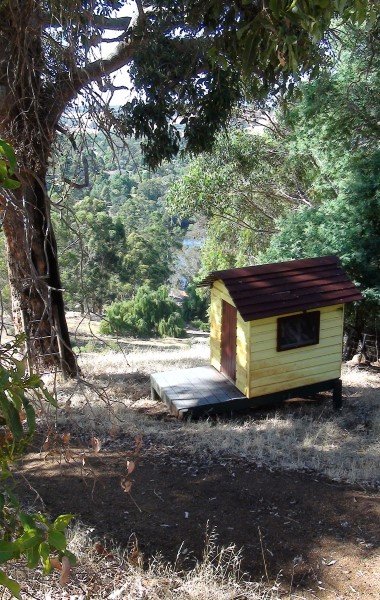
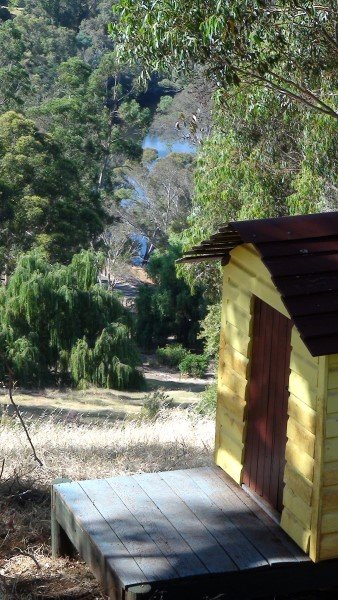
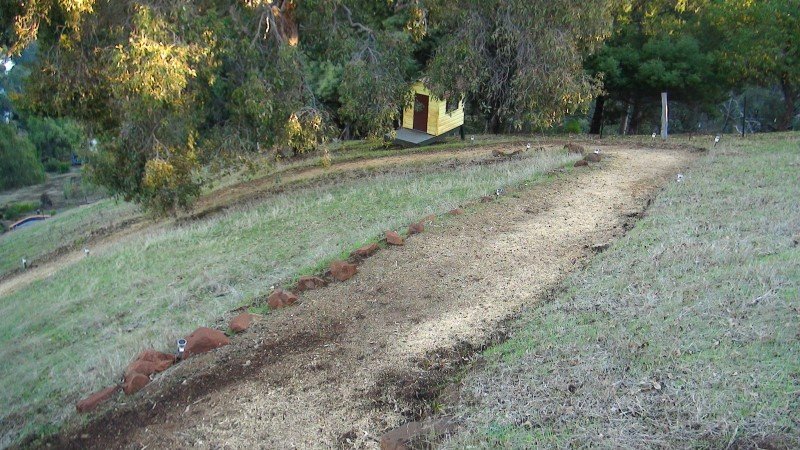
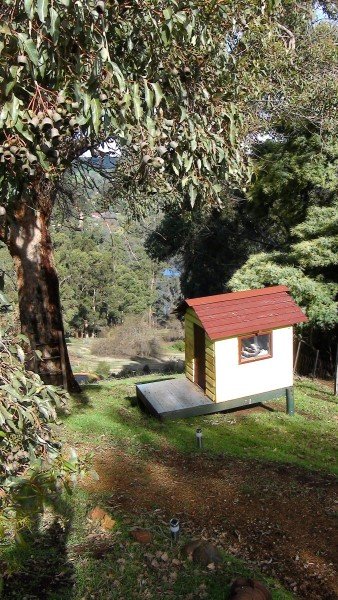
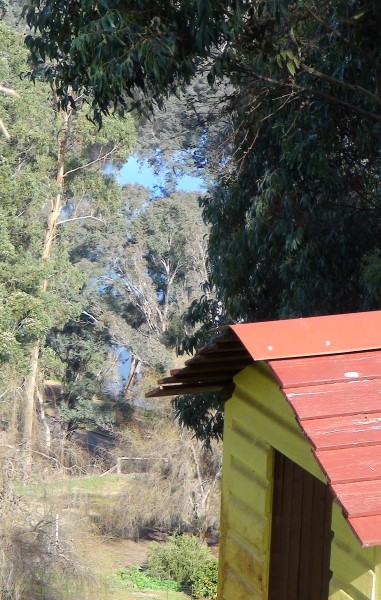
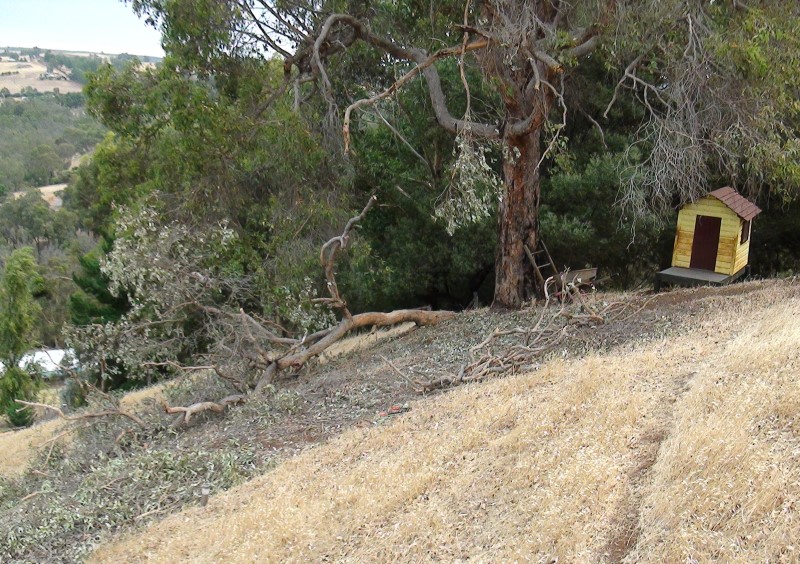
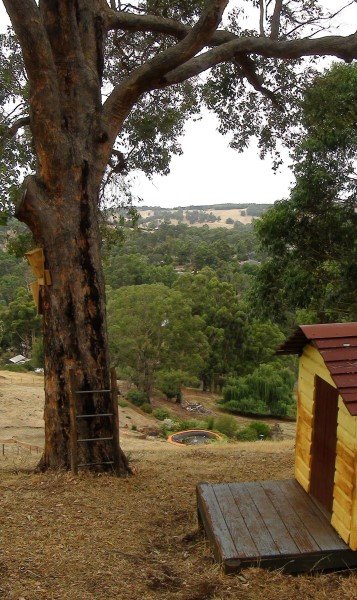
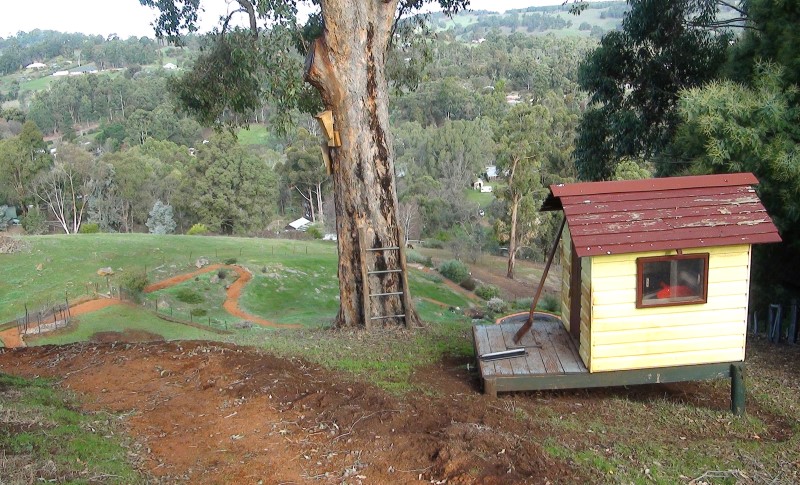
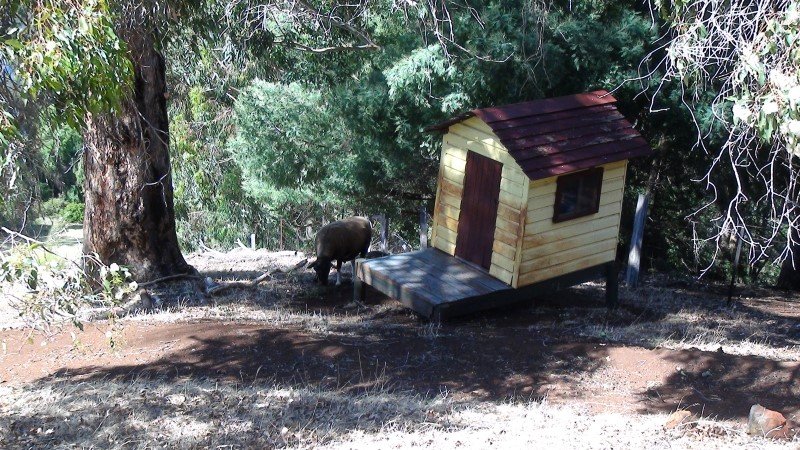
When I moved into the house a small house was positioned next to a sand pit in the middle of a lawn on the top garden. It had obviously been a child’s cubby house and part of a play area for the previous tenants. It was just big enough for one or two people if they remained seated. I thought it could be useful.So I partly dismantled it and with the help of a small group of friends moved it to a new location half way down the hill under a tree in the middle garden. Over a few weeks I reassembled it, installed a table and bench and new clear plastic windows. Then I repaired the roof and painted it. I converted into a very small office overlooking the river.
Row 1
- Plant 1 Apple (Golden Delicious)
- Plant 2 Apple (Golden Delicious)
- Plant 3 Medlar (Dutch)
- Plant 4 Dwarf Lemon
- Plant 5 Dwarf Nectarine (2 grafted varieties)
- Plant 6 Lime (Sublime Dwarf Patio)
- Plant 7 Orange (Blood Maltese)
- Plant 8 Plum (Grafted onto sucker)
- Plant 9 Lime (Red Centred)
- Plant 10 Tangelo (Seminole)
- Plant 11 Lemonade
- Plant 12 Plum (Mature Plum)
- Plant 13 Cherry (Mature Cherry)
- Plant 14 Fig (Black Genoan)
- Plant 15 Passionfruit
- Plant 16 Rhubarb, Goji Berry and Gooseberry
Old plum & path
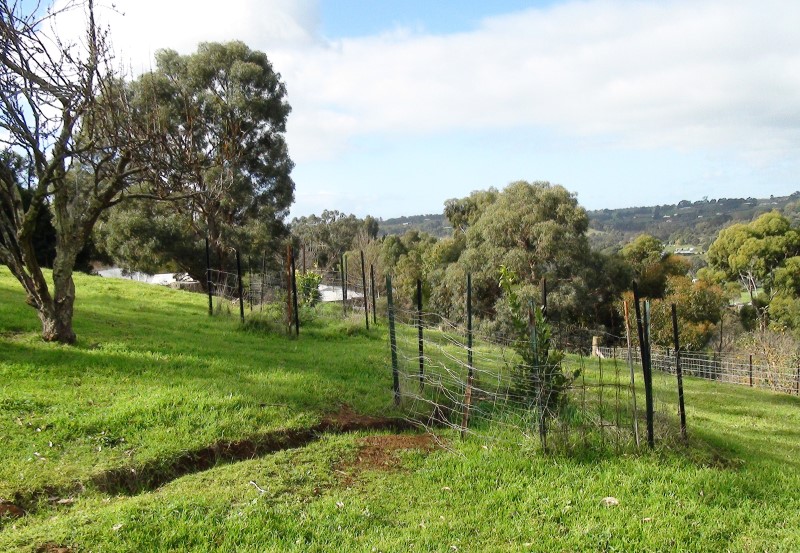
Plum & citrus
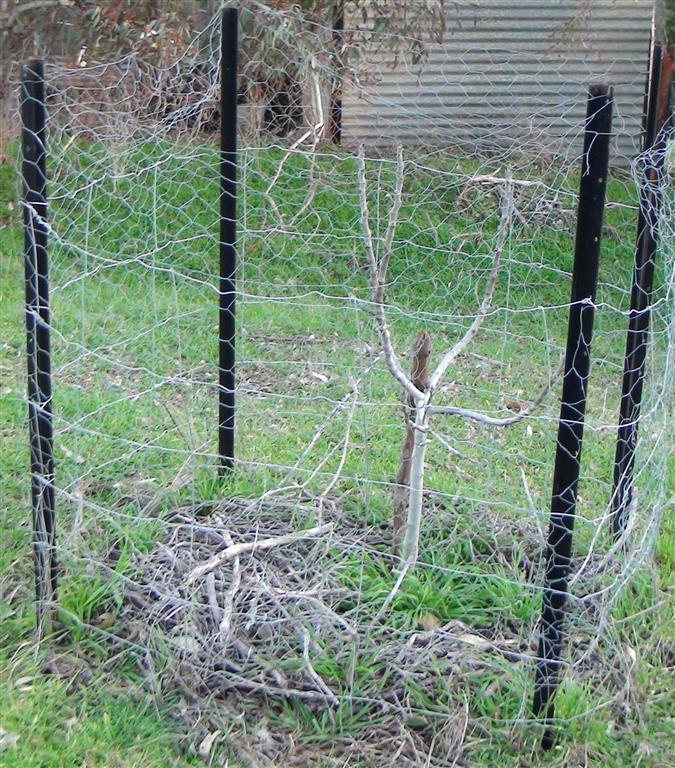
Fig
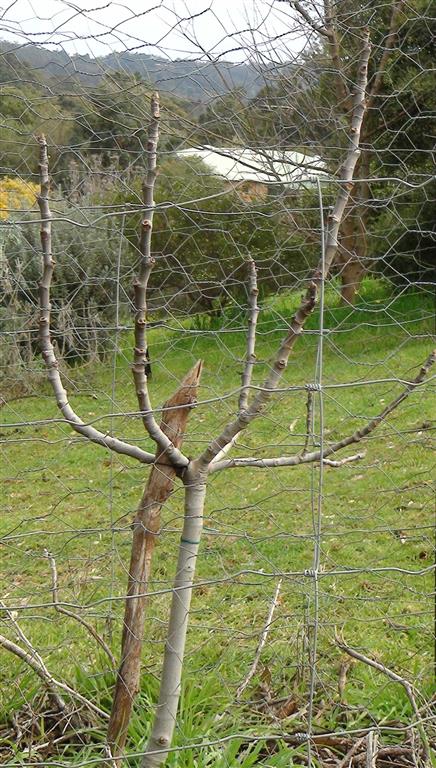
Fig
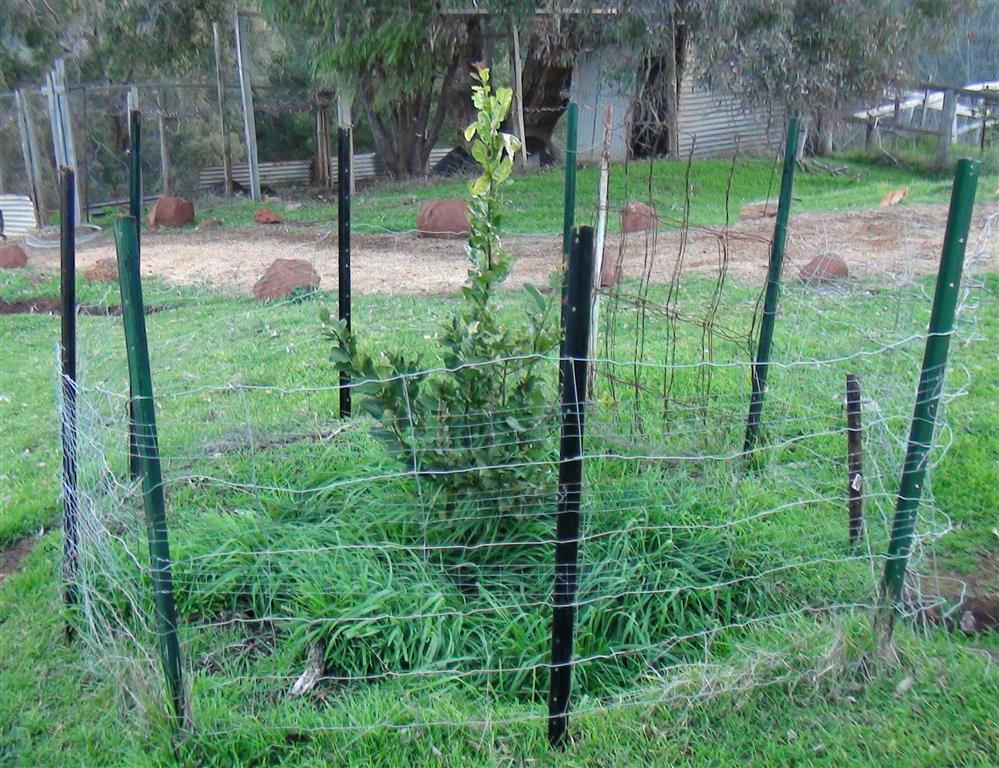
Lemonade

Lemonade

Lime 2
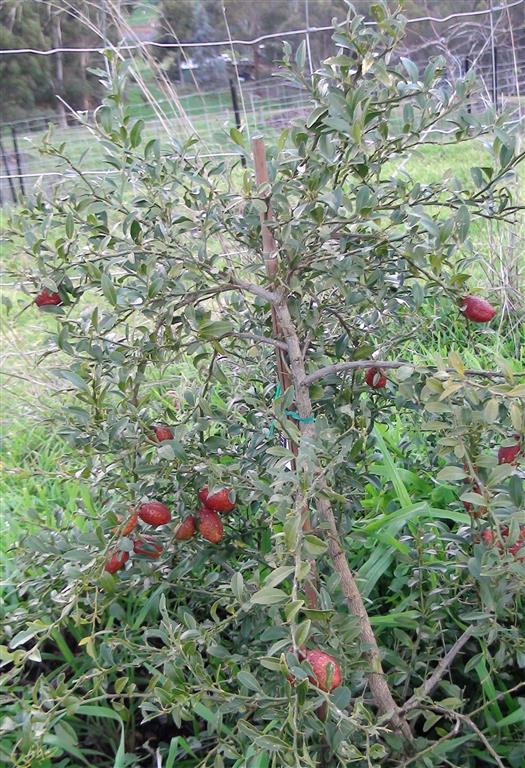
Lime2

Orange

Passionfruit
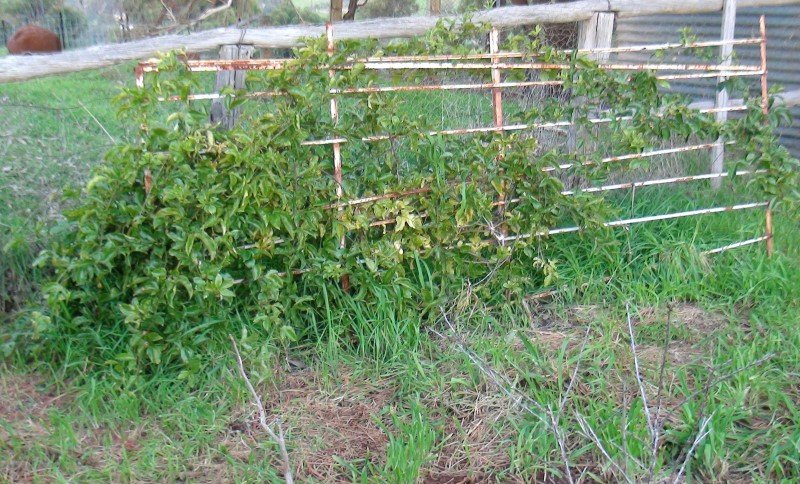
Passionfruit
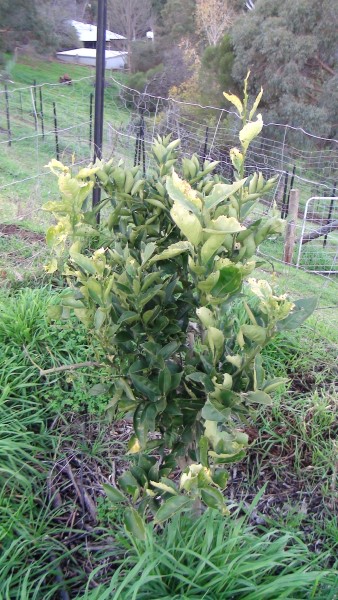
Orange
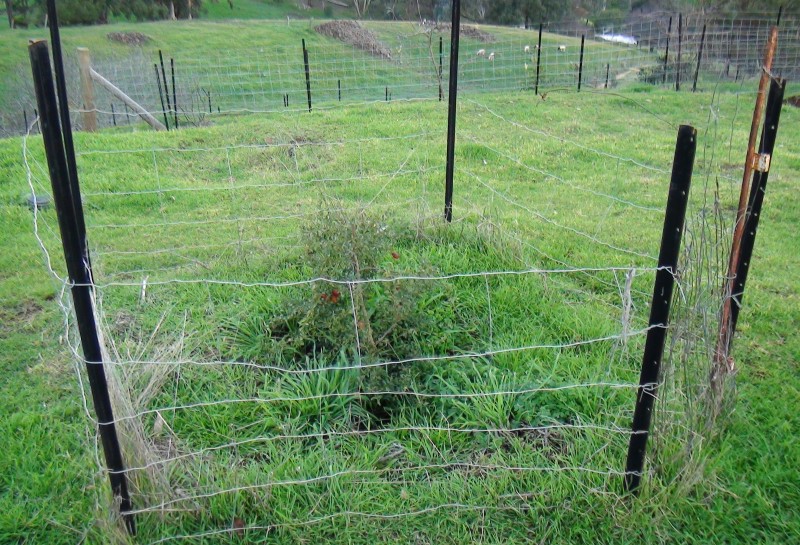
Lime 2
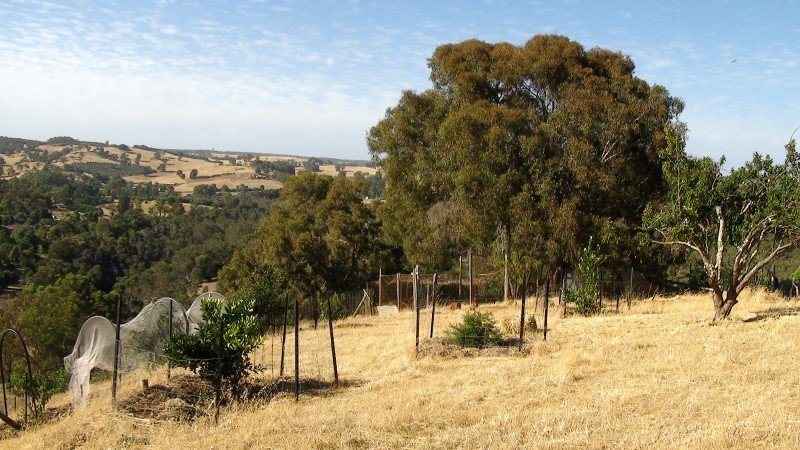
Citrus & old plum
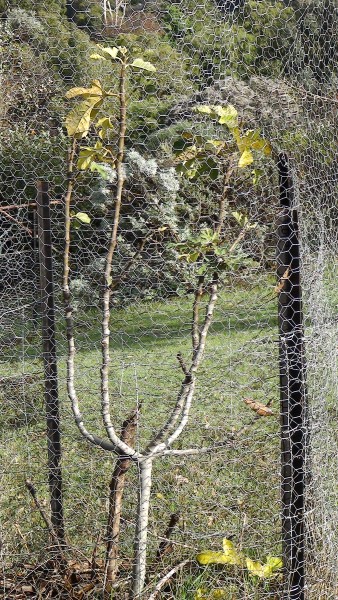
Fig
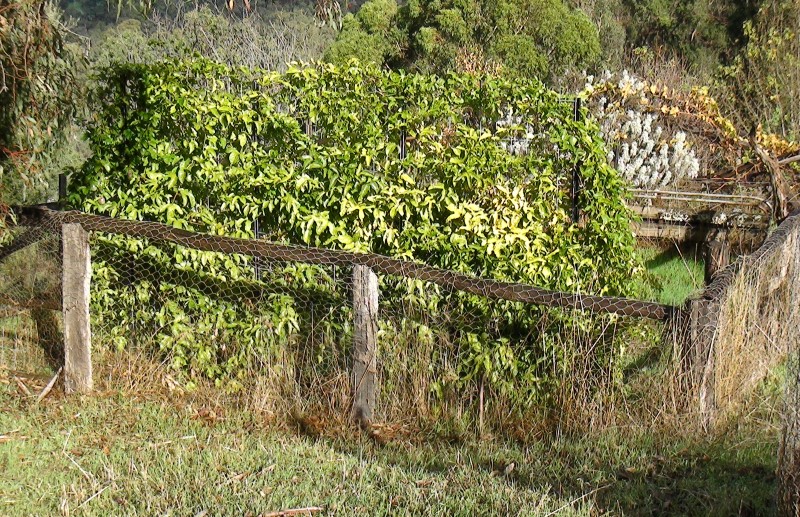
Passionfruit
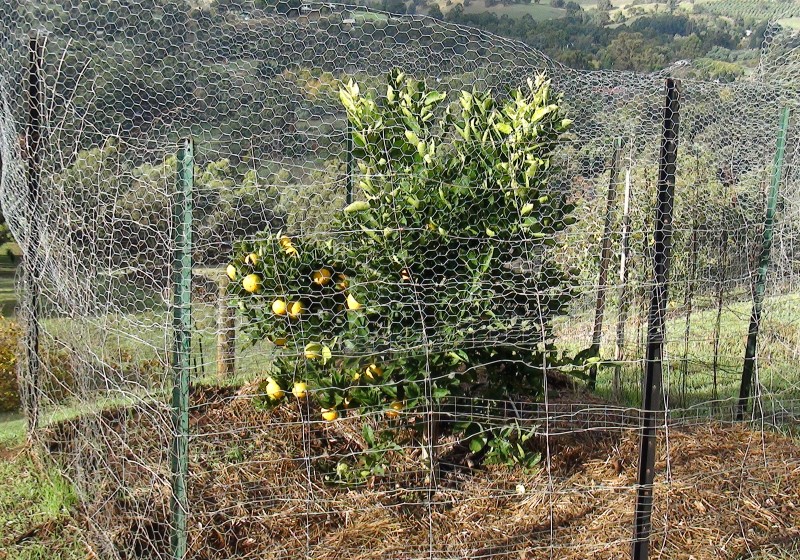
Orange
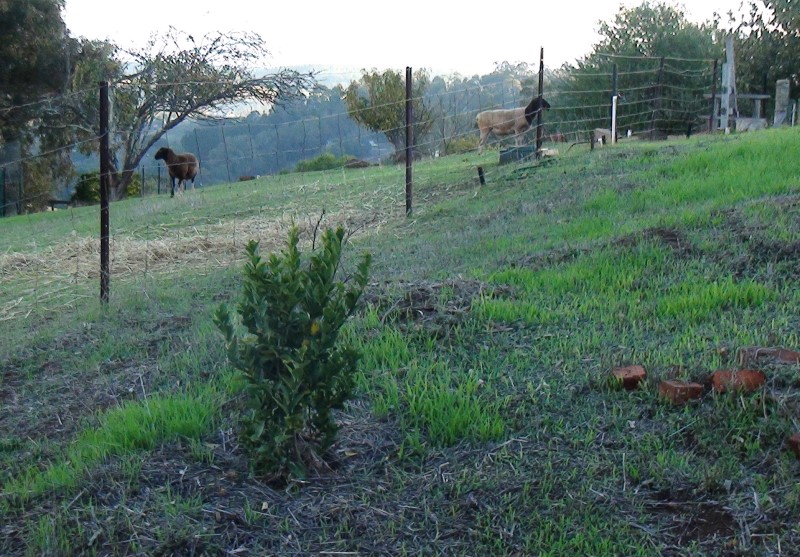
Lime 1 with sheep behind
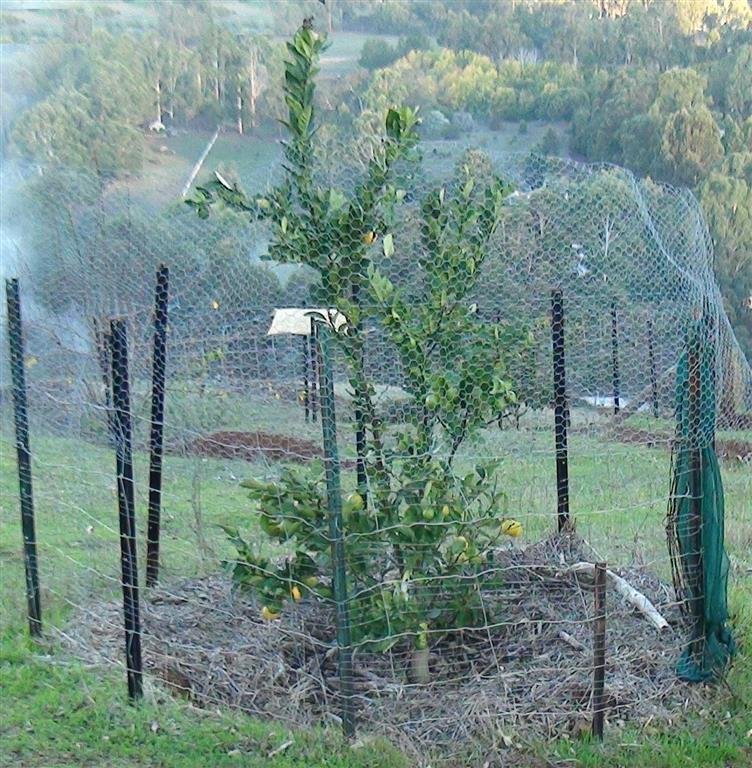
Lemonade
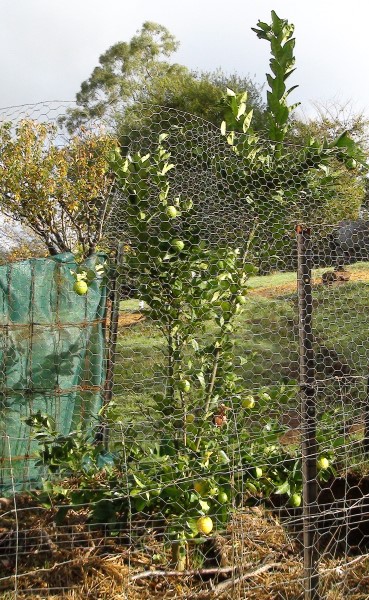
Lemonade
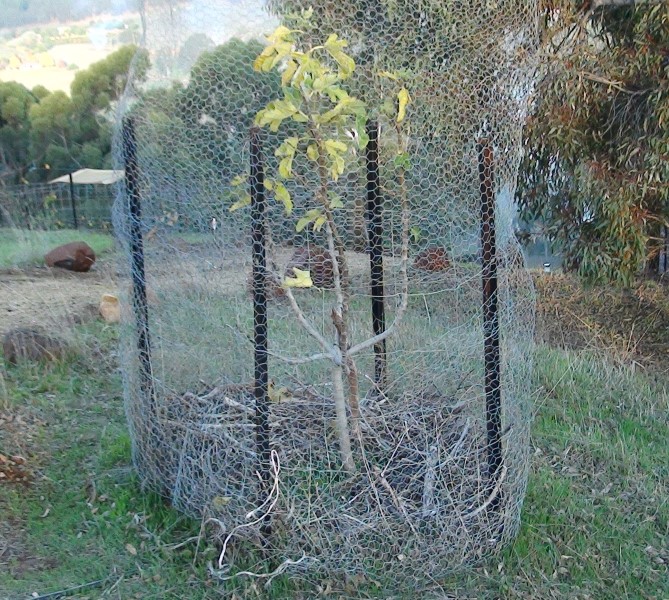
Fig
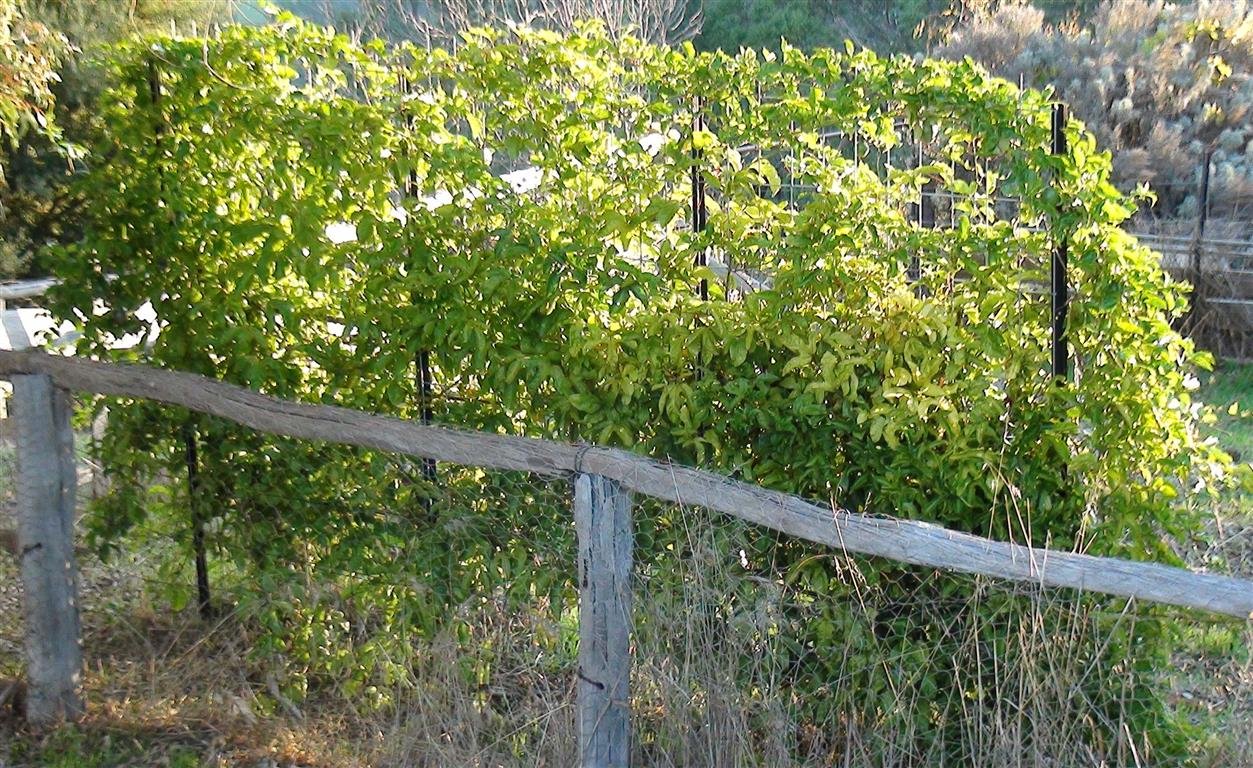
Passionfruit
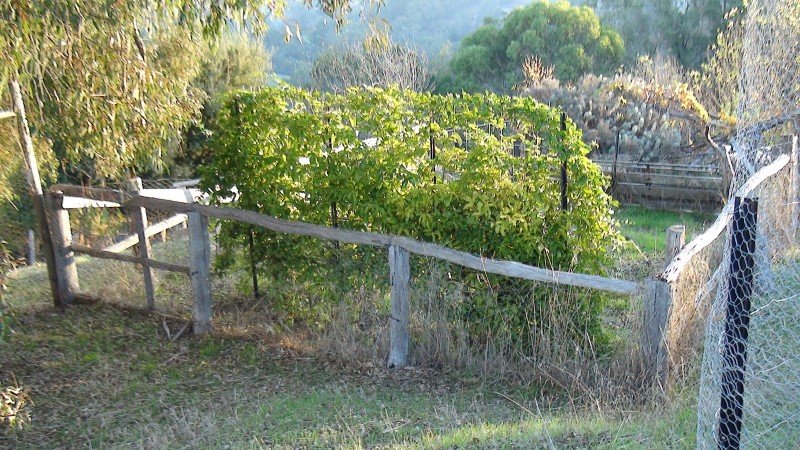
Passionfruit
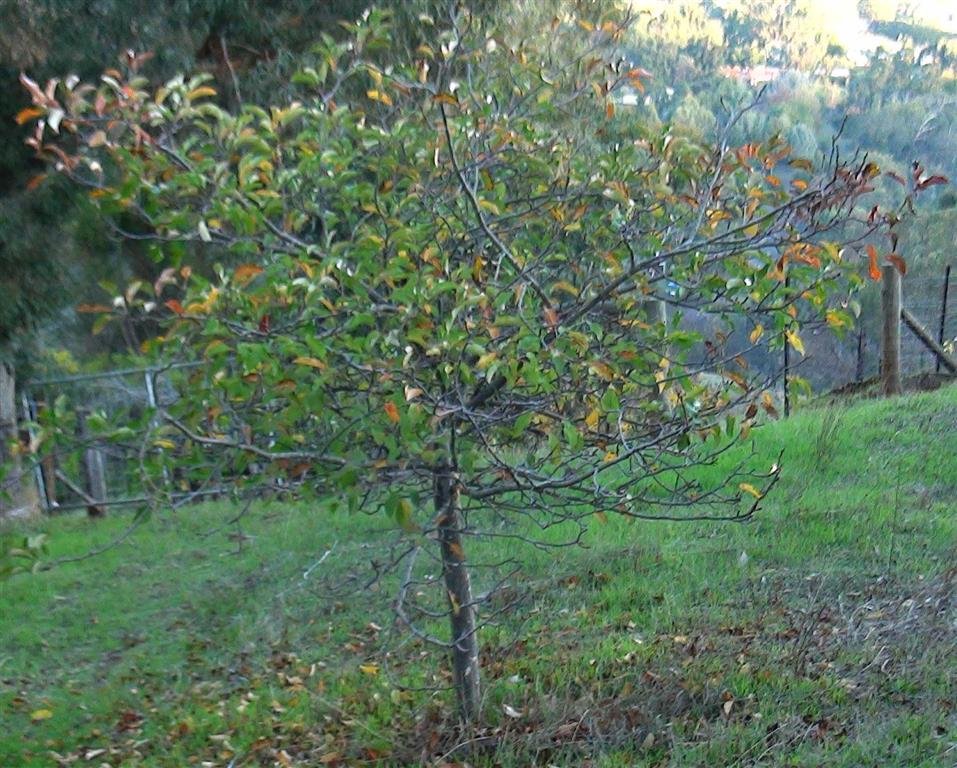
Apple 2
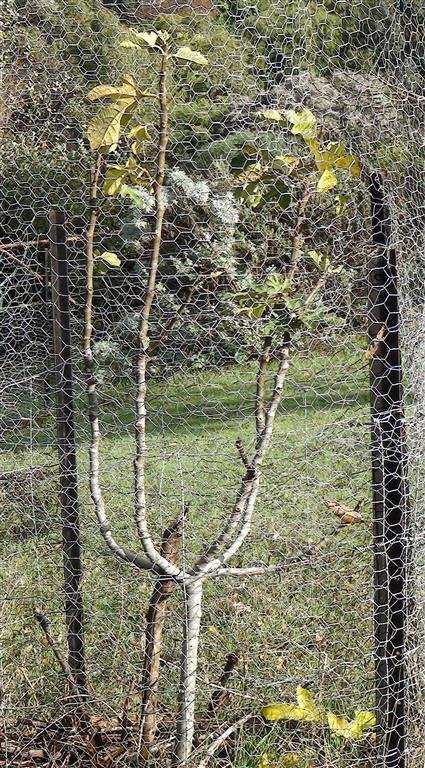
Fig
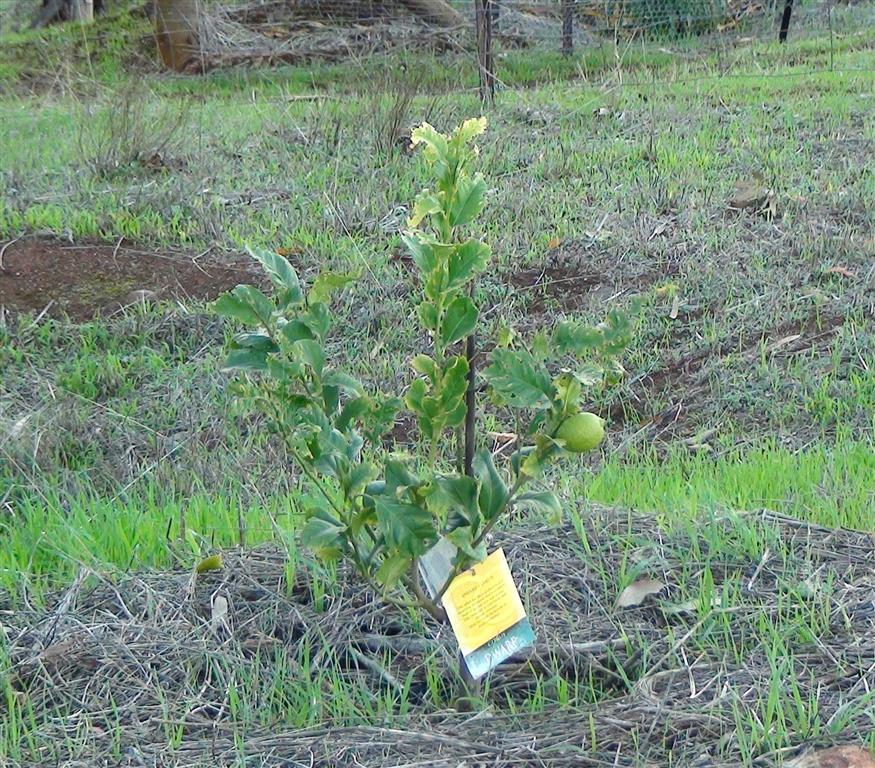
Lemon
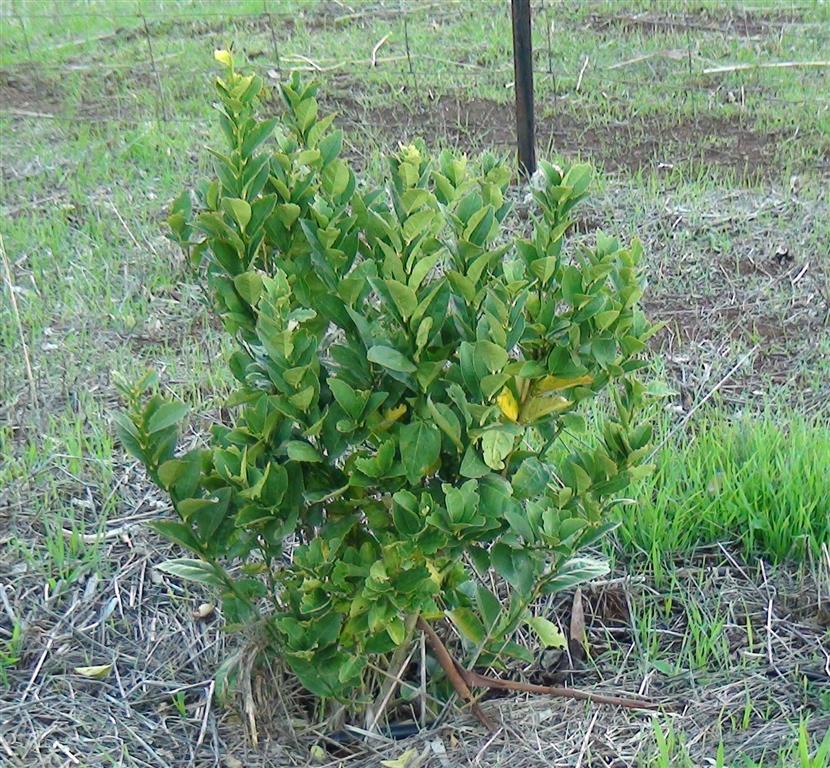
Lime 1
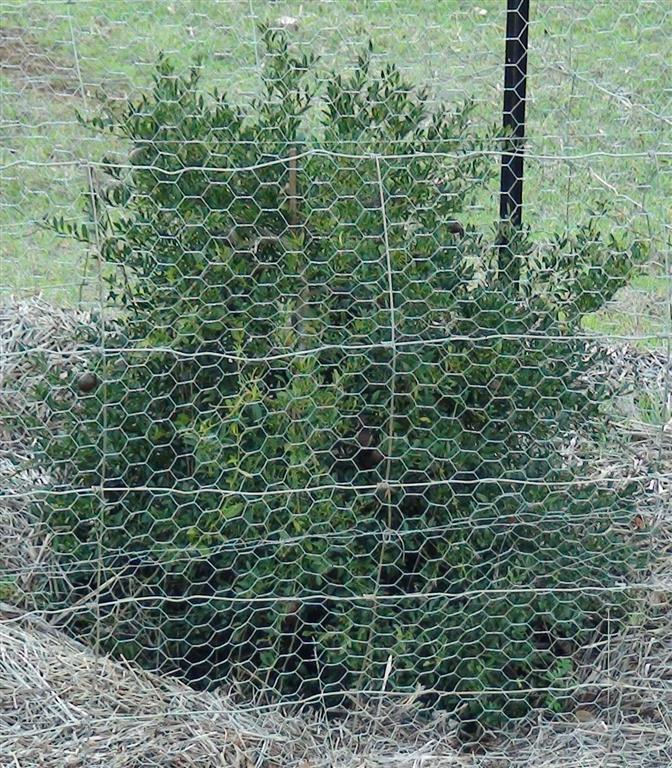
Lime 2
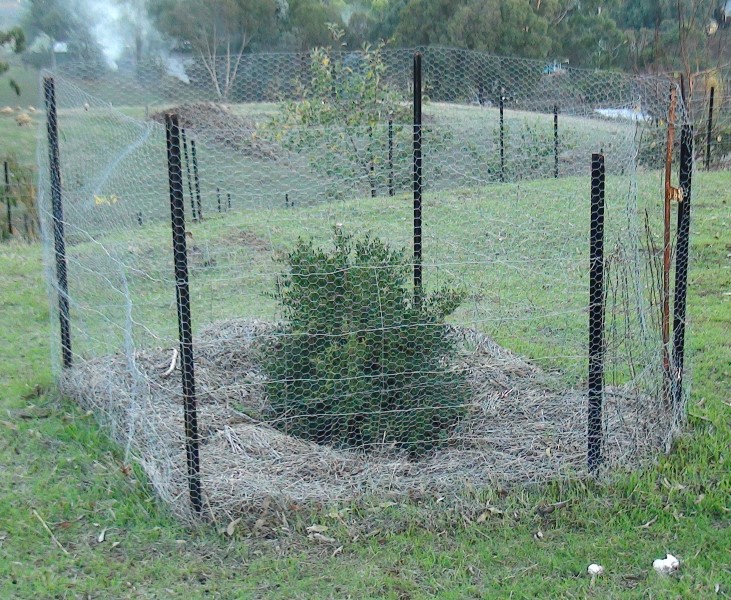
Lime 2
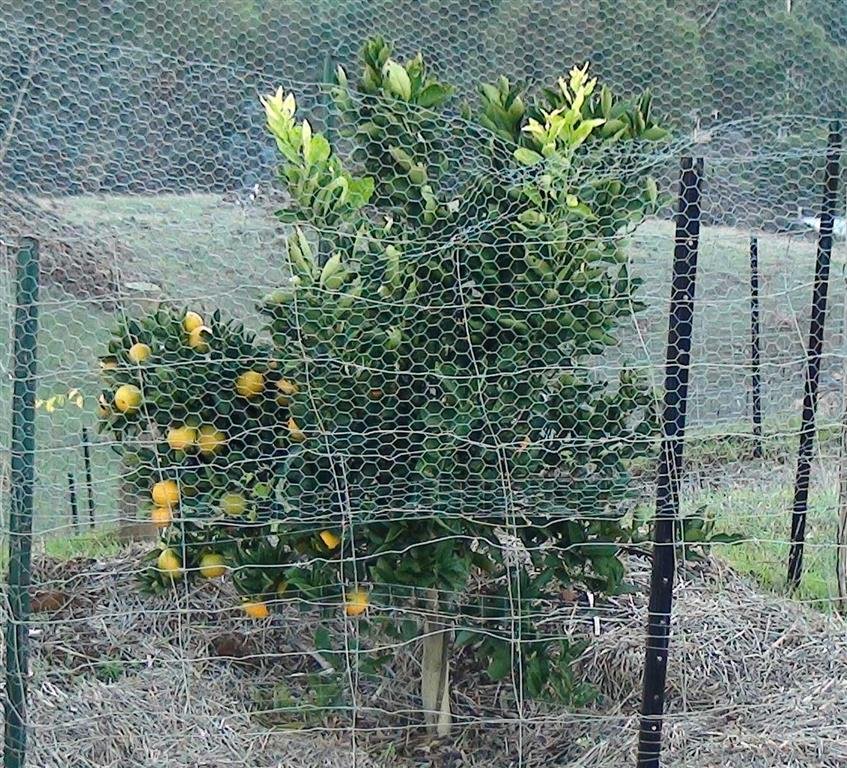
Orange
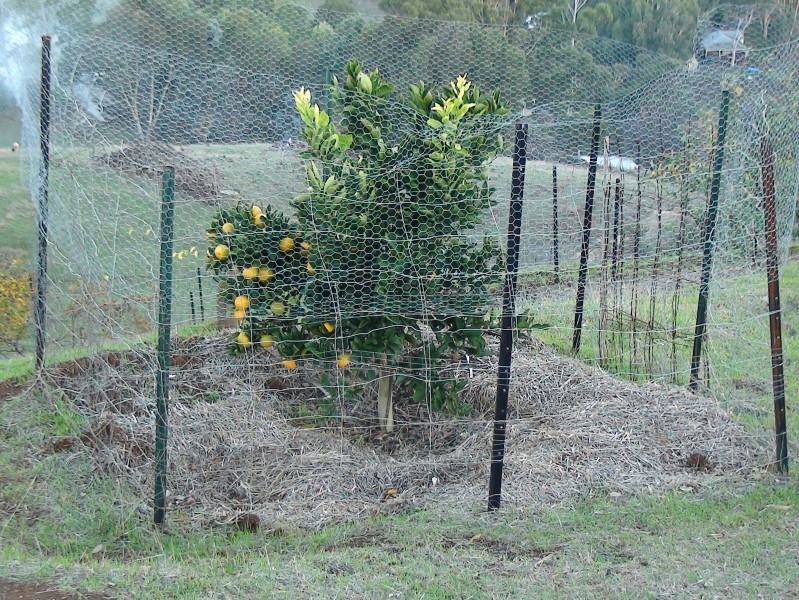
Orange
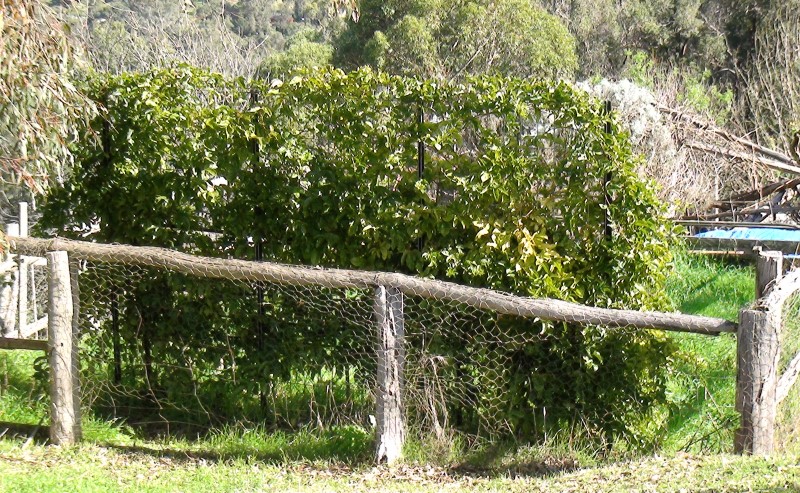
Passionfruit
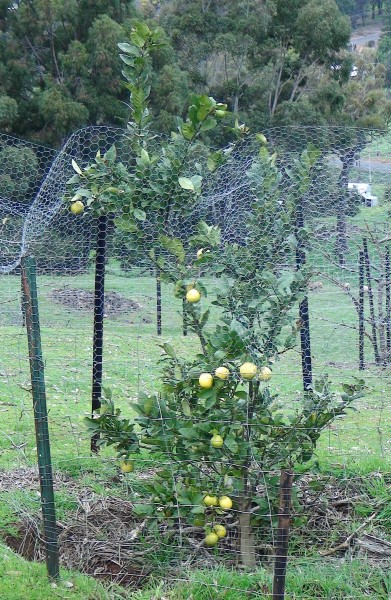
Lemonade
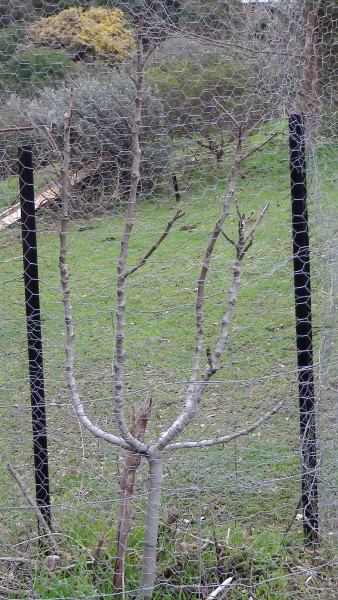
Fig
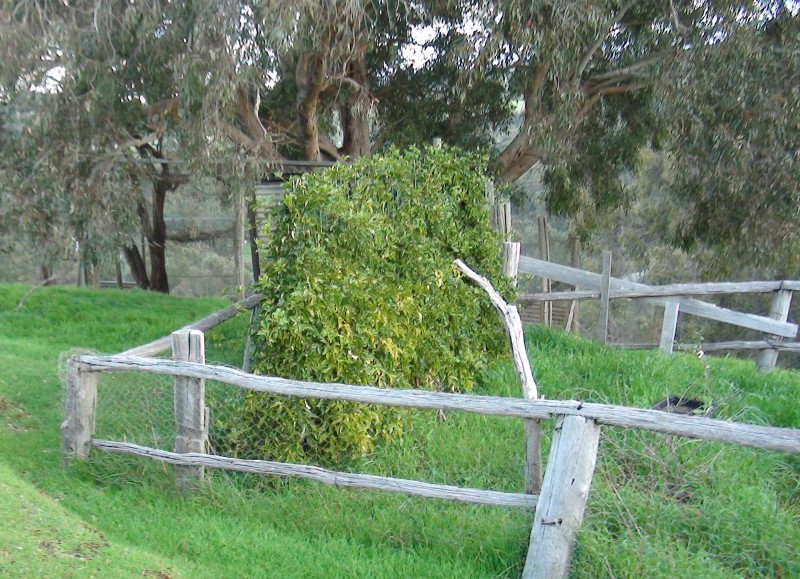
Passionfruit
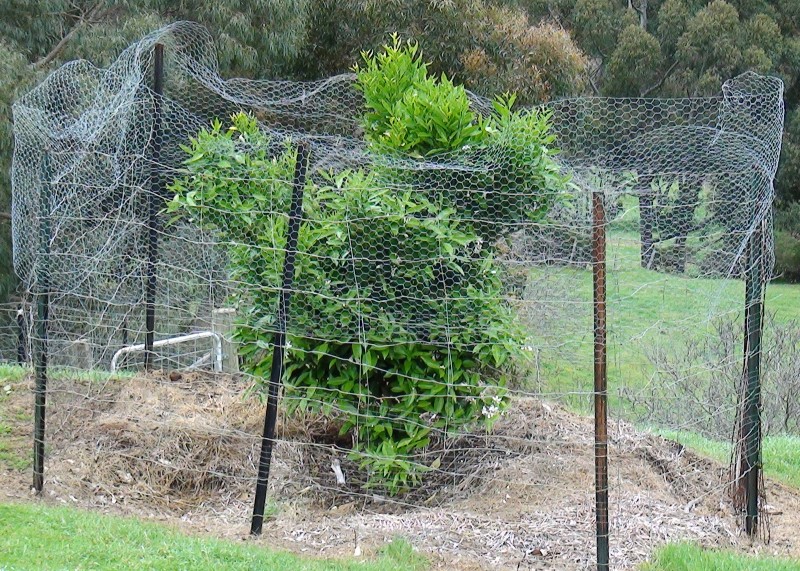
Orange
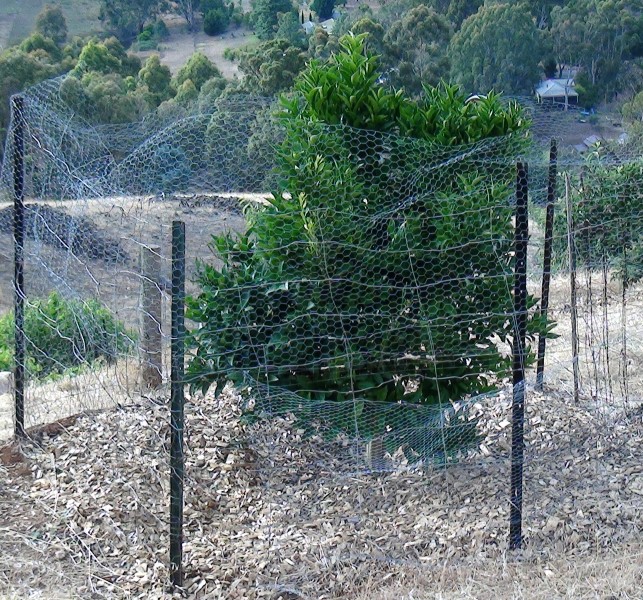
Orange
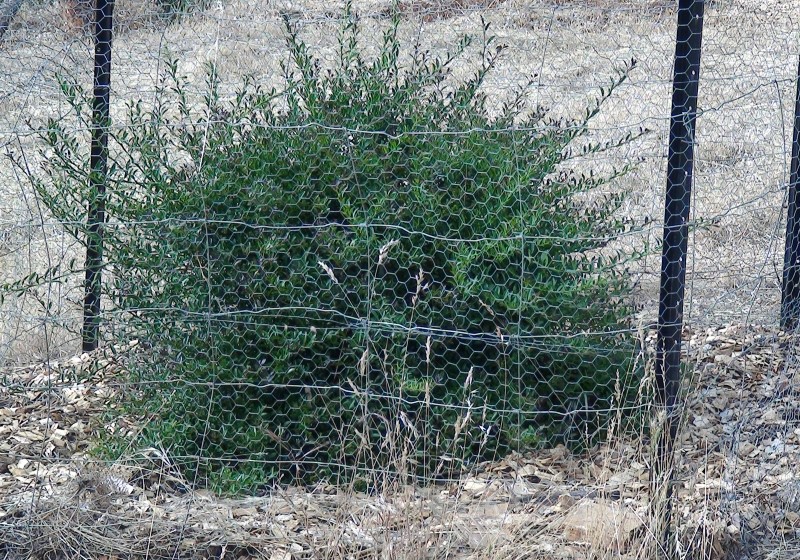
Lime 2
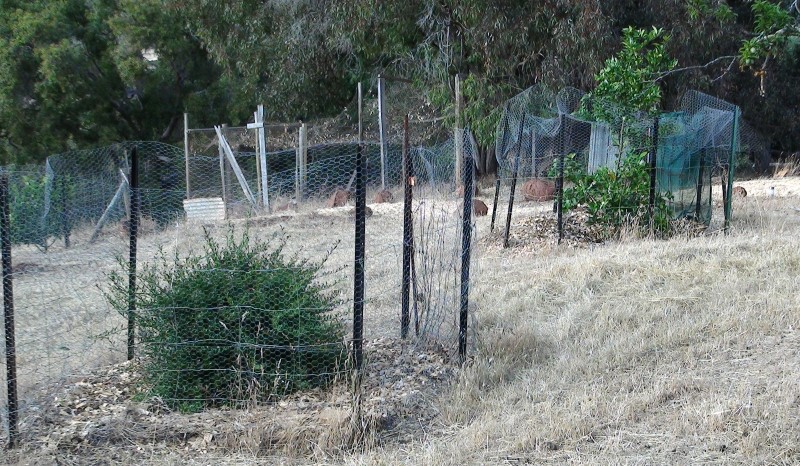
Lime 2 with lemonade behind
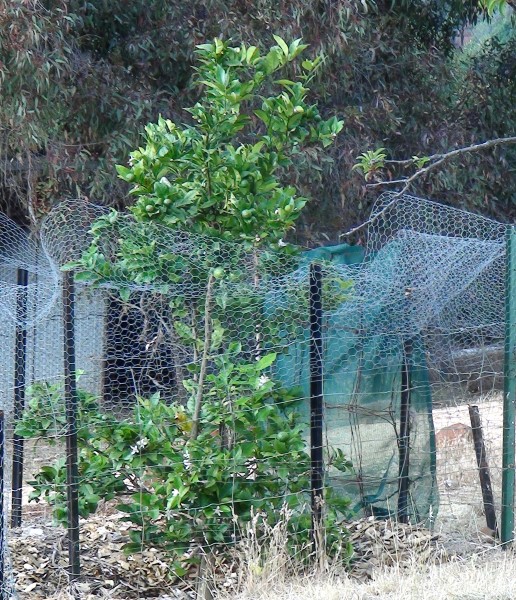
Lemonade
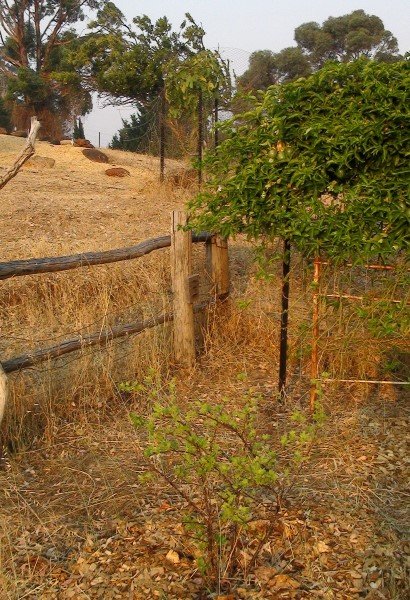
Gooseberry & Passionfruit
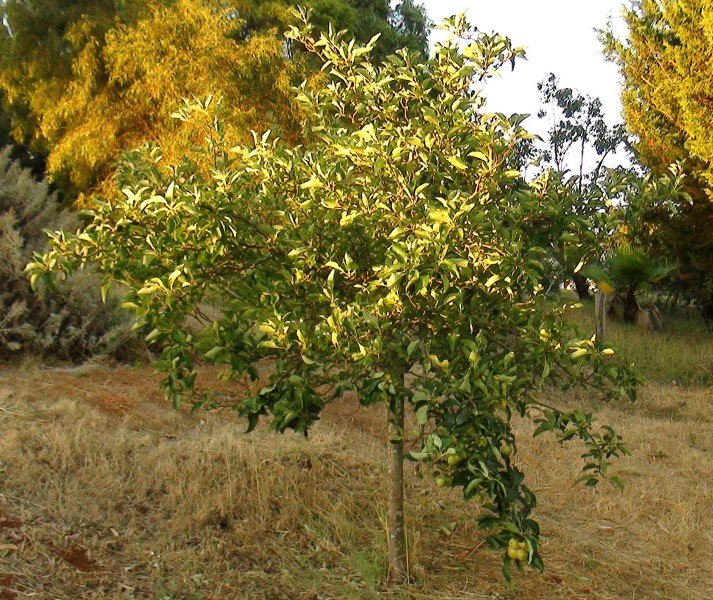
Apple 1
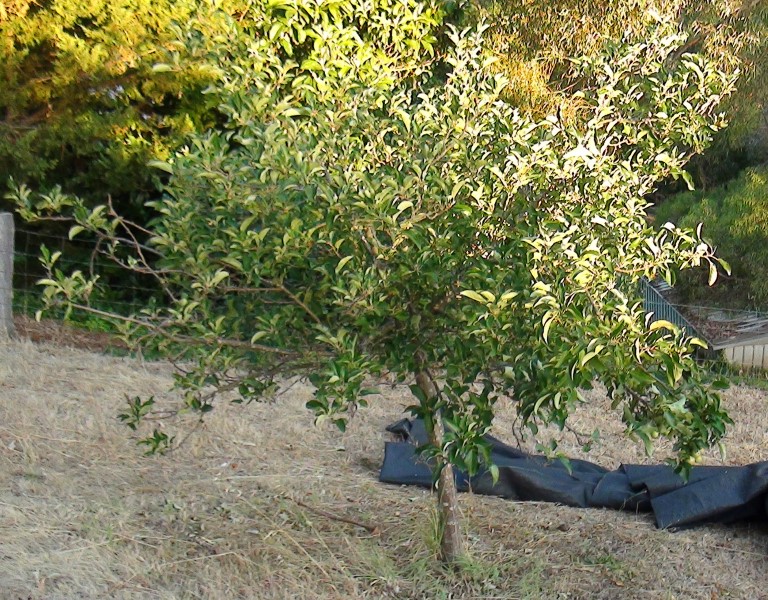
Apple 2
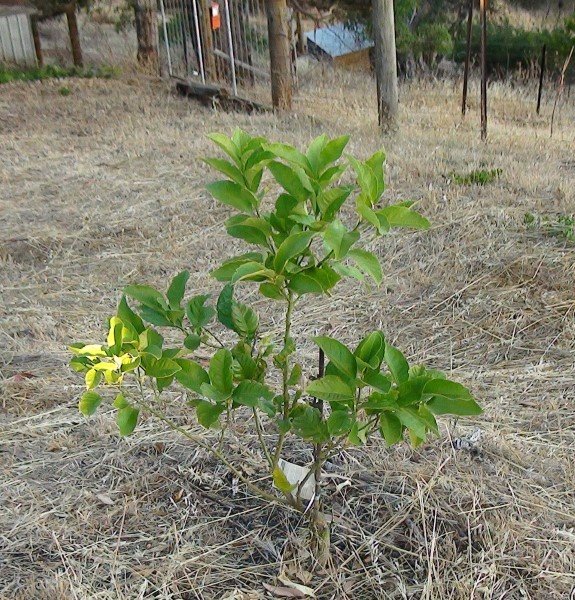
Lemon
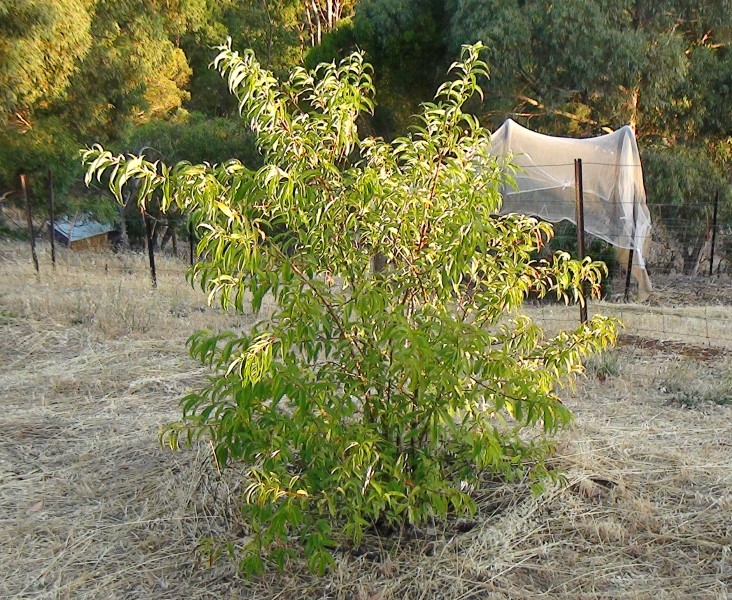
Nectarine rootstock
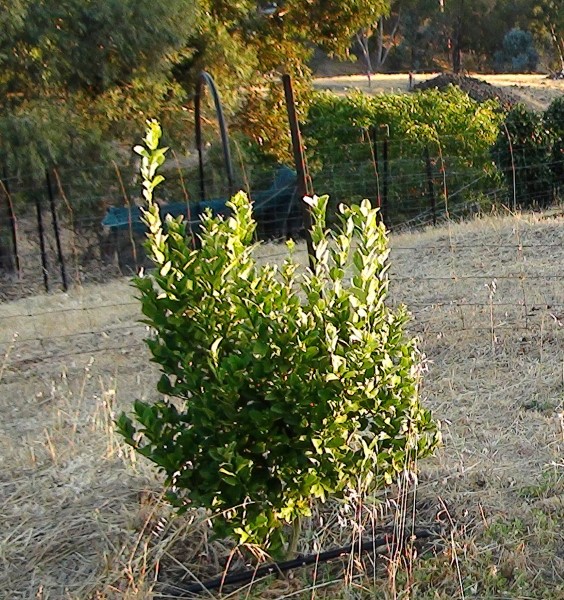
Lime 1
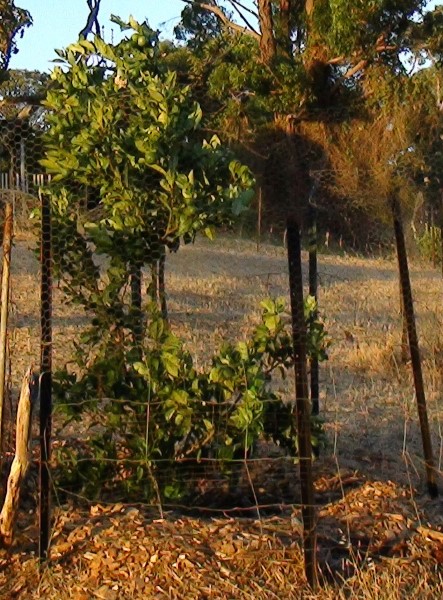
Lemonade
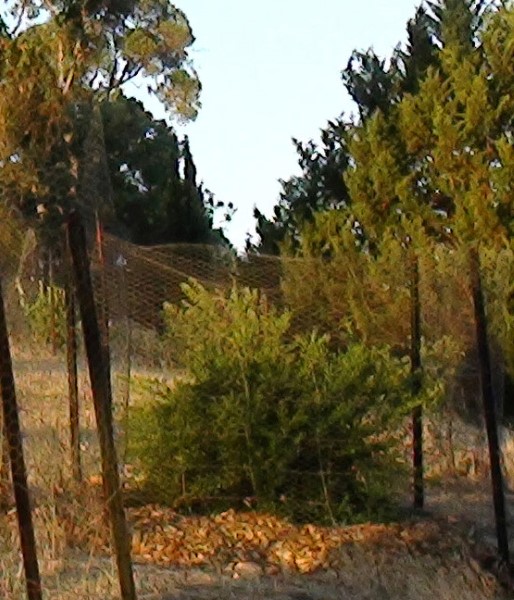
Lime 2
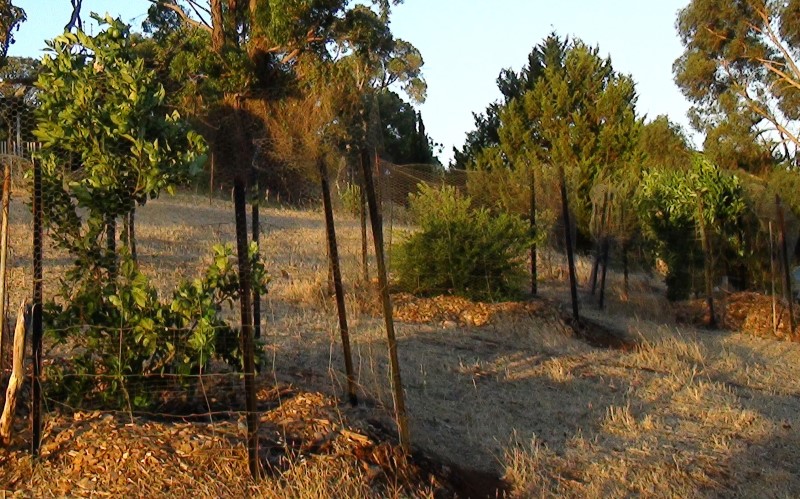
Lemonade, Lime & Orange
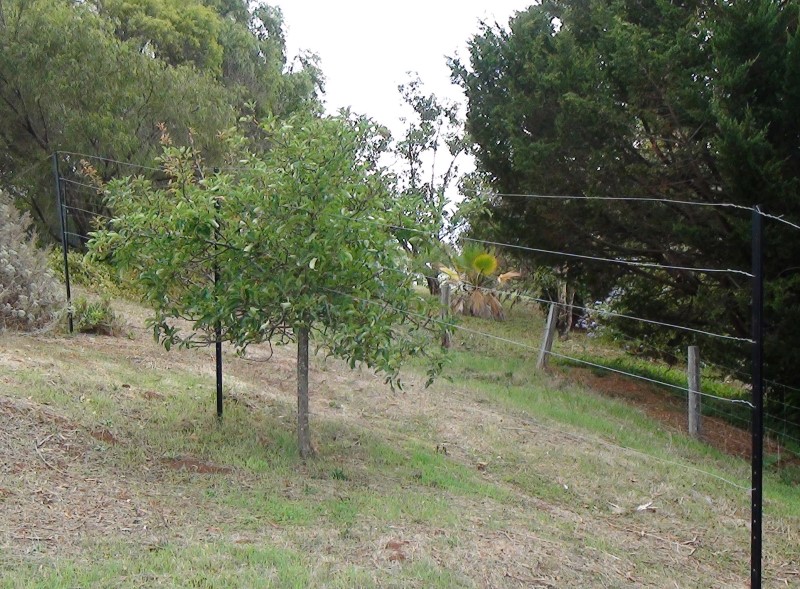
Apple 2
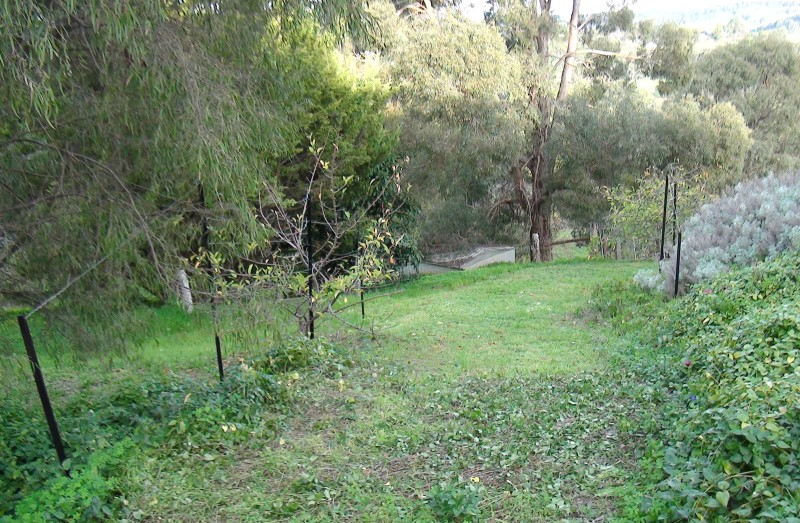
Apple 1 & Apple 2
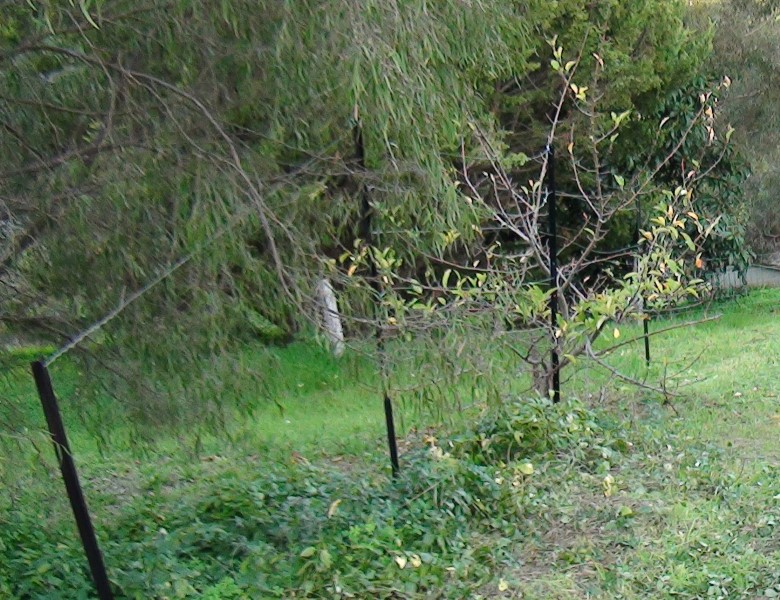
Apple 1
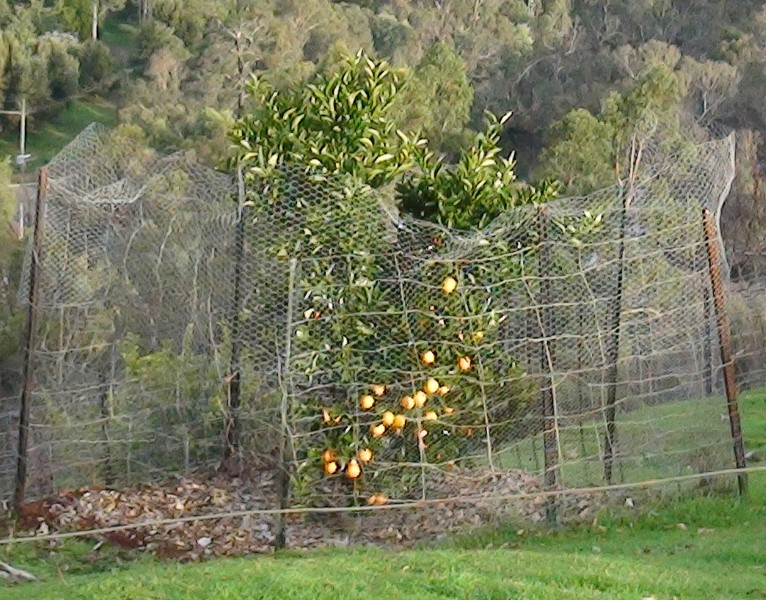
Orange
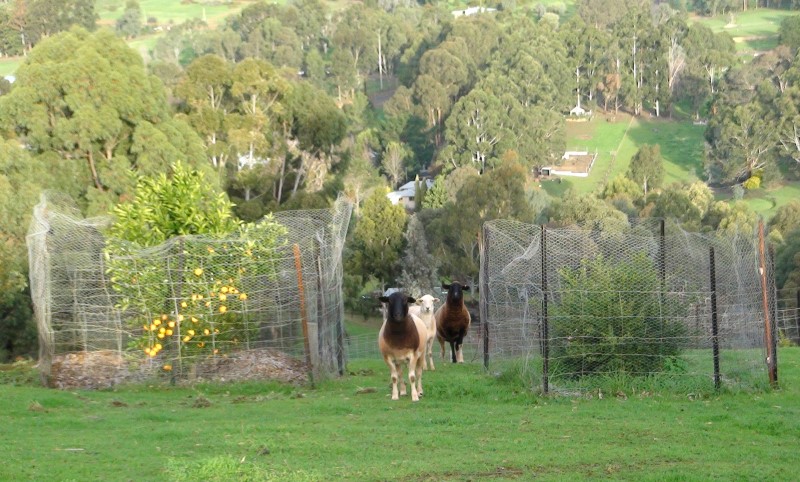
Orange & lime with Panda & friends
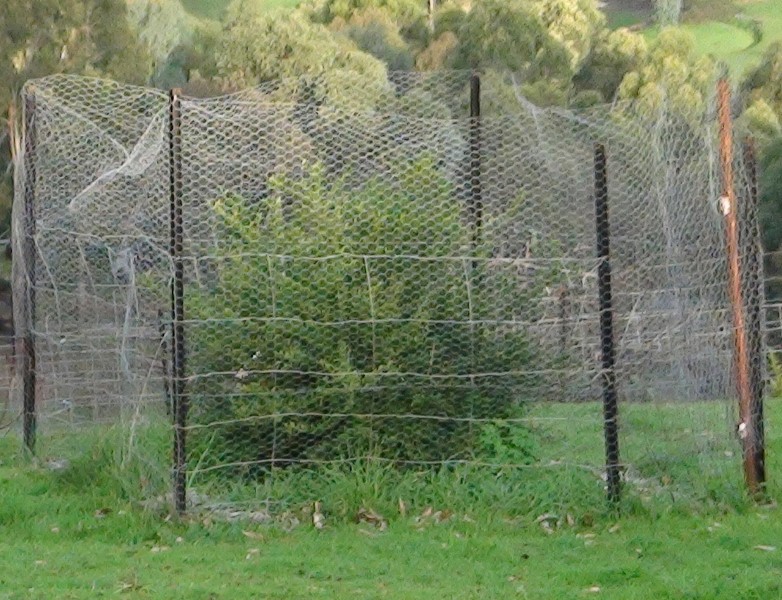
Lime 2
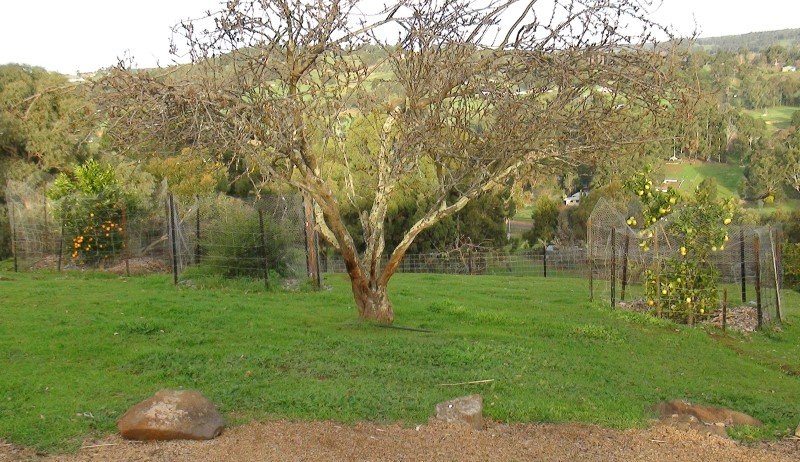
Old plum & citrus
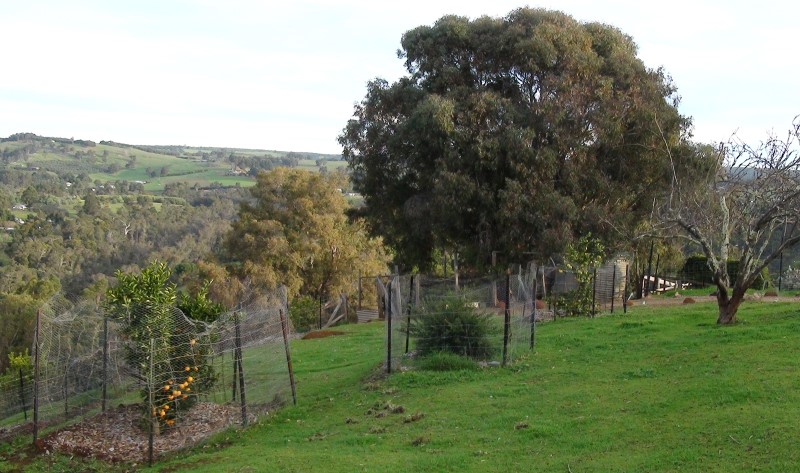
Citrus
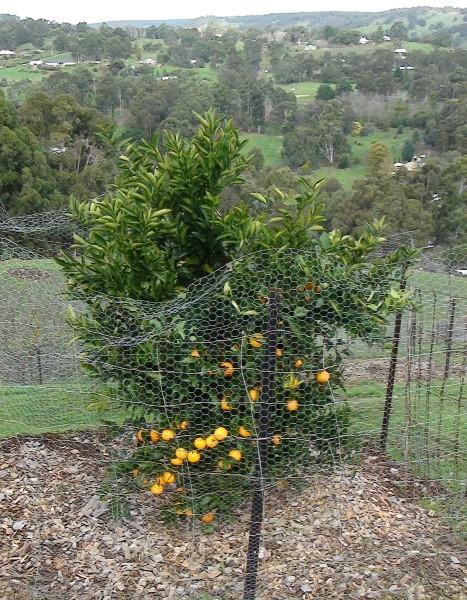
Orange
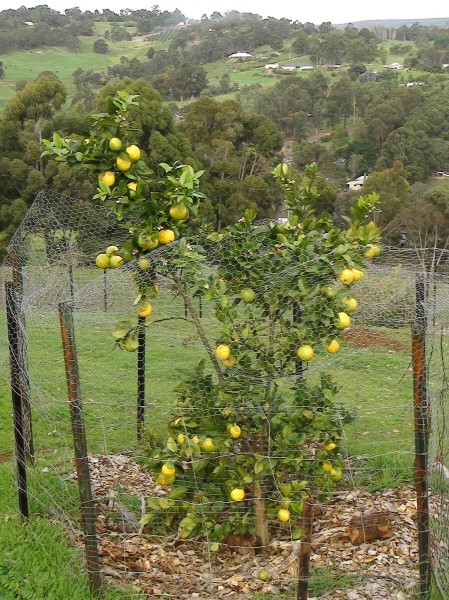
Lemonade
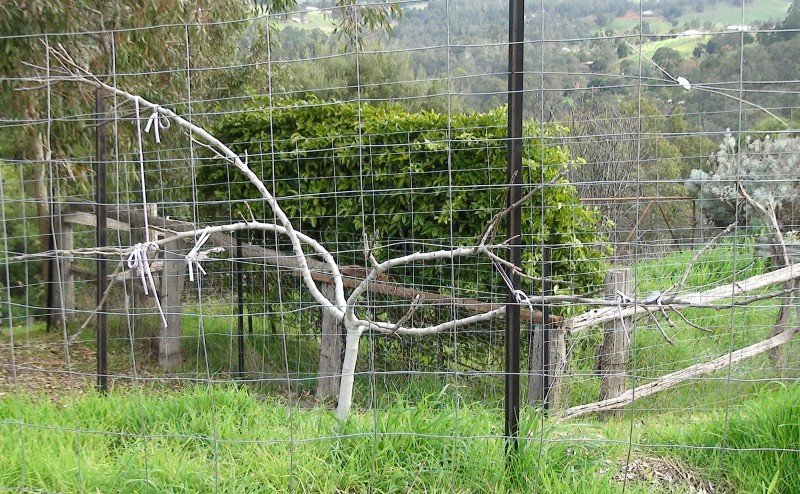
Fig & Passionfruit
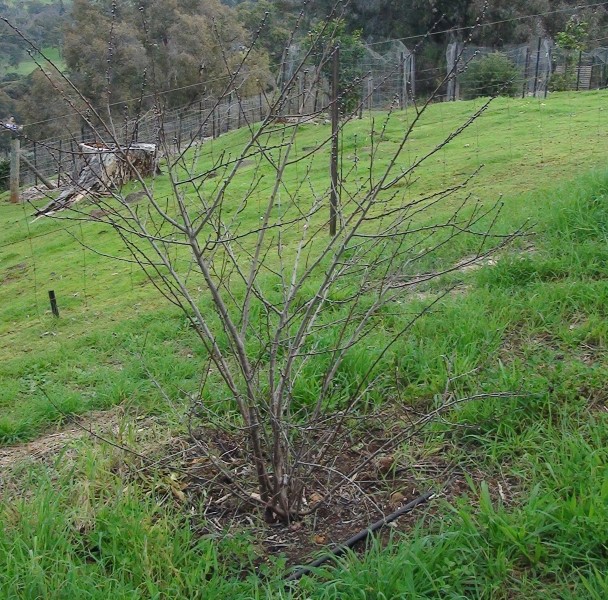
Nectarine rootstock
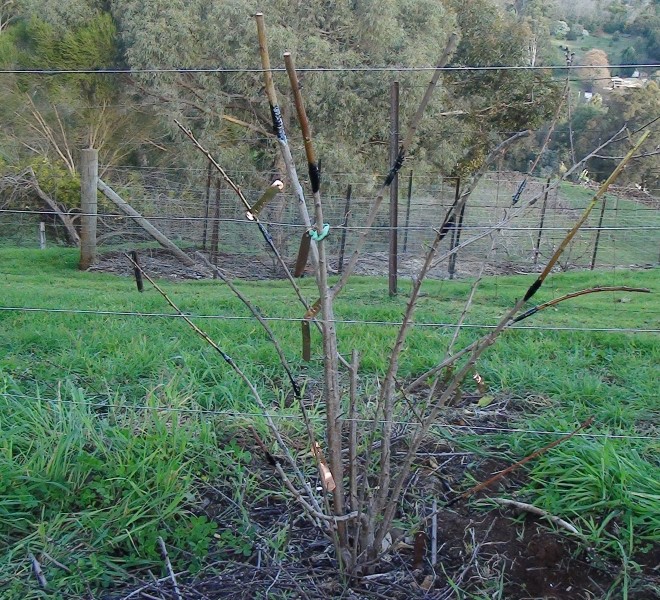
Graft onto rootstock
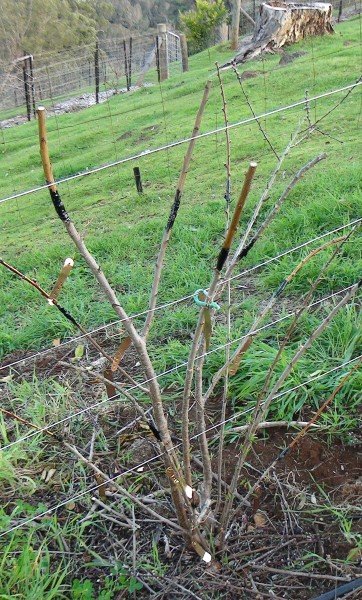
Graft
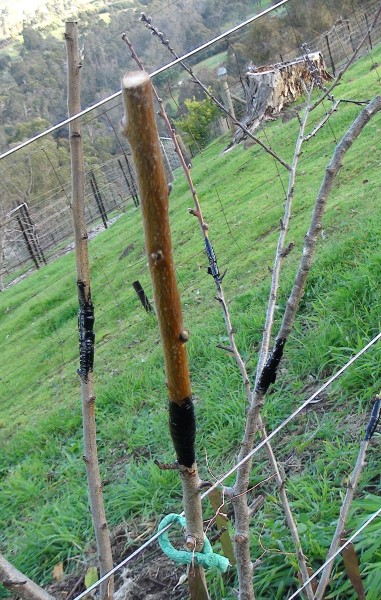
Graft
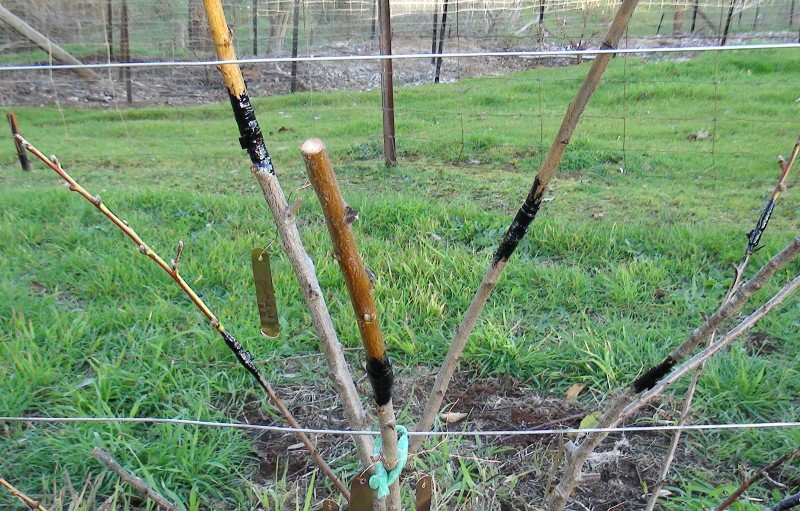
Graft
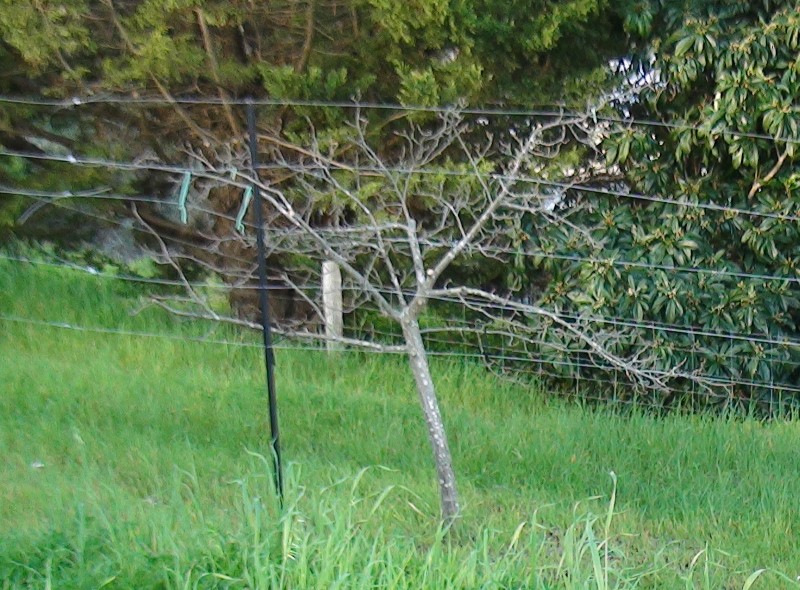
Apple 2
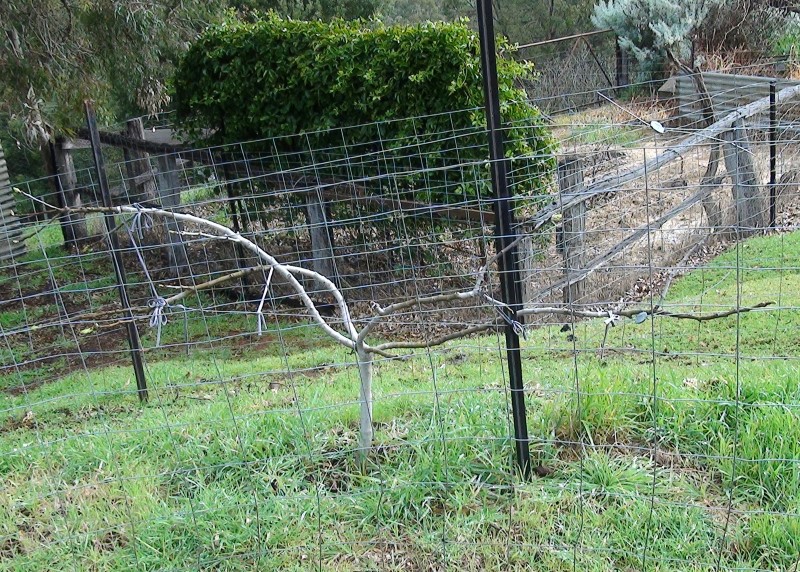
Fig & Passionfruit
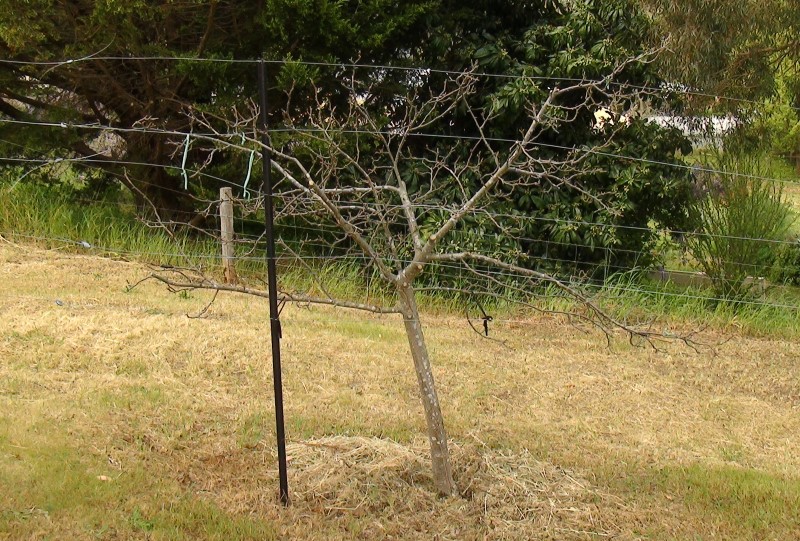
Apple 2
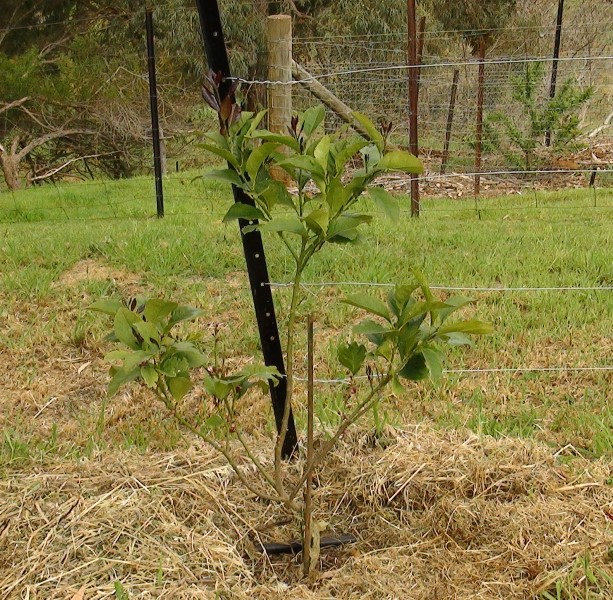
Lemon
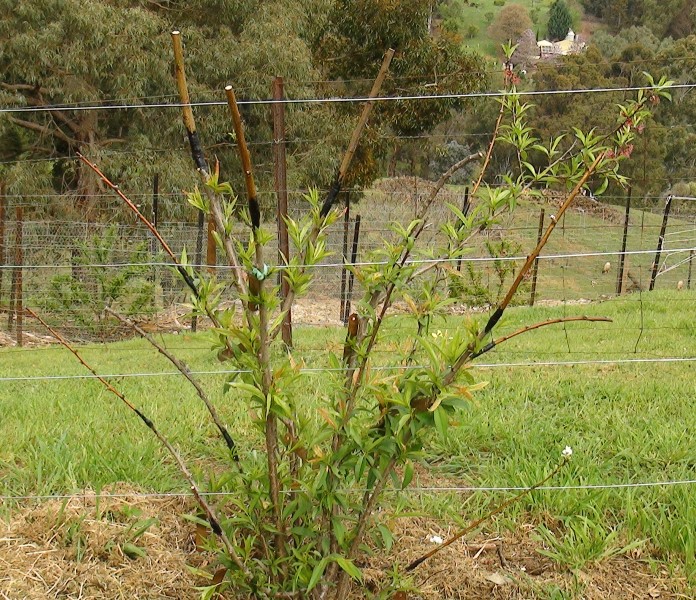
Graft
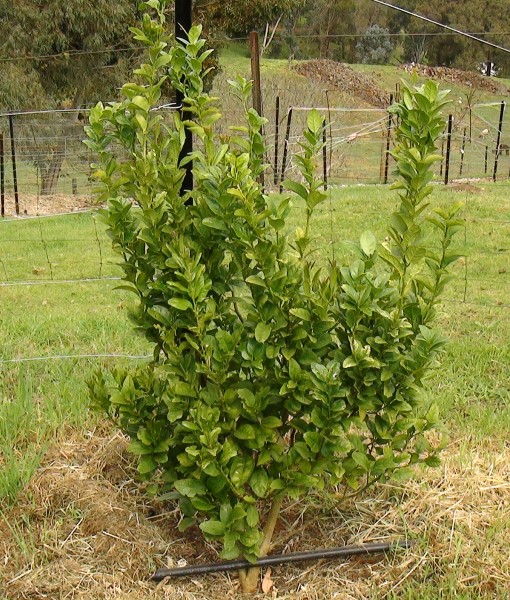
Lime 1
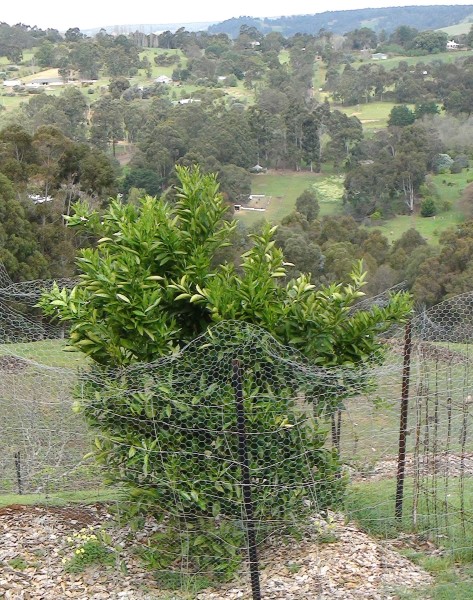
Orange
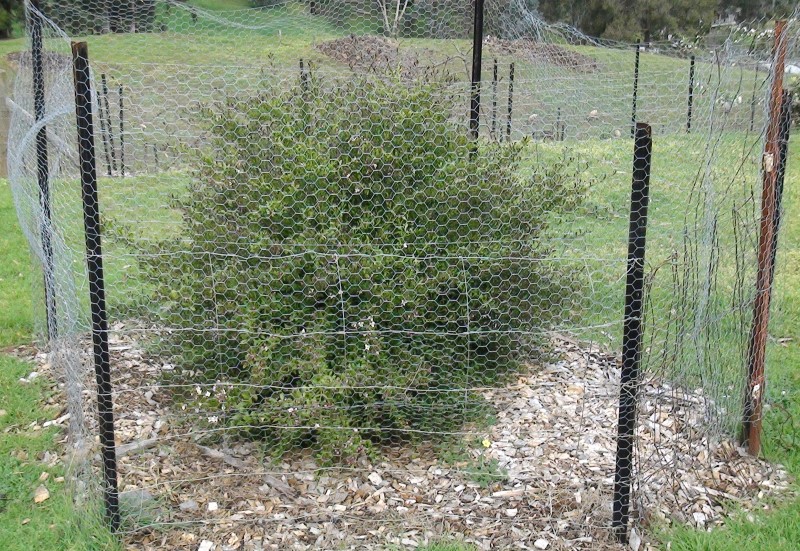
Lime 2
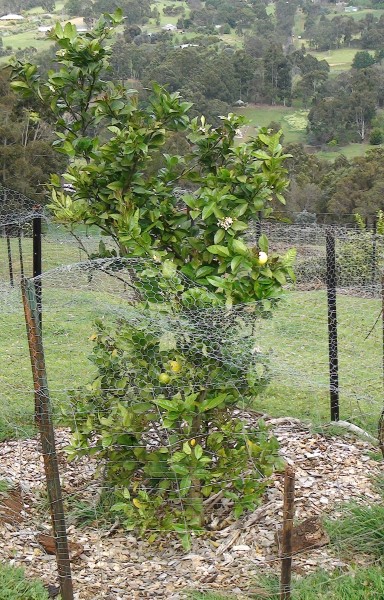
Lemonade
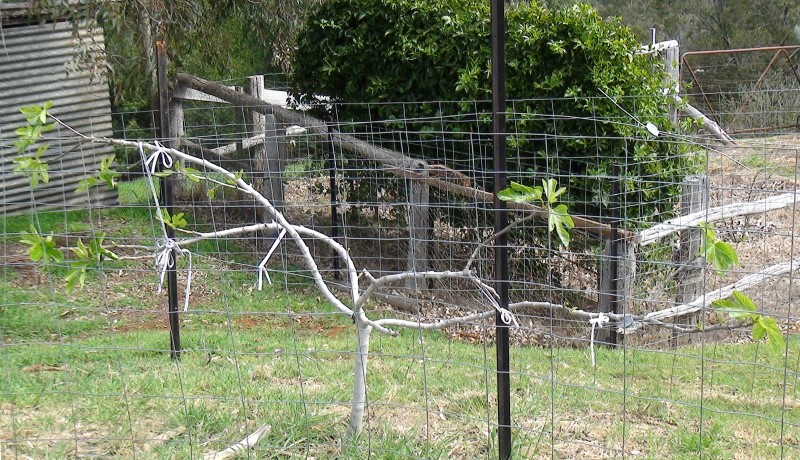
Fig & Passionfruit
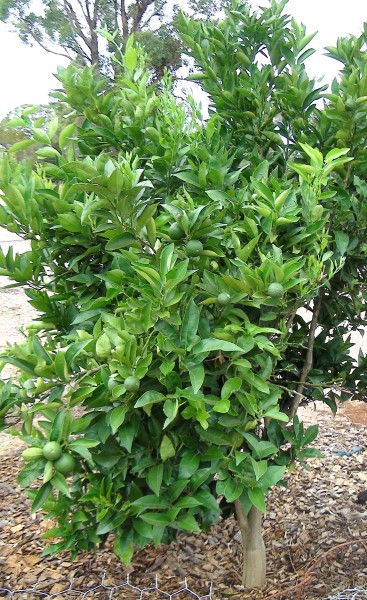
Orange
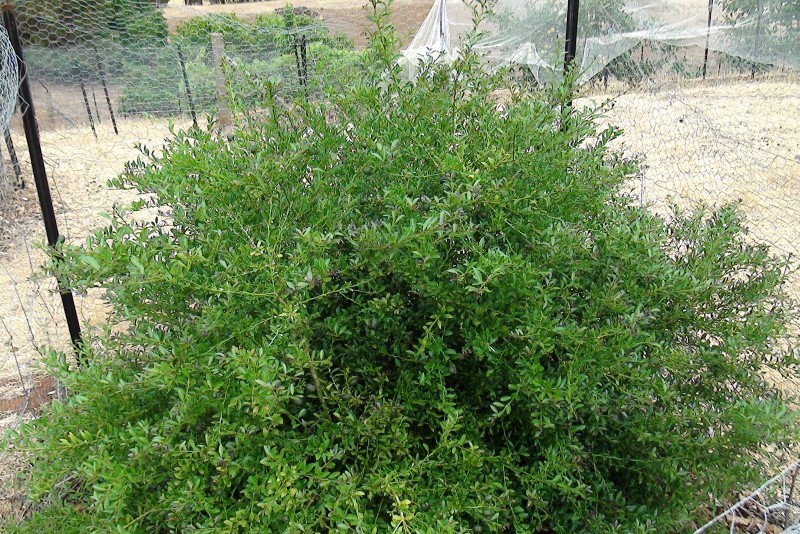
Lime 2
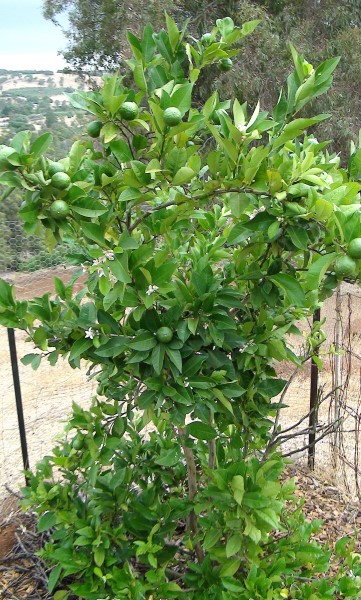
Lemonade
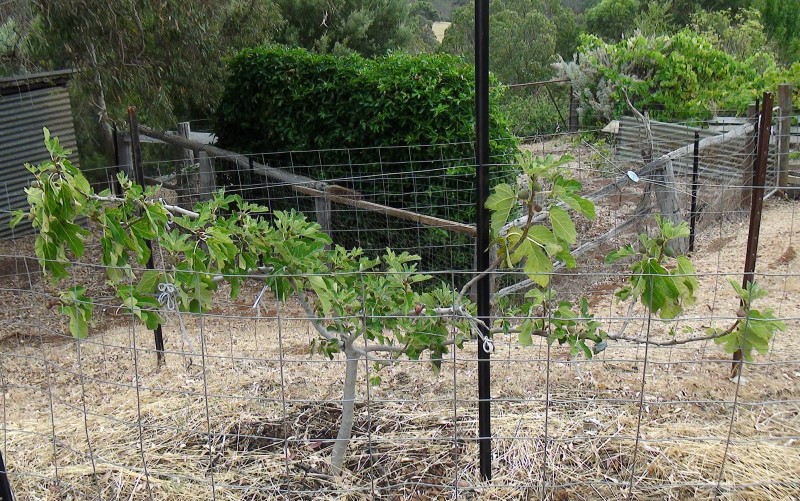
Fig & Passionfruit
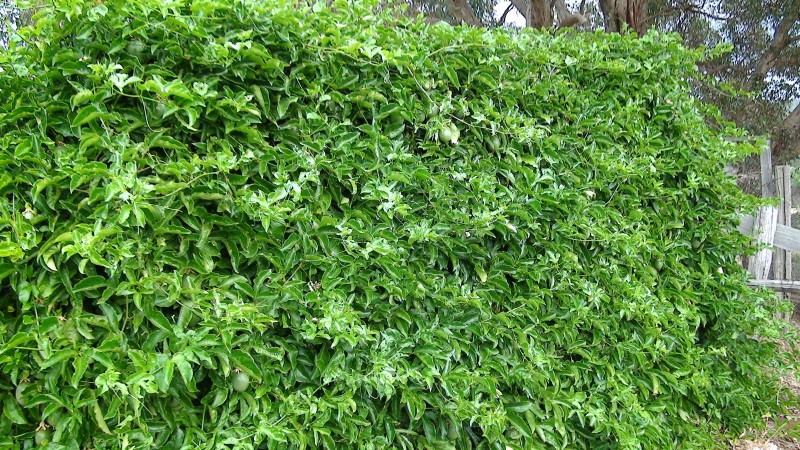
Passionfruit - west side
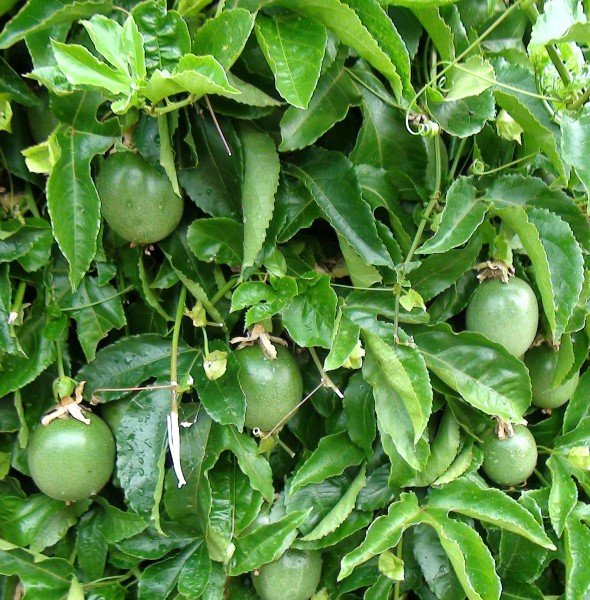
Passionfruit
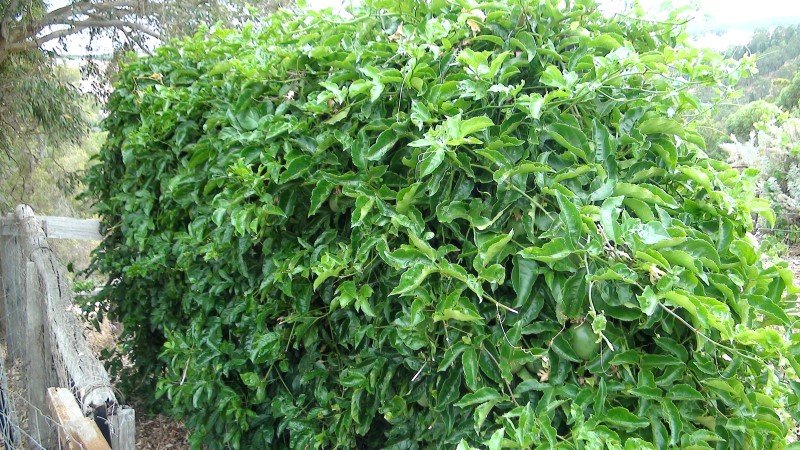
Passionfruit - east side
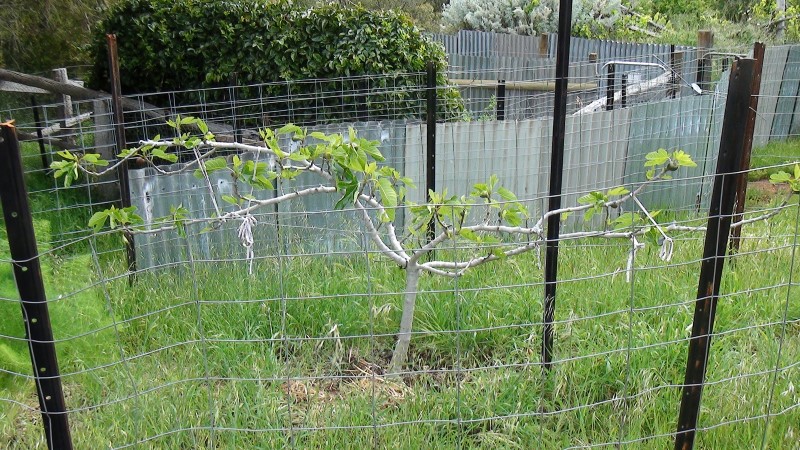
Fig
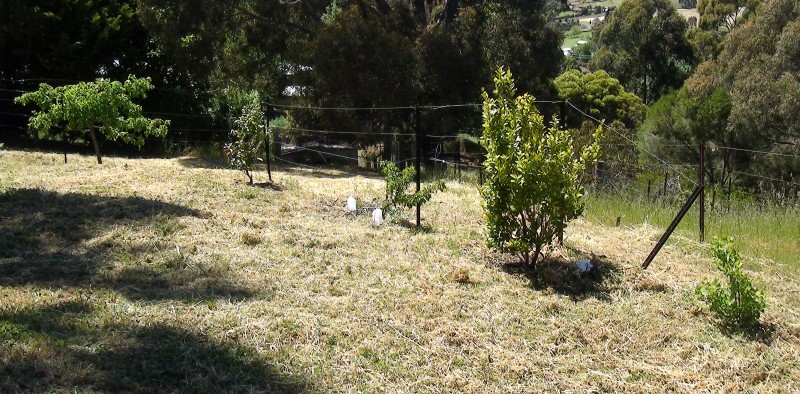
Apple, Lemon, Graft & Lime 1 - row 1
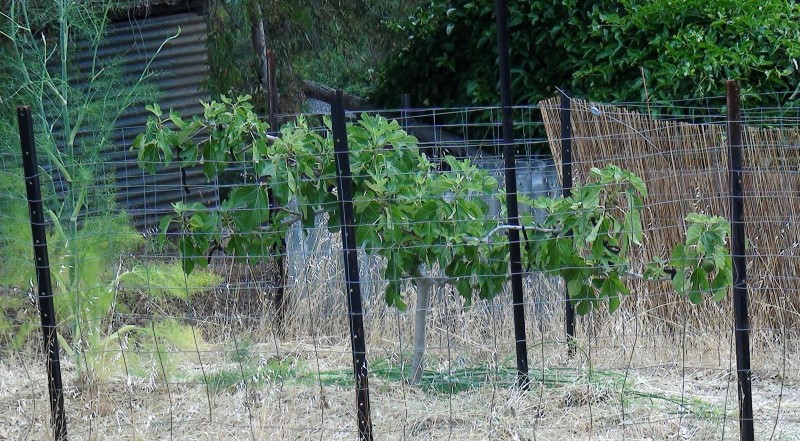
Fig
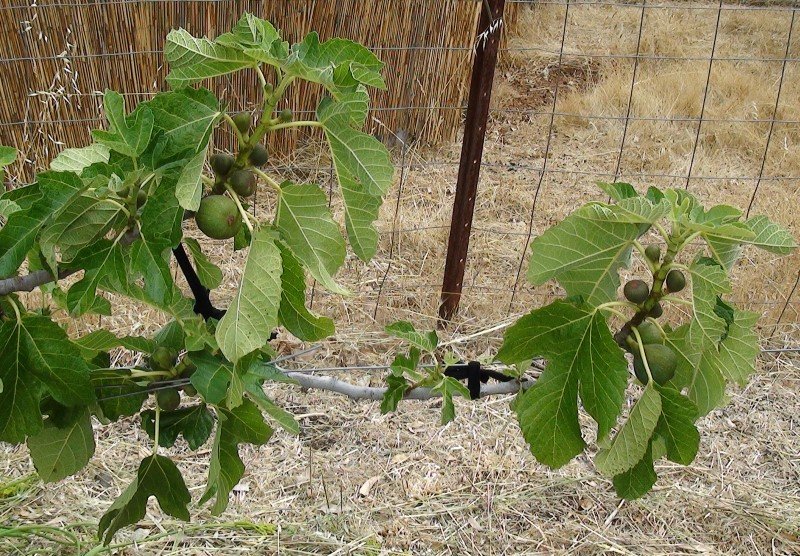
Fig
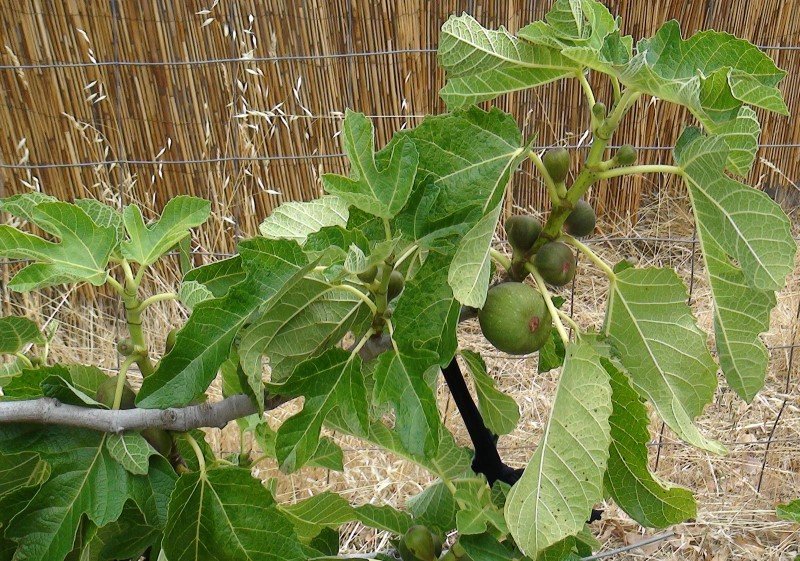
Fig
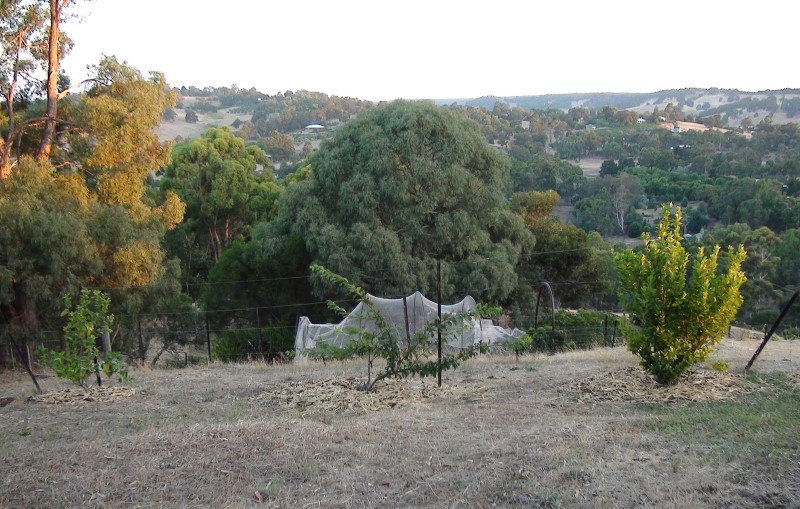
Lemon, Graft & Lime - row 1
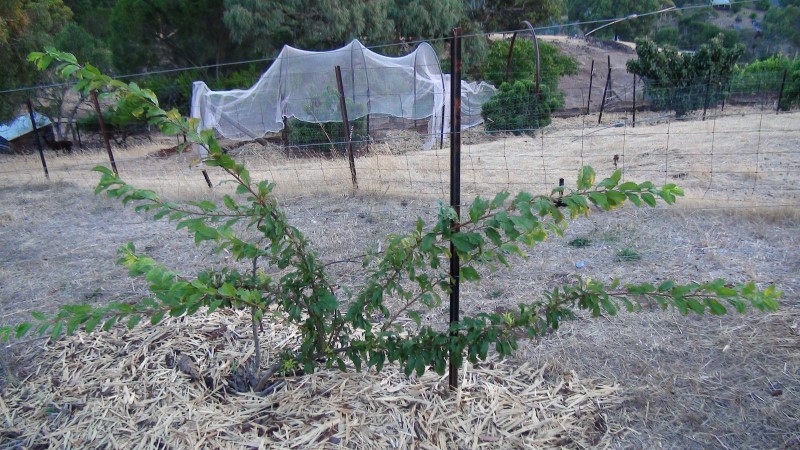
Graft
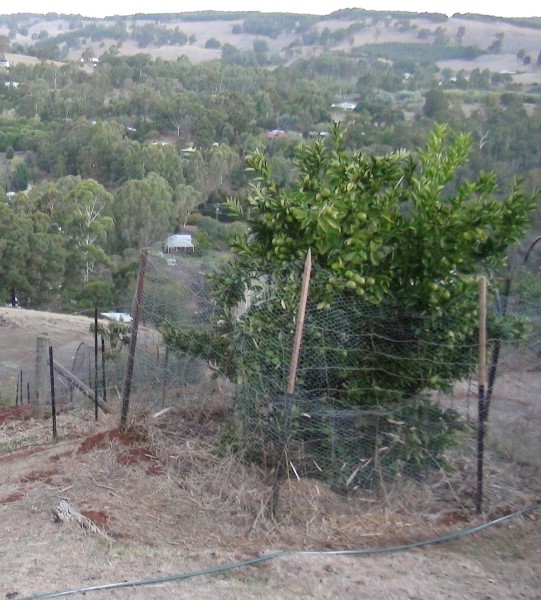
Orange
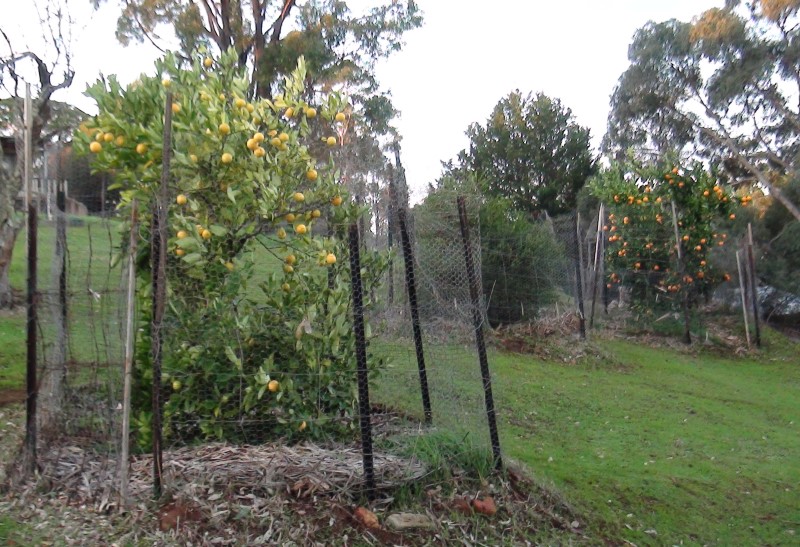
Lemonade, Lime & Orange
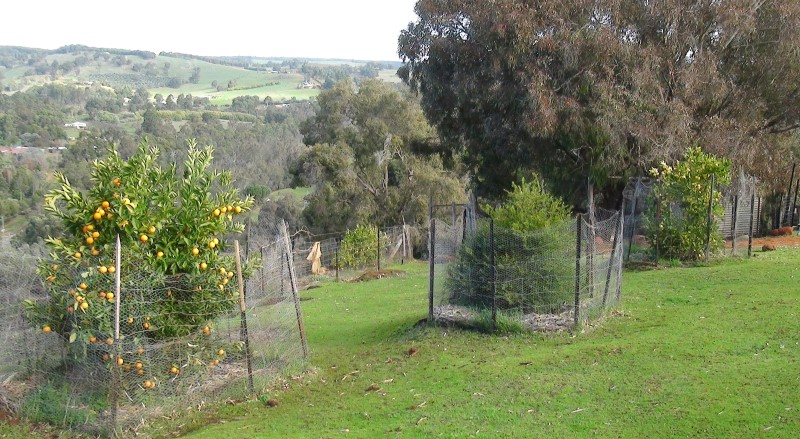
Orange, Lime & Lemonade
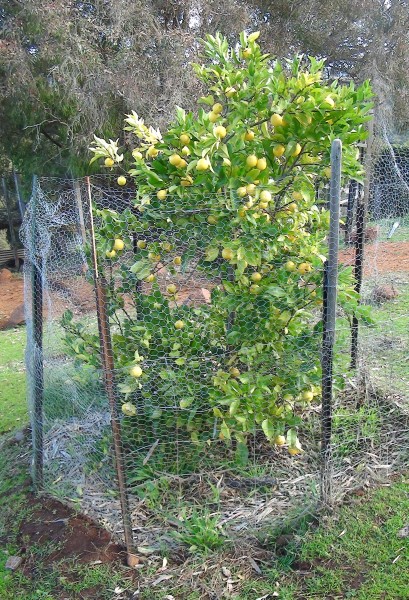
Lemonade
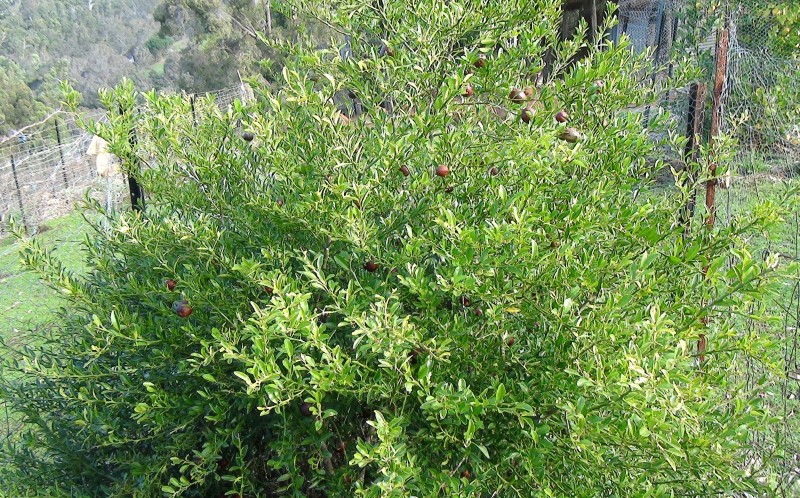
Lime
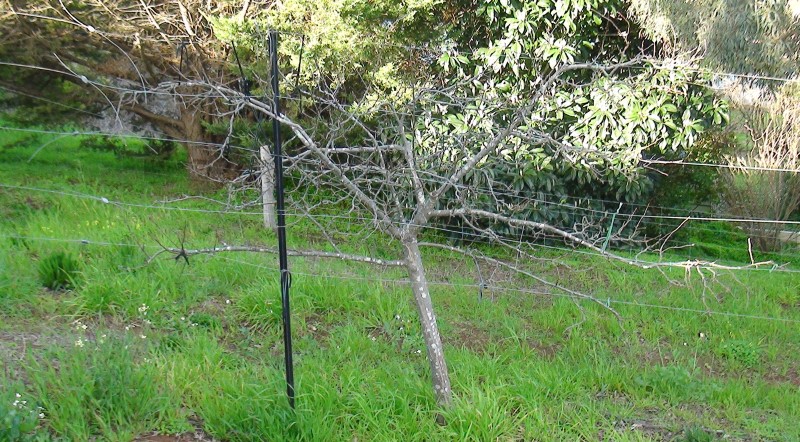
Apple 2
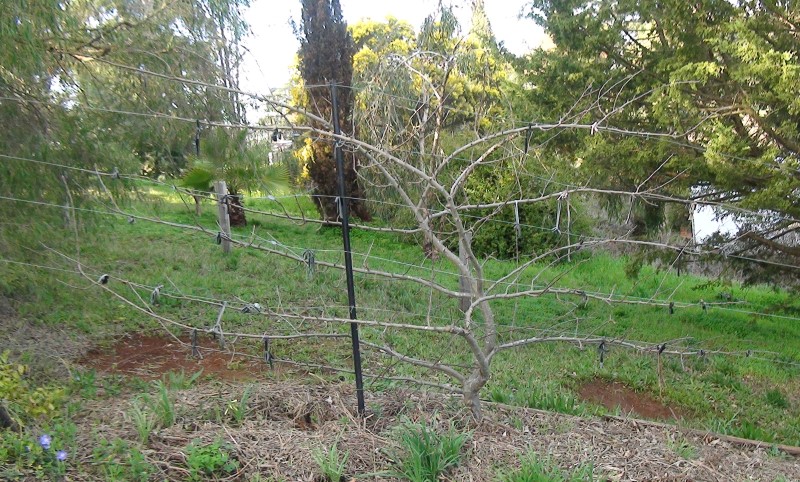
Apple 1
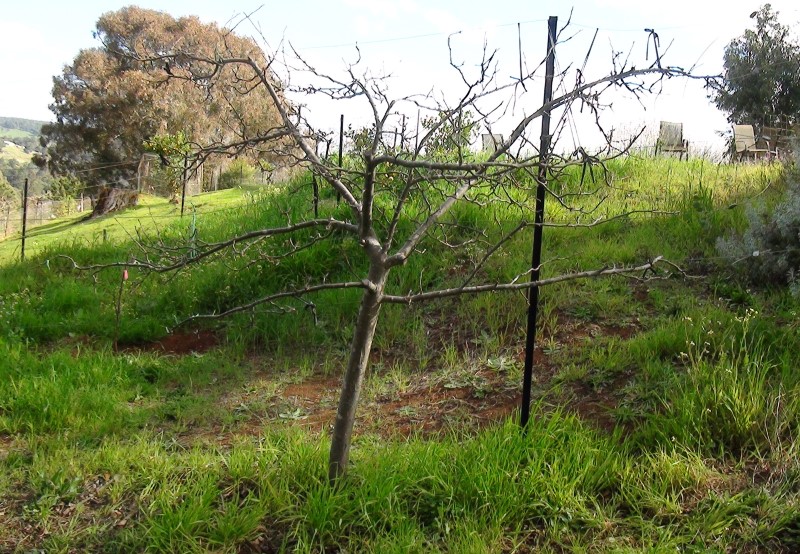
Apple 2
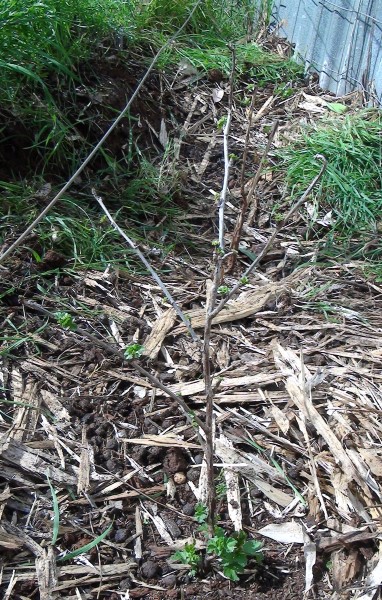
Gooseberry
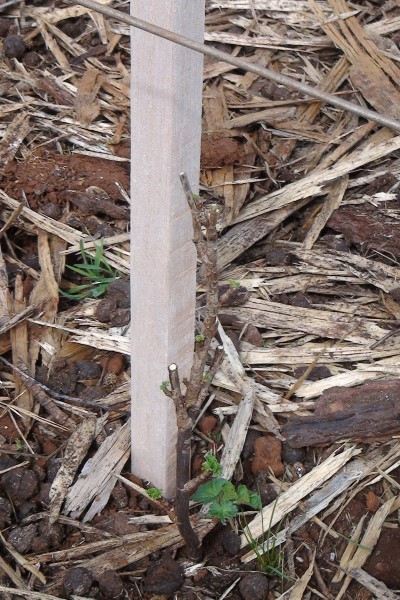
Gooseberry
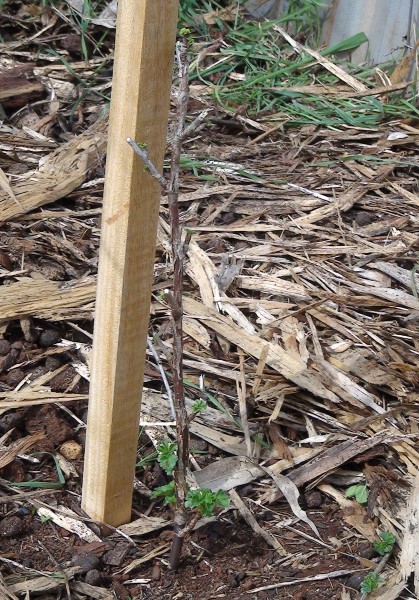
Gooseberry
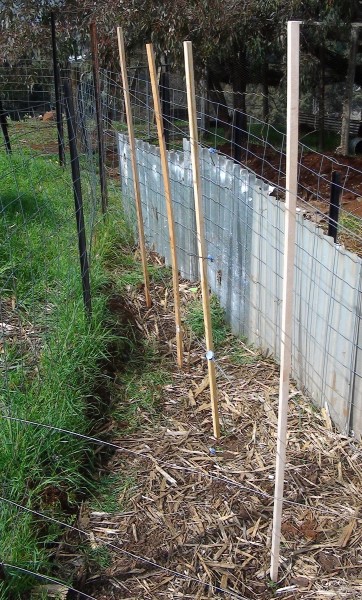
Gooseberry row
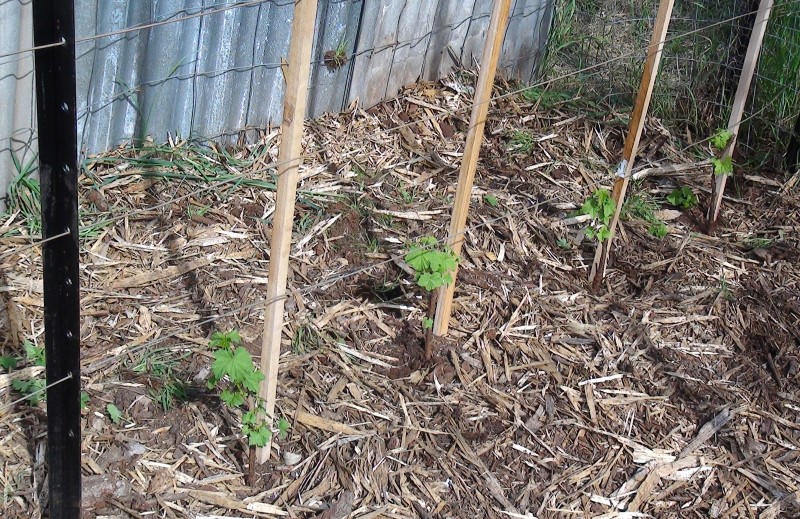
Red currants
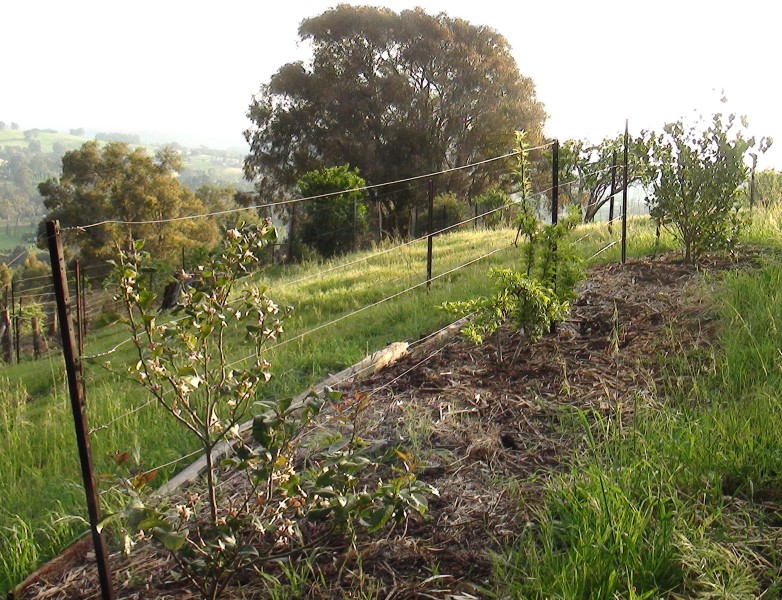
Row 1
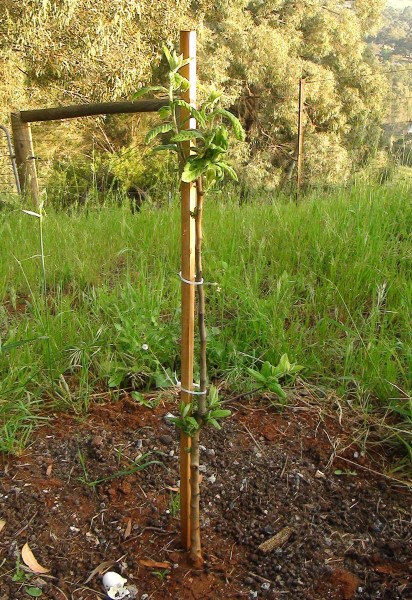
Medlar
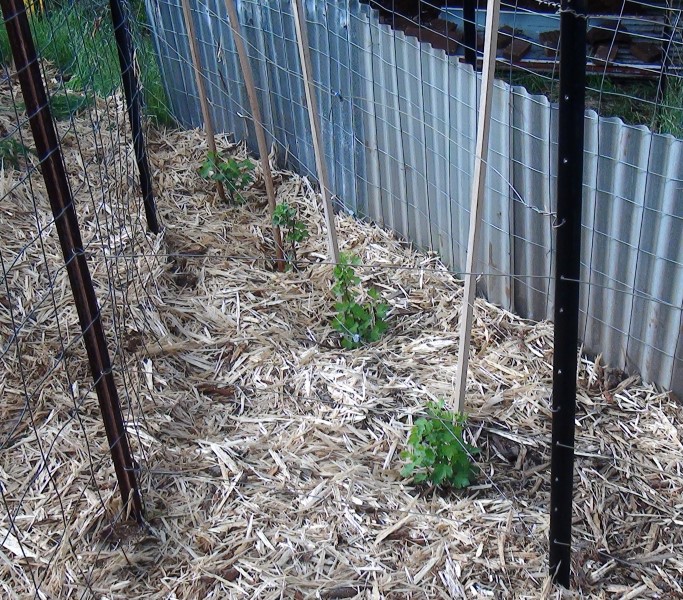
Gooseberry row
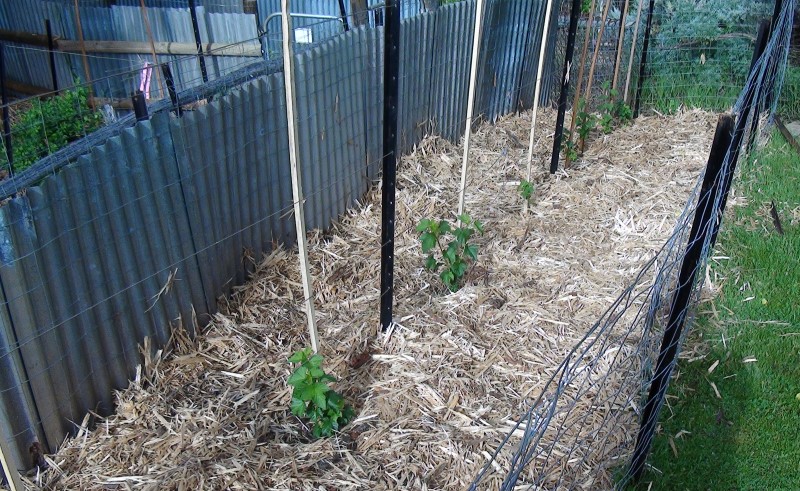
Red currants
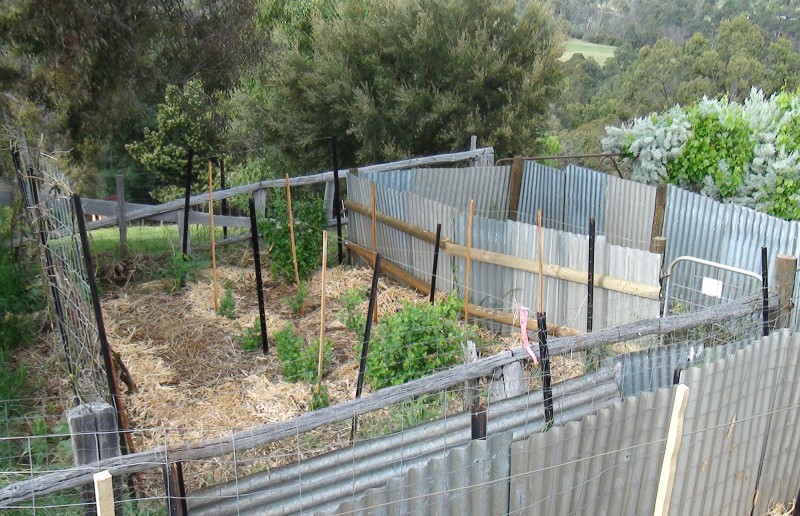
Passionfruit, Gooseberry & Goji berry
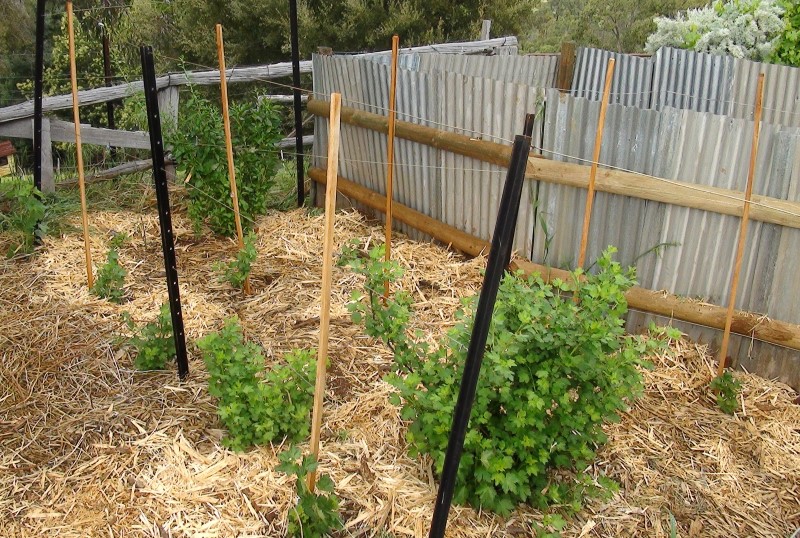
Gooseberry & Goji berry
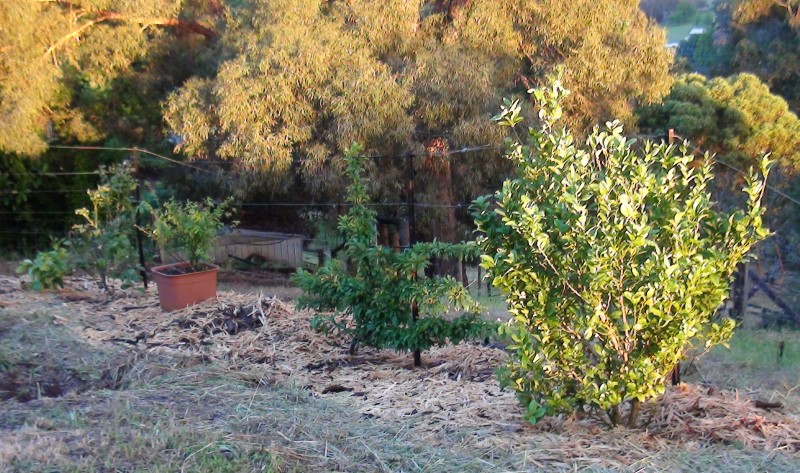
Row 1
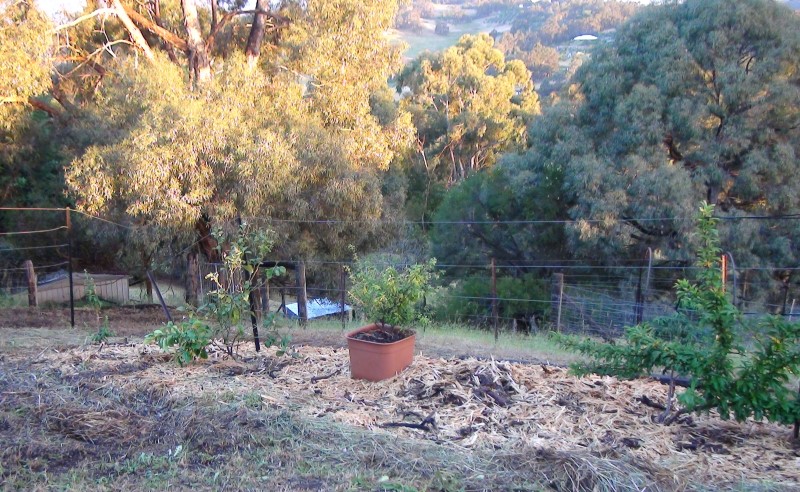
Row 1
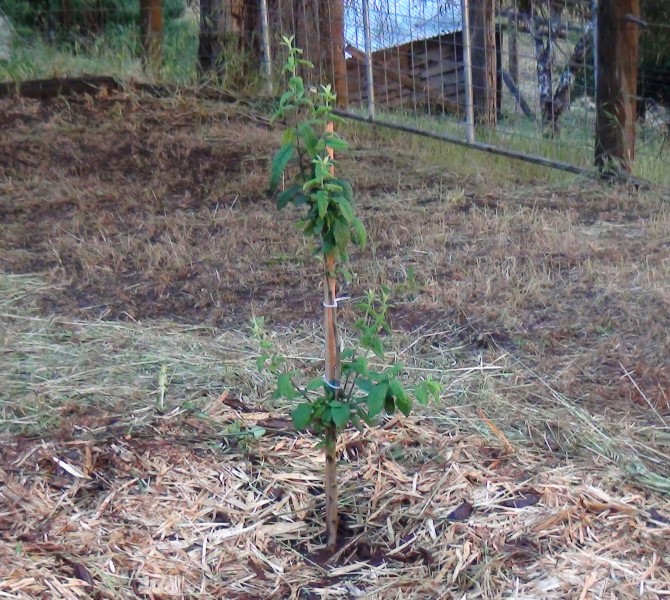
Medlar
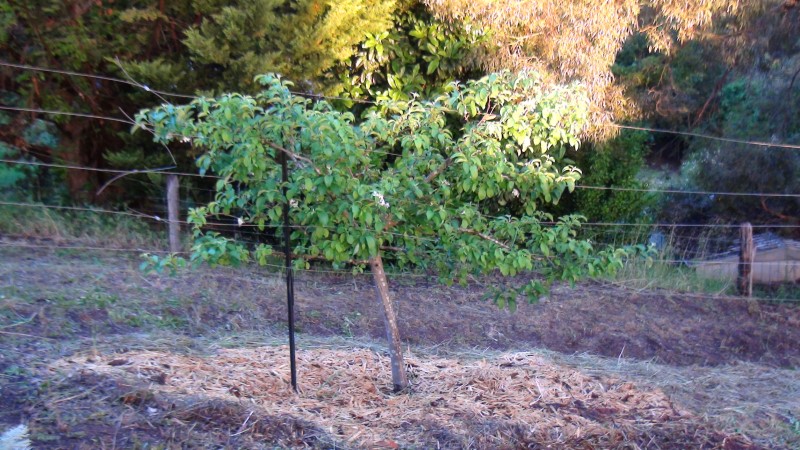
Apple 2
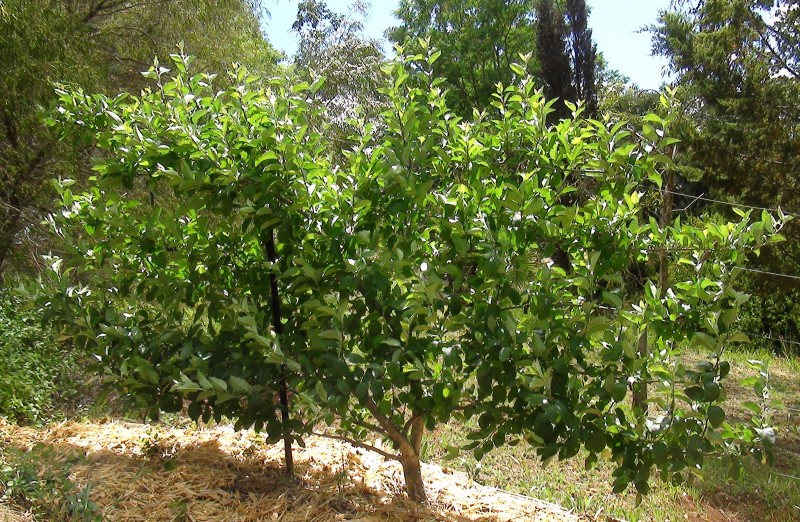
Apple 1
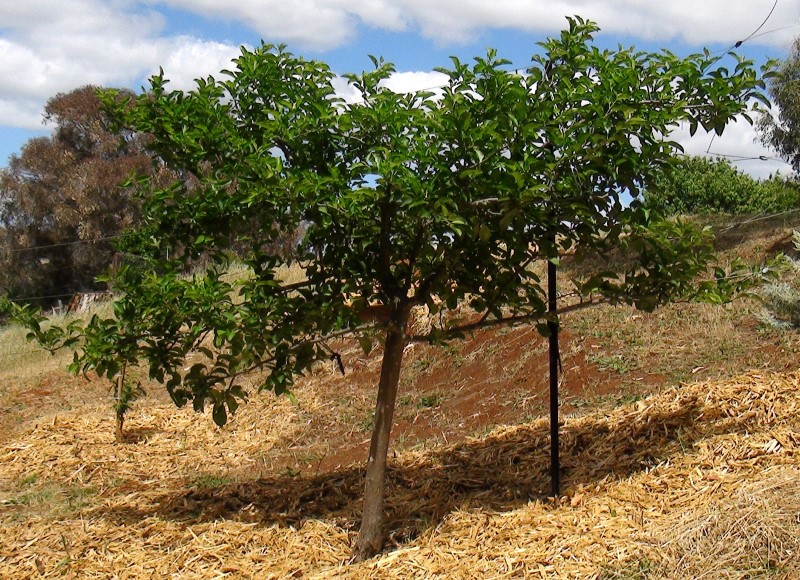
Apple 2
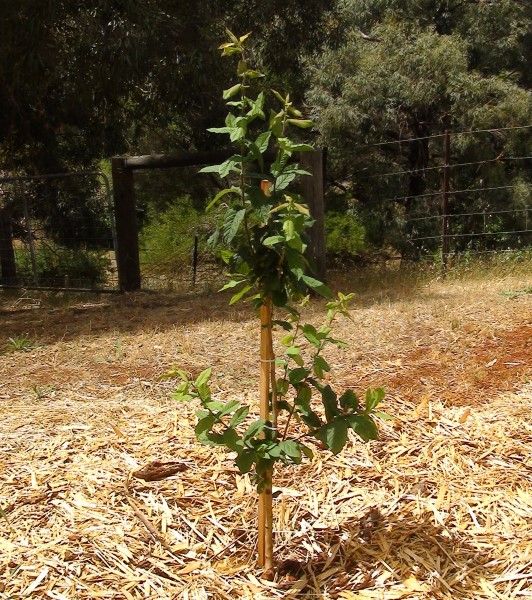
Medlar
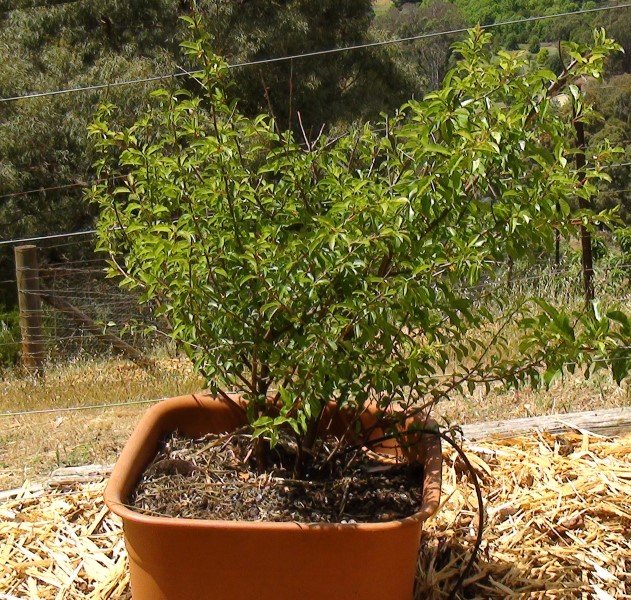
Plum sucker rootstock
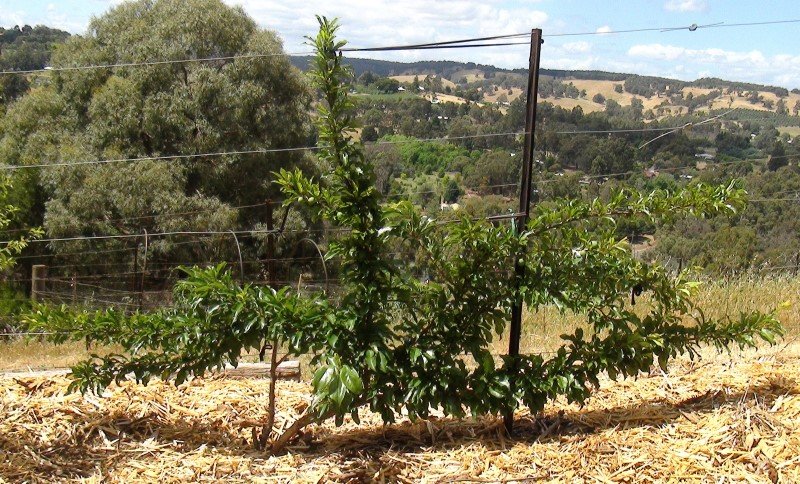
Graft
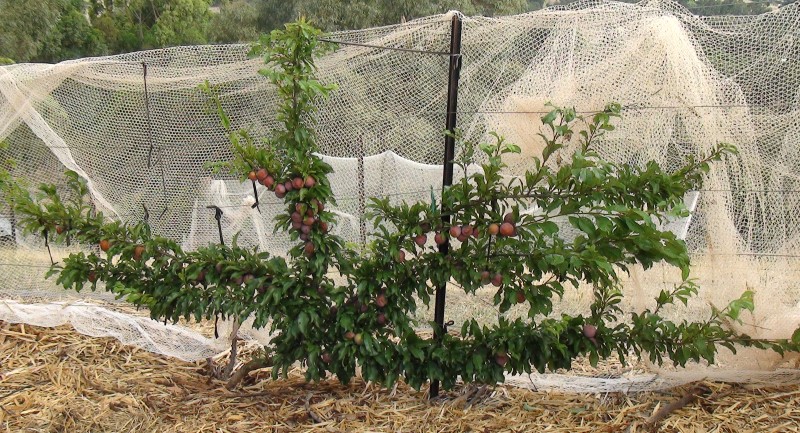
Graft with fruit
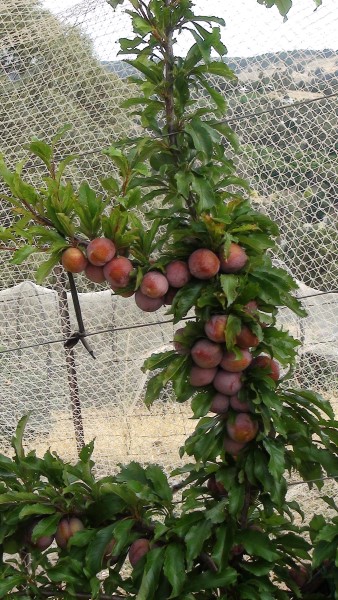
Plum on Nectarine rootstock
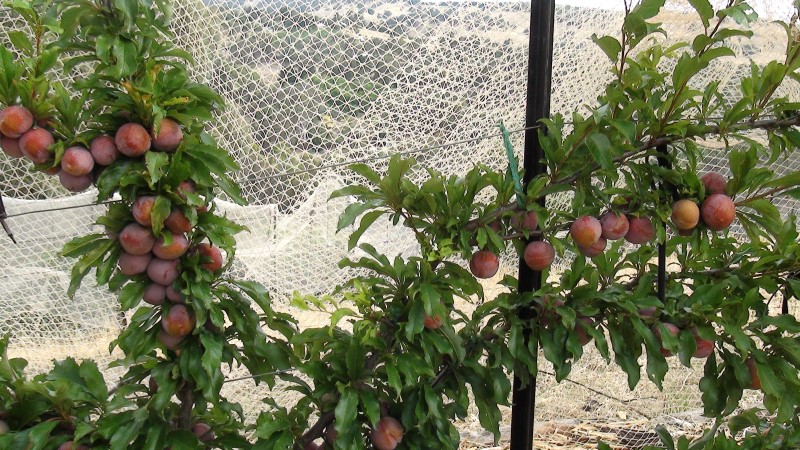
Graft
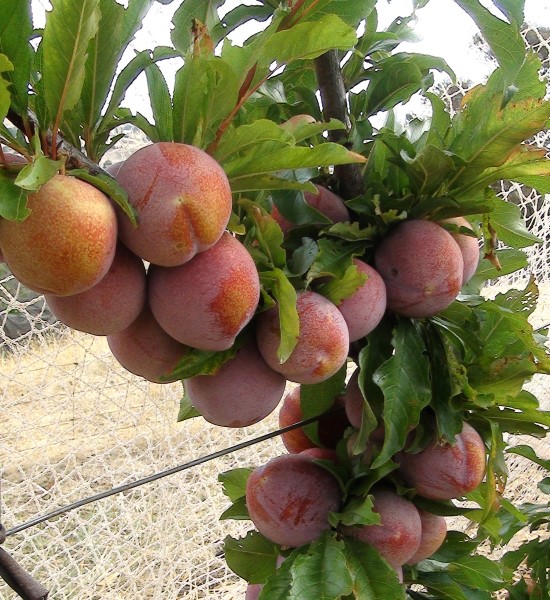
Graft
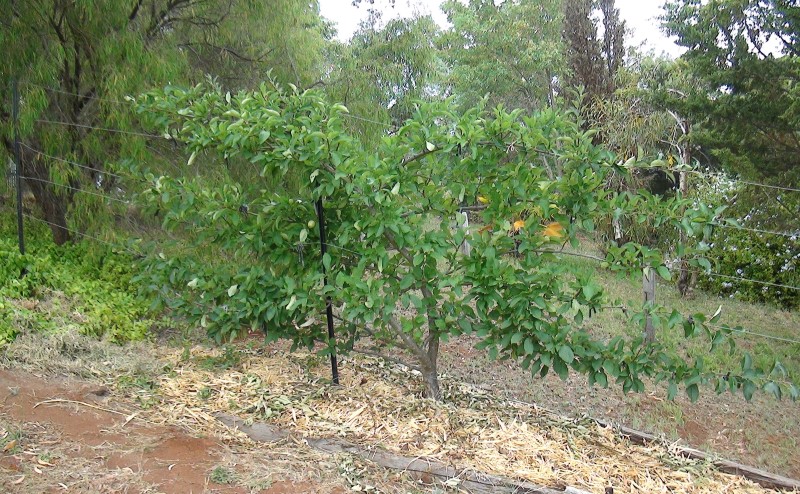
Apple 1
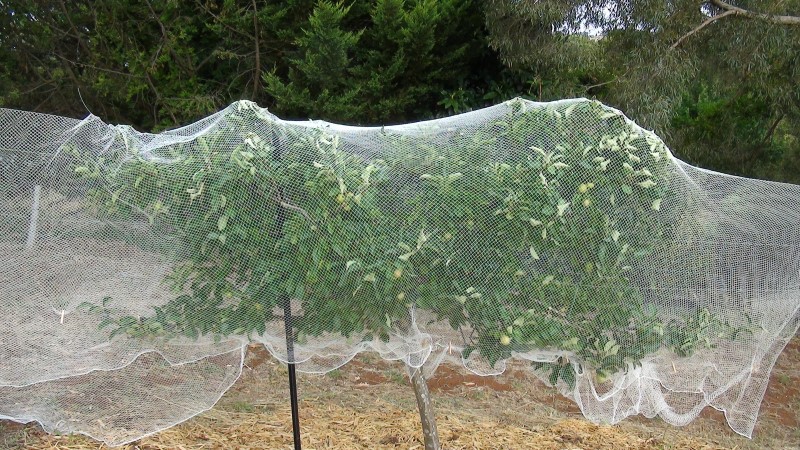
Apple 2
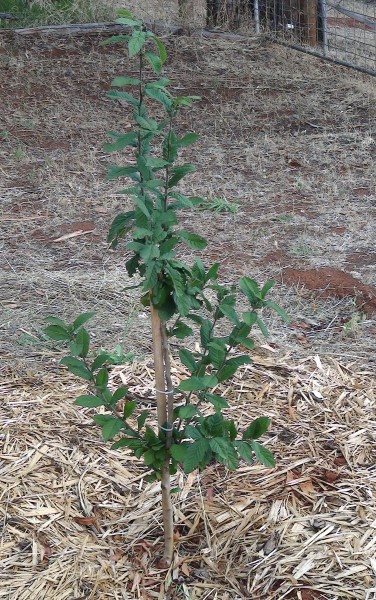
Medlar
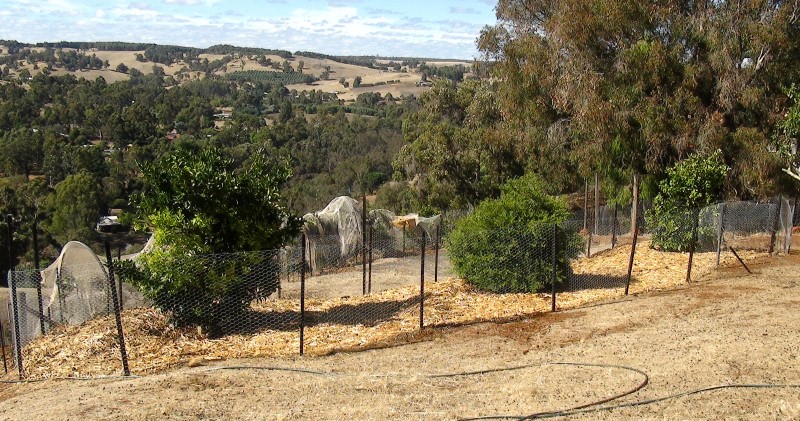
Citrus
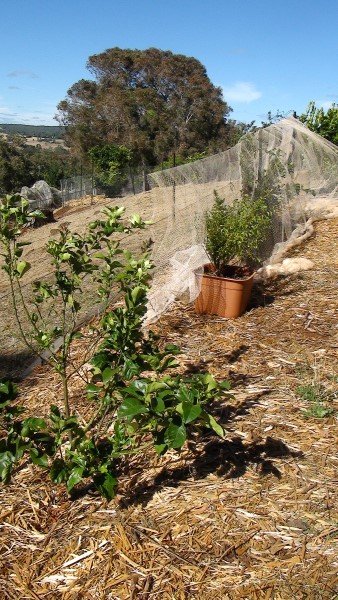
Lemon
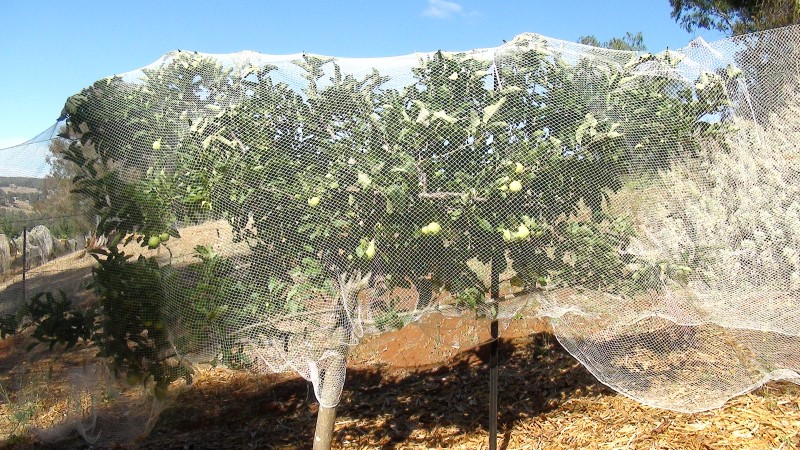
Apple 2
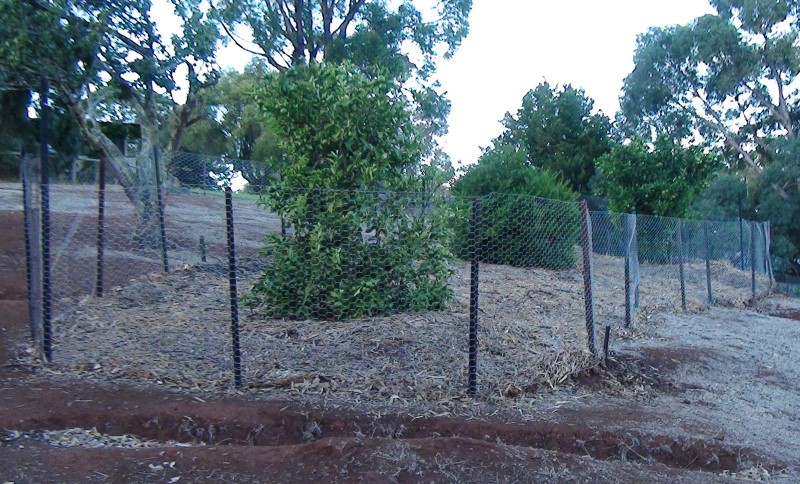
Citrus
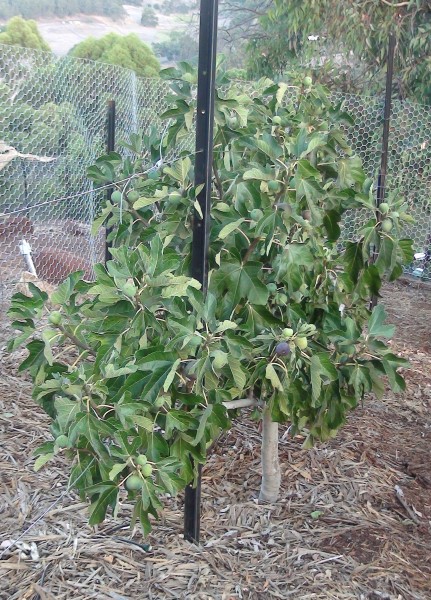
Fig
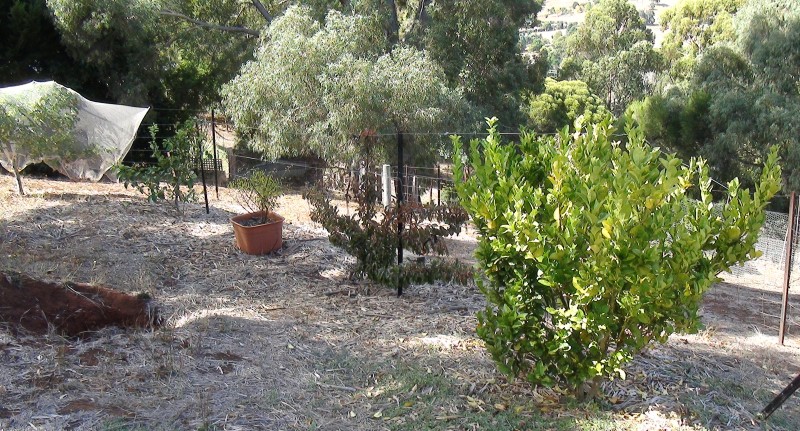
Lime 1 & Graft
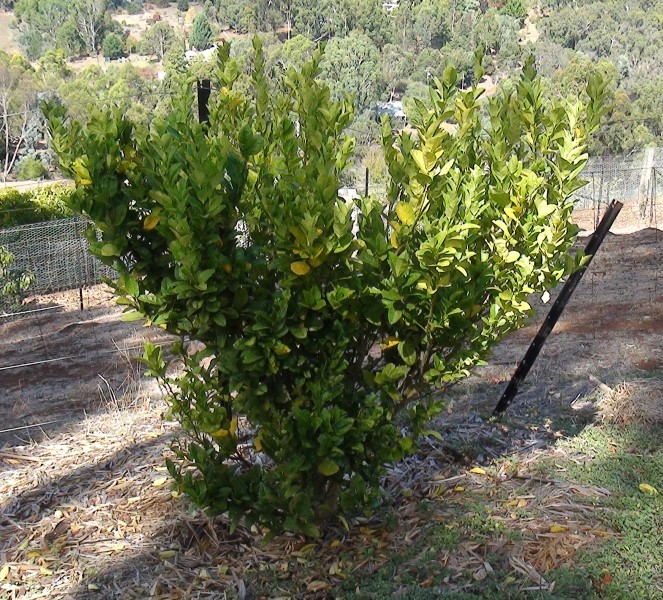
Lime 1
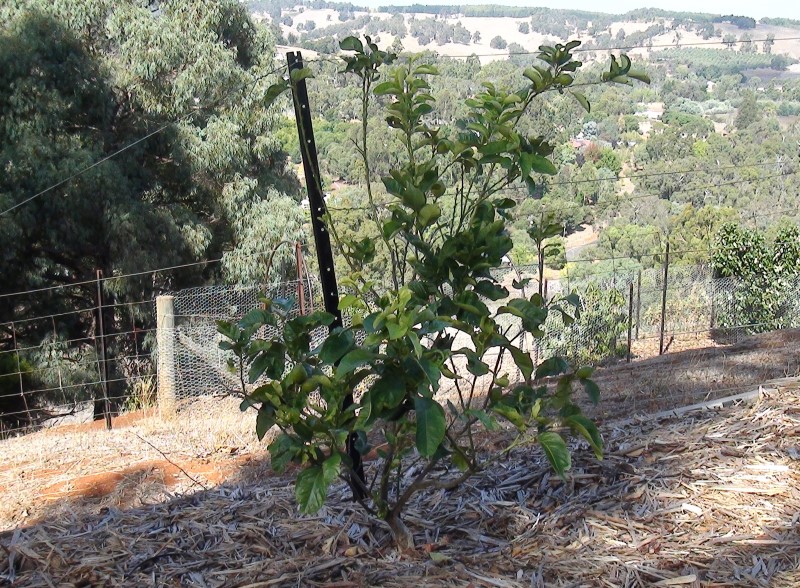
Lemon
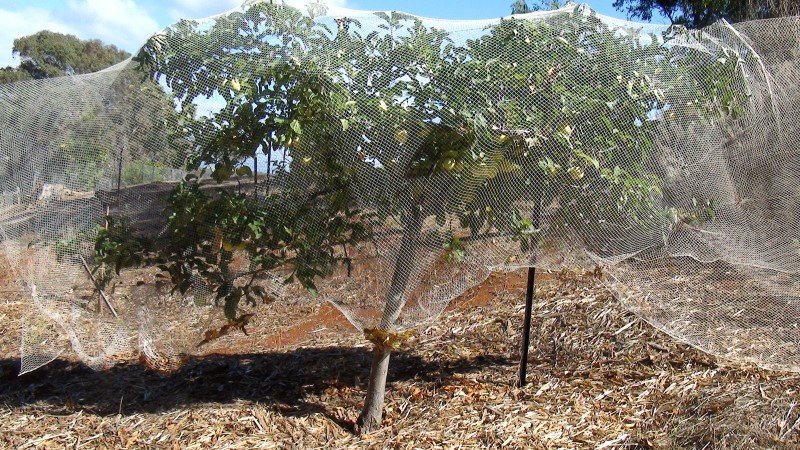
Apple 2
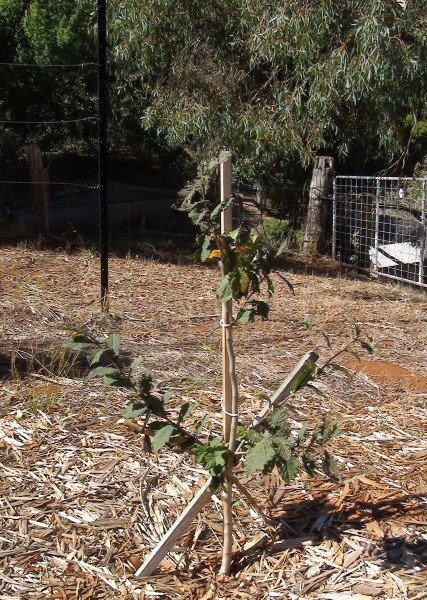
Medlar
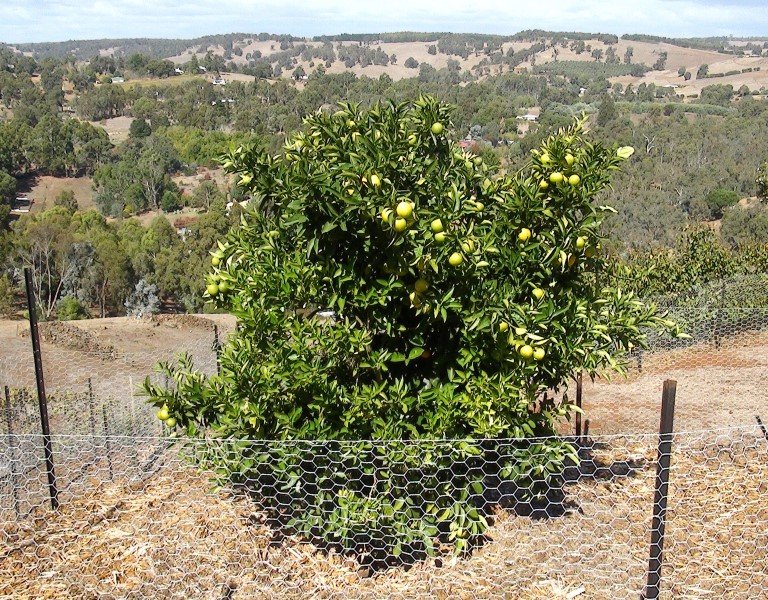
Orange
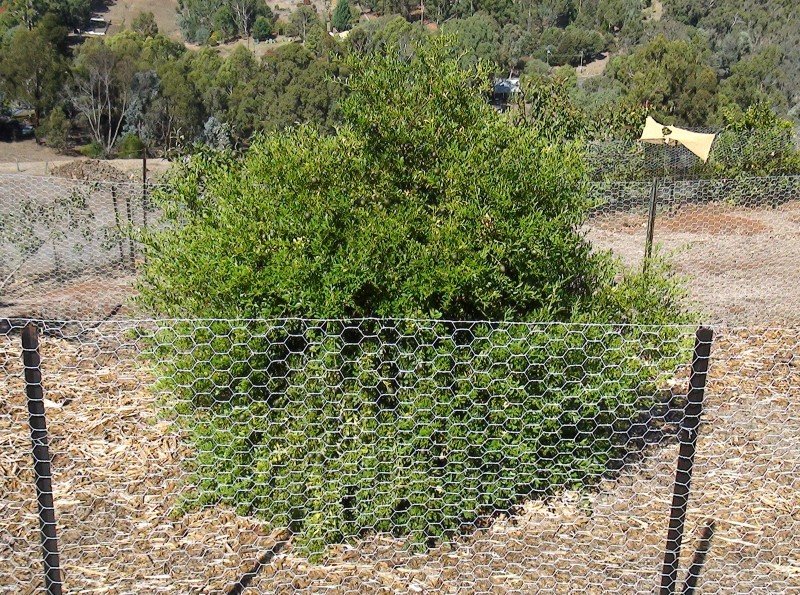
Lime 2
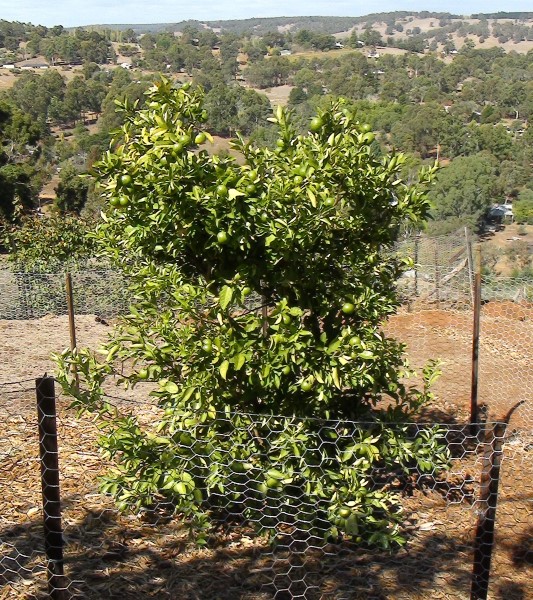
Lemonade
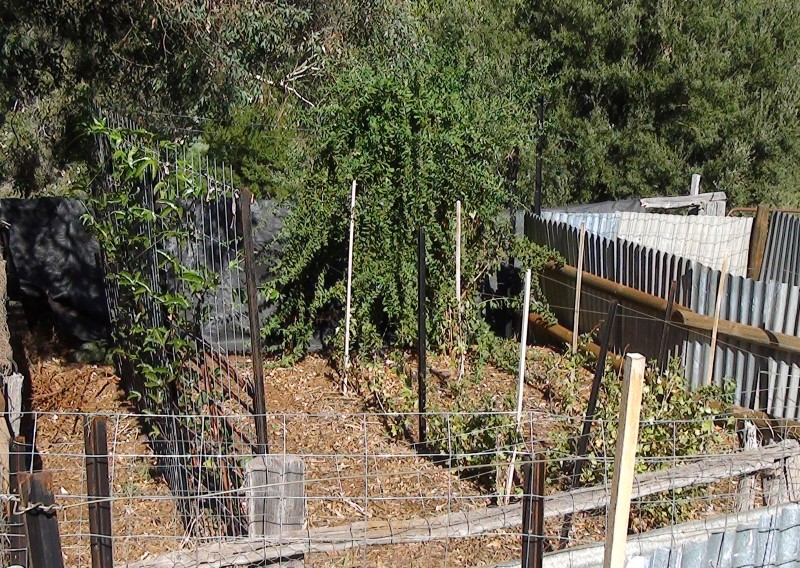
Passionfruit, Gogi berry & Gooseberry
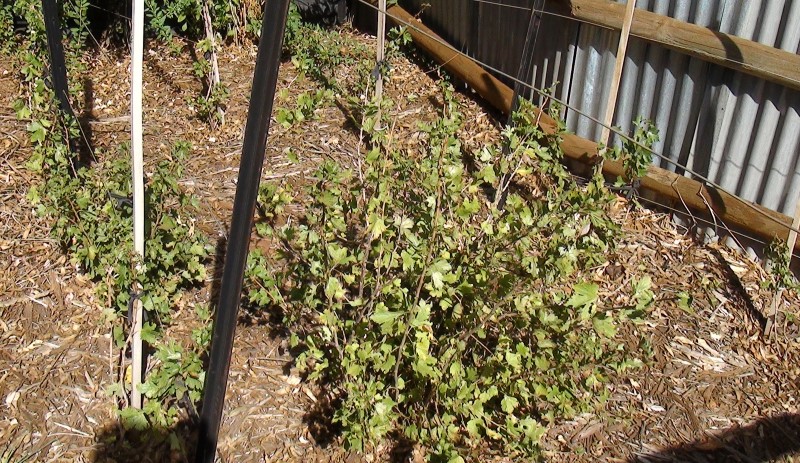
Gooseberries
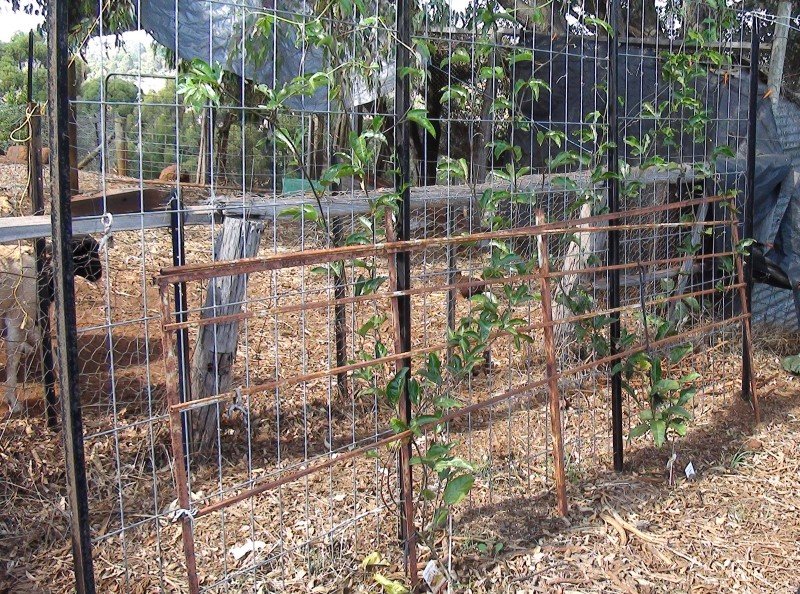
Passionfruit
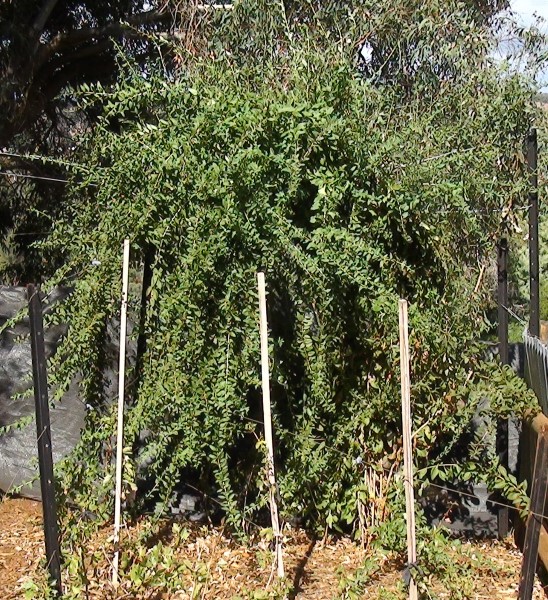
Goji berry
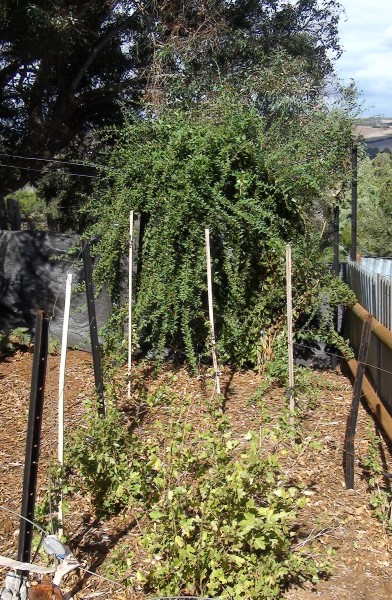
Goji berry & Gooseberries
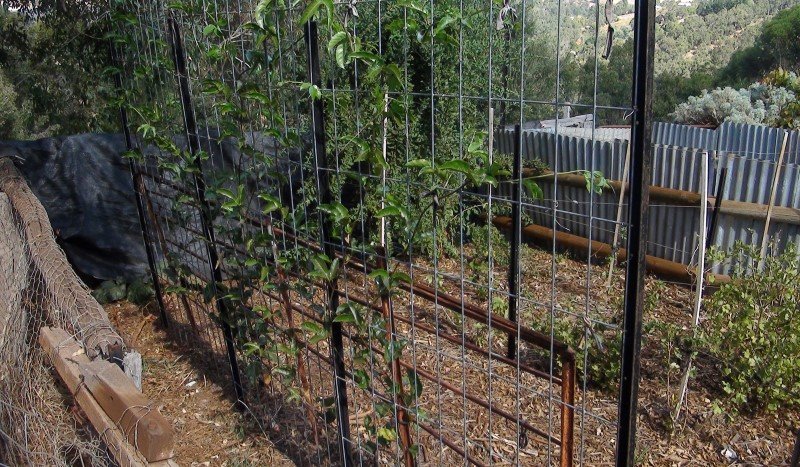
Passionfruit
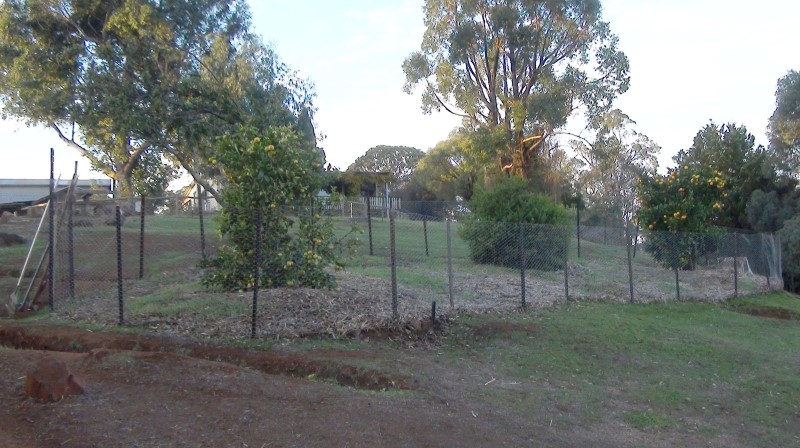
Citrus
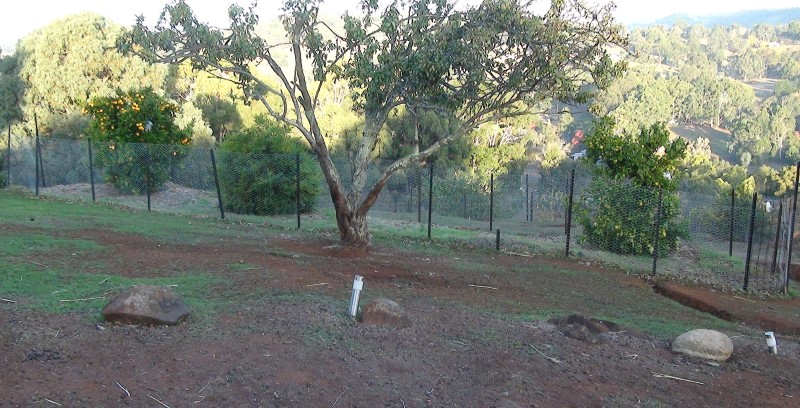
Citrus
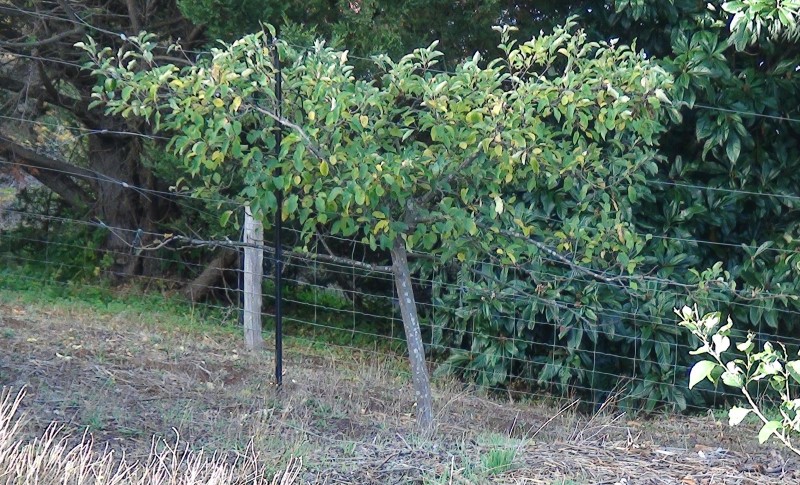
Apple 2
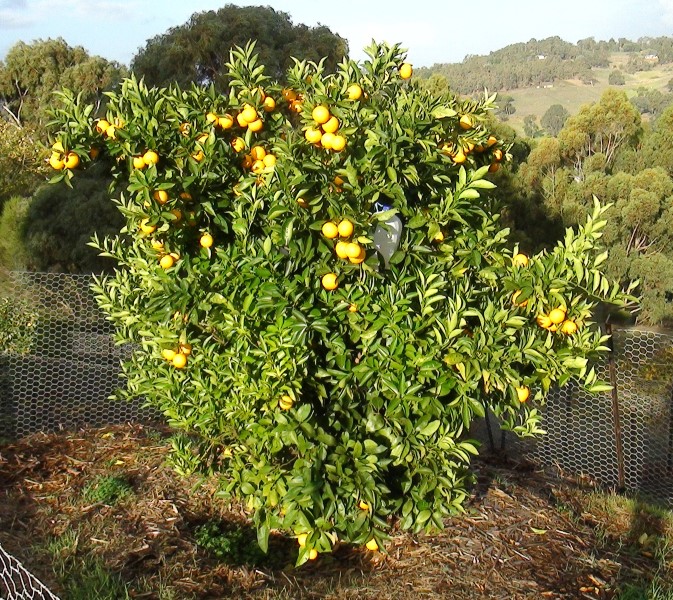
Orange
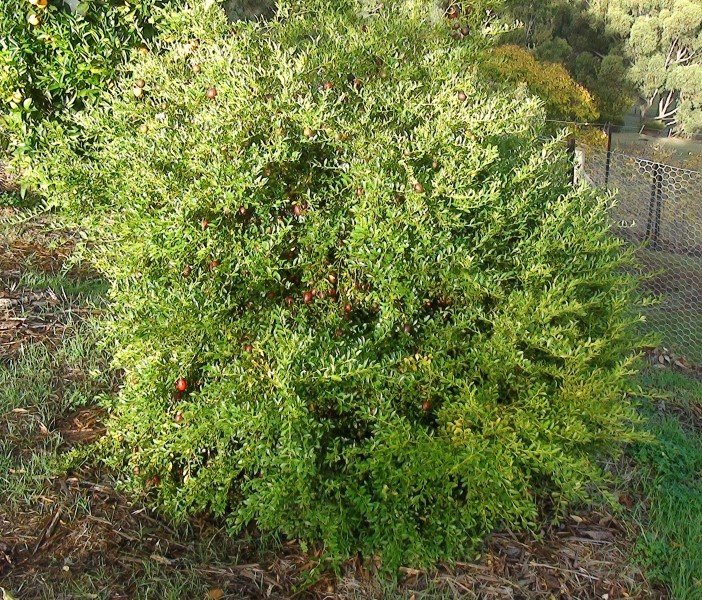
Lime 2
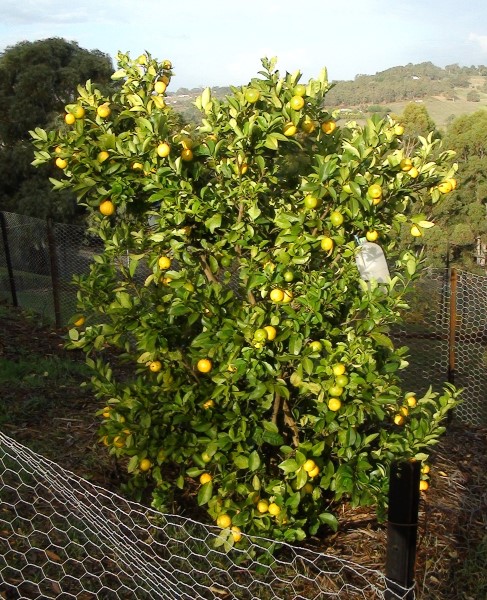
Lemonade
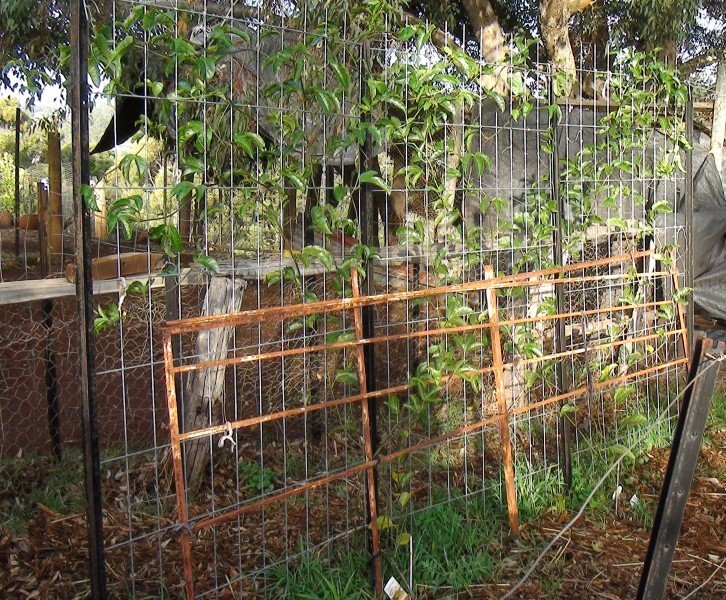
Passionfruit
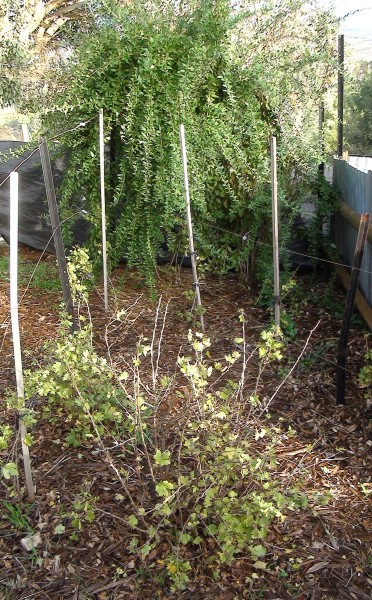
Goji berry & Gooseberies
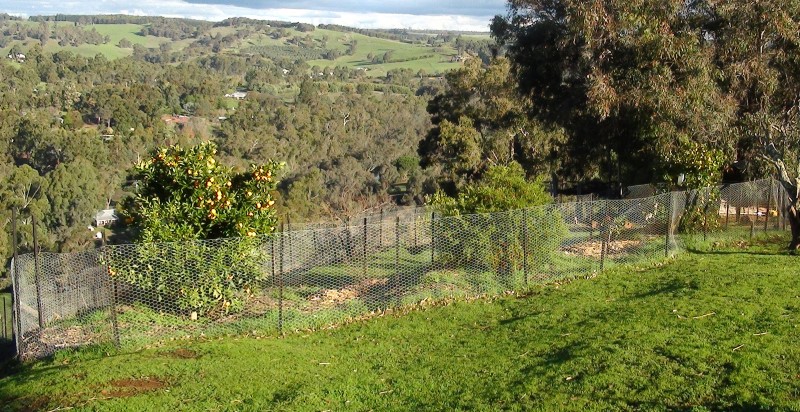
Citrus
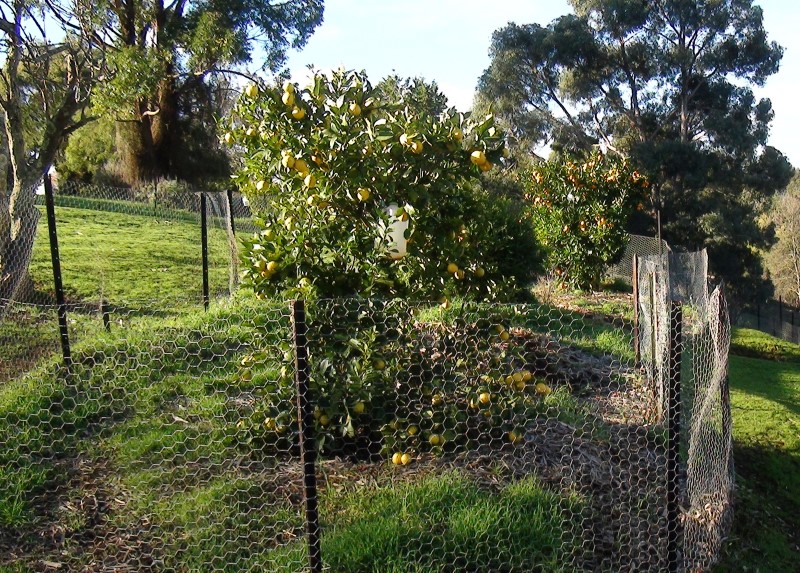
Lemonade
Row 2
- Plant 1 Peach (Trixzie ‘Pixzee’ Dwarf)
- Plant 2 Dwarf Pear (Sensation)
- Plant 3 Nectarine (Trixzie ‘Nectazee’)
- Plant 4 Pear (Trixzie ‘Pyvert’)
- Plant 5 Peach (Valley Red Dwarf)
- Plant 6 Dwarf Pear (Beurre Bosc)
- Plant 7 Nectarine (Rootstock with 2 nectarine grafts)
- Plant 8 Apple (Trixzie Dwarf Gala)
- Plant 9 Prune (d’Agen)
- Plant 10 Mandarin (Hickson)
Basic outline of row looking east
Basic outline of row looking southwest
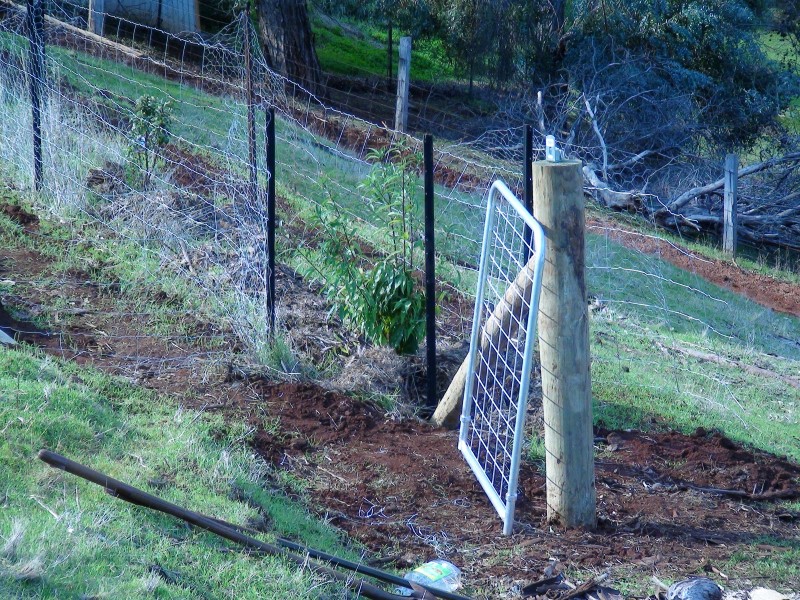
Adding gate & strainer posts
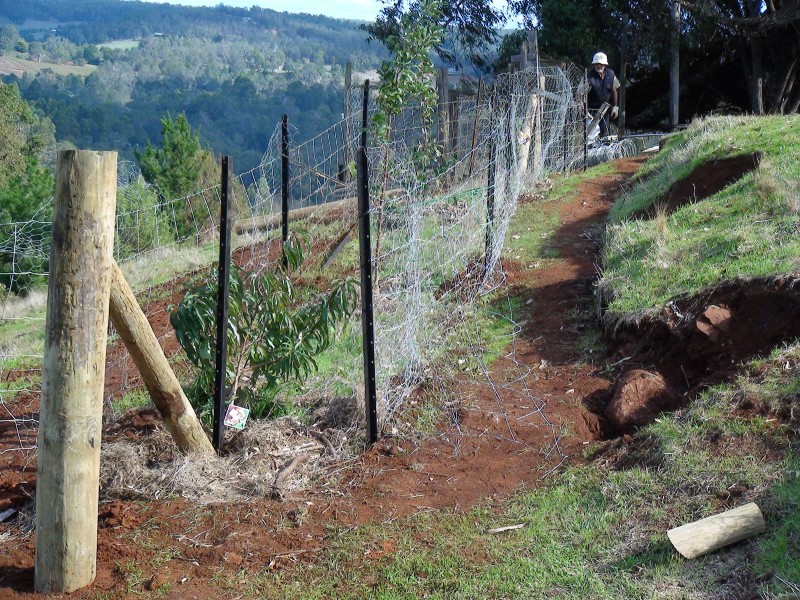
Building west section
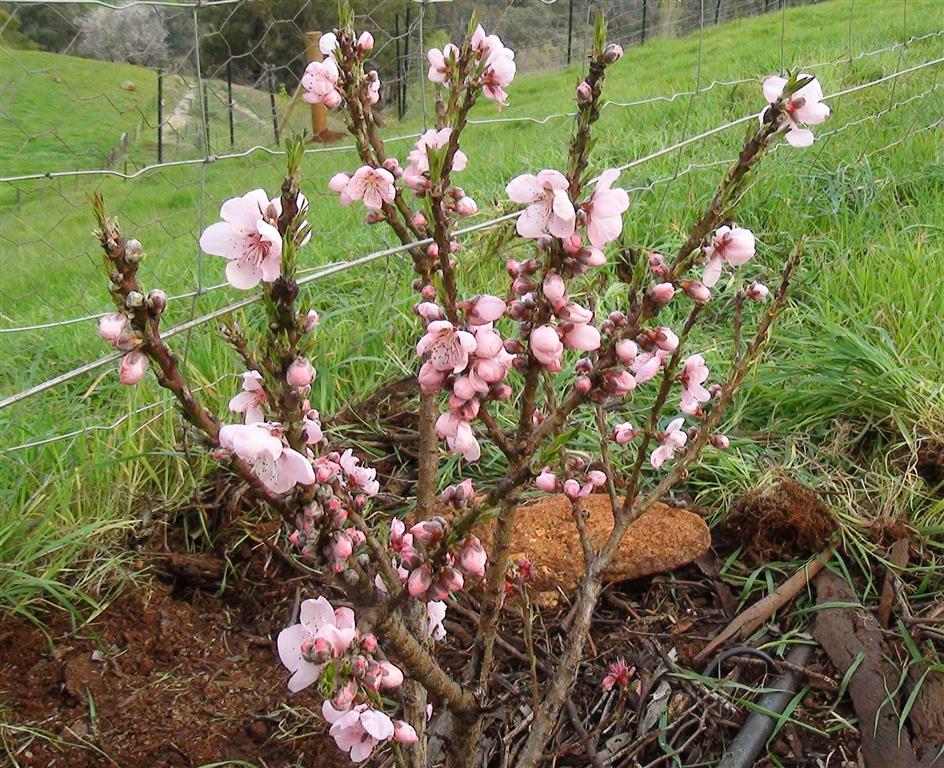
Peach 1
East section
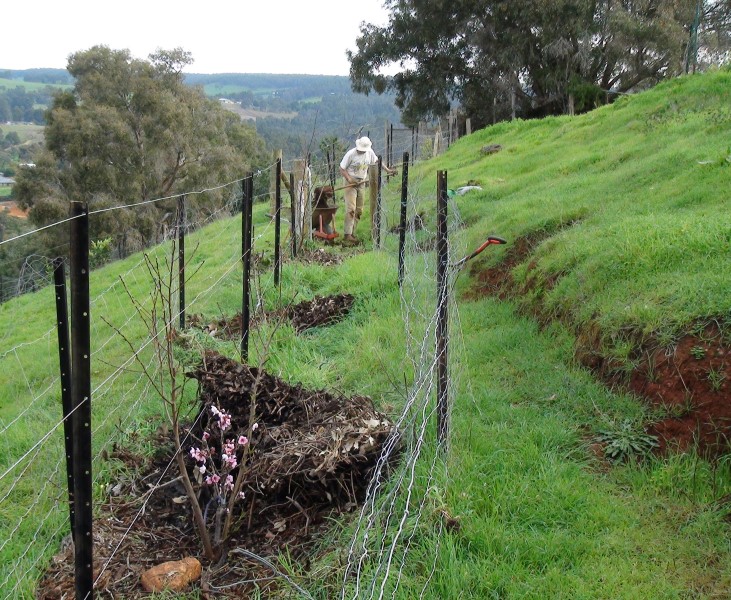
East section
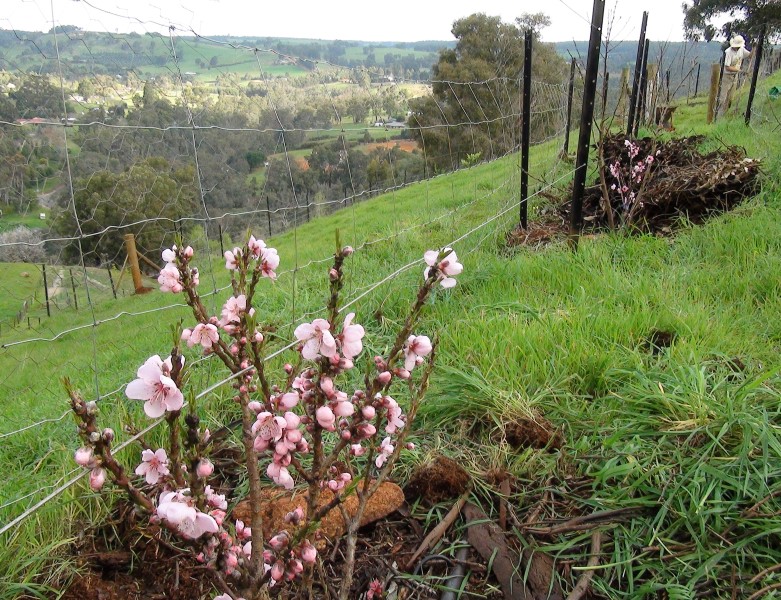
Peach 1 in blossum
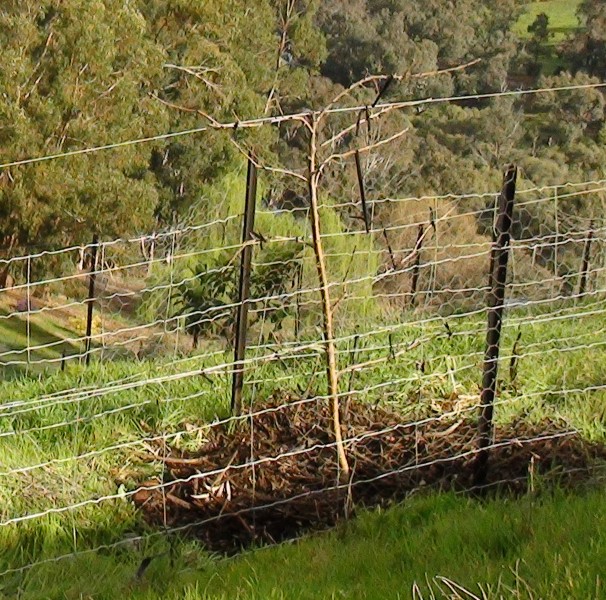
Apple
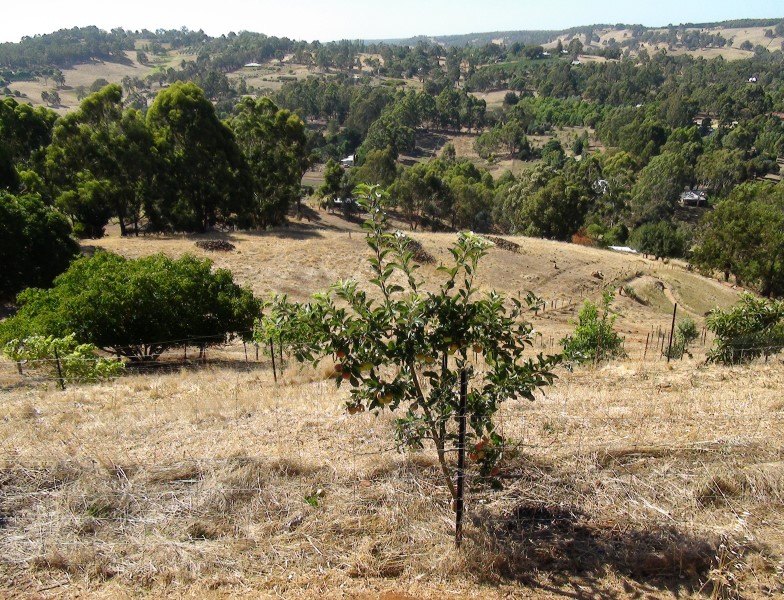
Apple
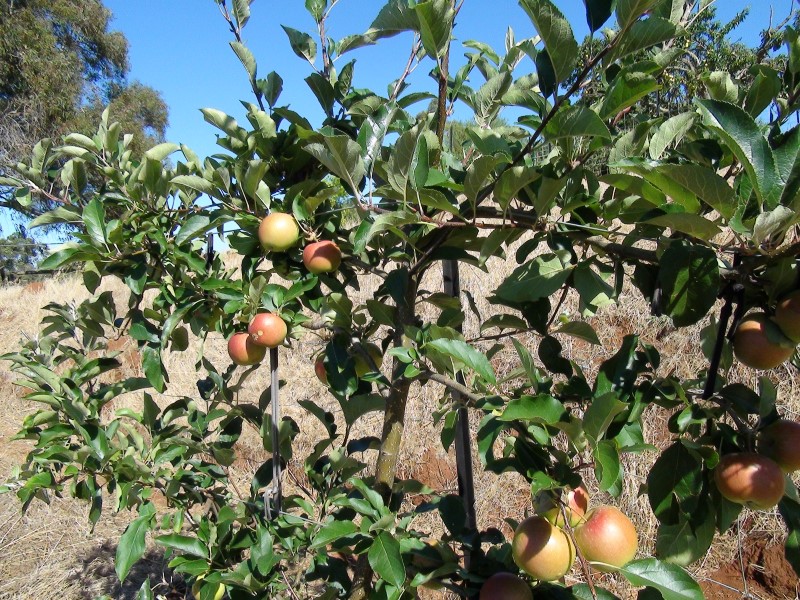
Apples
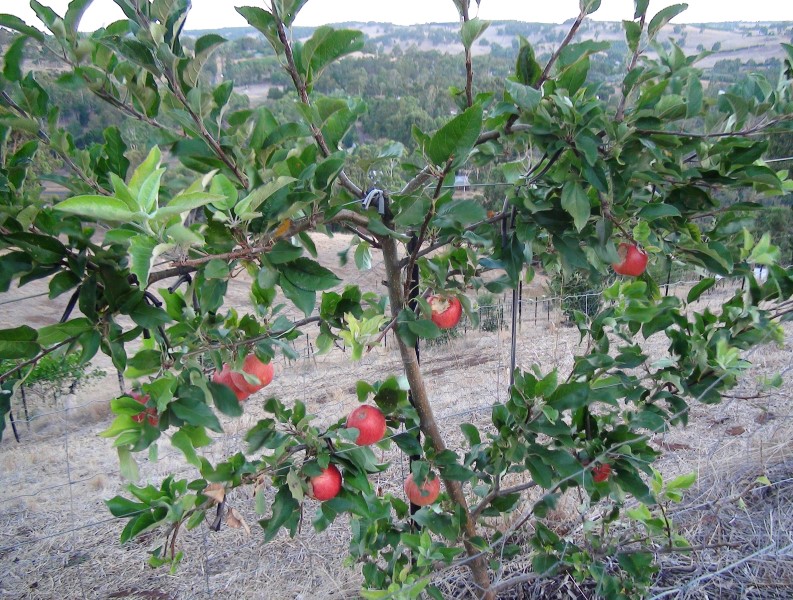
Apple
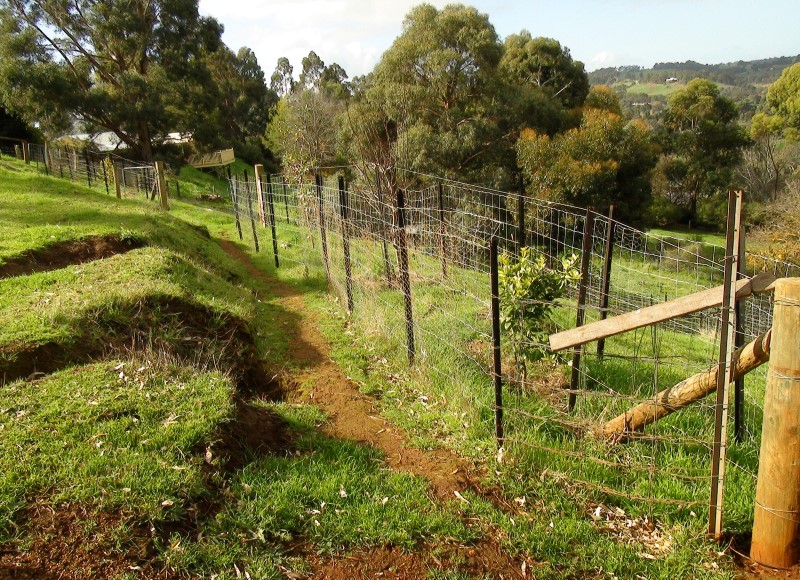
Row 2
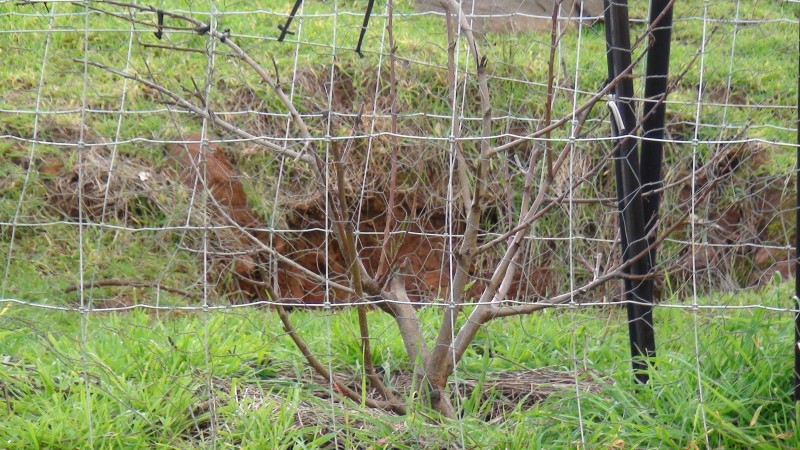
Nectarine rootstock

Peach 1
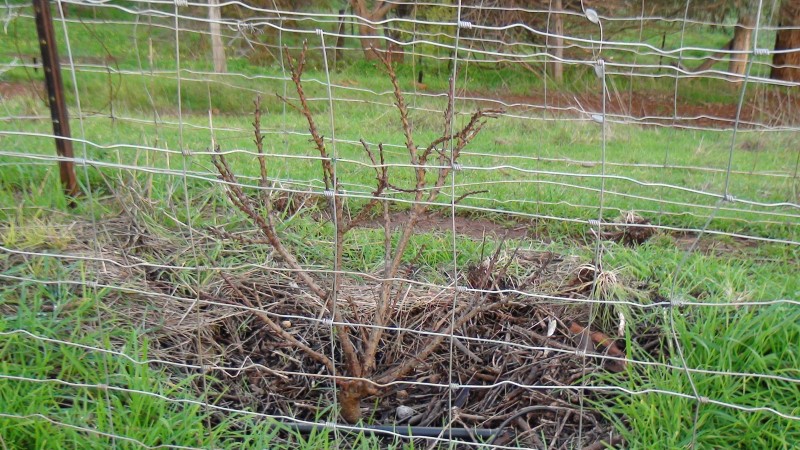
Peach 1
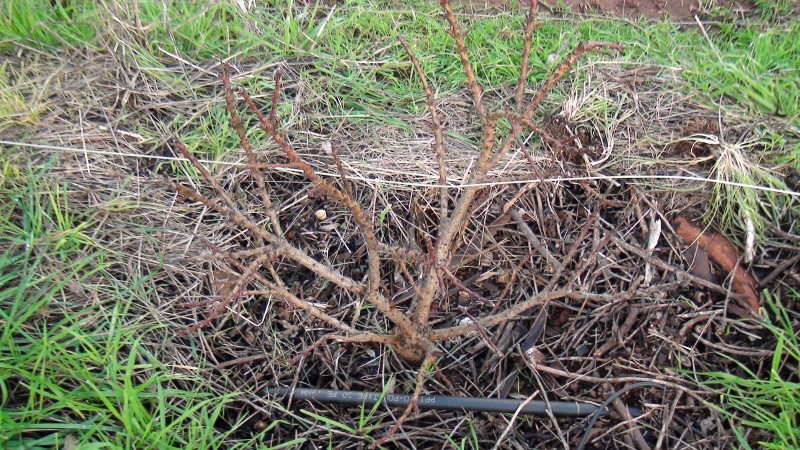
Peach 1
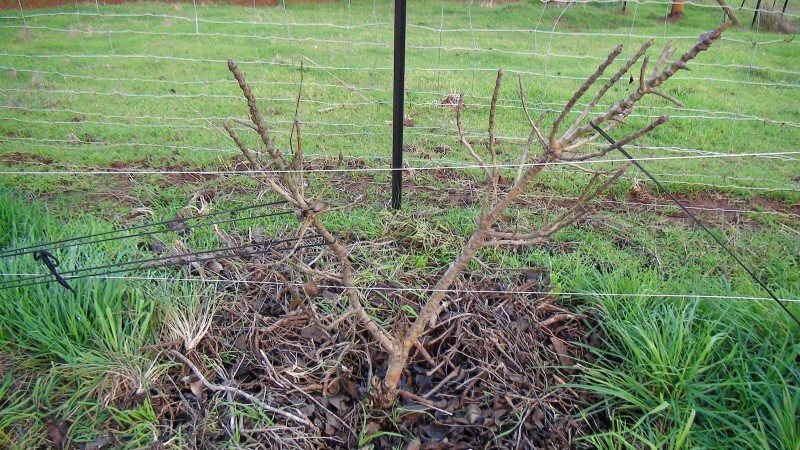
Pear
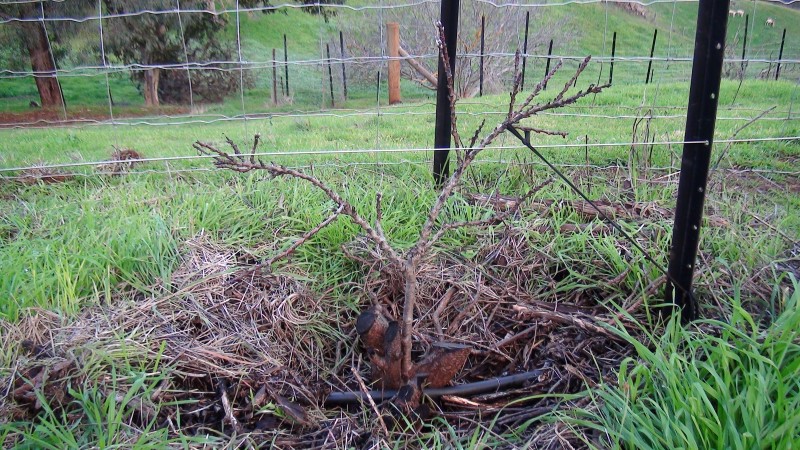
Peach 2
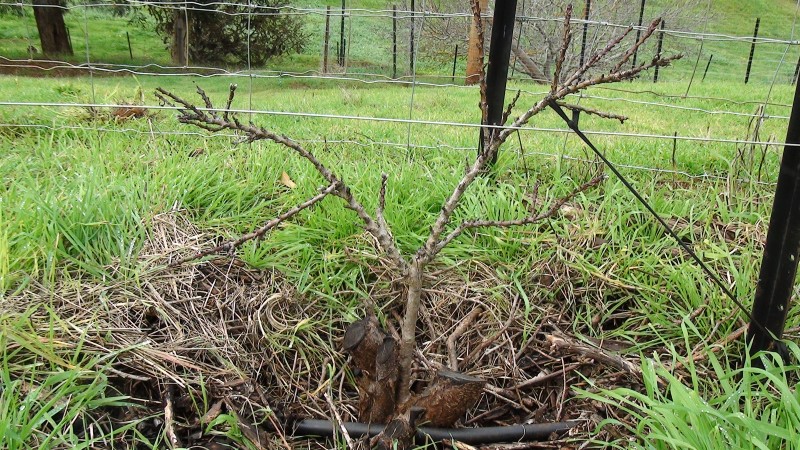
Peach 2
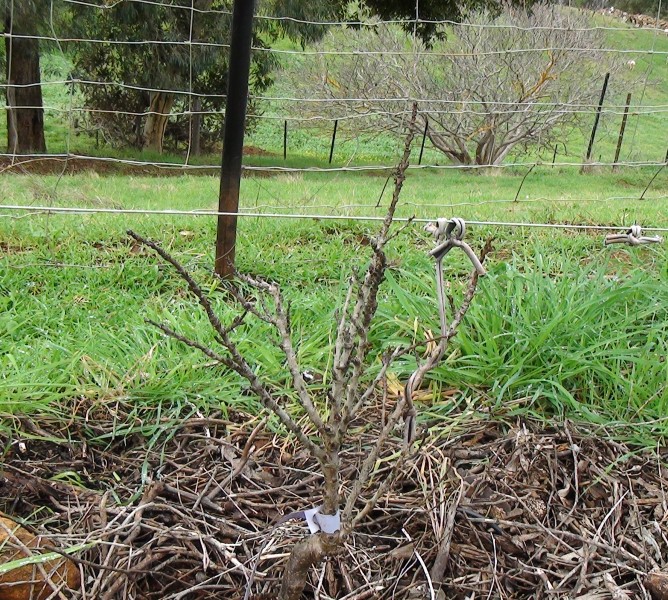
Nectarine
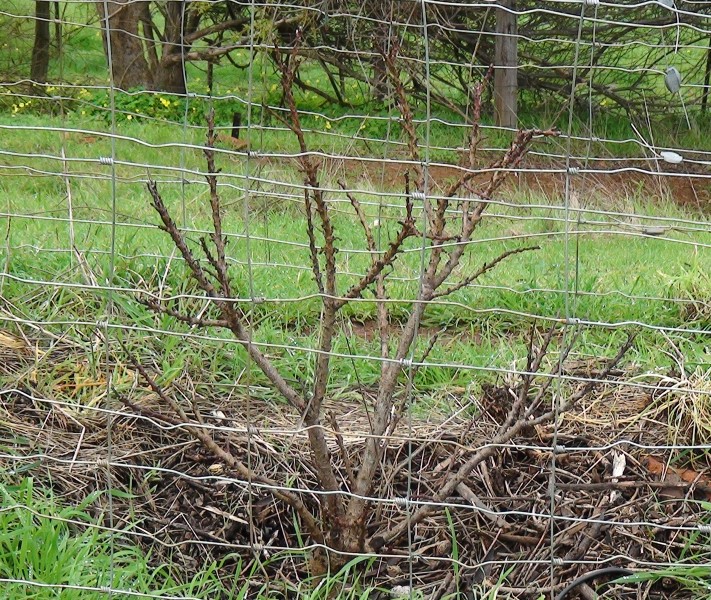
Peach 1
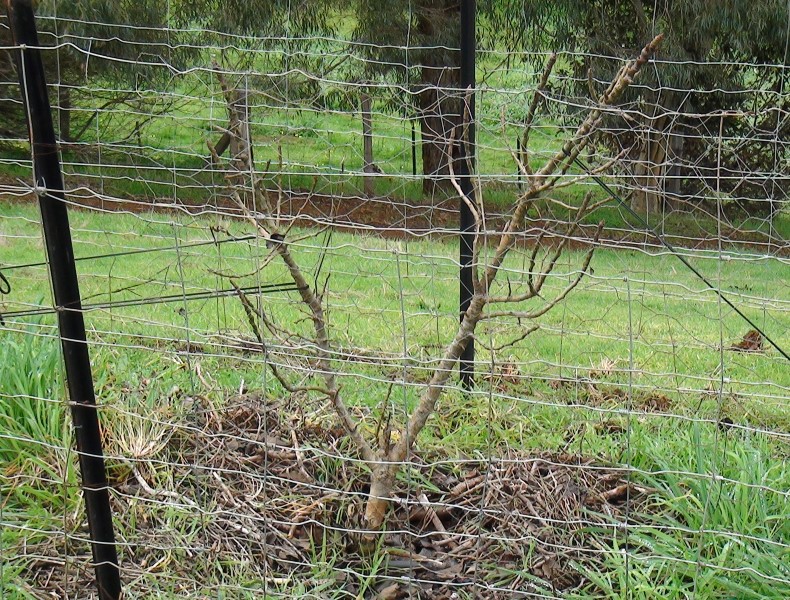
Pear
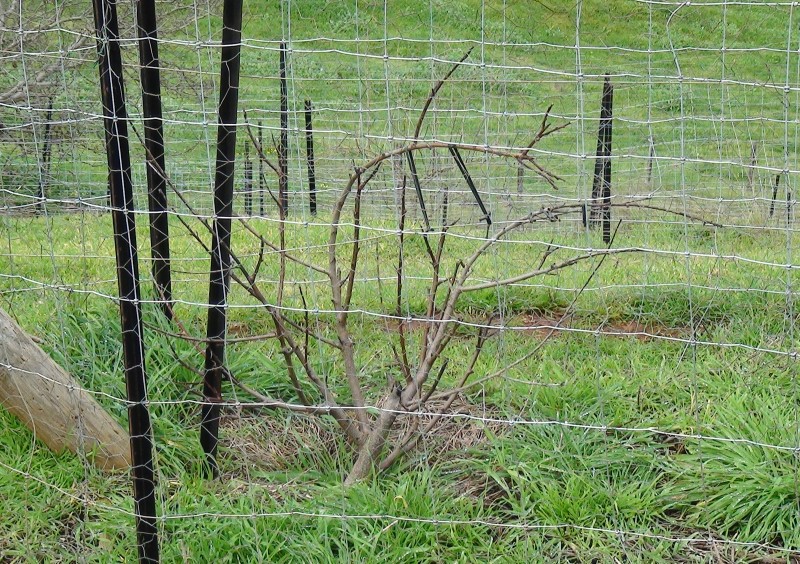
Nectarine rootstock
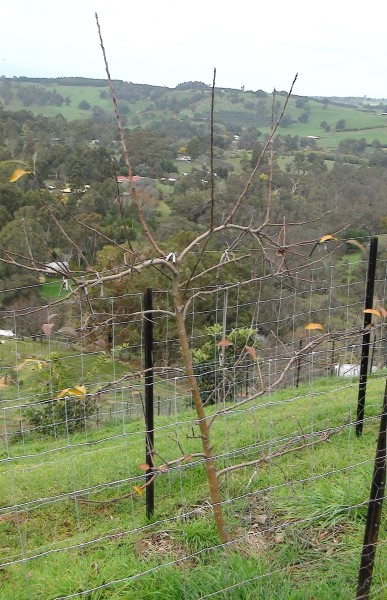
Apple
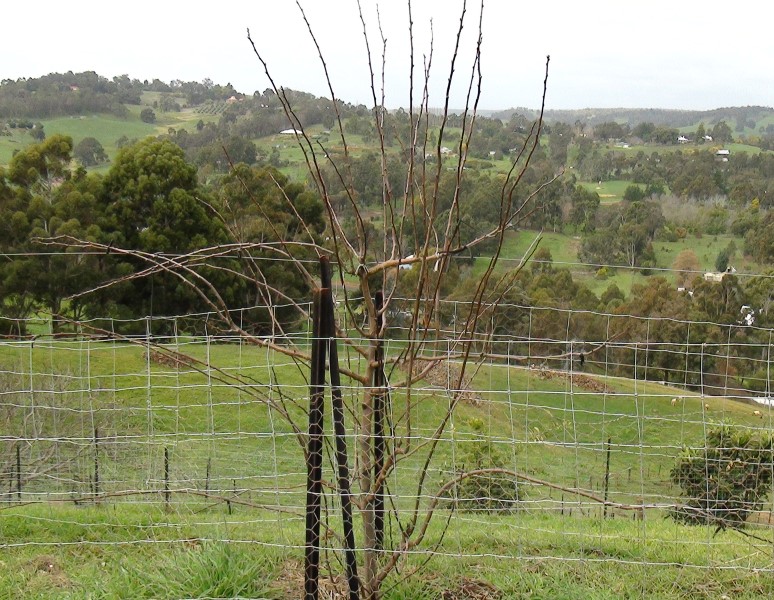
Prune
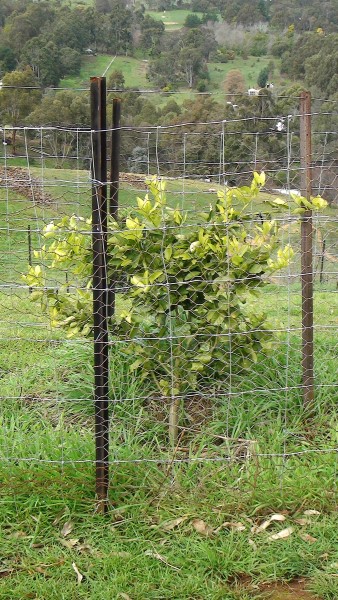
Mandarine
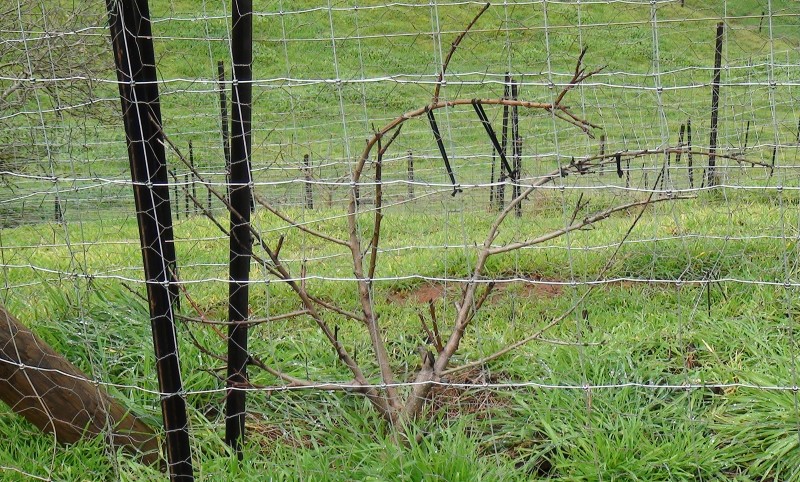
Nectarine rootsock
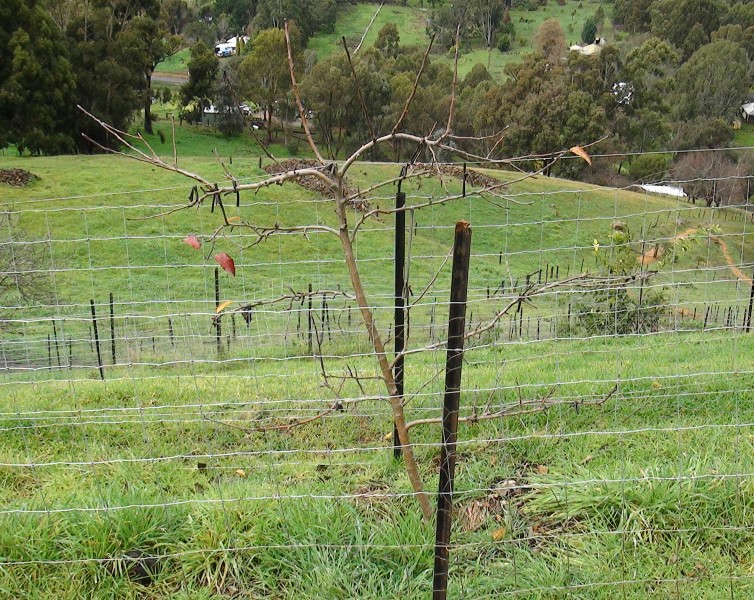
Apple
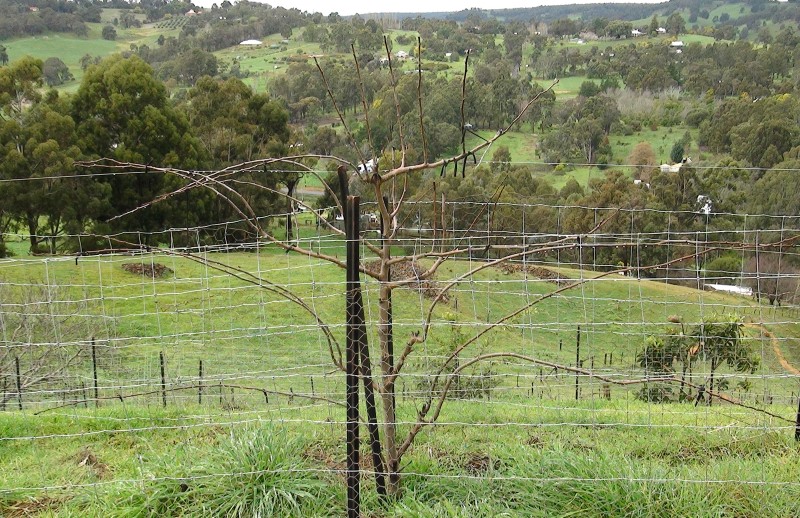
Prune
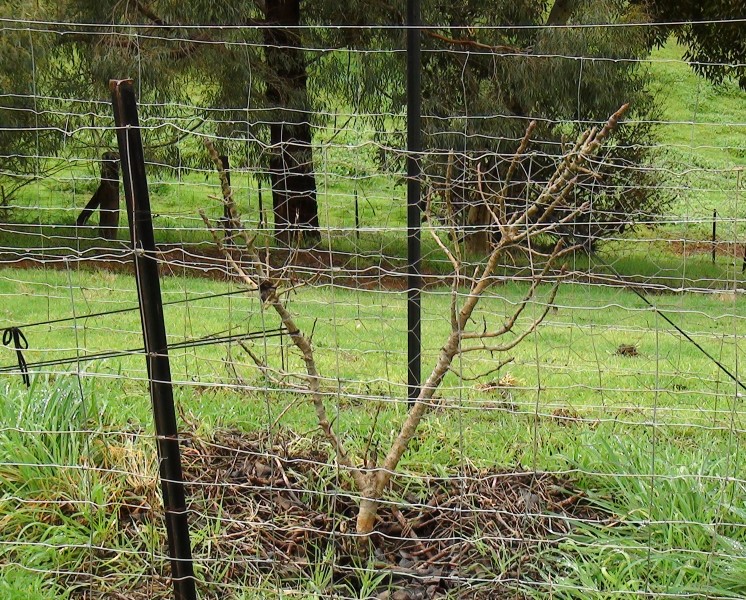
Pear
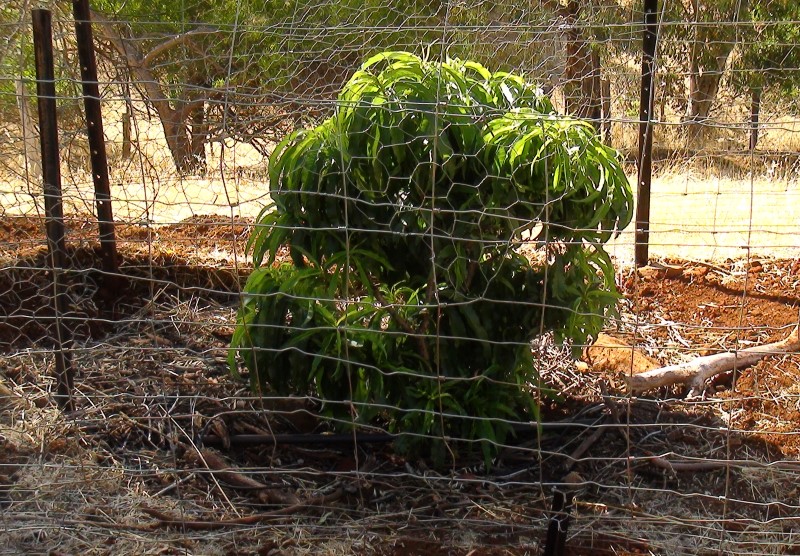
Peach 1
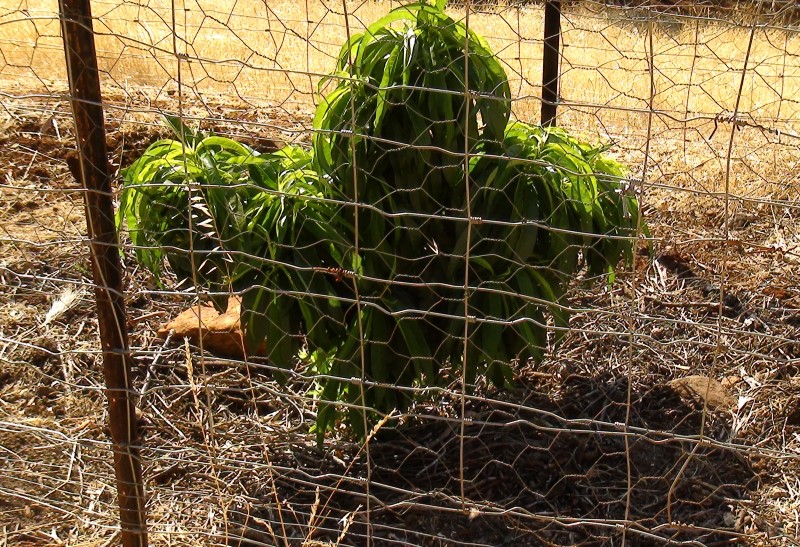
Nectarine
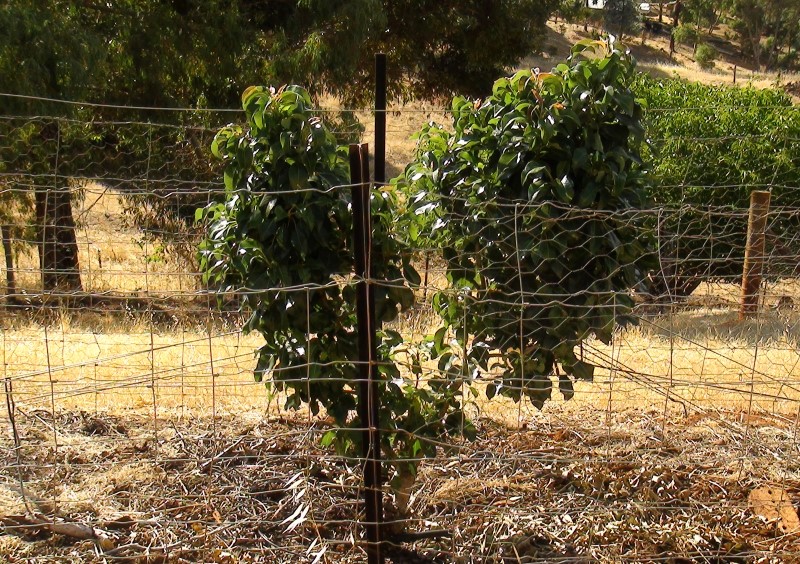
Pear
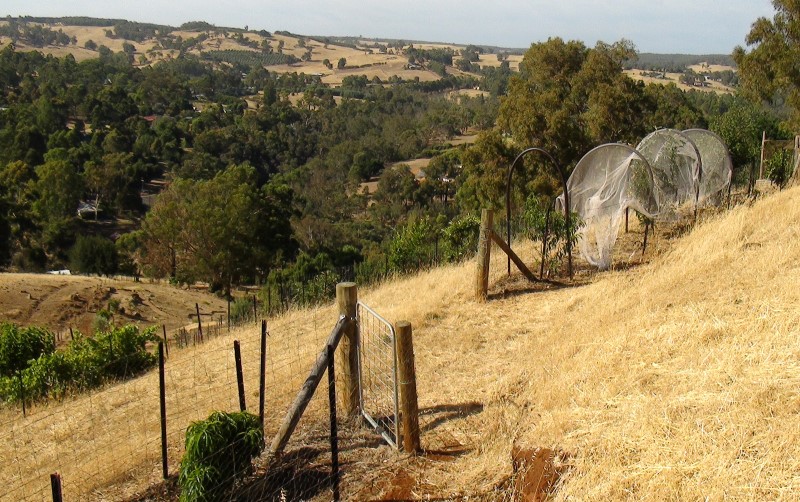
Row 2
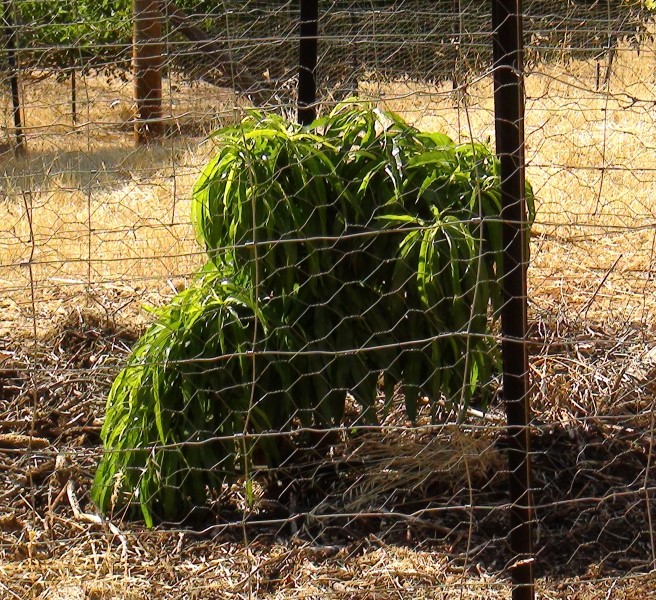
Peach 1
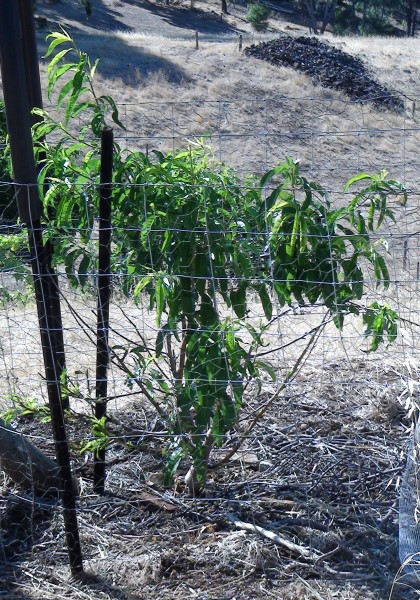
Nectarine rootstock
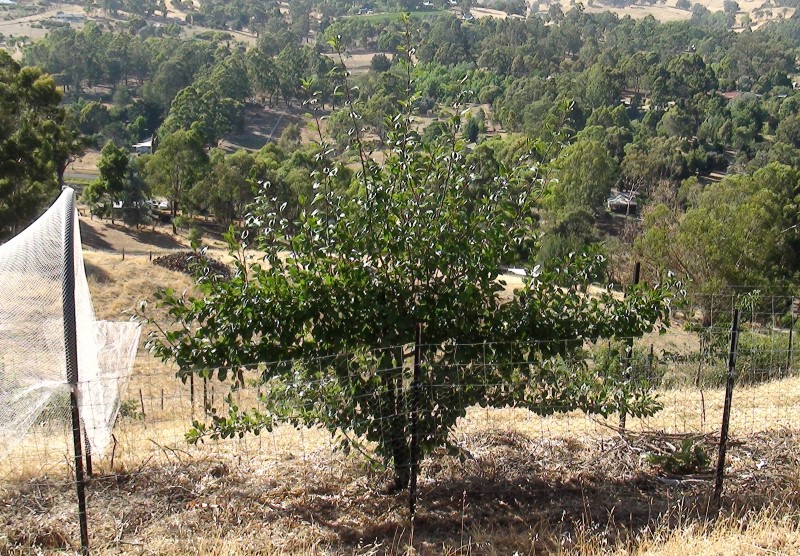
Prune
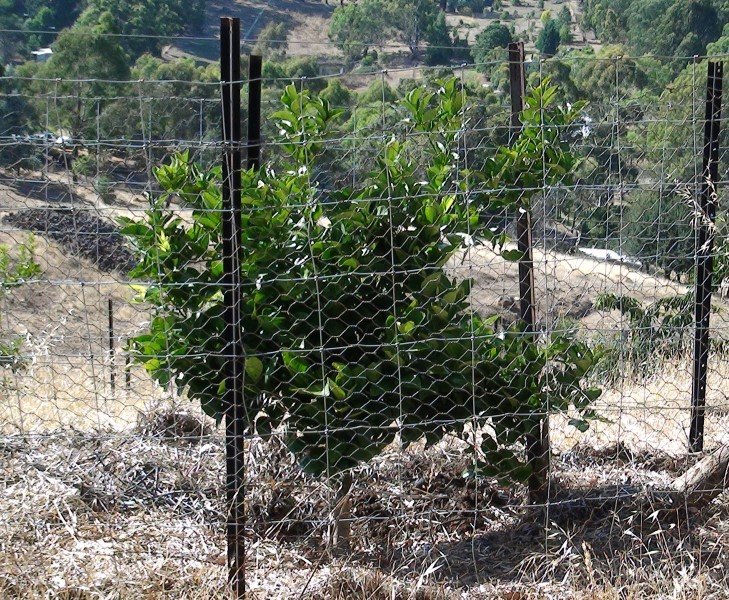
Mandarine
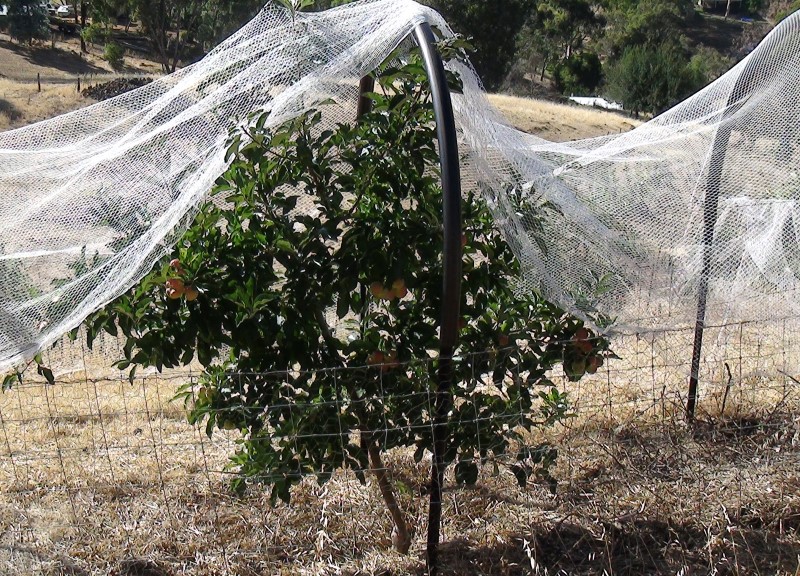
Apple
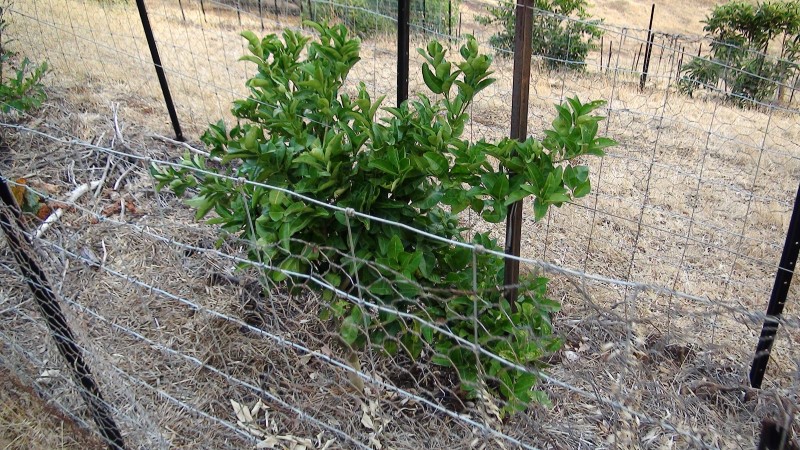
Mandarin
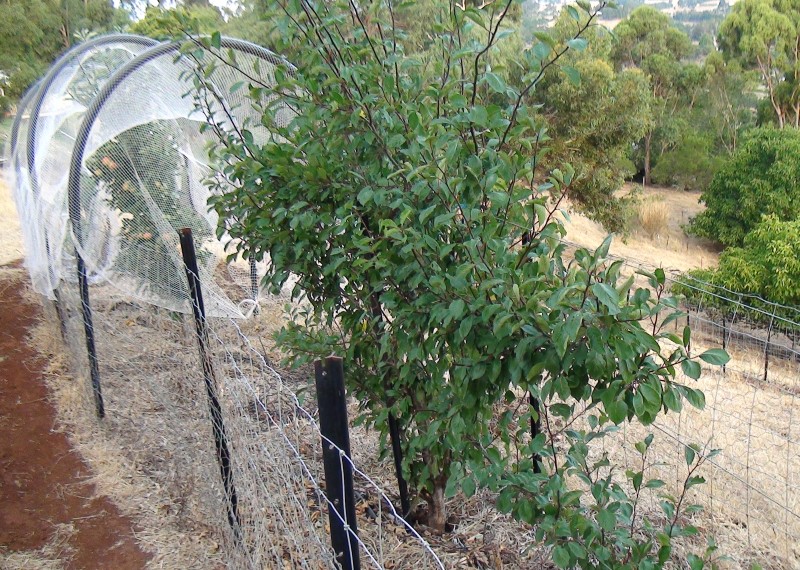
Prune
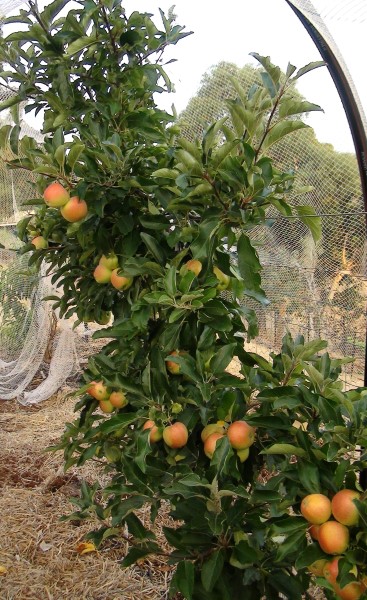
Apple
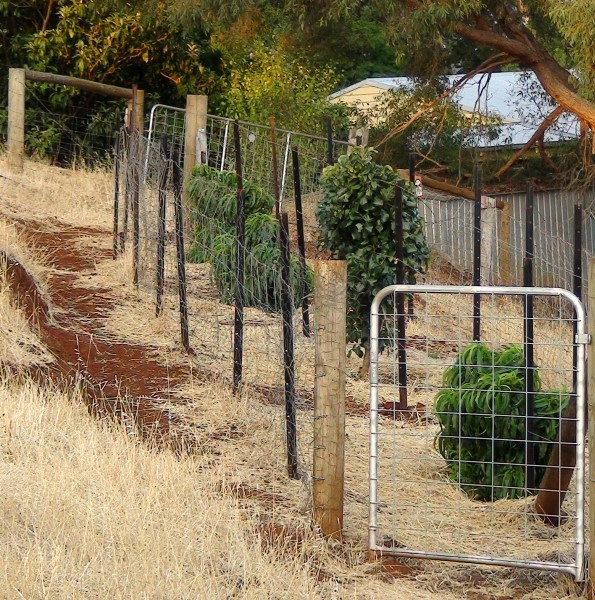
Row 2 - east section
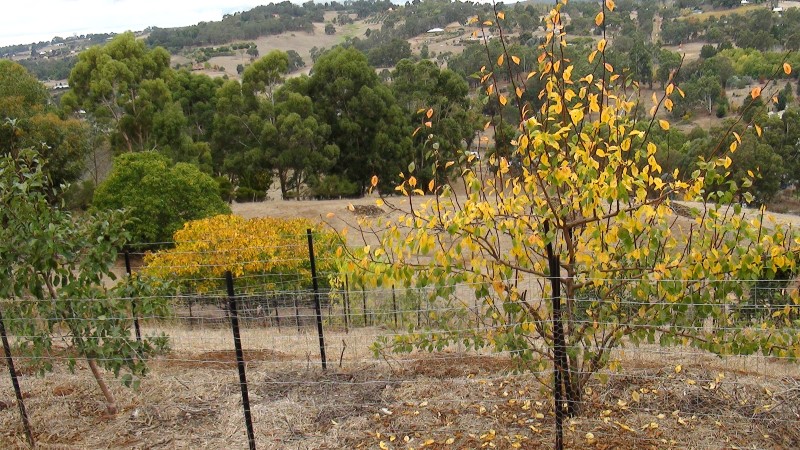
Prune & part of apple
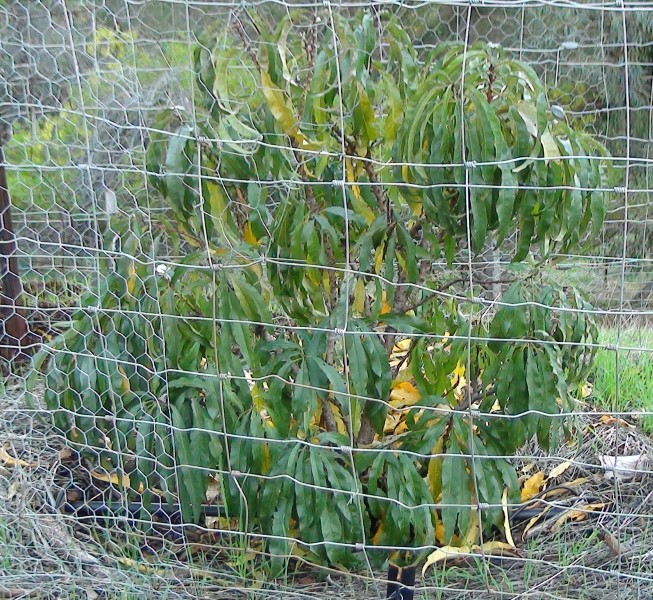
Peach 1
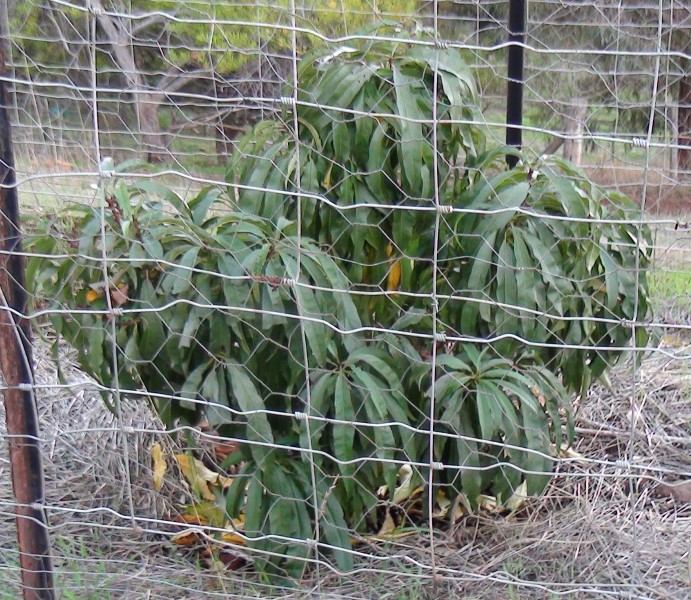
Nectarine
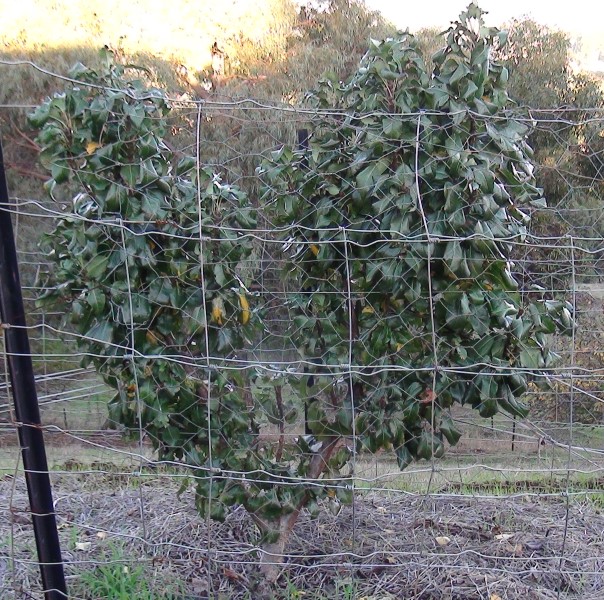
Pear
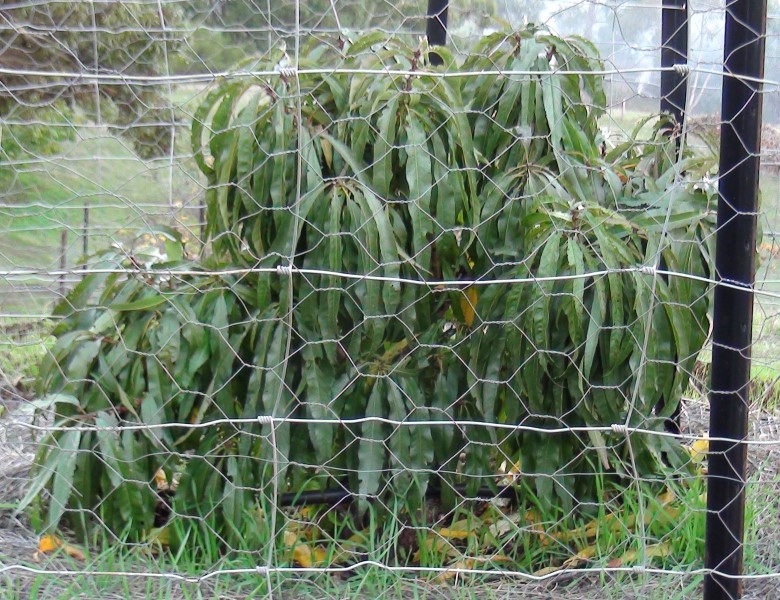
Peach 2
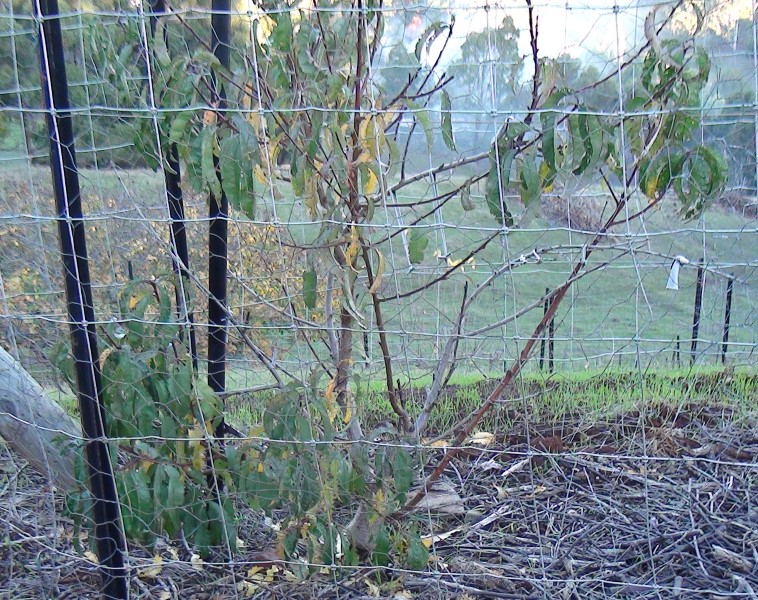
Nectarine rootstock
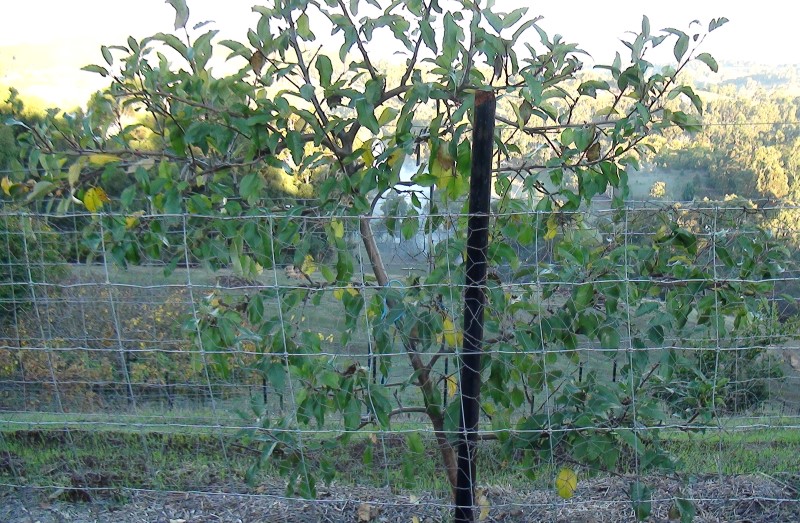
Apple
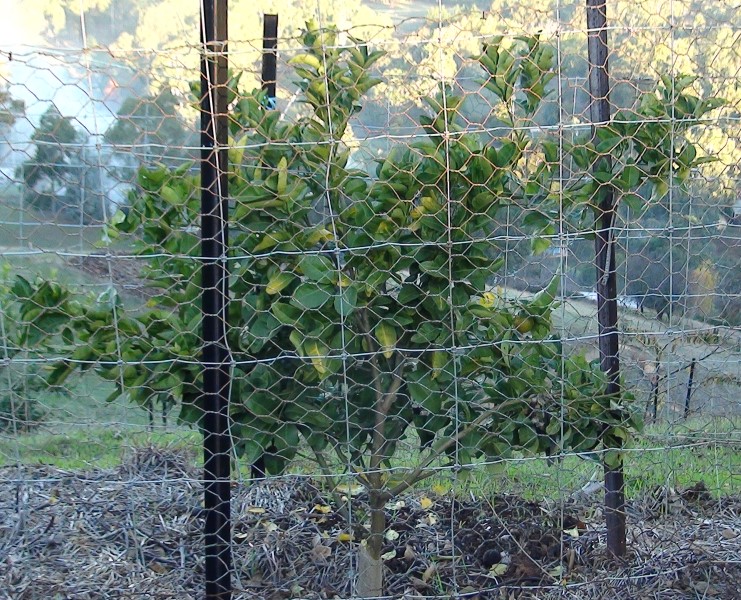
Mandarin
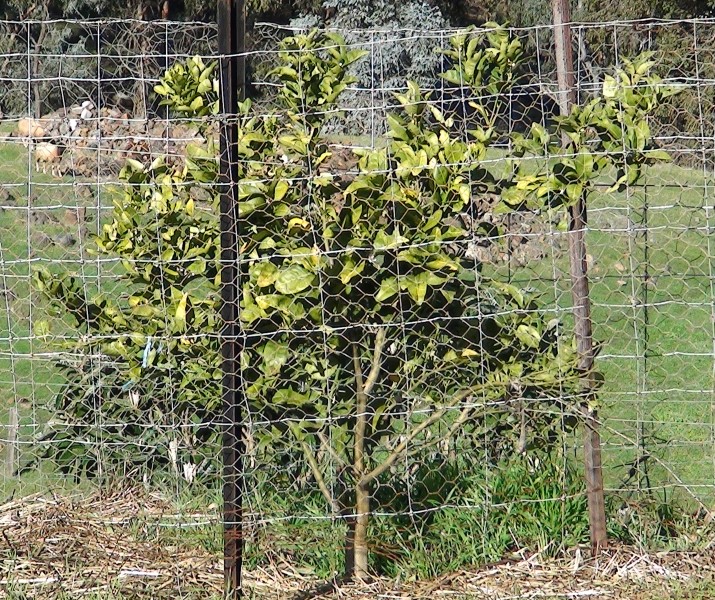
Mandarin
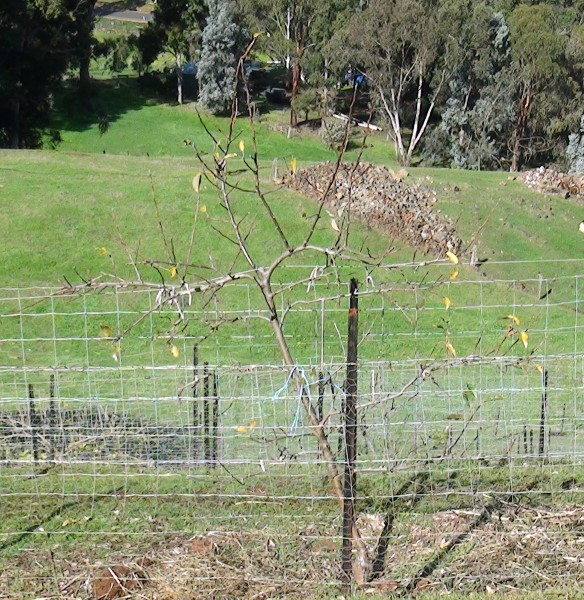
Apple
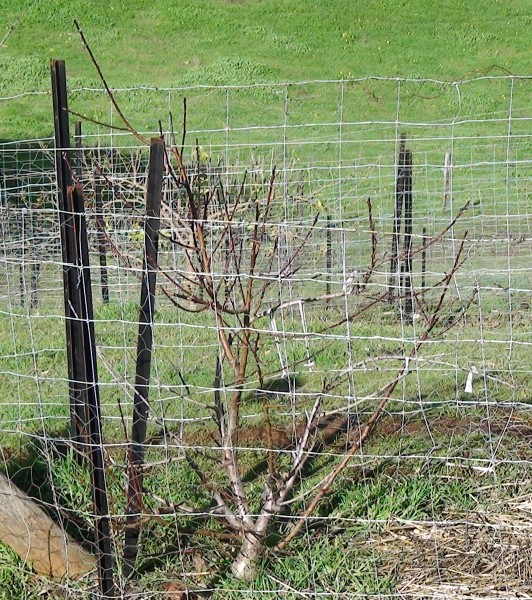
Nectarine rootstock
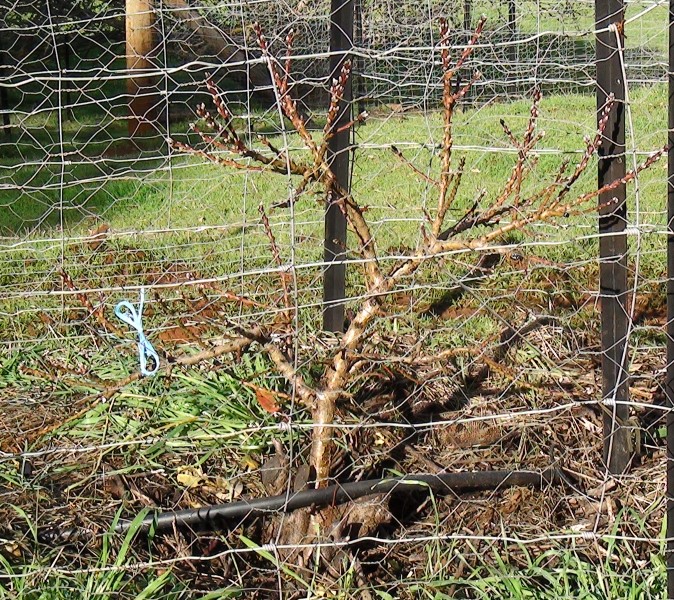
Peach 2
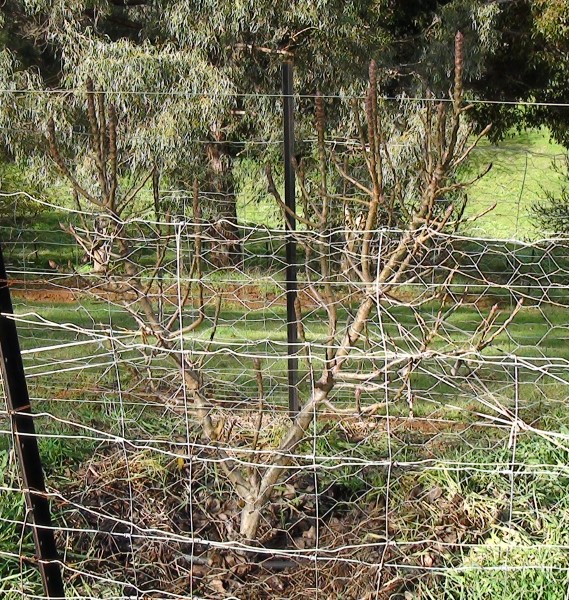
Pear
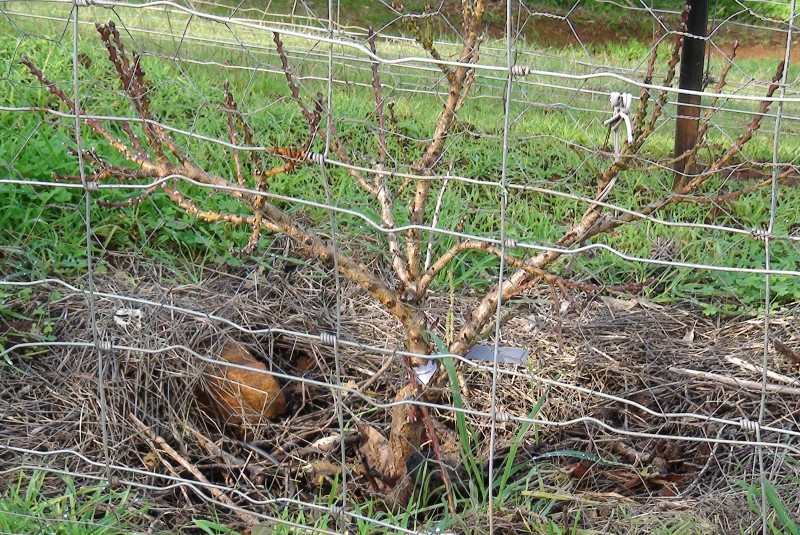
Nectarine
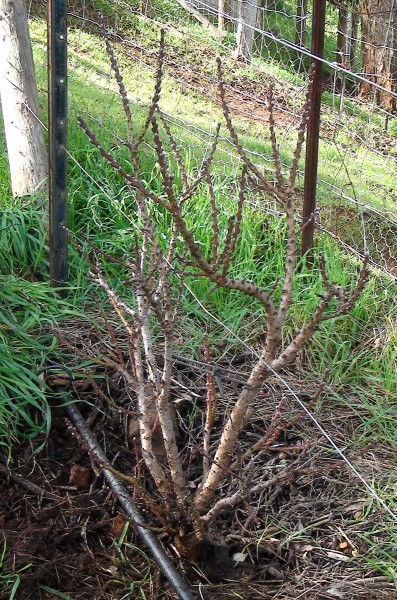
Peach 1
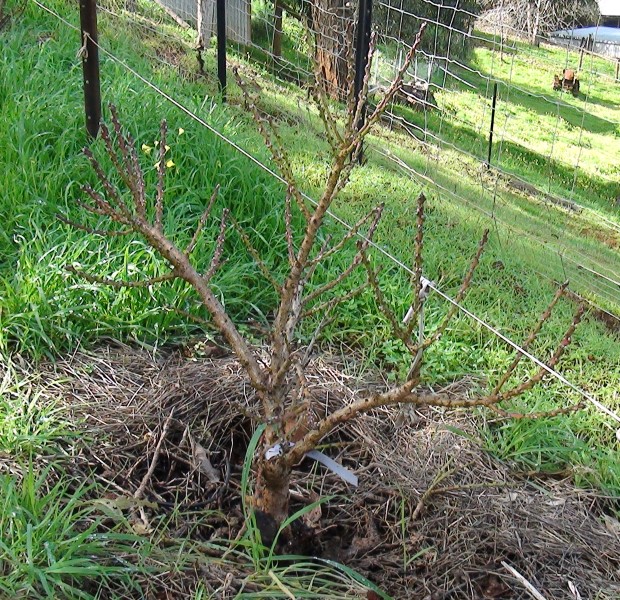
Nectarine
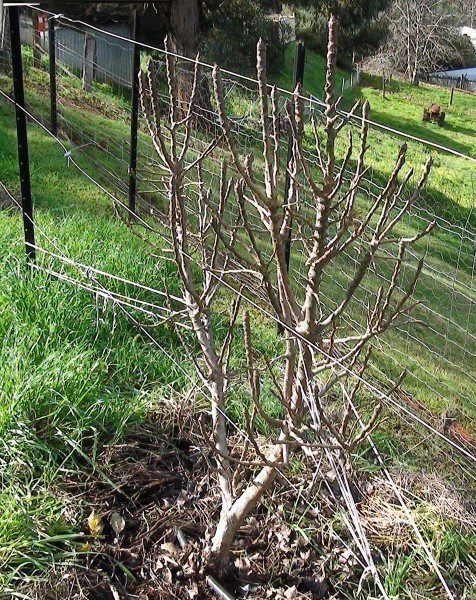
Pear
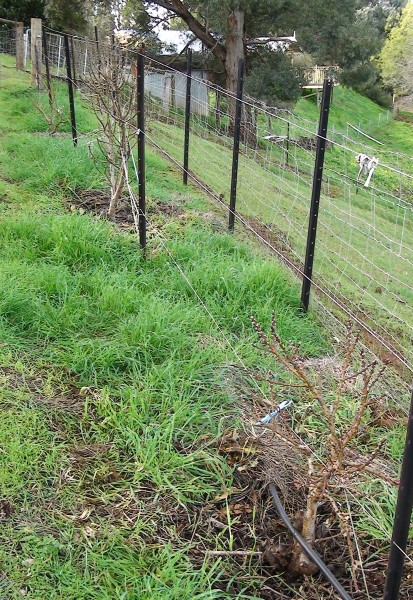
East part of row
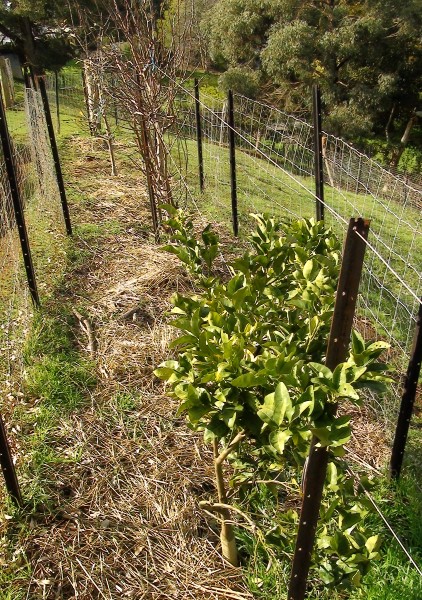
West part of row
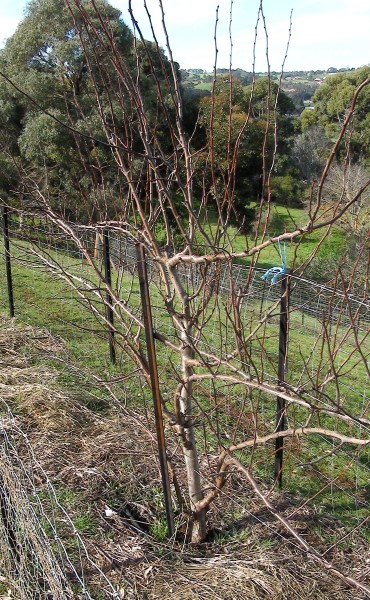
Prune
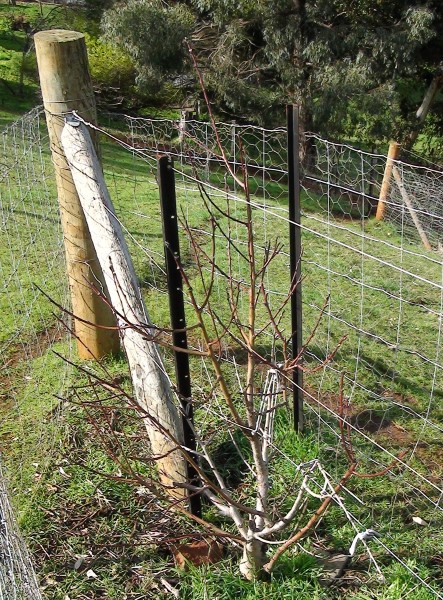
Nectarine rootstock
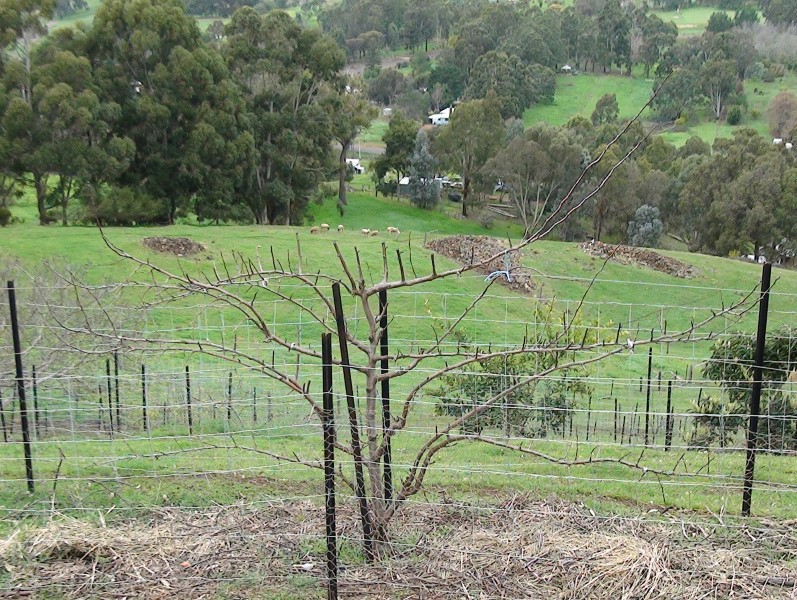
Prune
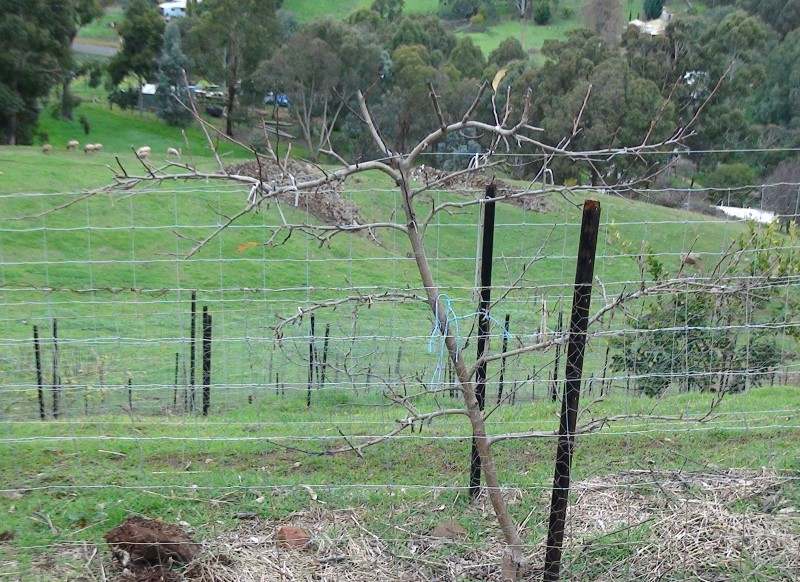
Apple
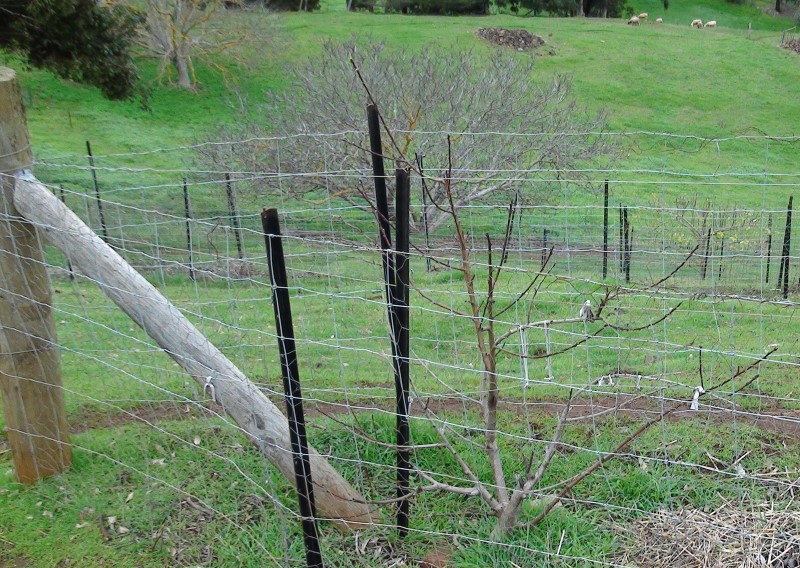
Nectarine rootstock
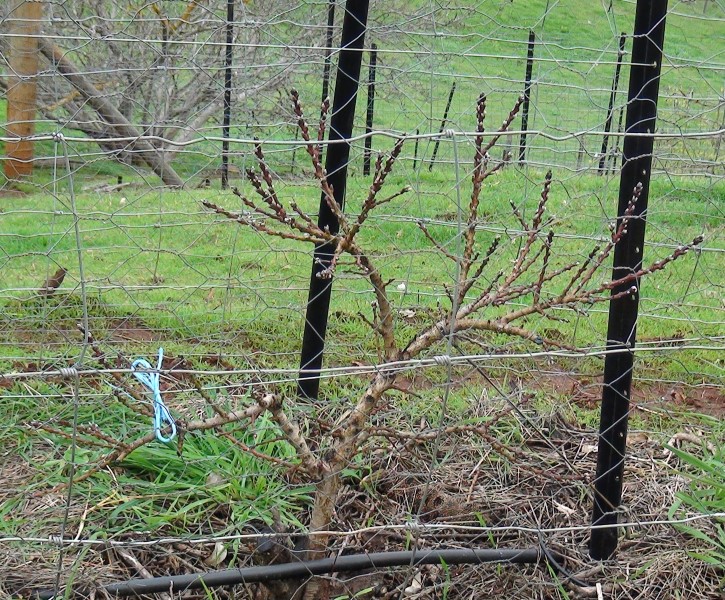
Peach 2
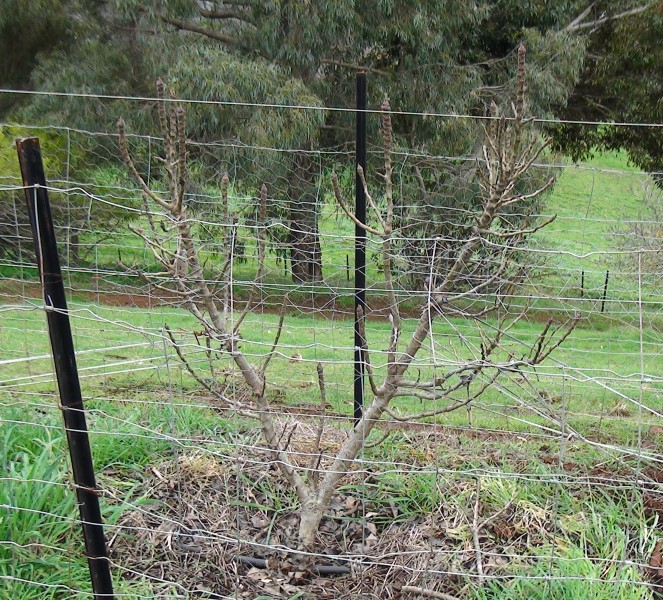
Pear
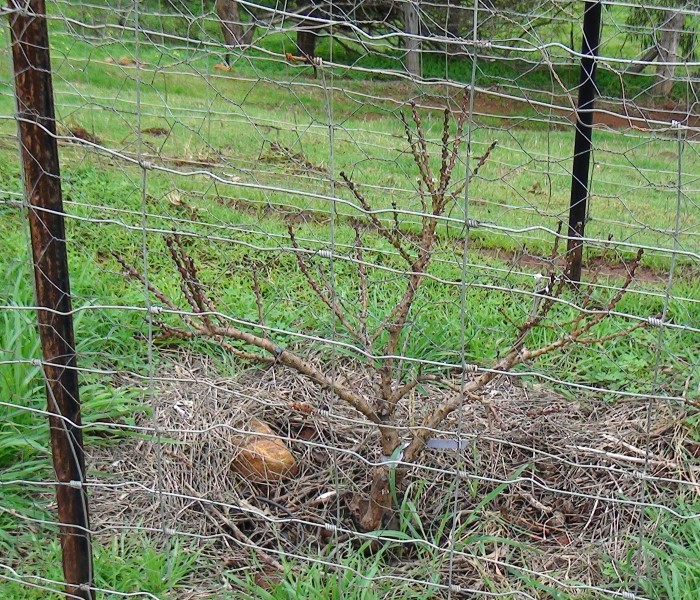
Nectarine
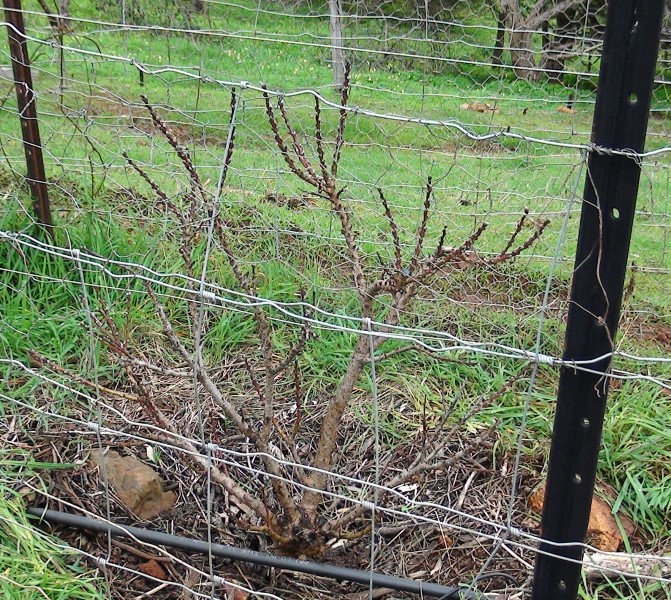
Peach 1
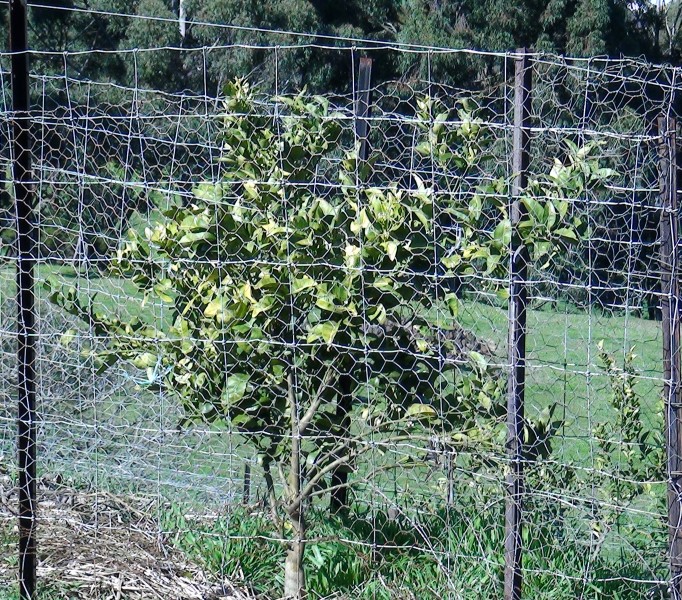
Mandarine
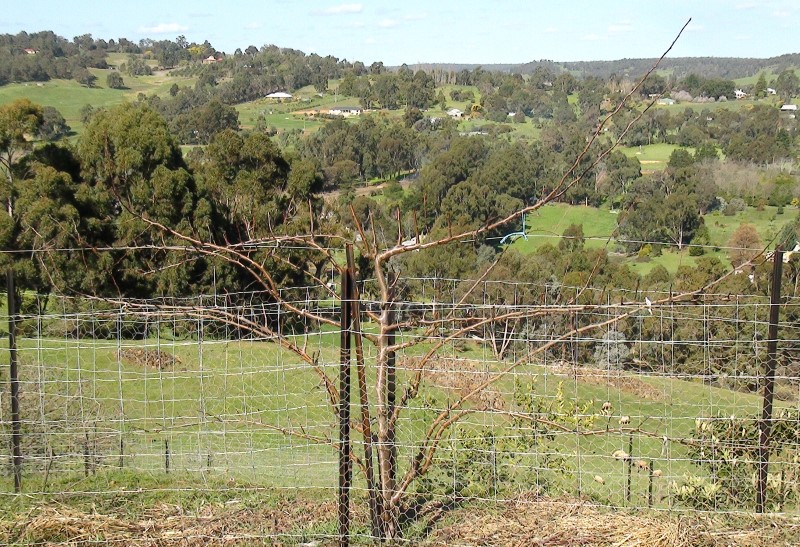
Prune
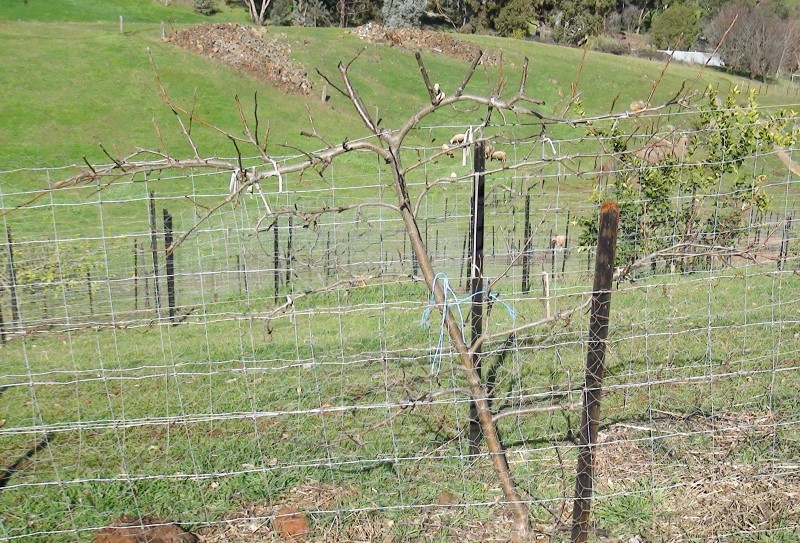
Apple
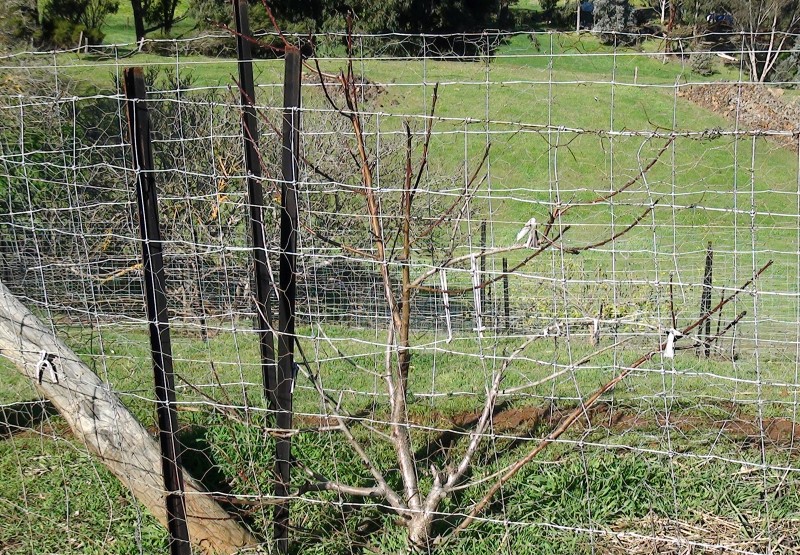
Nectarine rootstock
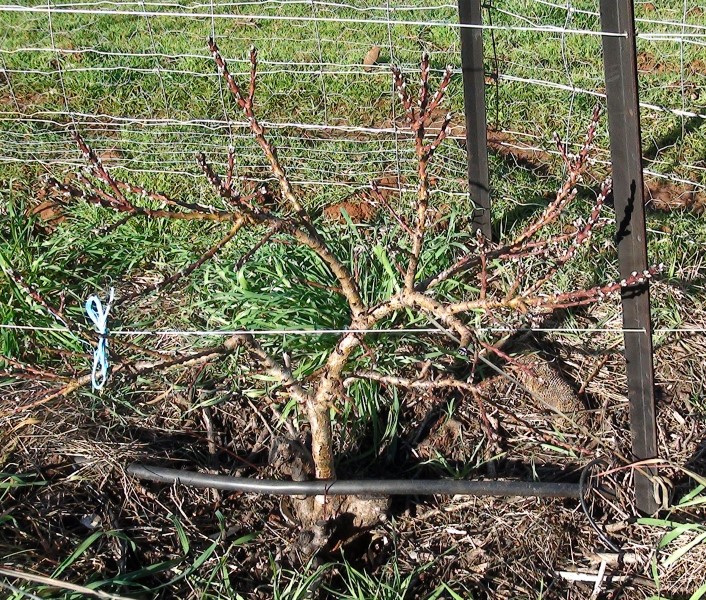
Peach 2
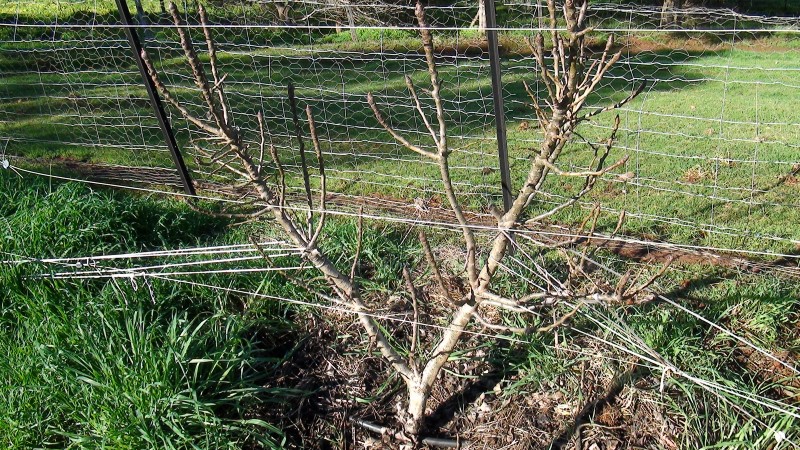
Pear
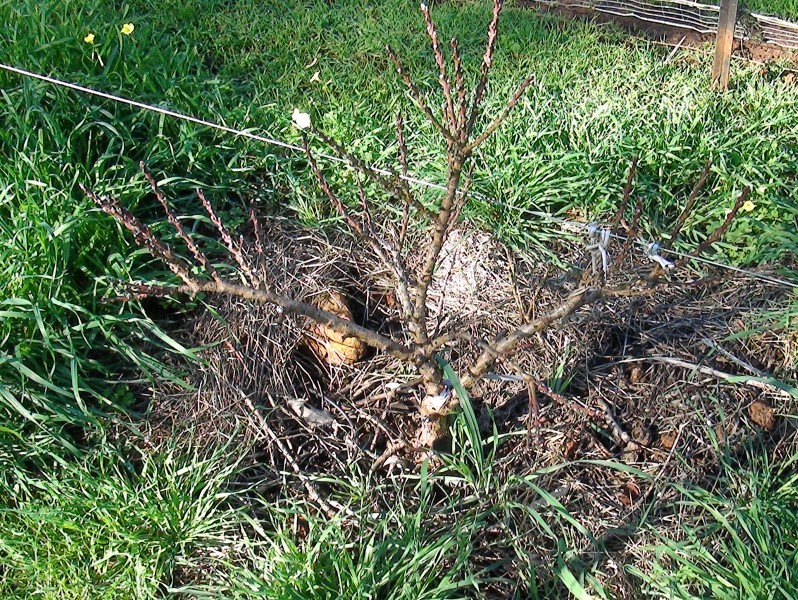
Nectarine
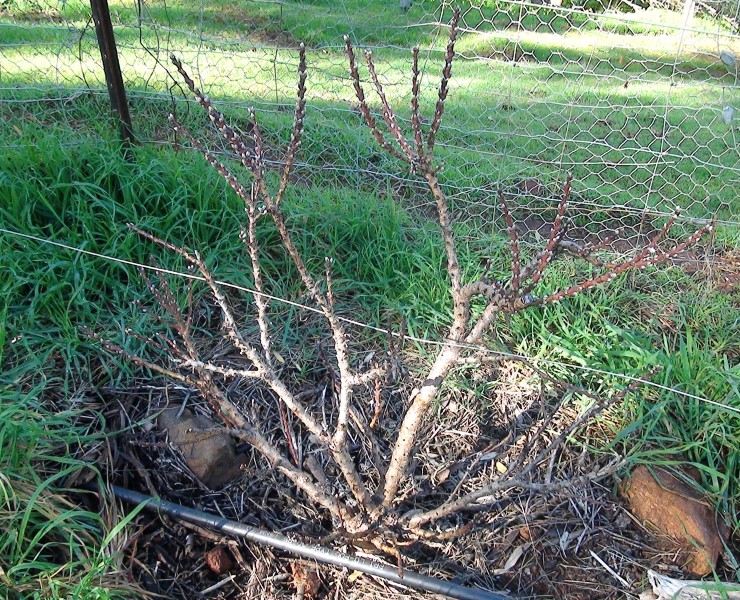
Peach 1
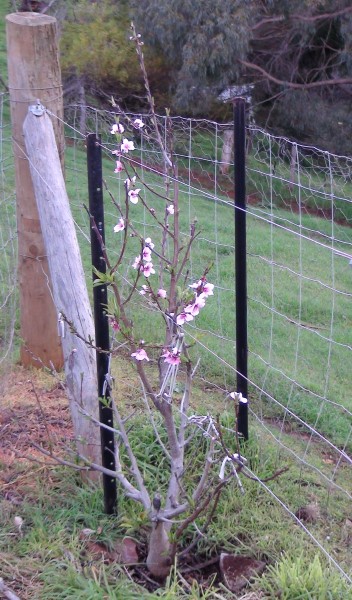
Nectarine rootstock
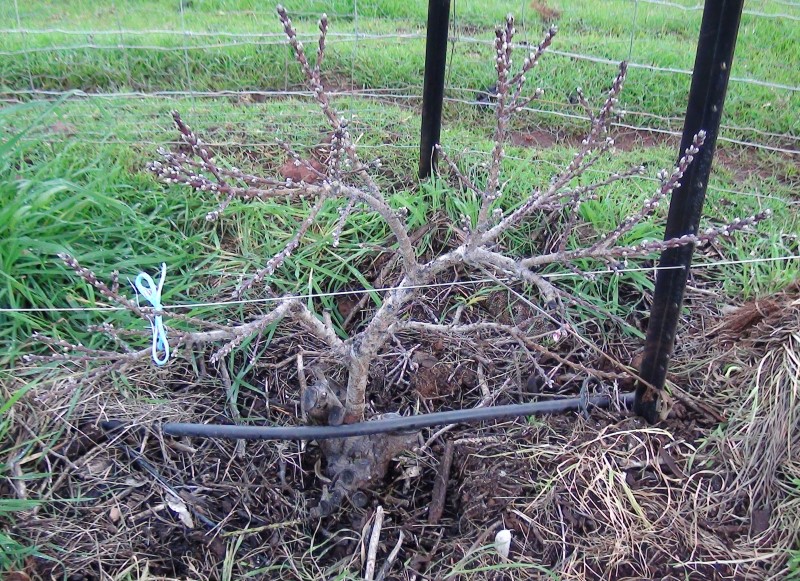
Peach 2
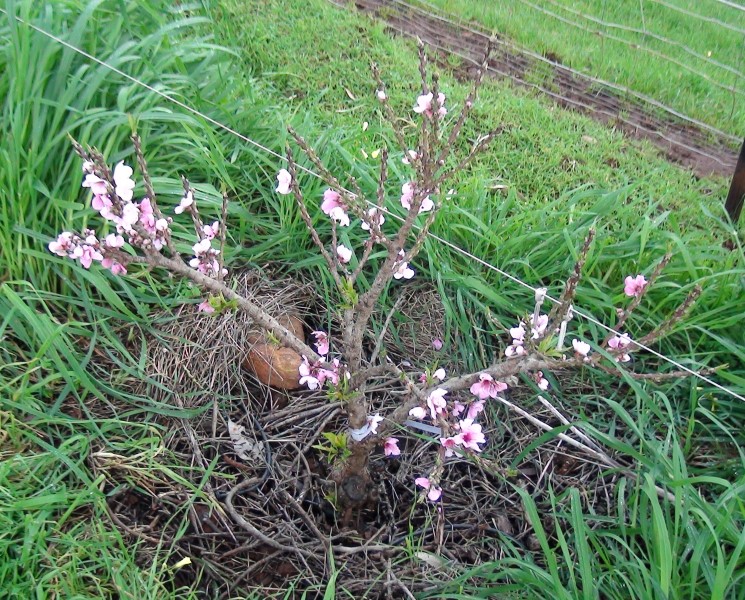
Nectarine
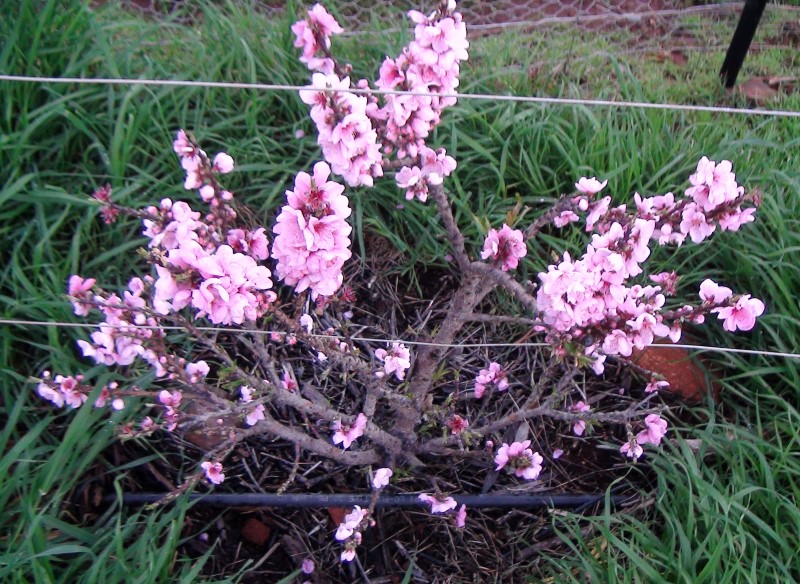
Peach 1
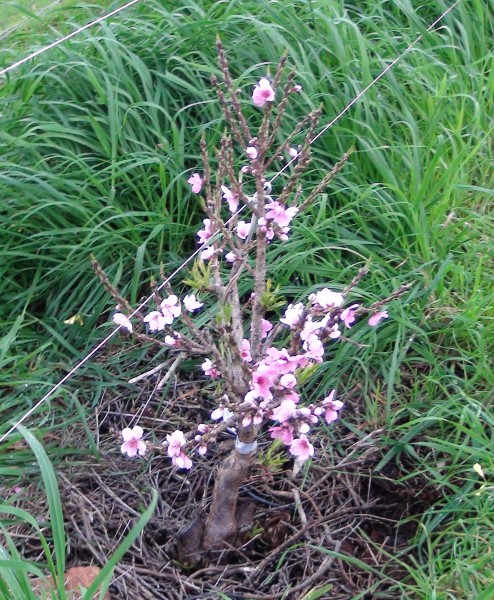
Peach 2
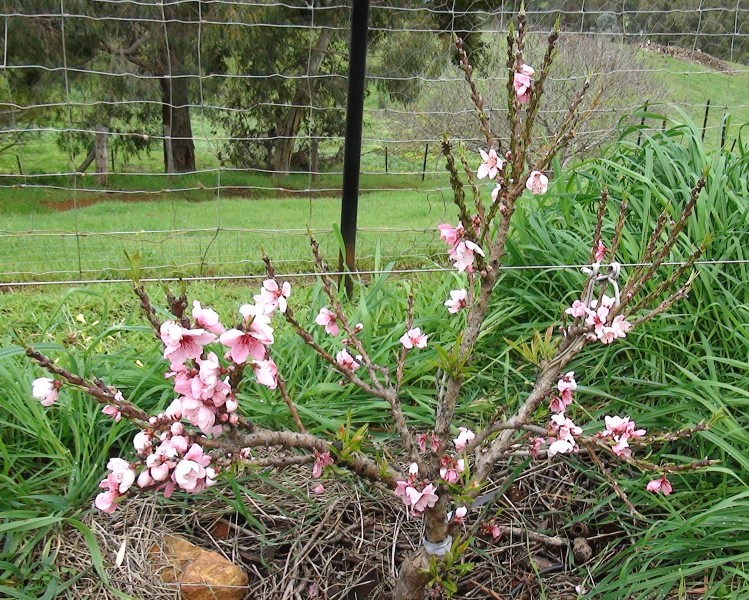
Nectarine
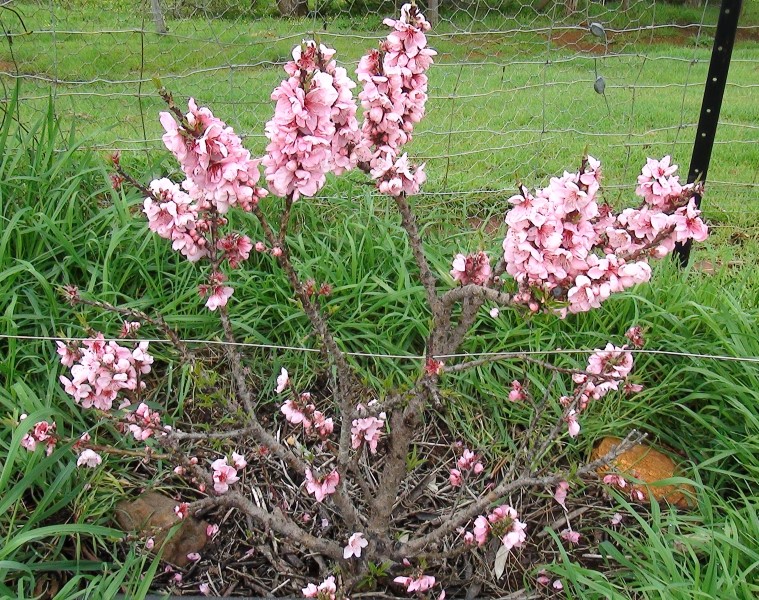
Peach 1
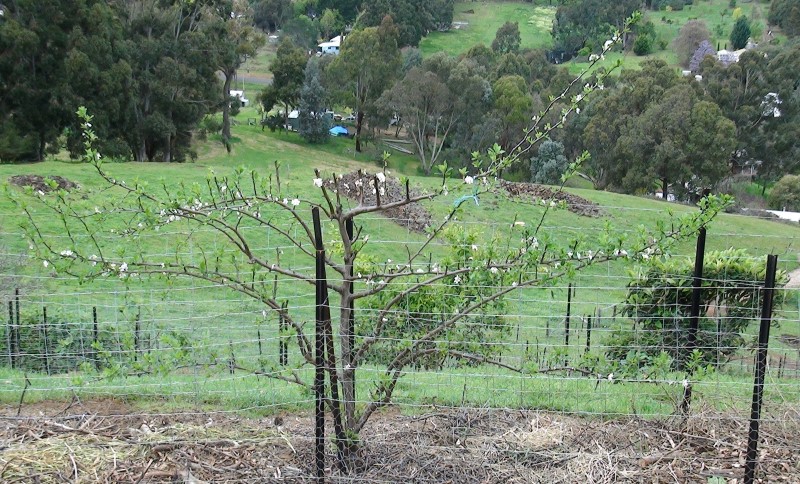
Prune
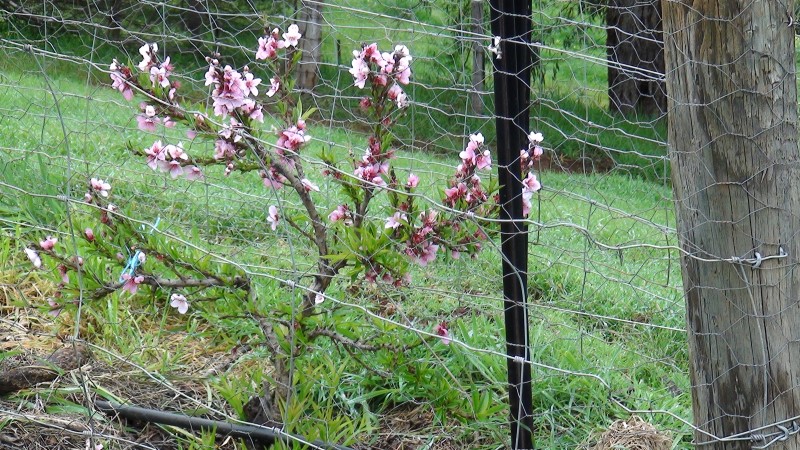
Peach 2
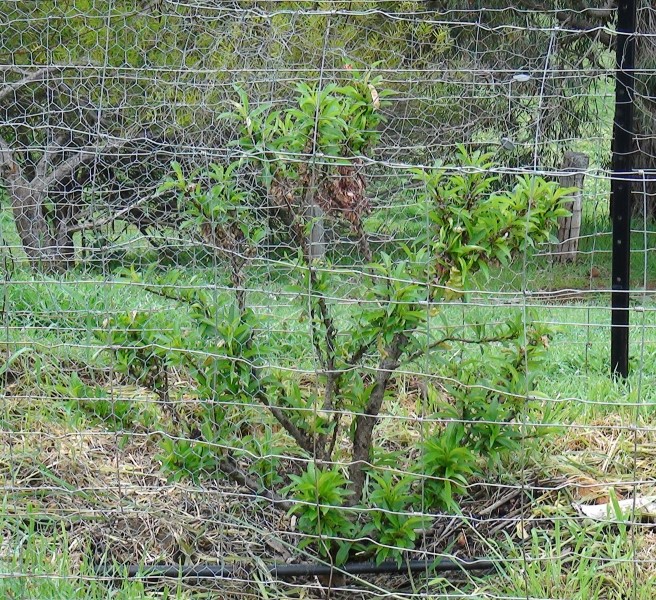
Peach 1
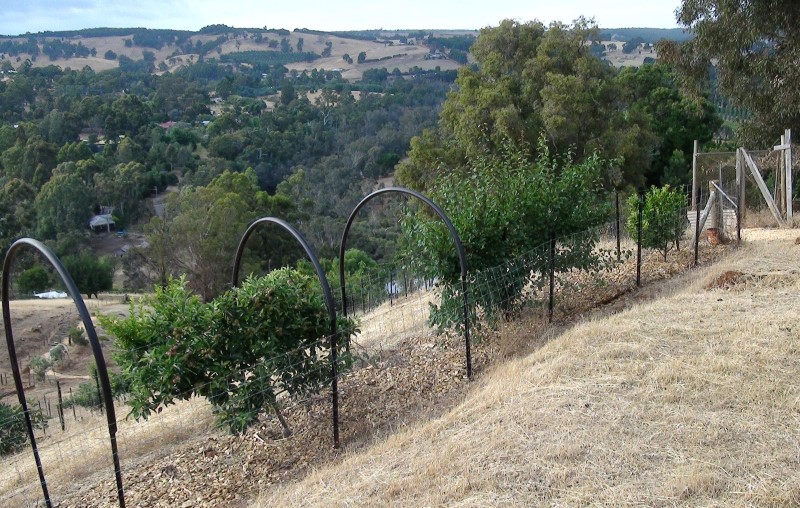
West part of row 2
Peach 2
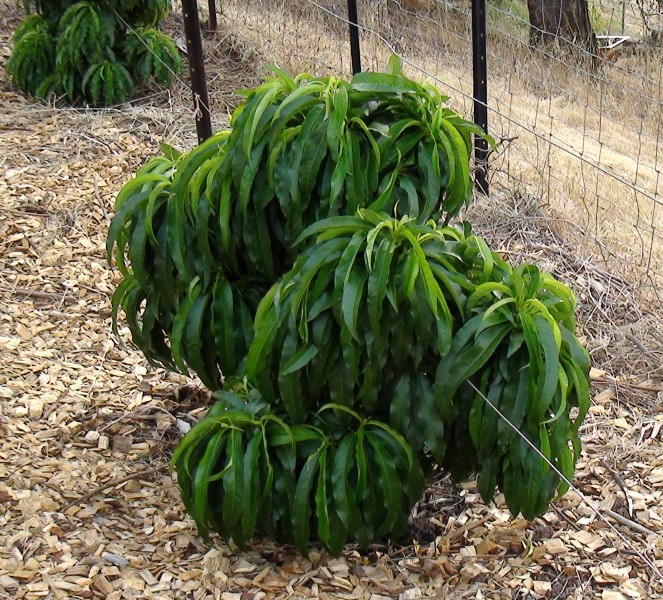
Nectarine
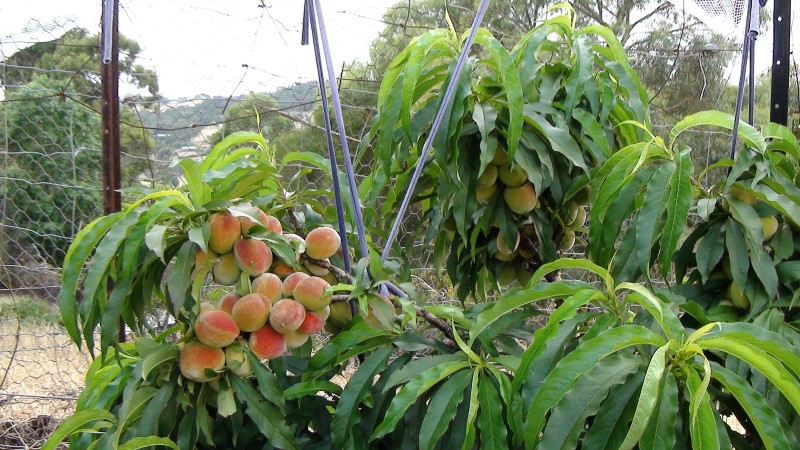
Peach 1
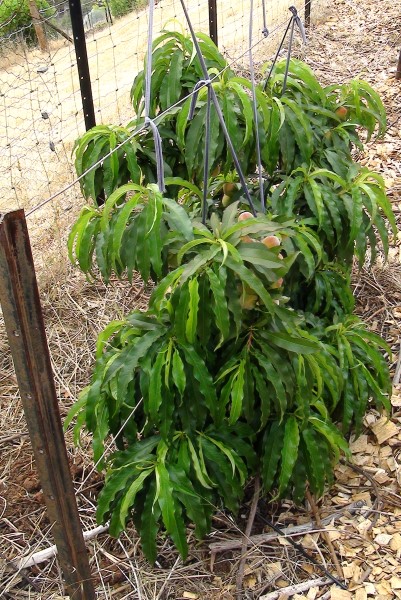
Peach 1
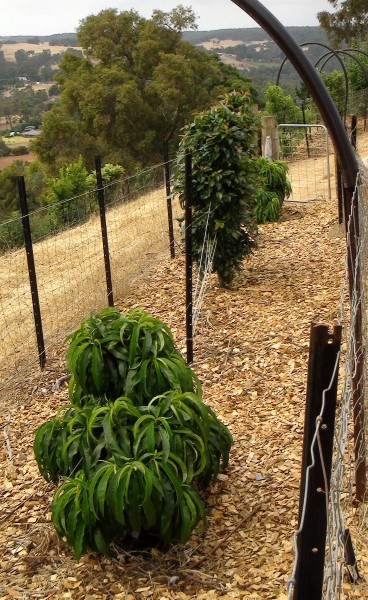
East part of row
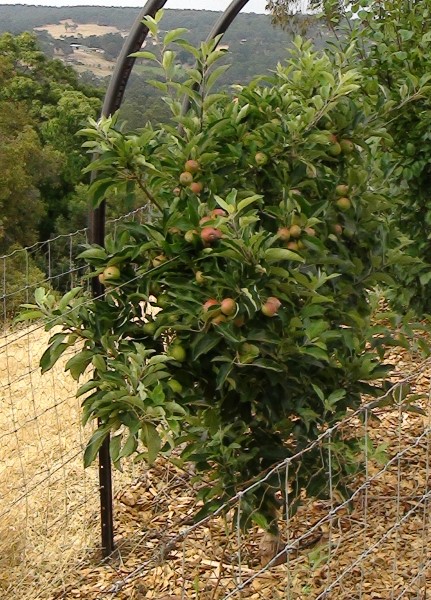
Apple
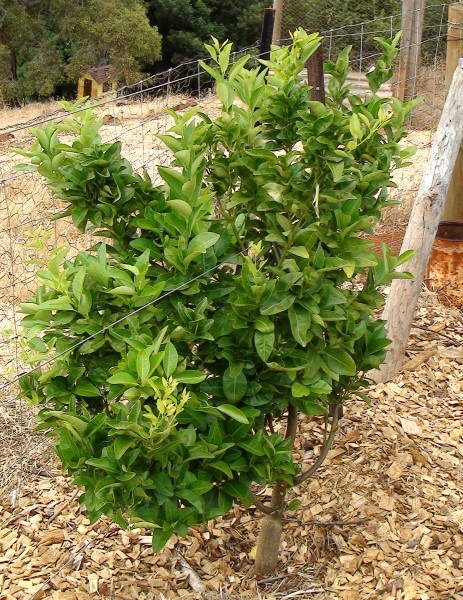
Mandarine
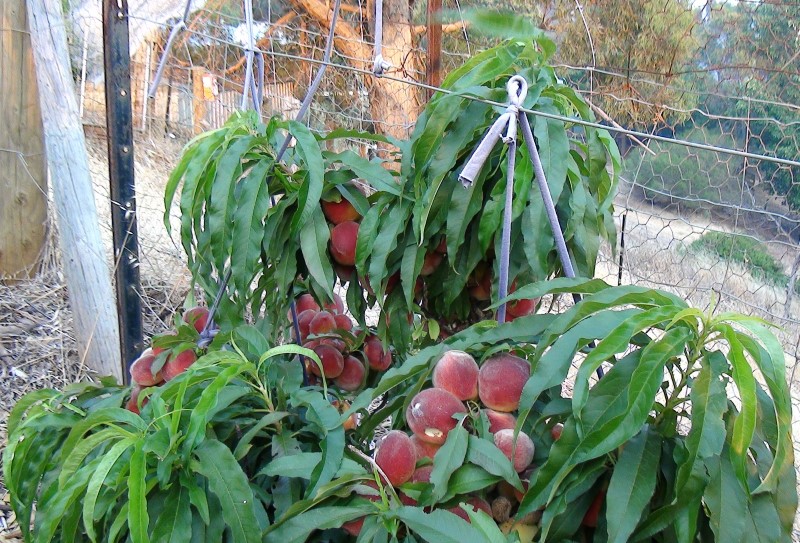
Peach 1
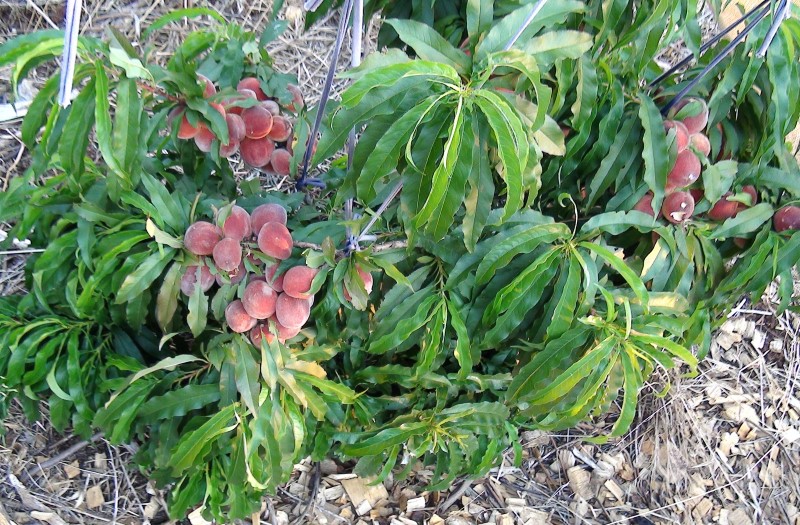
Peach 1
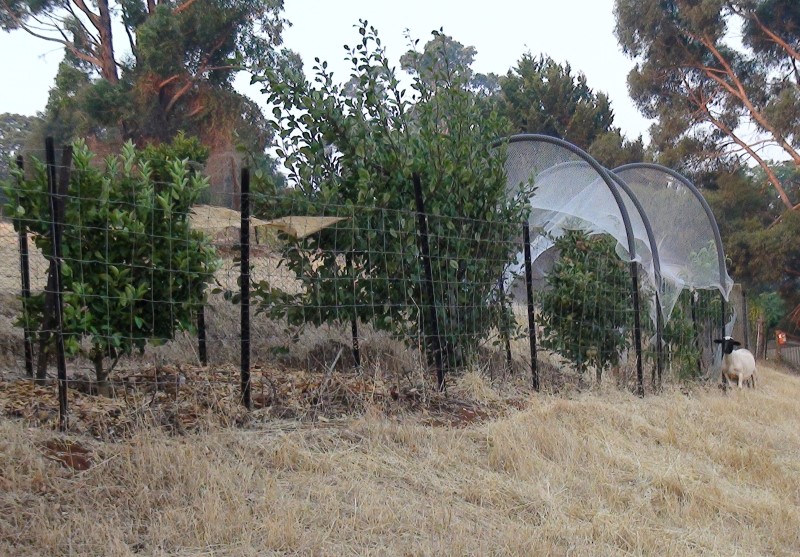
West part of row 2
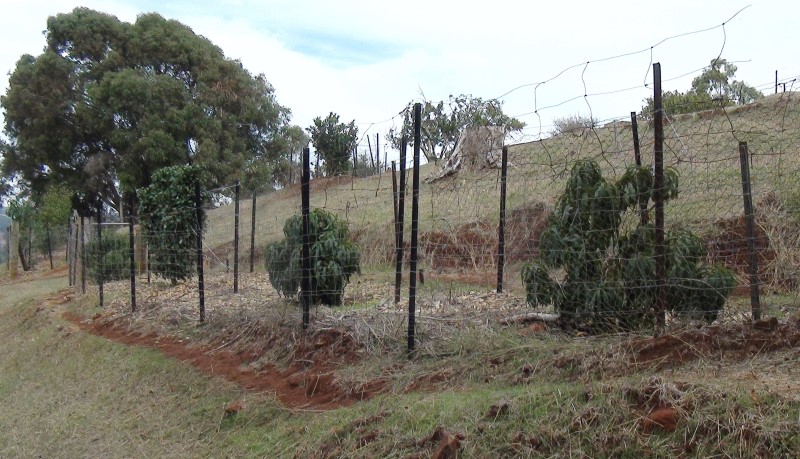
East part of row
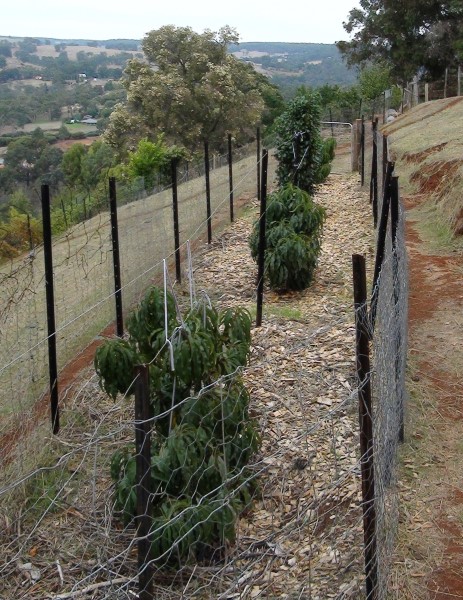
East part of row
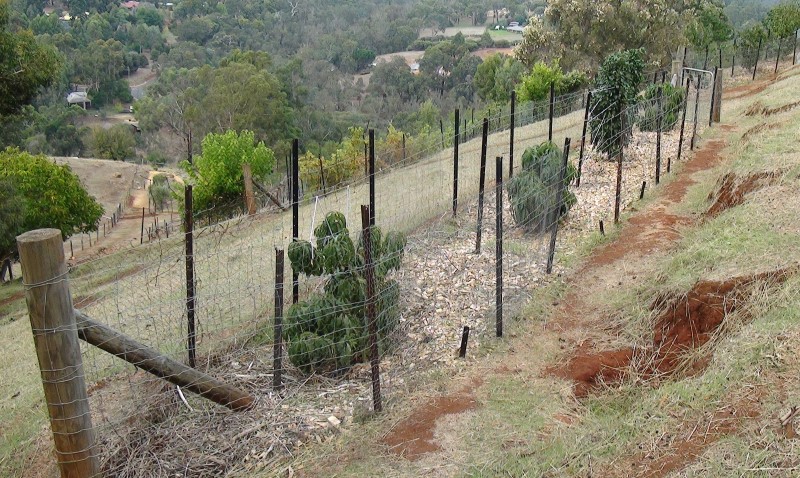
East part of row
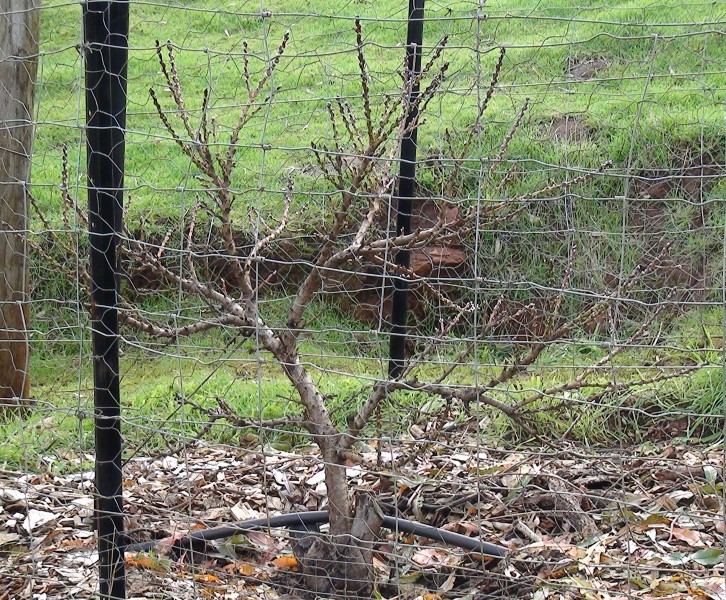
Peach 2
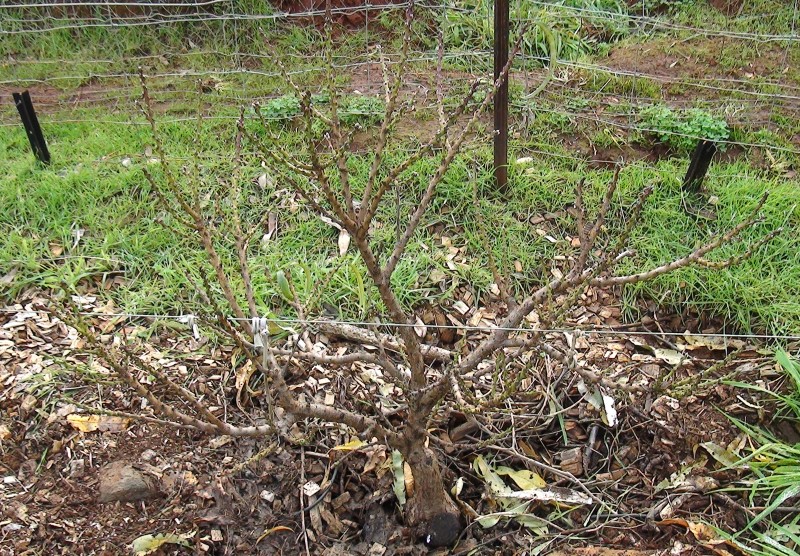
Nectarine
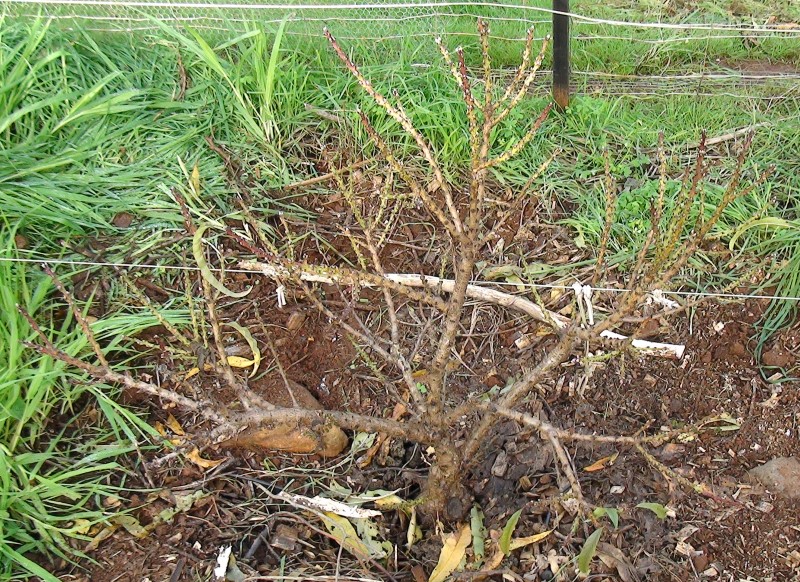
Peach 1
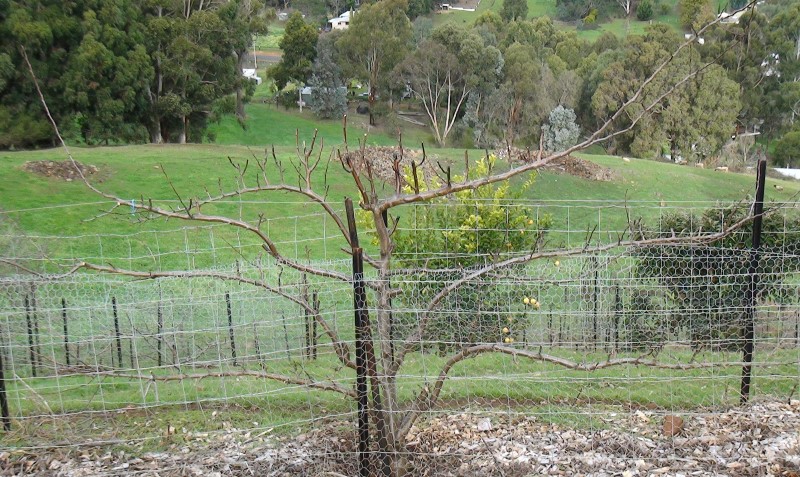
Prune
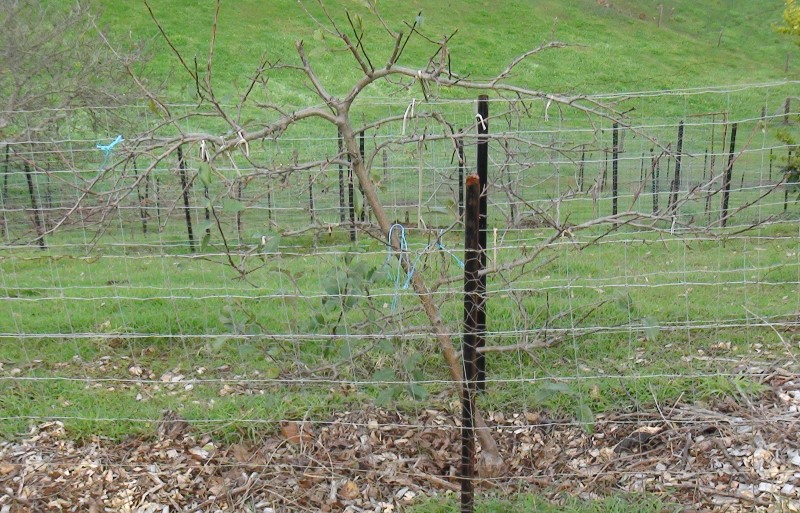
Apple
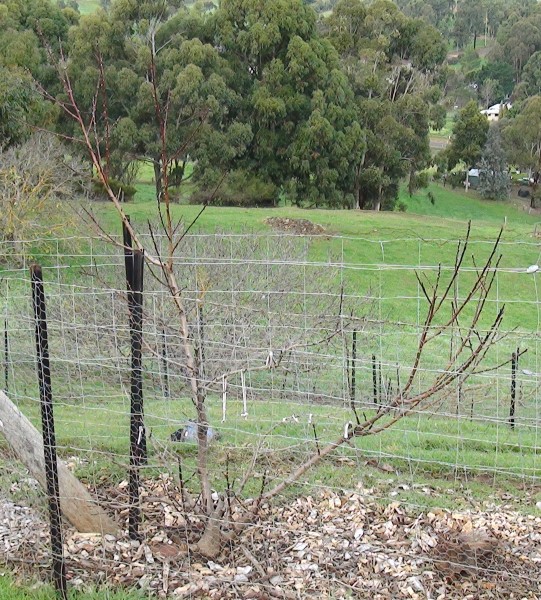
Nectarine rootstock
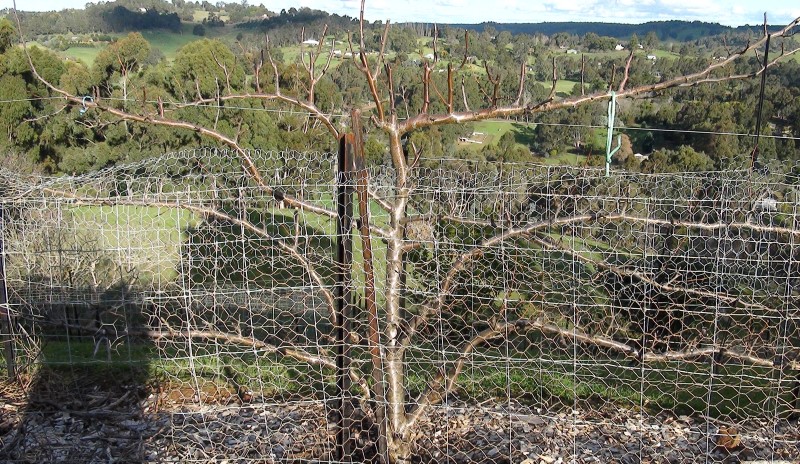
Prune
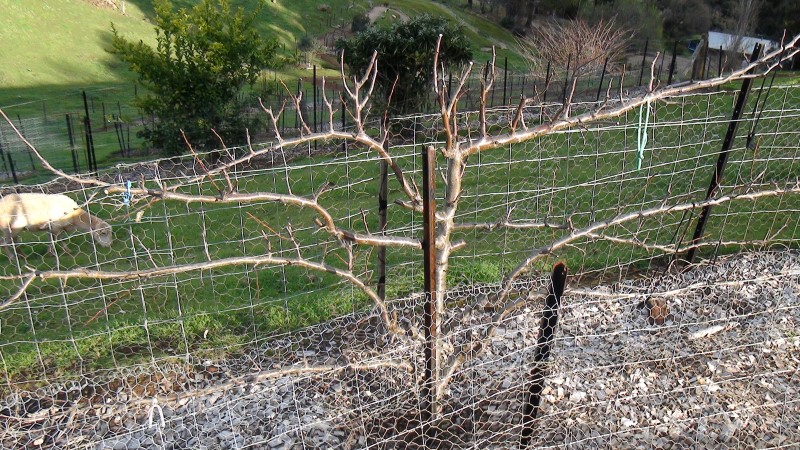
Prune
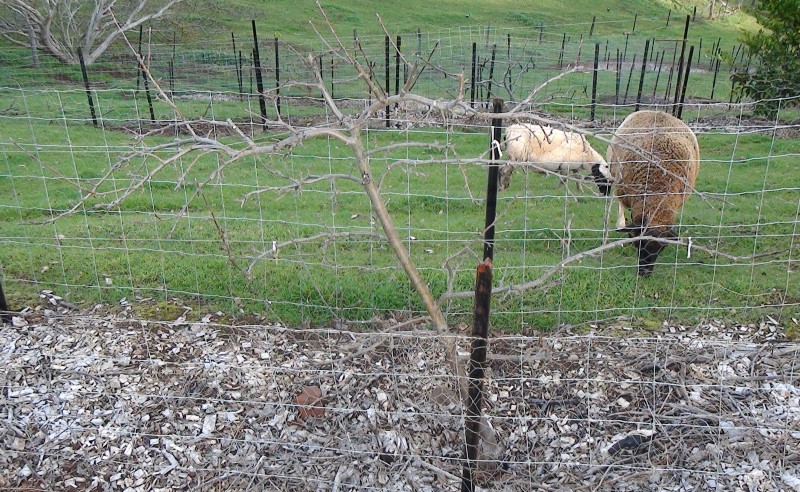
Apple
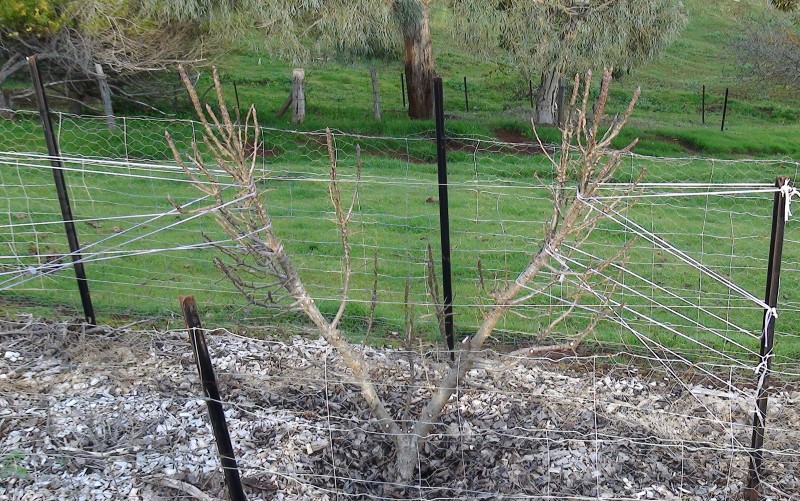
Pear
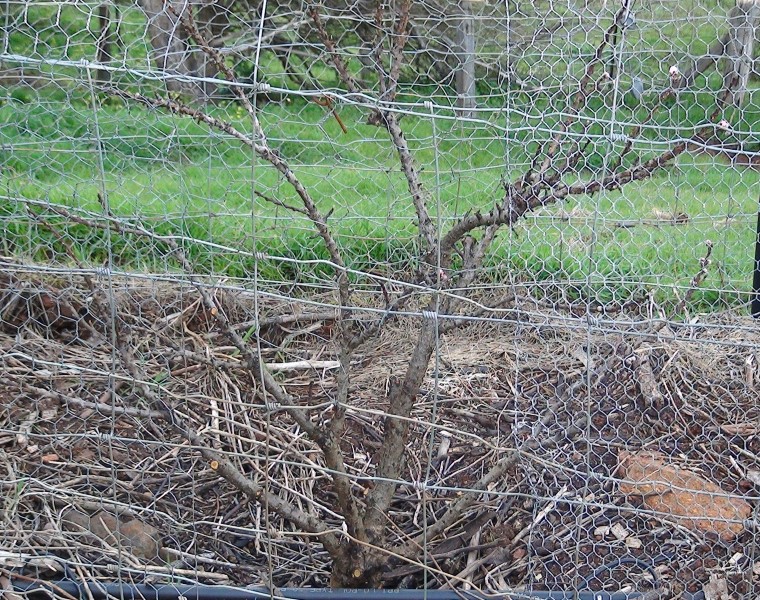
Peach 1
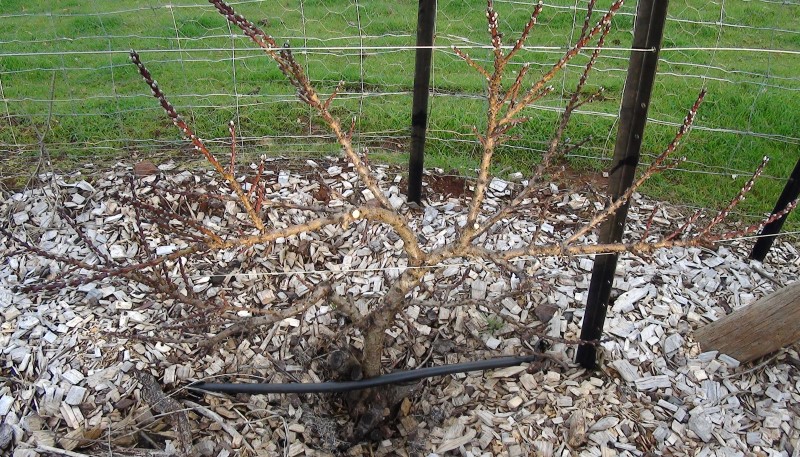
Peach 2
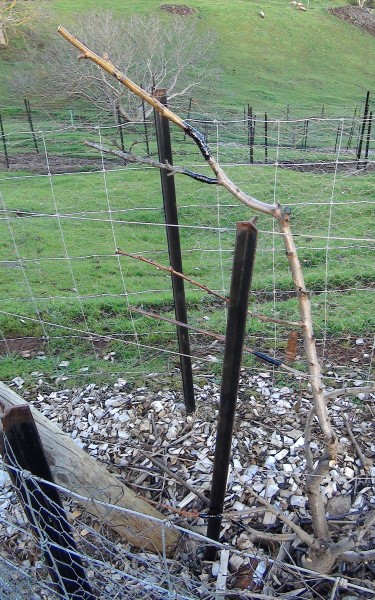
Nectarine graft
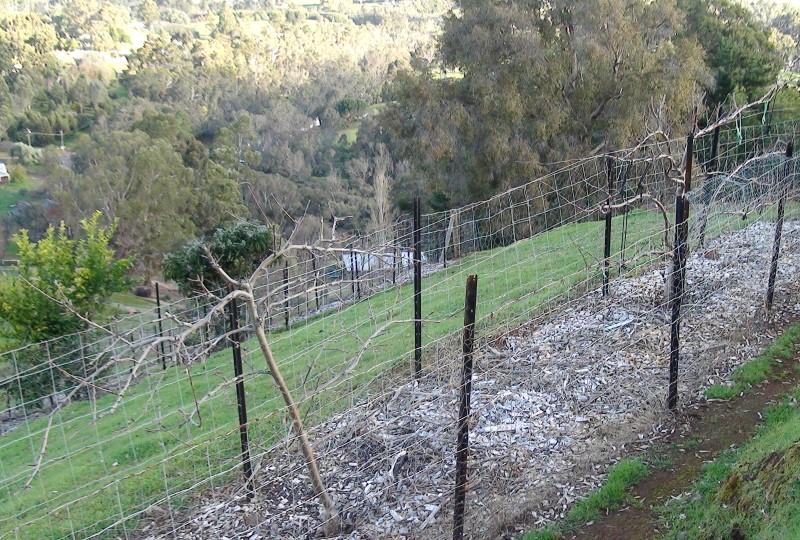
West part of row
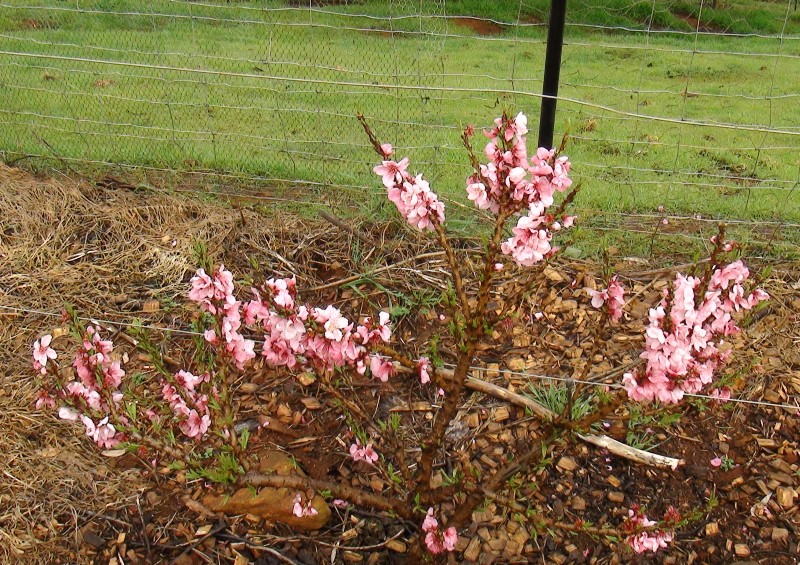
Nectarine
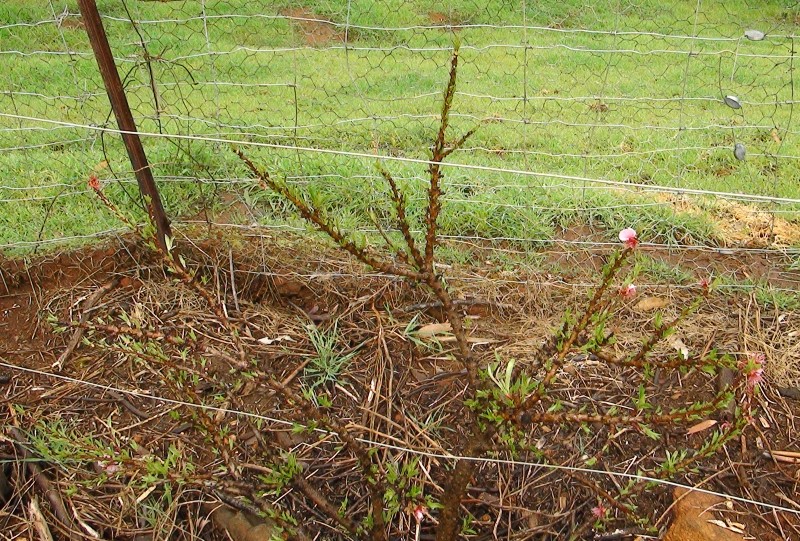
Peach 1
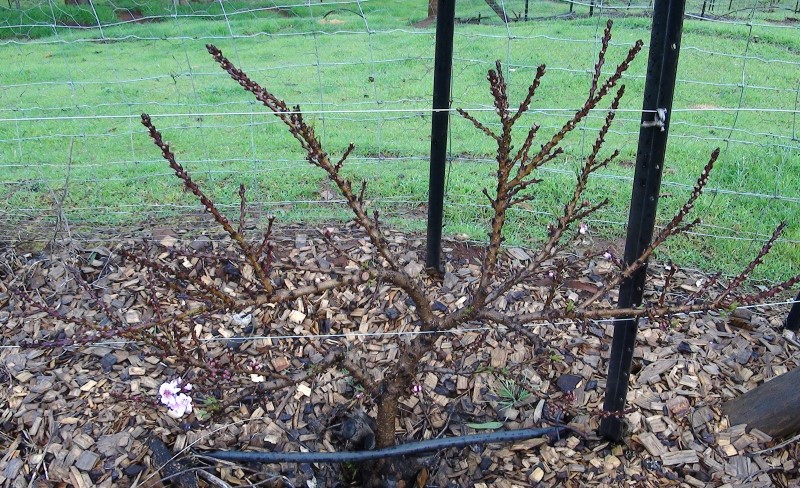
Peach 2
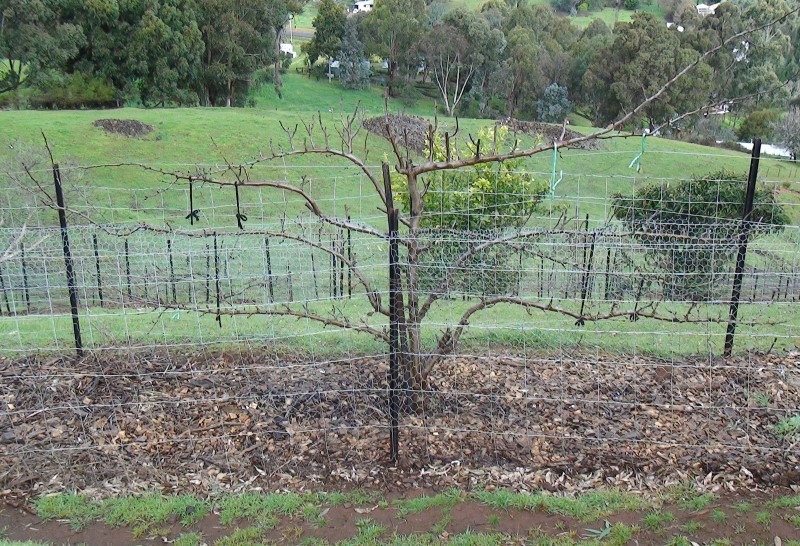
Plum
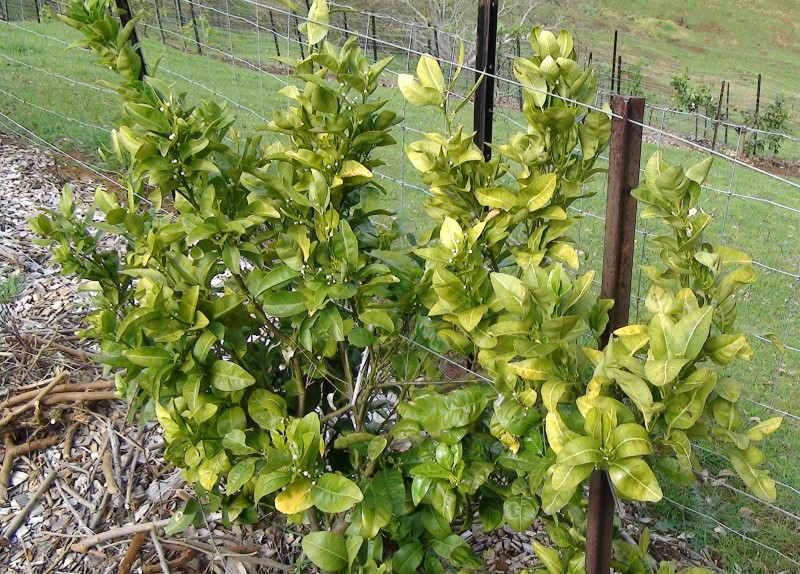
Mandarine
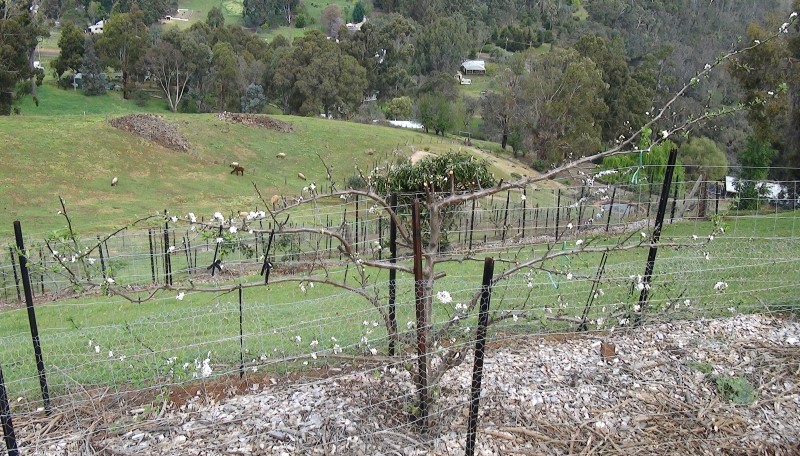
Prune
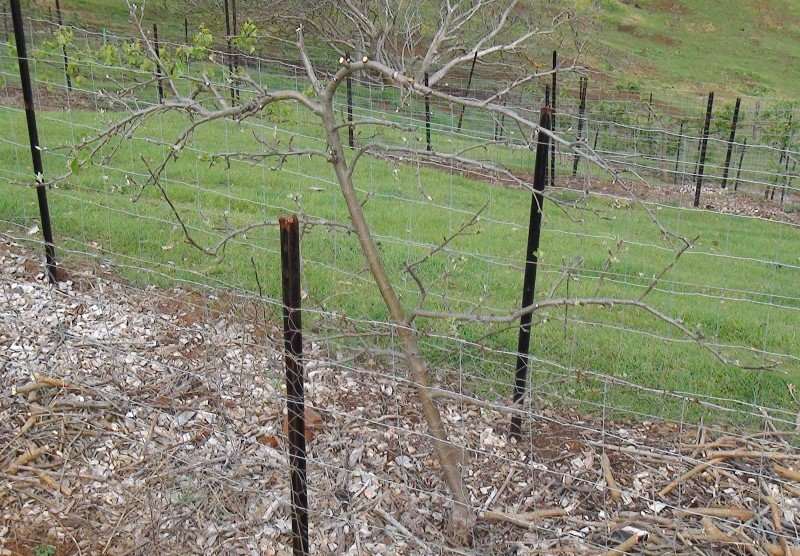
Apple
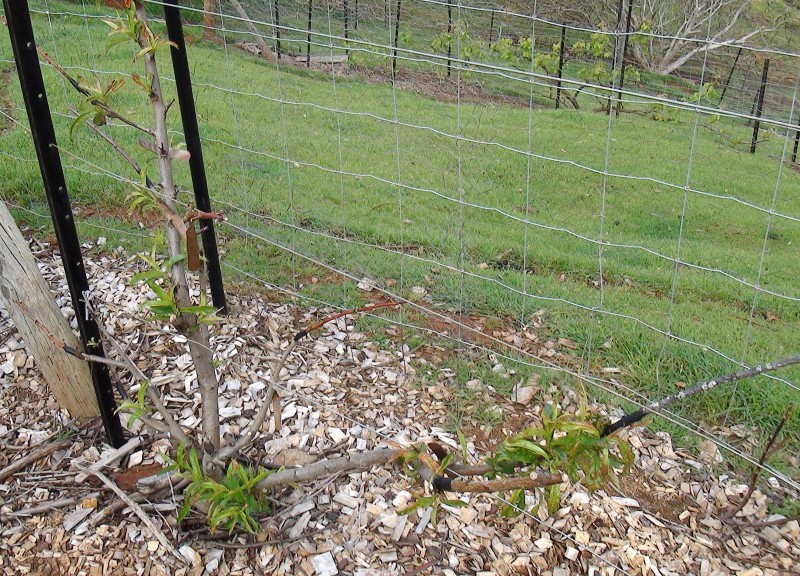
Graft
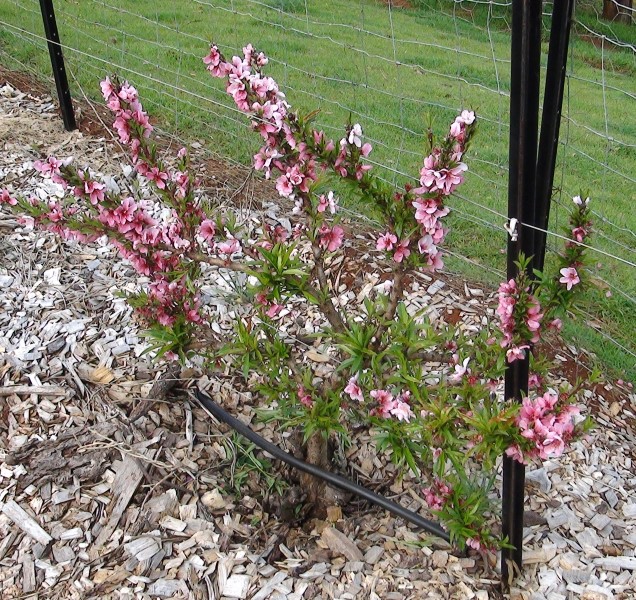
Peach 2
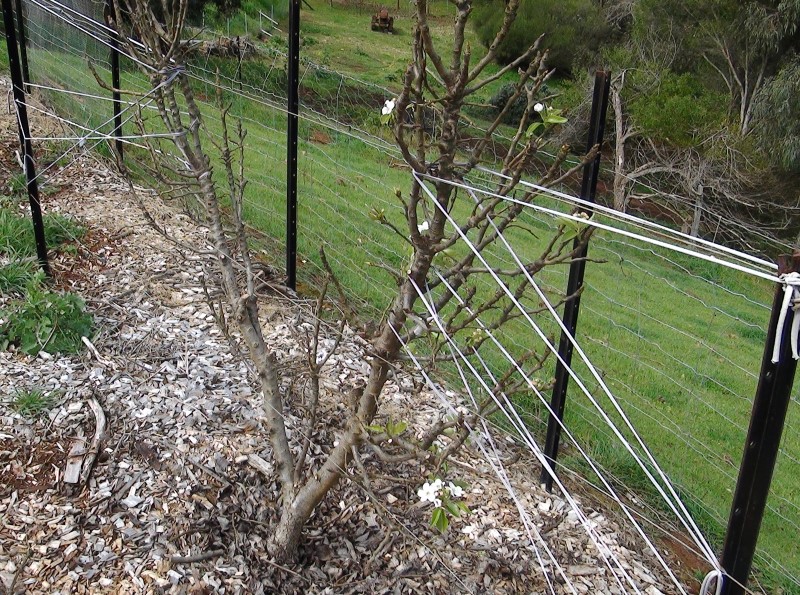
Nectarine
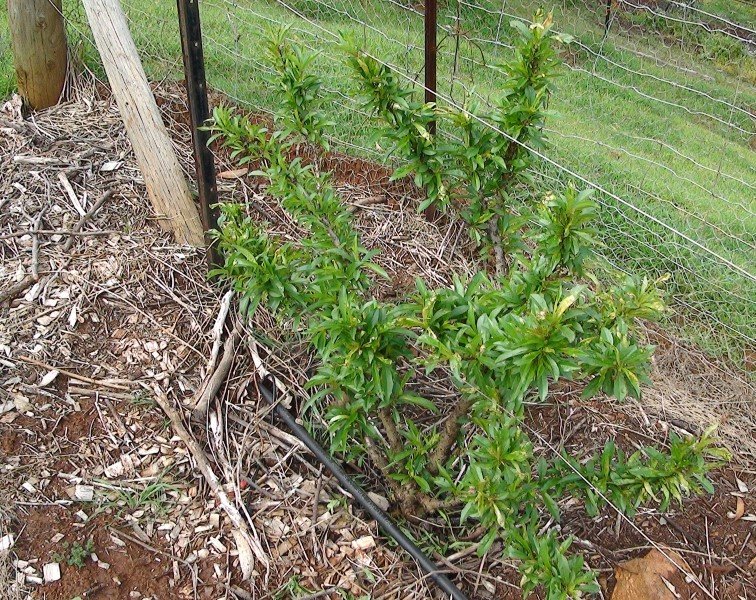
Peach 1
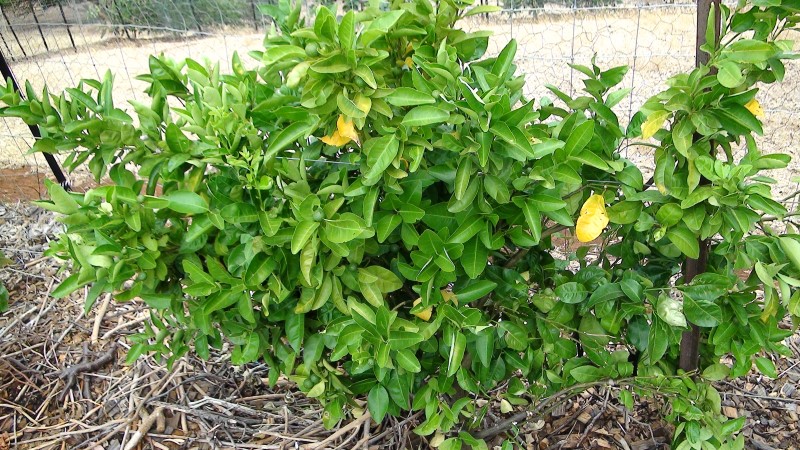
Mandarine
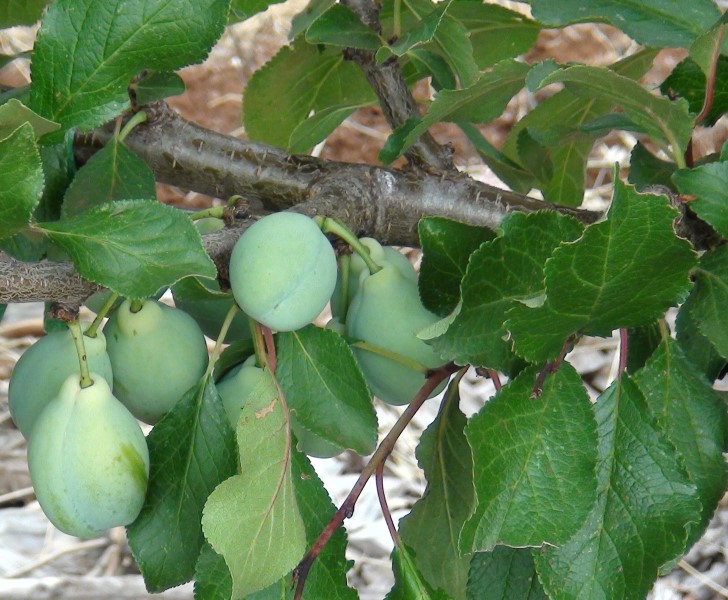
Prunes
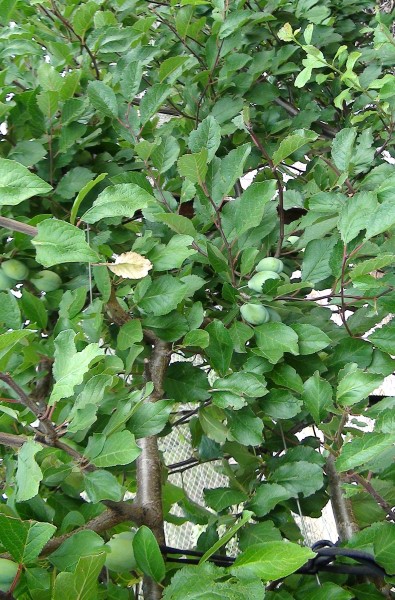
Prune
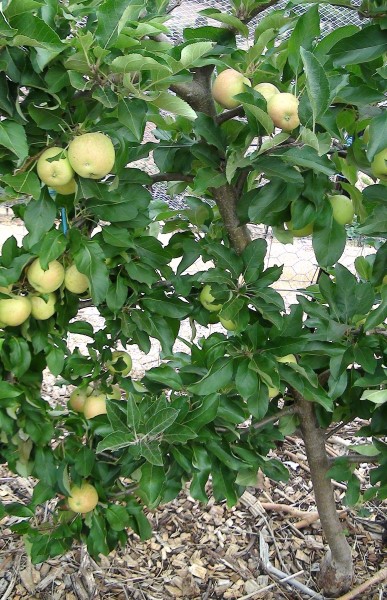
Apples
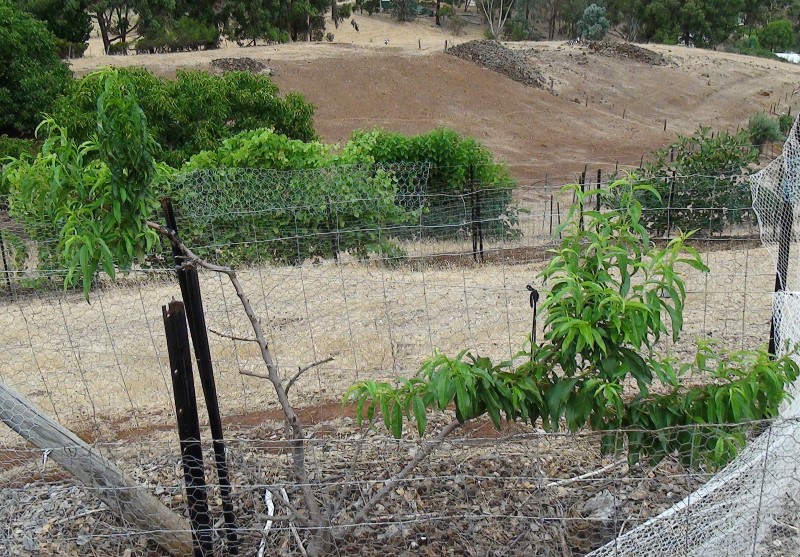
Graft
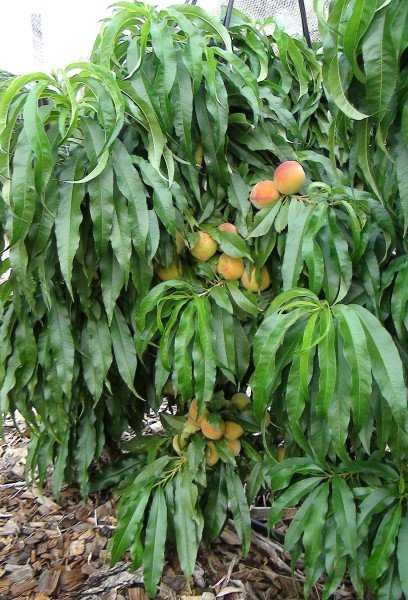
Peaches
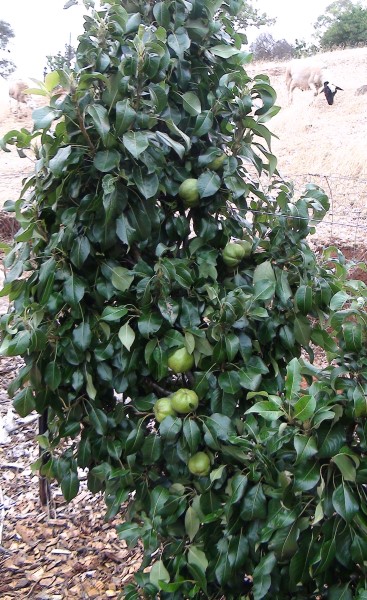
Pear
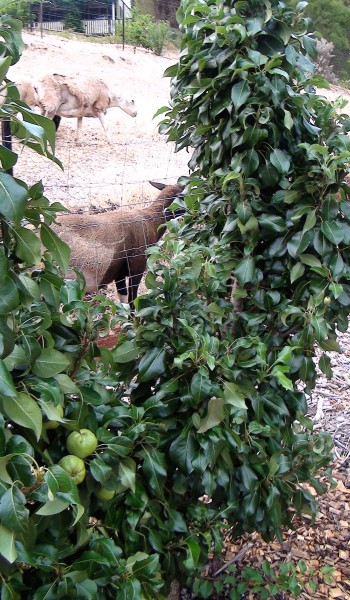
Pear
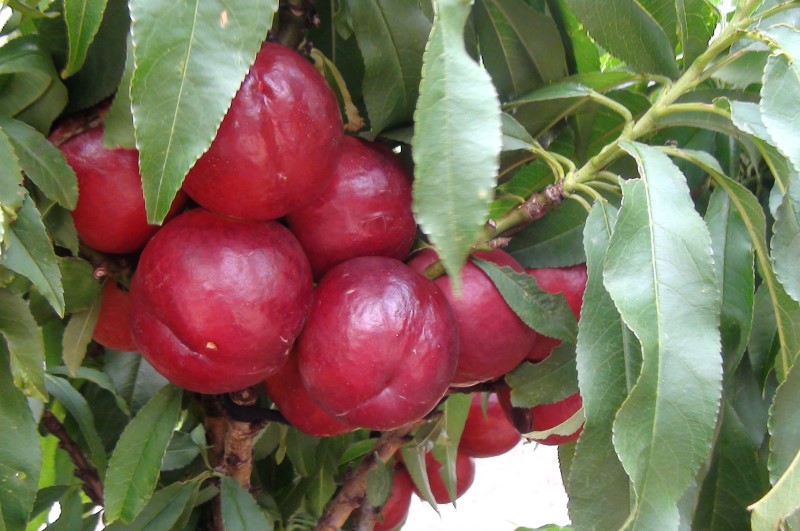
Nectarines
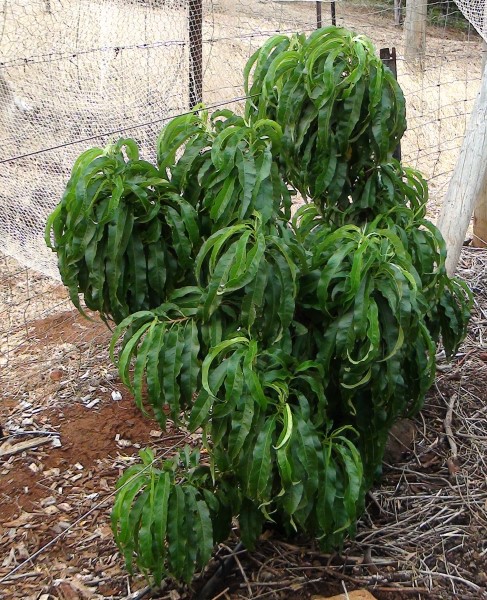
Peach 2
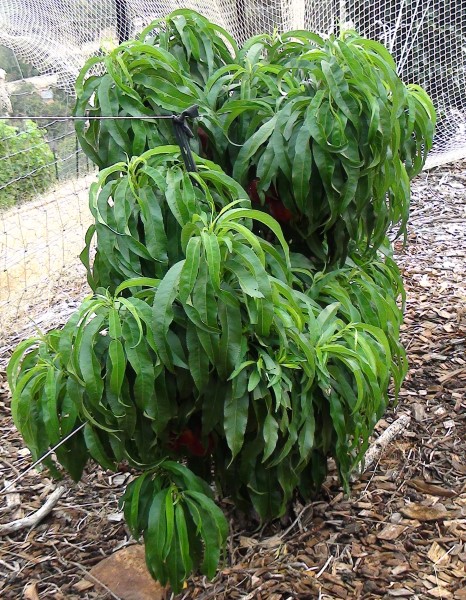
Peach 1
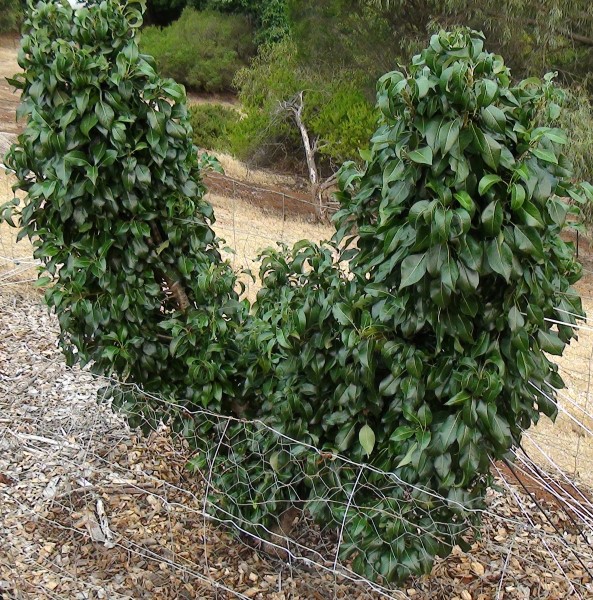
Pear
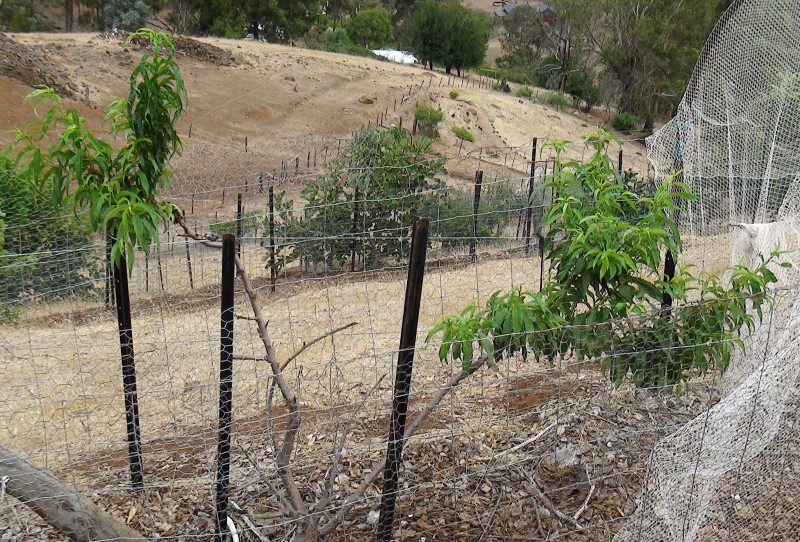
Graft
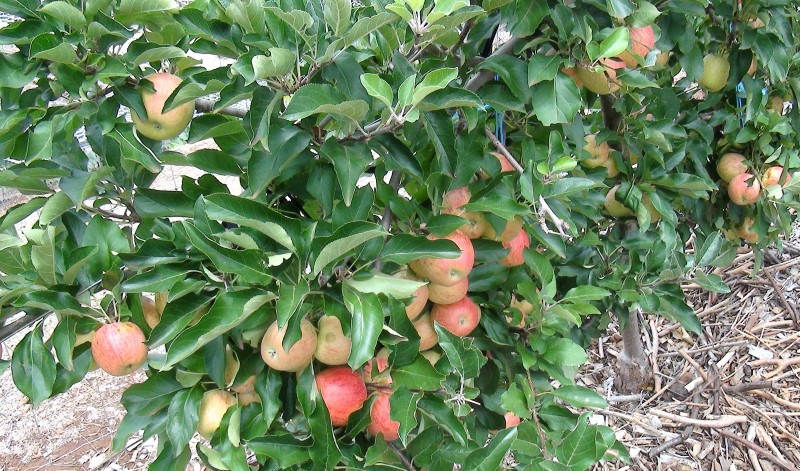
Apples
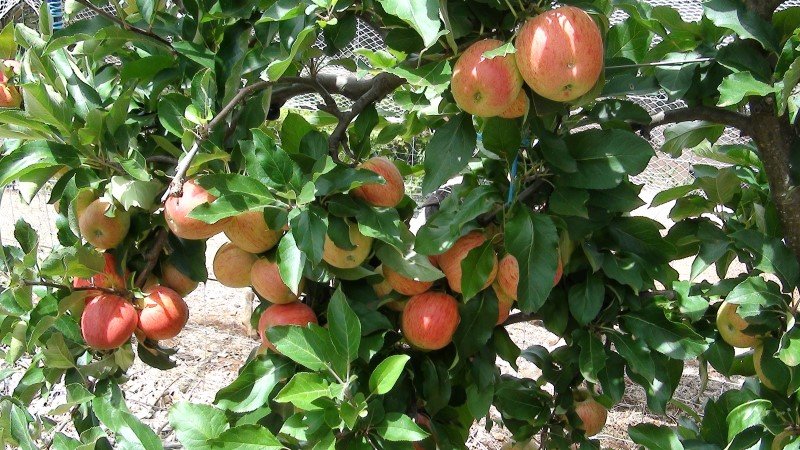
Apples
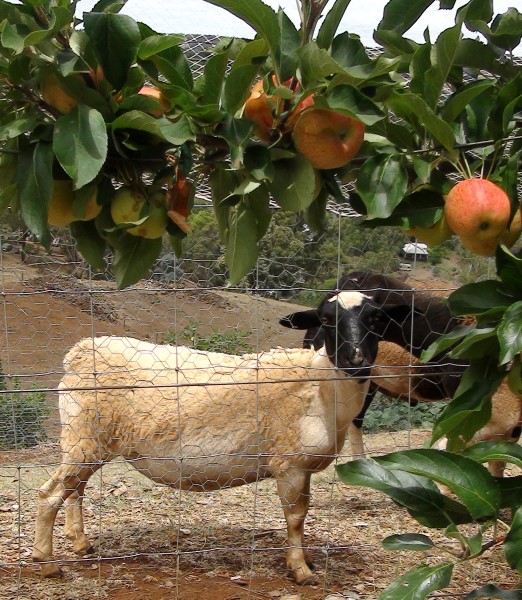
Apples & sheep
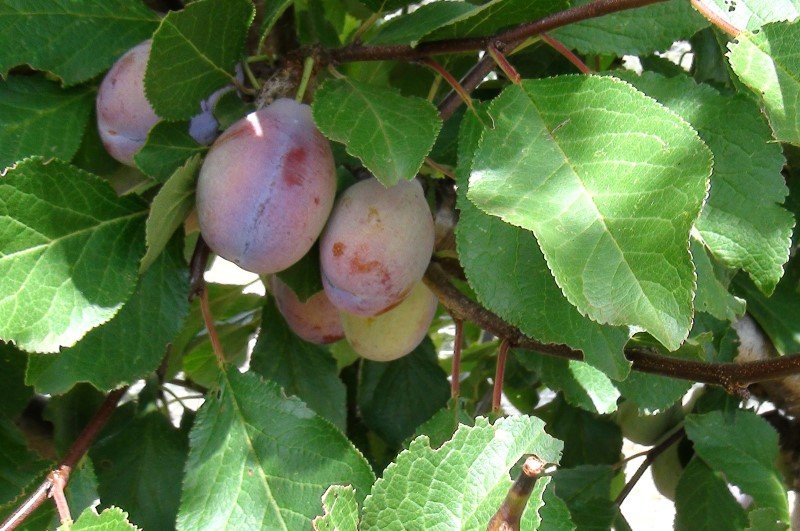
Prunes
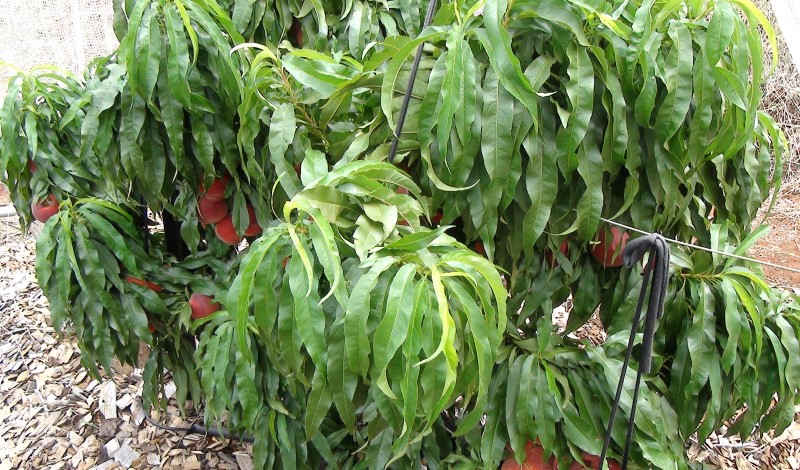
Peach
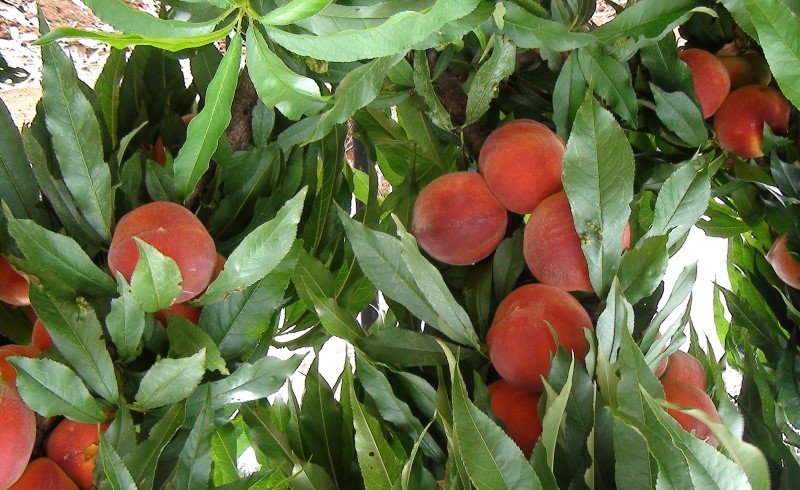
Peaches
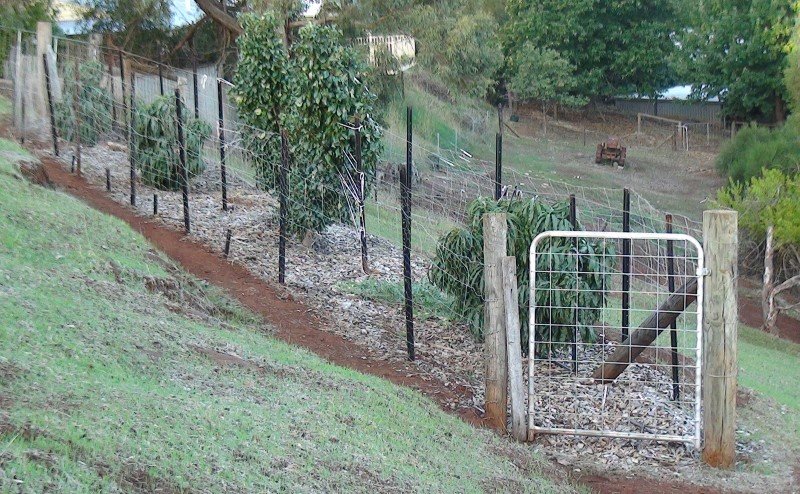
East part of row
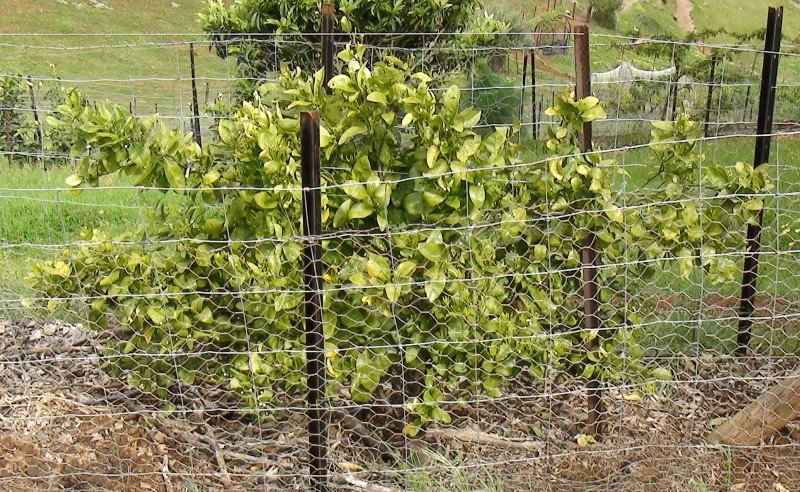
Mandarine
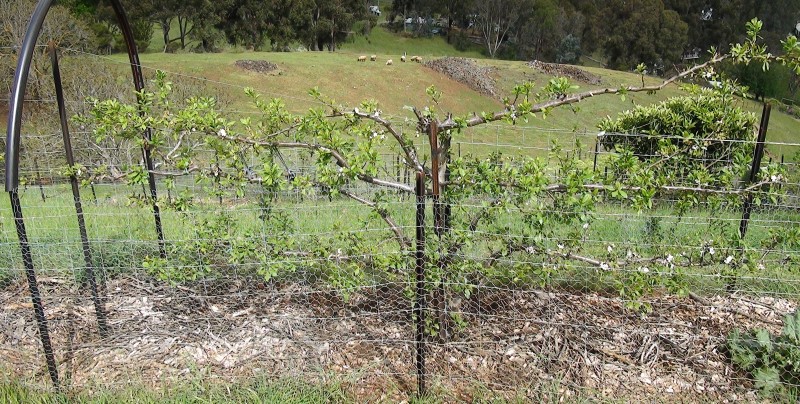
Prune
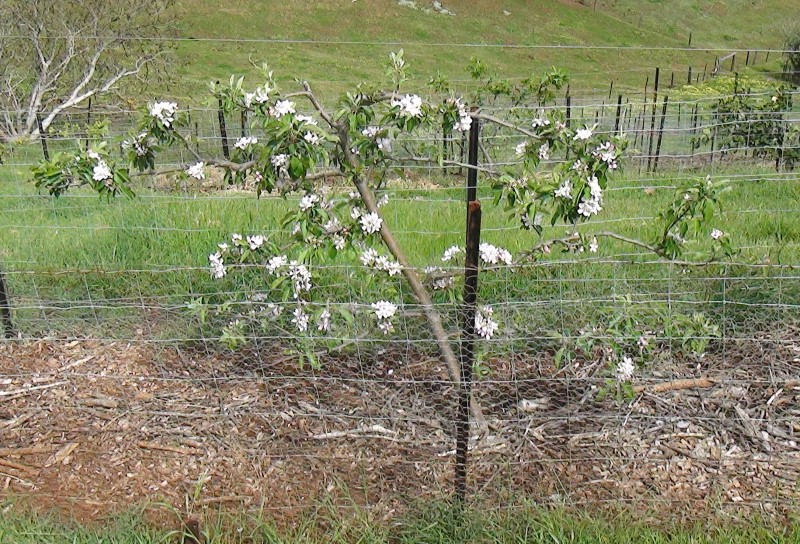
Apple
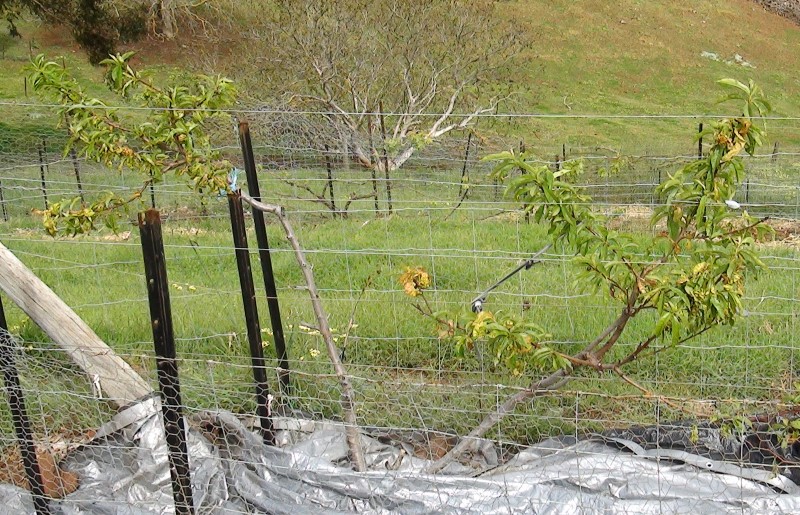
Graft
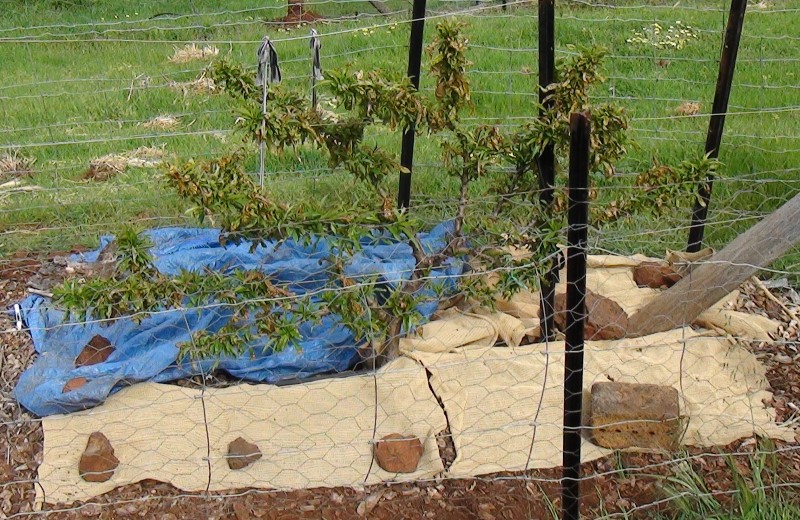
Peach 2
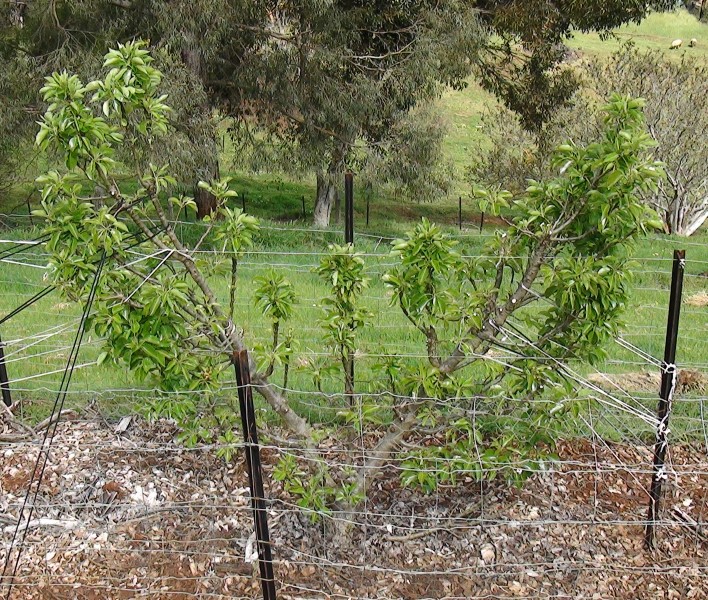
Pear
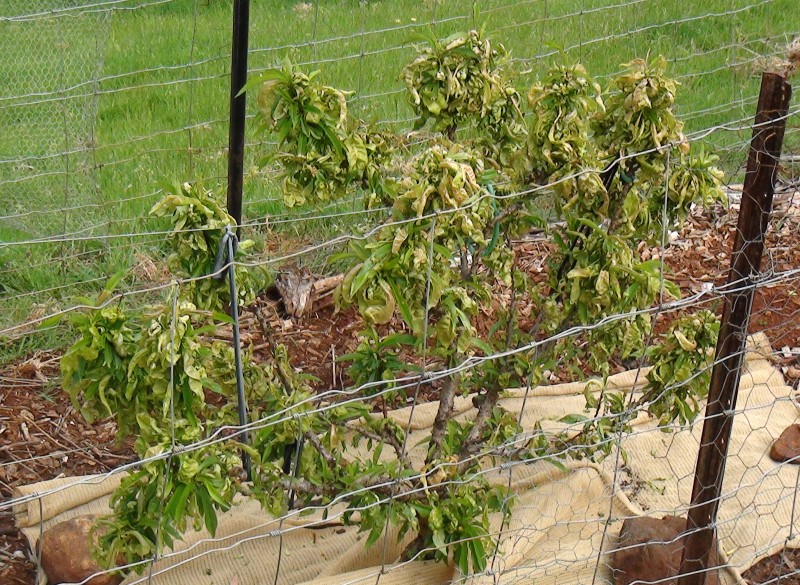
Peach 1
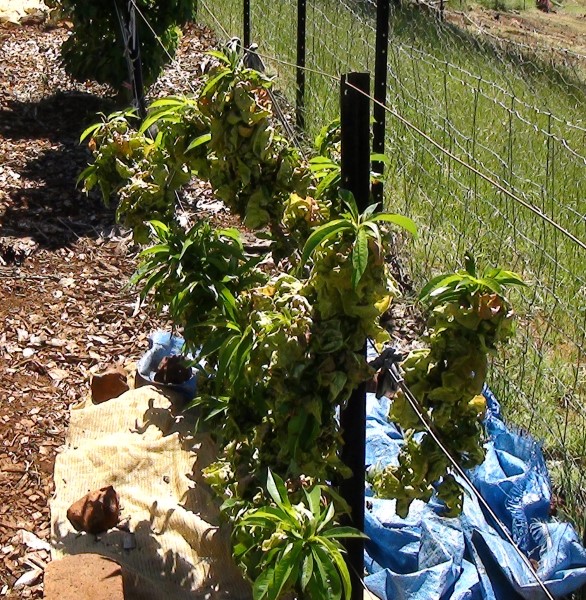
Peach 2
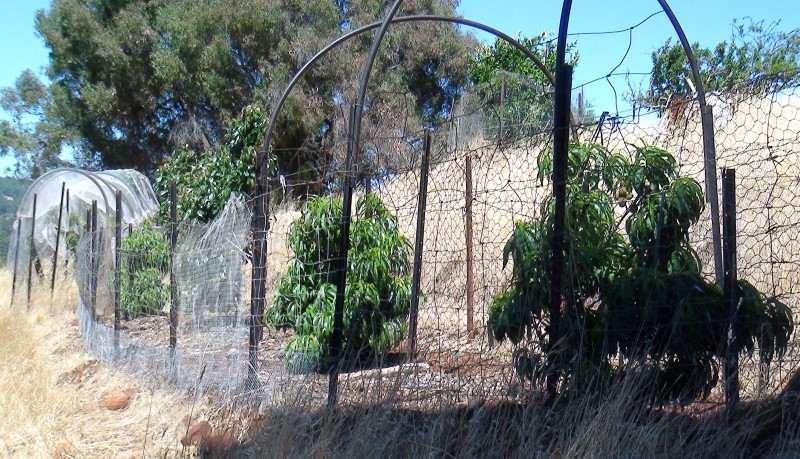
East part of row
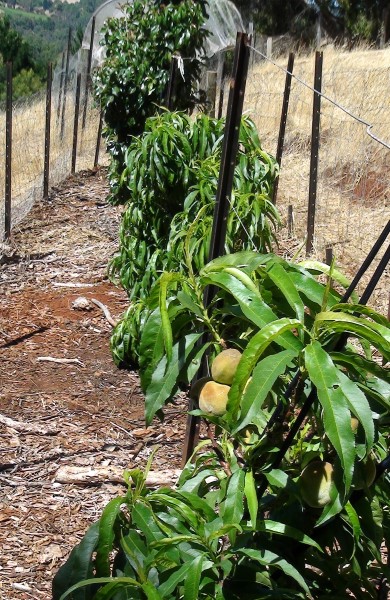
East part of row
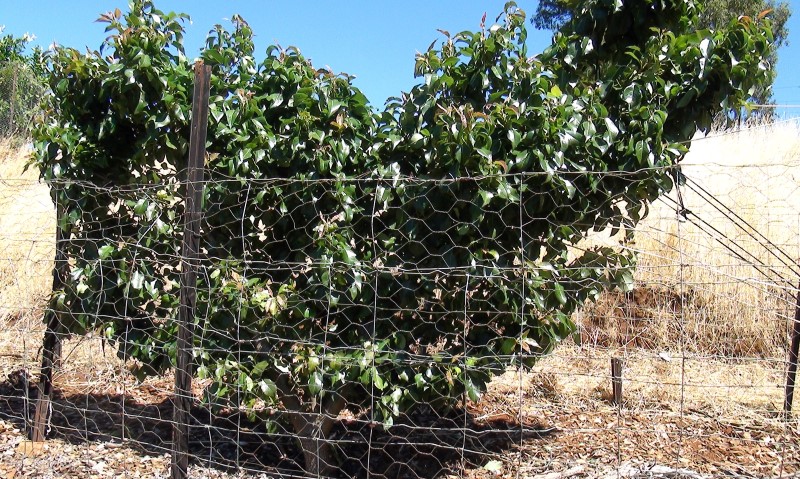
Pear
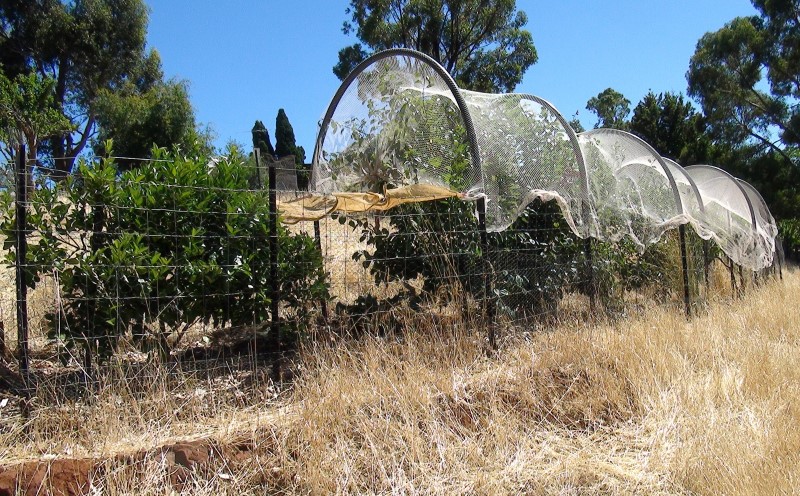
West part of row looking east
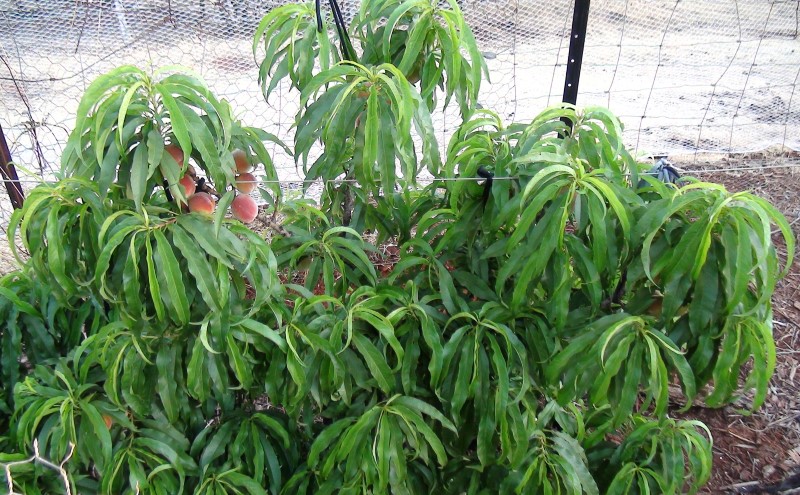
Peach 1
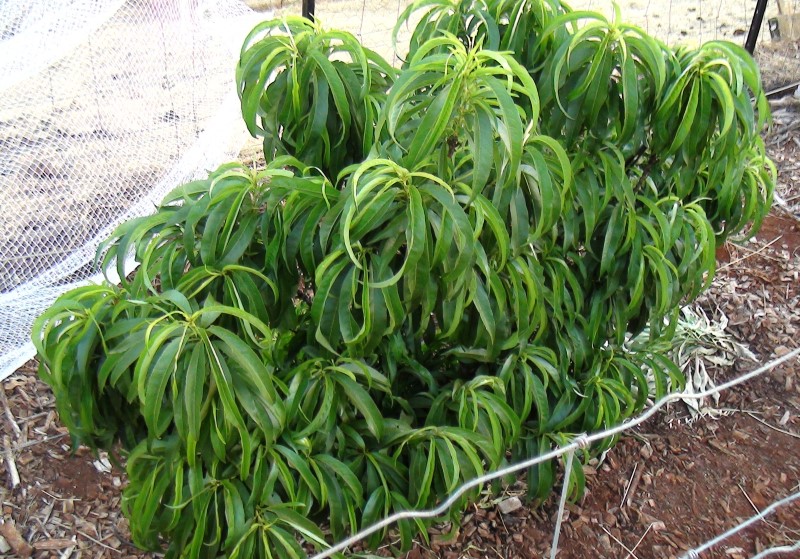
Nectarine
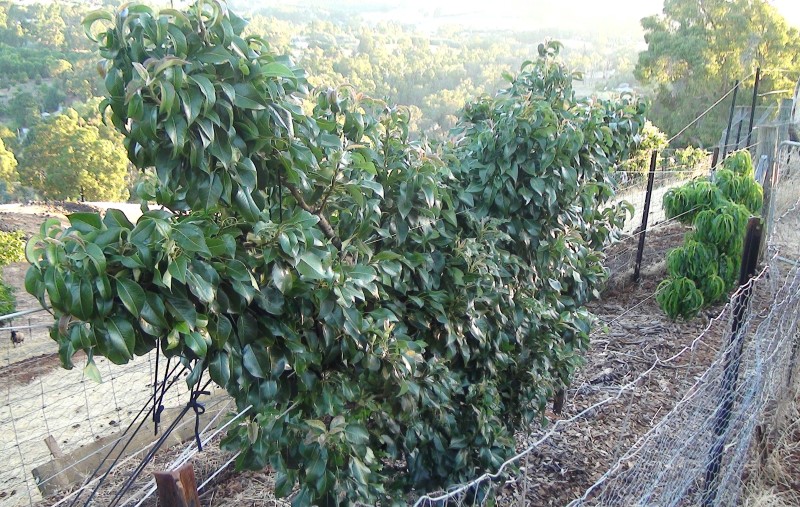
Pear
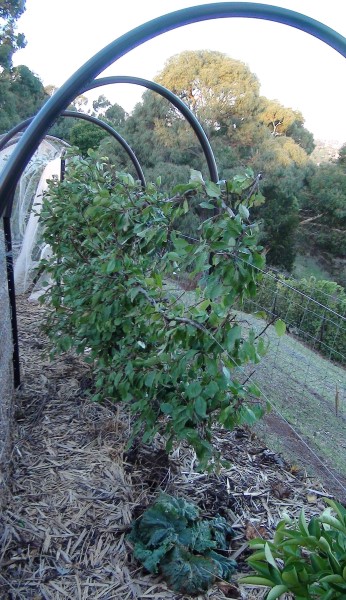
Prune & rhubard
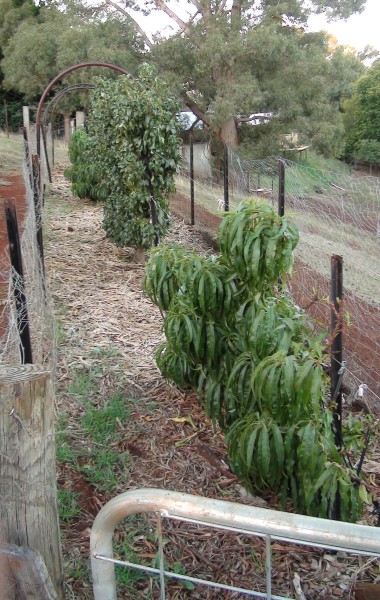
East part of row
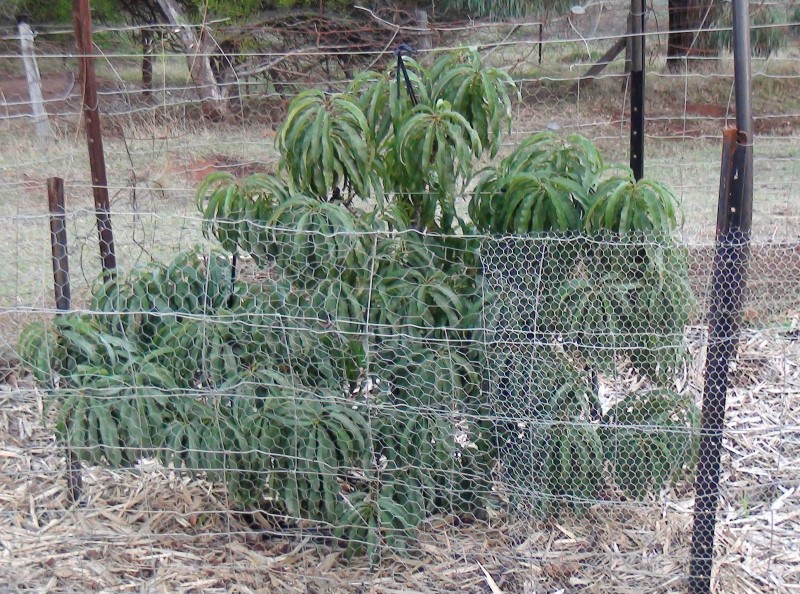
Peach 1
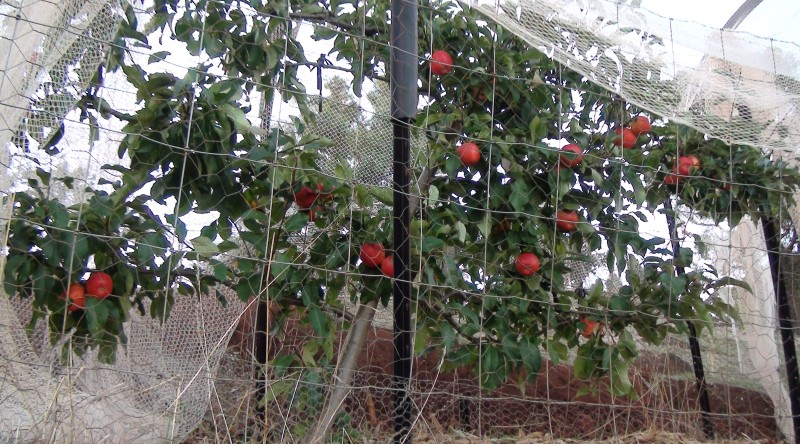
Apple
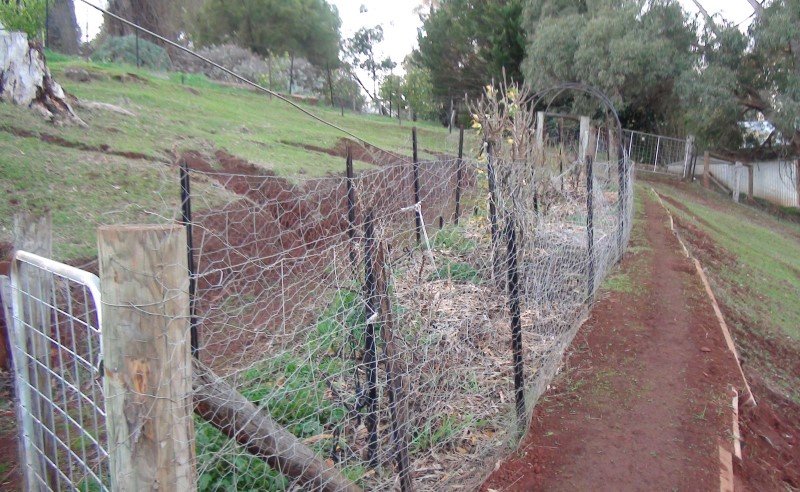
Row - new pathway
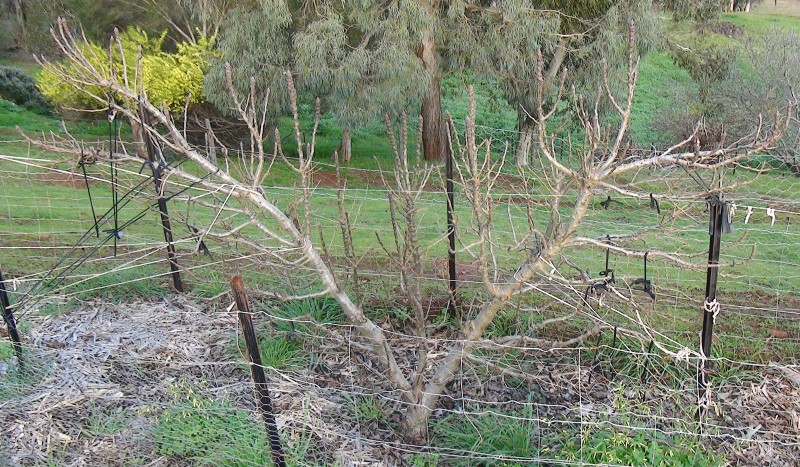
Pear 2
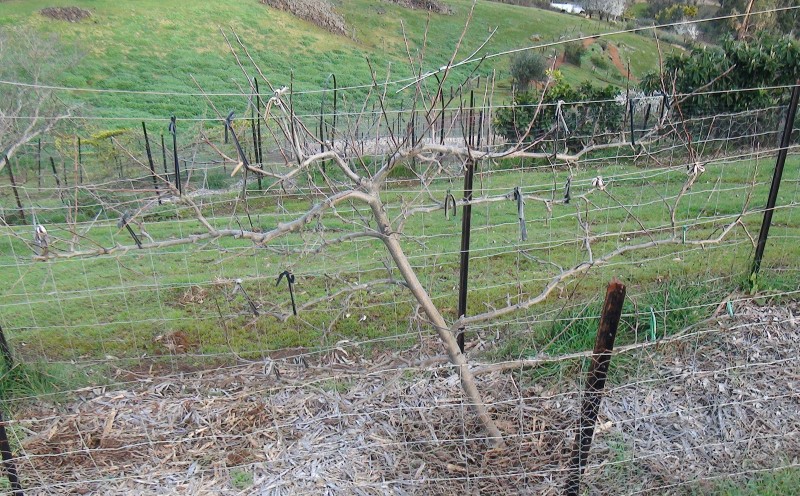
Apple
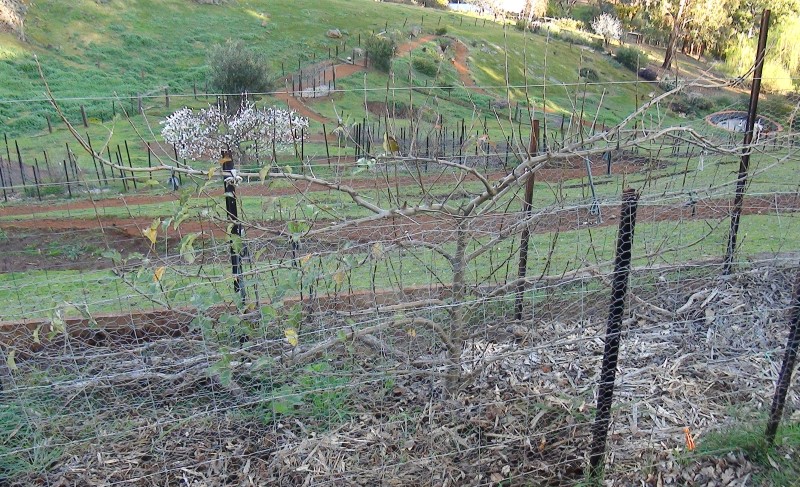
Prune
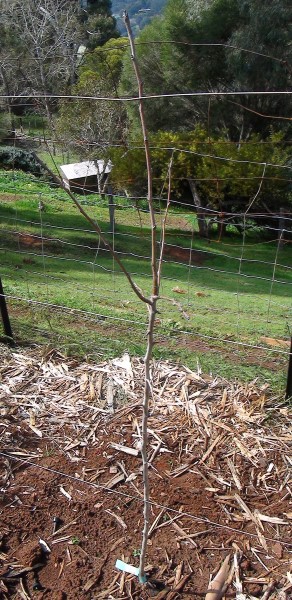
Pear 1
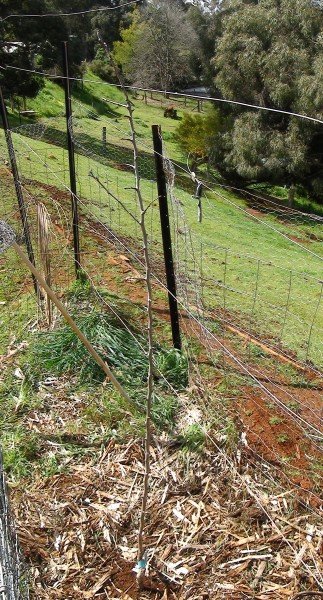
Pear 3
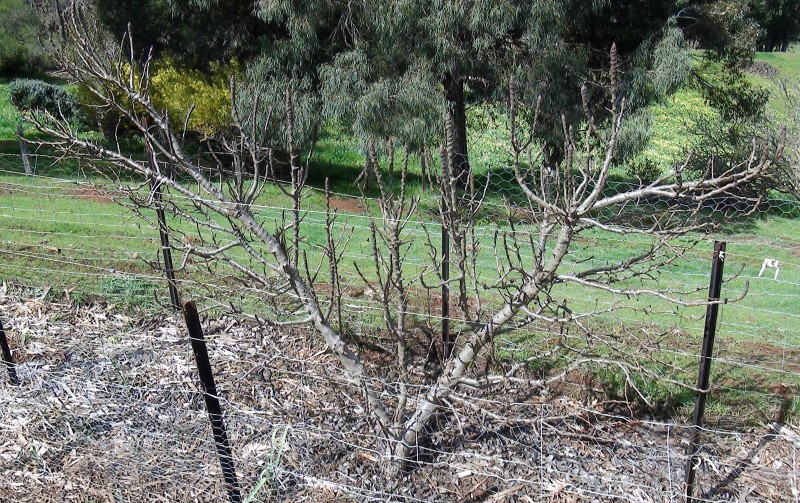
Pear 2
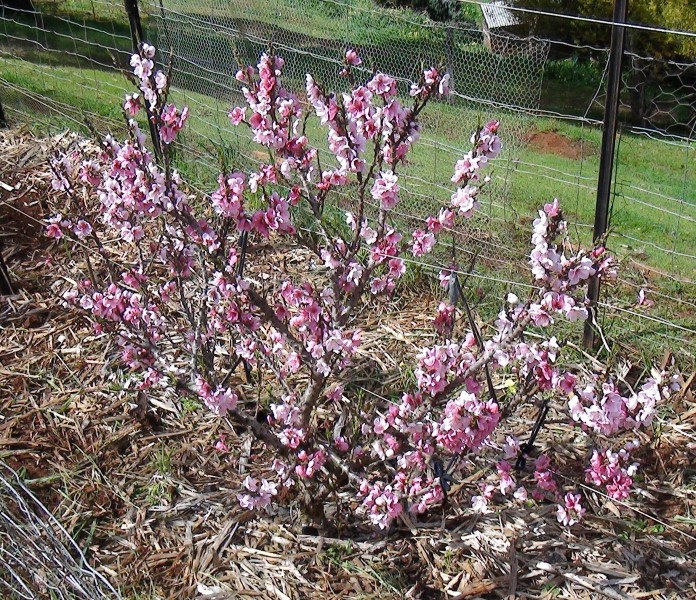
Peach 1
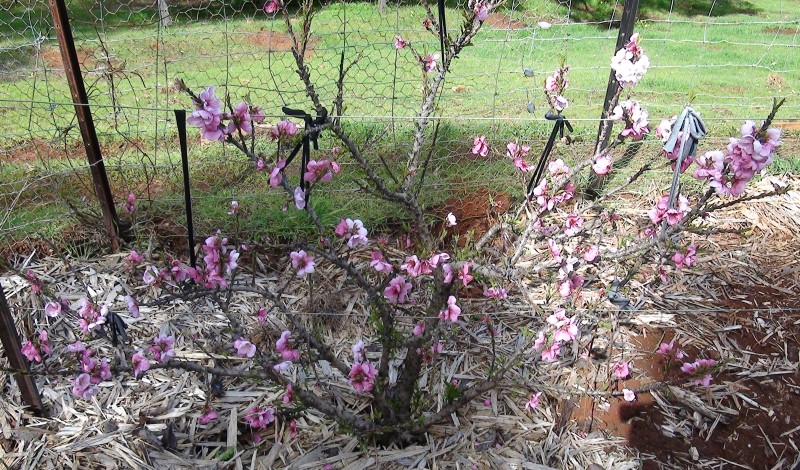
Nectarine
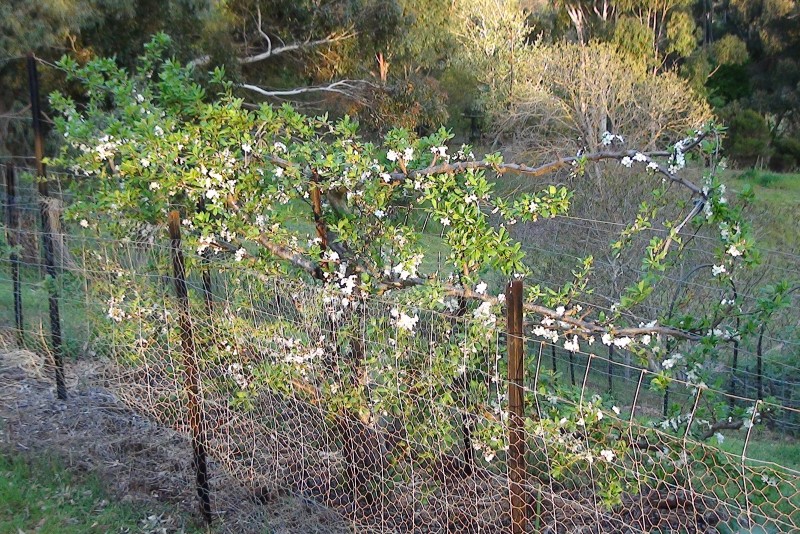
Prune
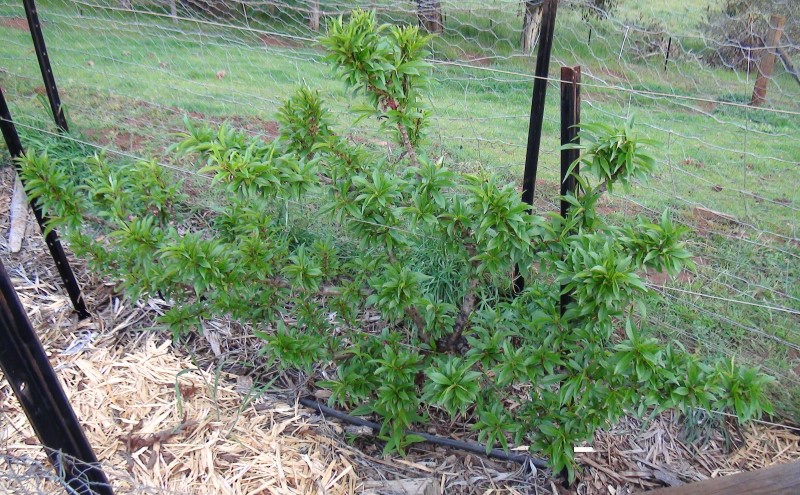
Peach 2
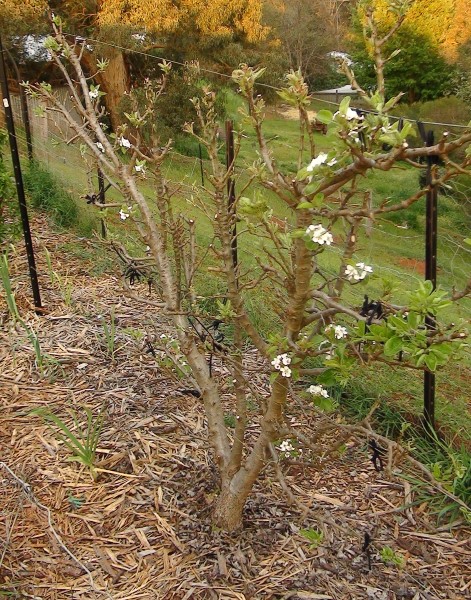
Pear 2
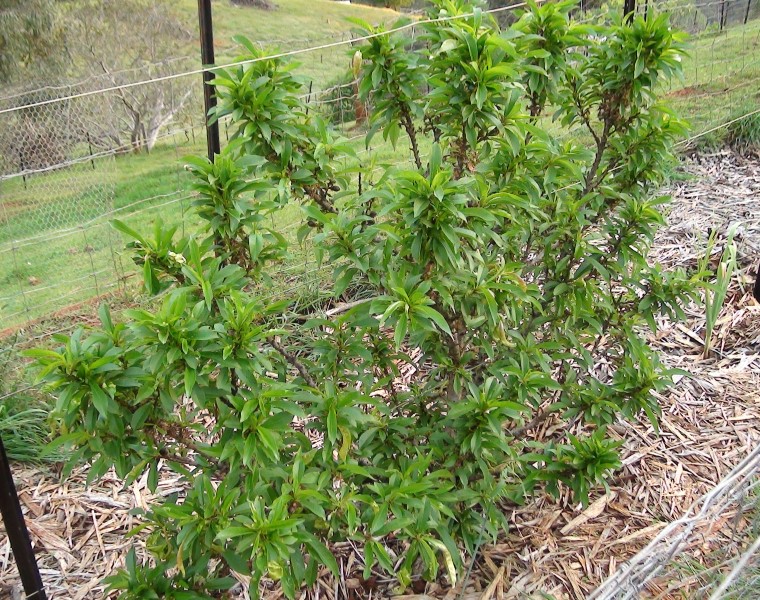
Nectarine
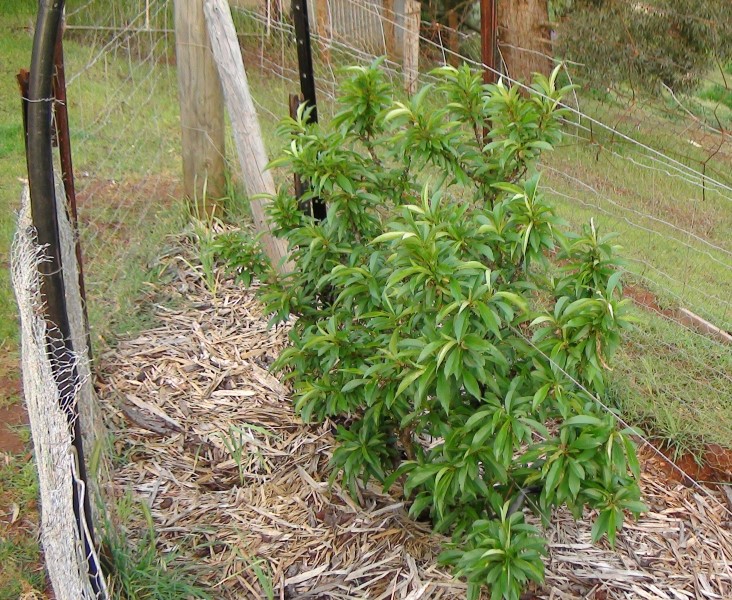
Peach 1
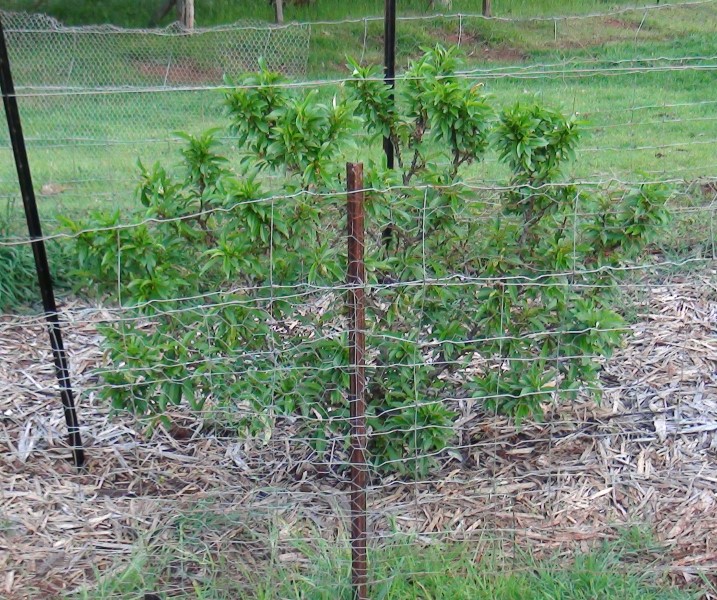
Nectarine
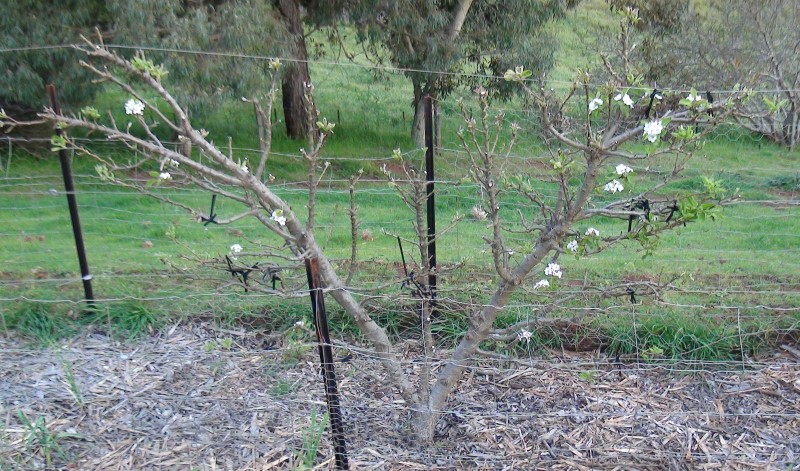
Pear 2
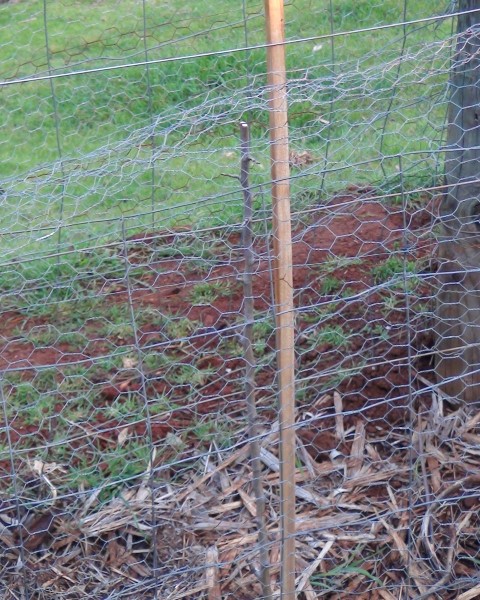
Pear 3
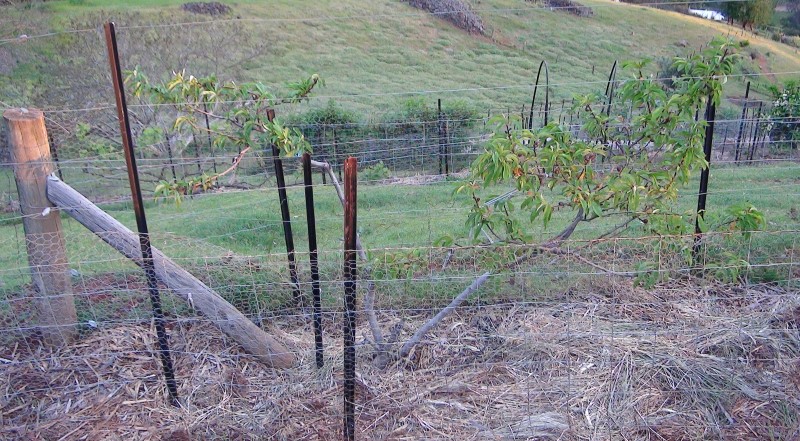
Graft
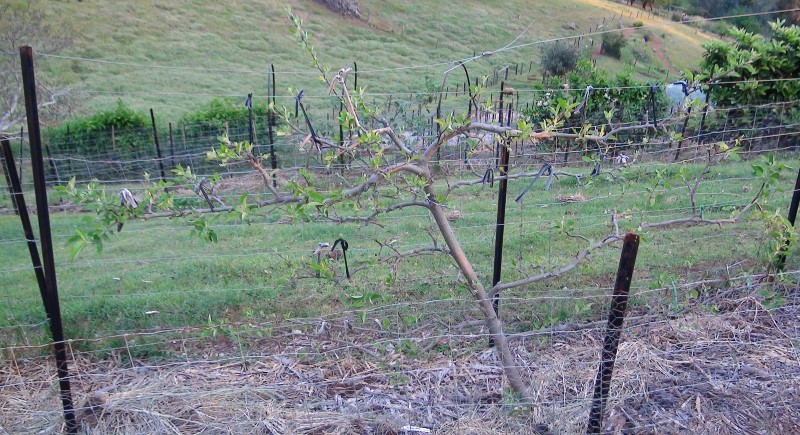
Apple
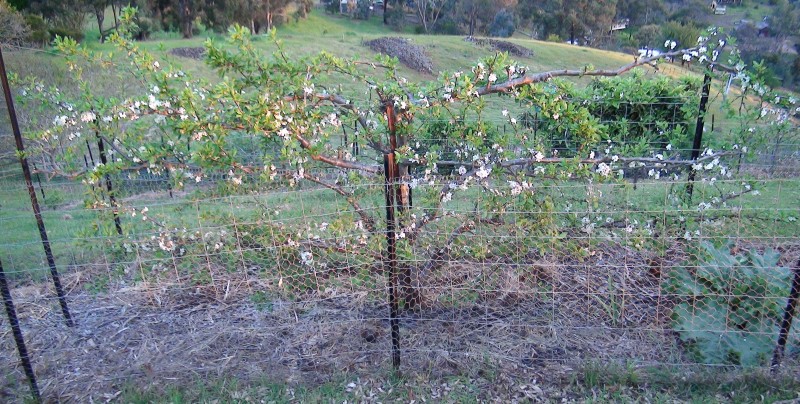
Prune
Mandarine
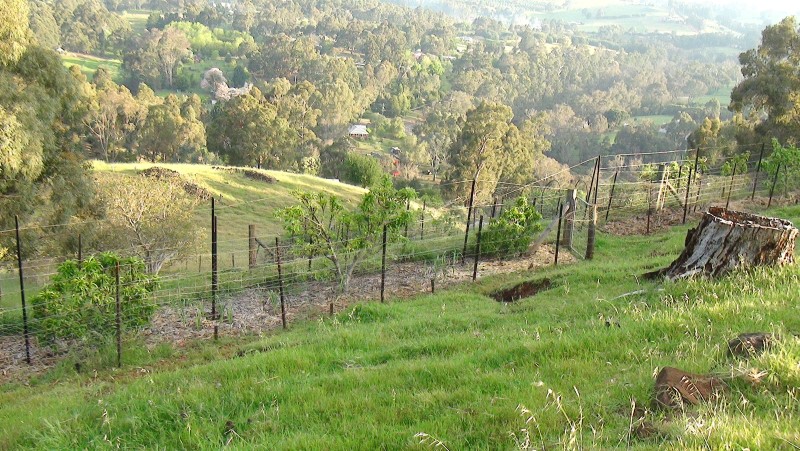
Row from the top of the hill
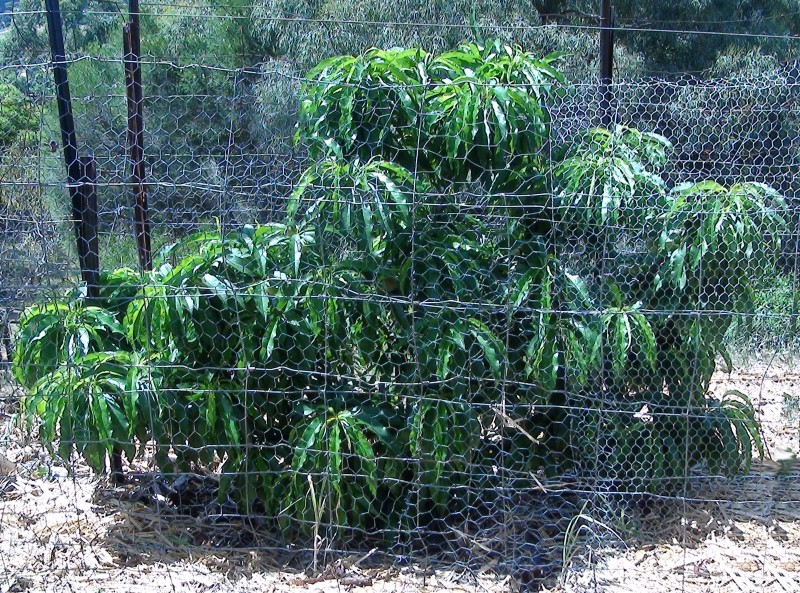
Peach 1
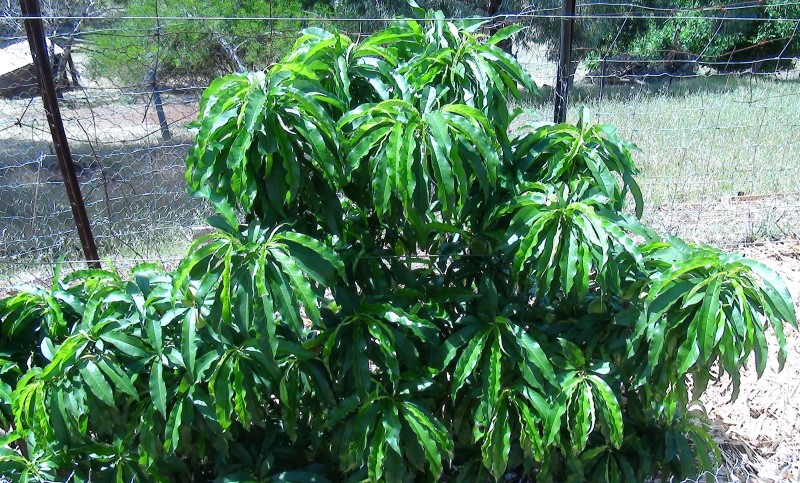
Nectarine
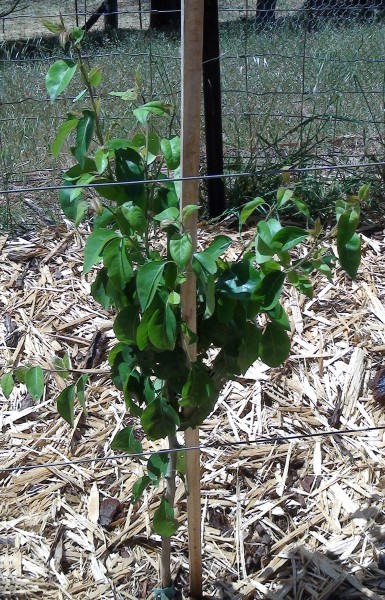
Pear 1
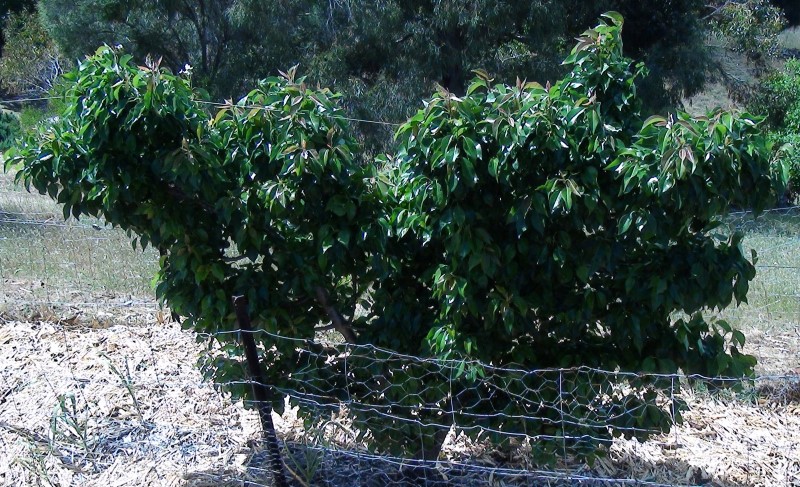
Pear 2
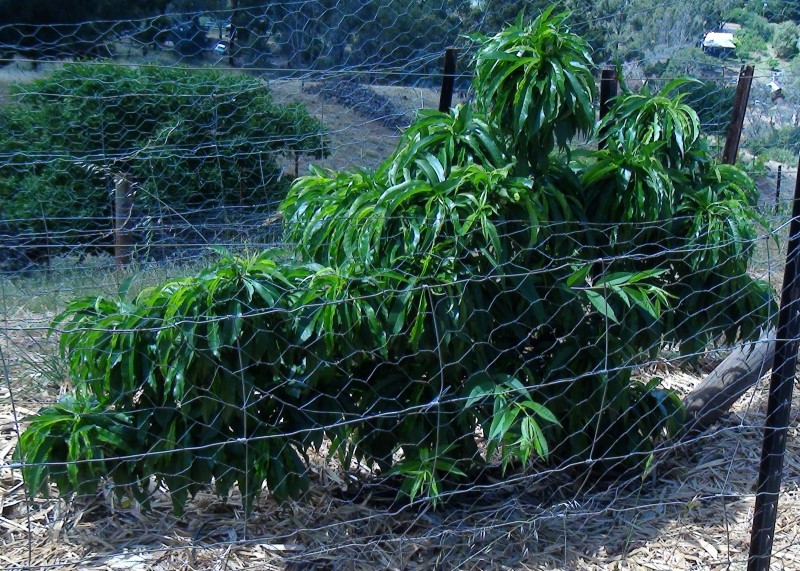
Pear 2
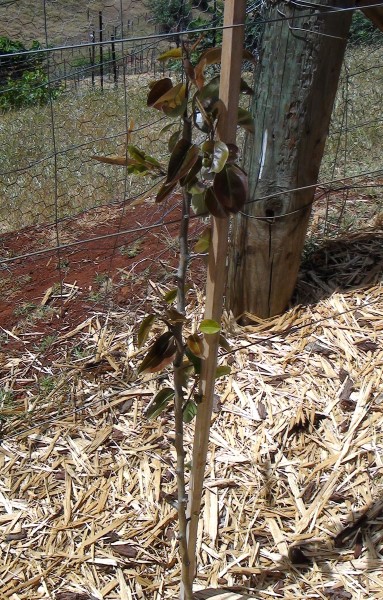
Pear 3
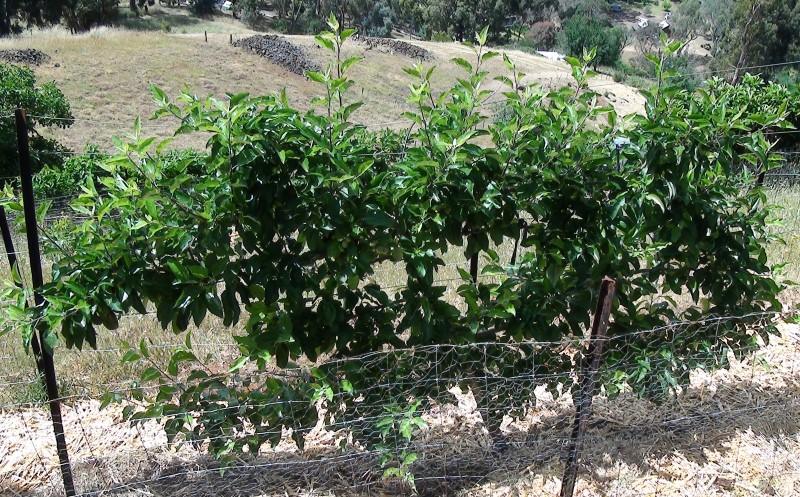
Apple
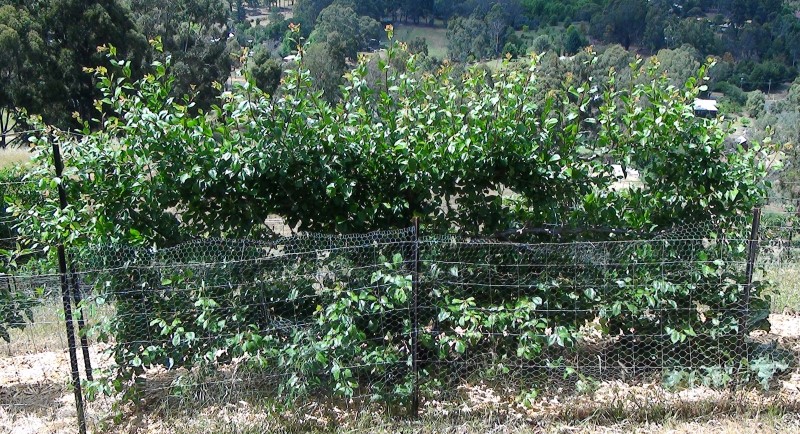
Prune
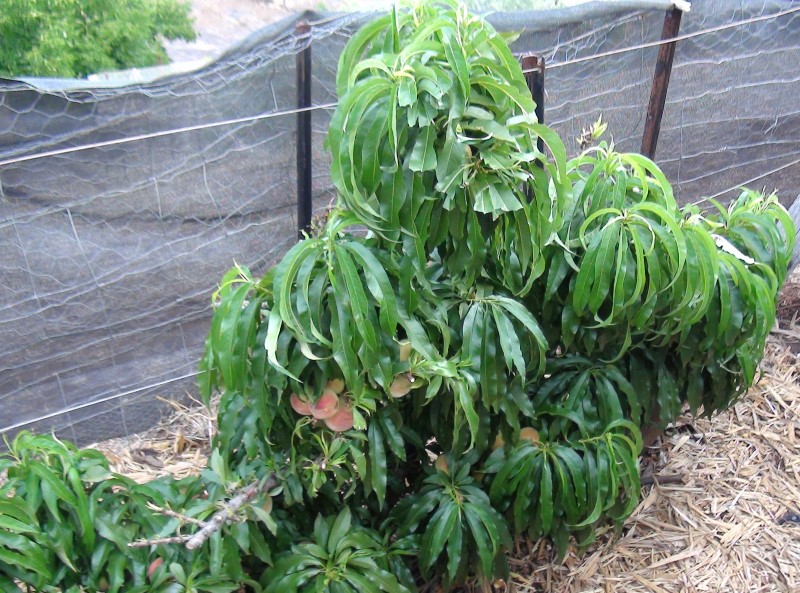
Peach 2
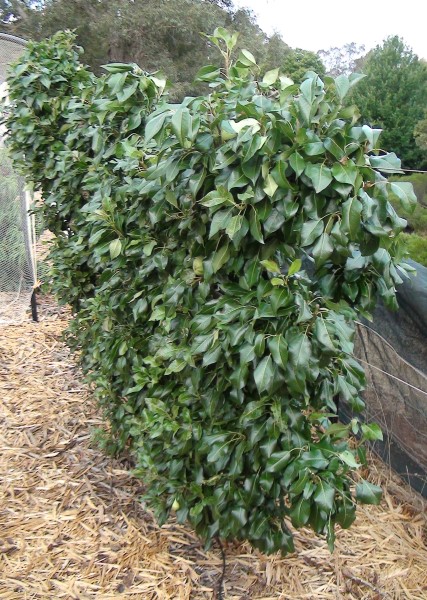
Pear 2
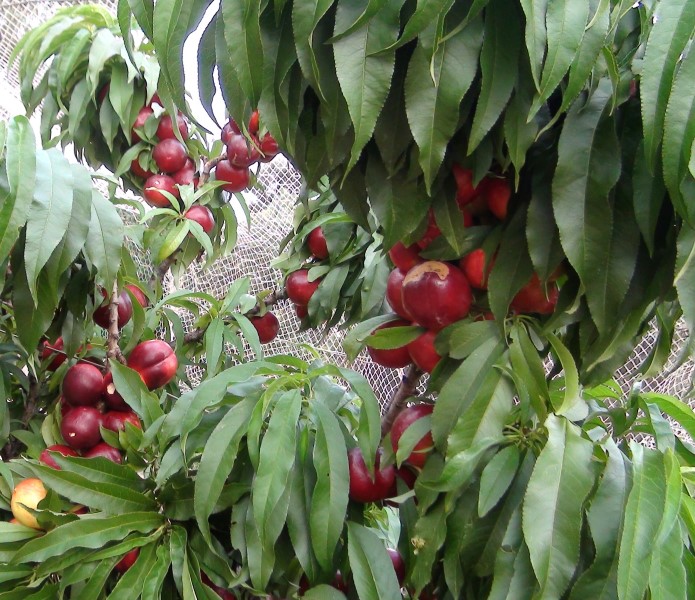
Nectarine
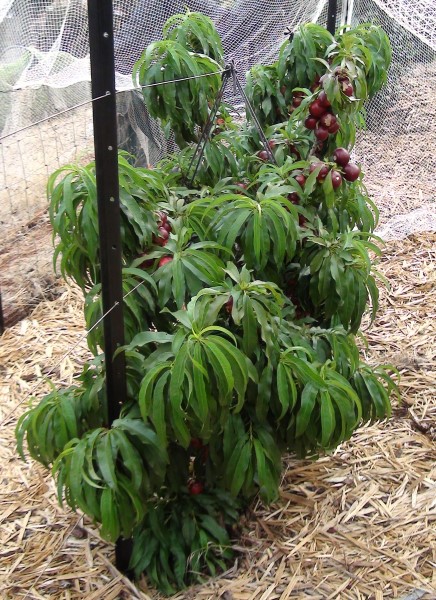
Nectarine
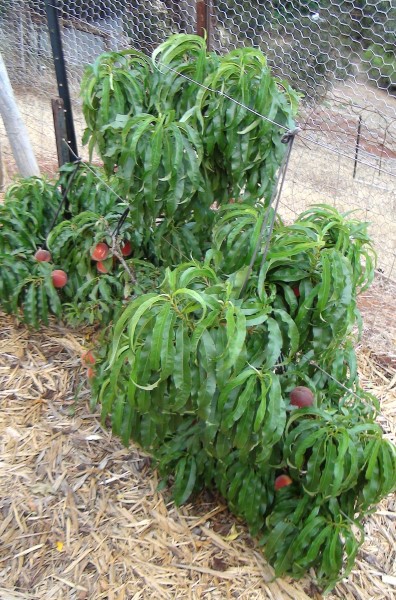
Peach 1
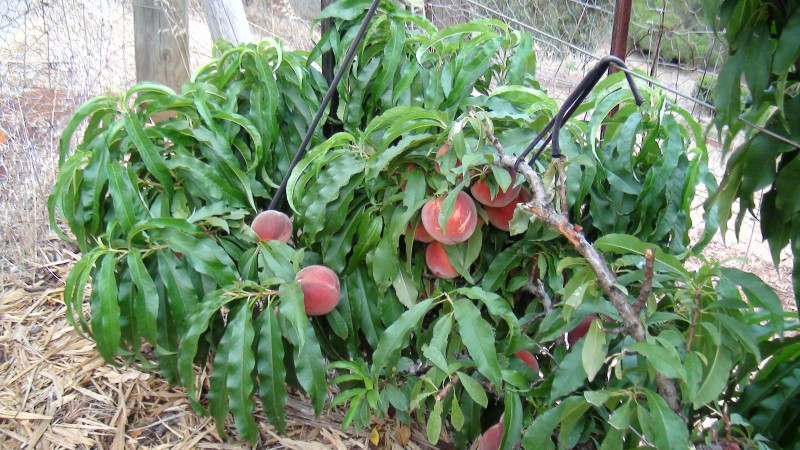
Peach 1
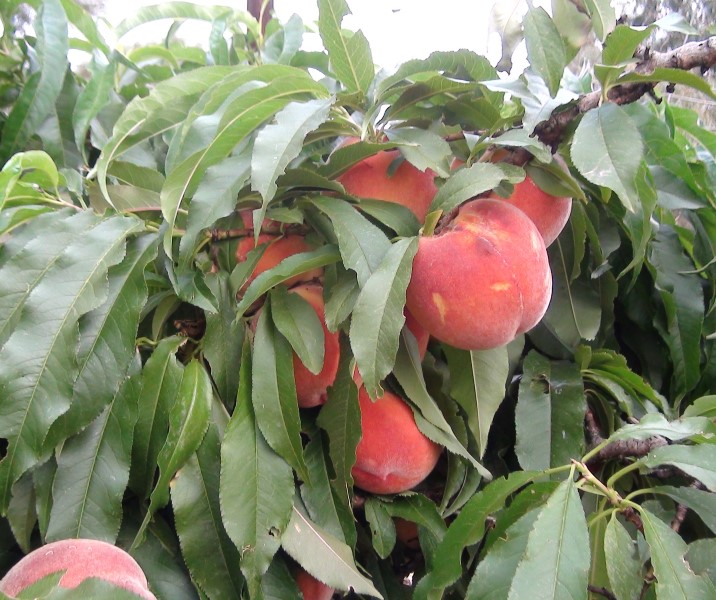
Peach 1
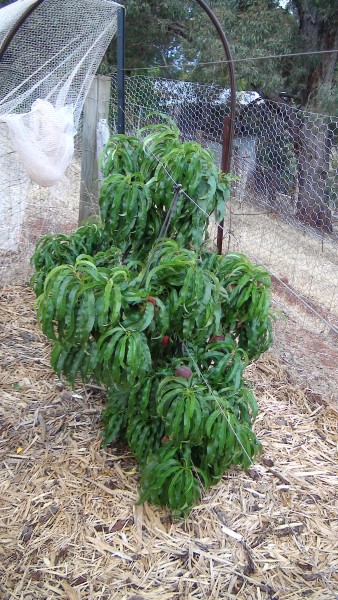
Peach 1
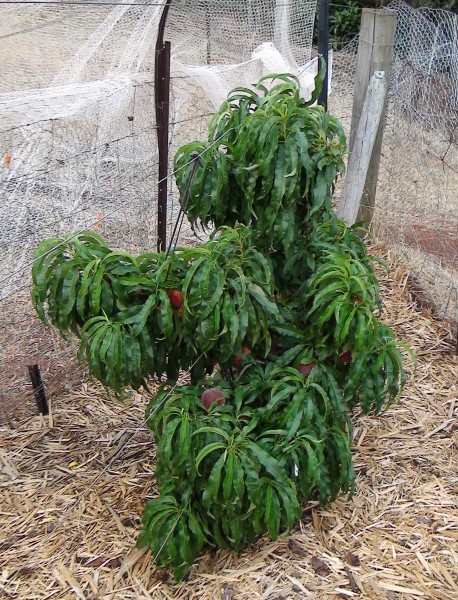
Peach 1
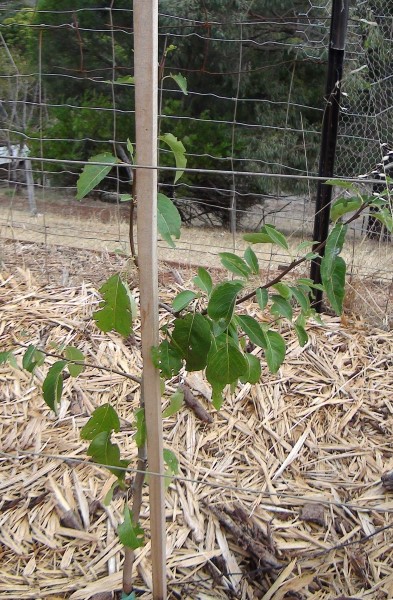
Pear 1
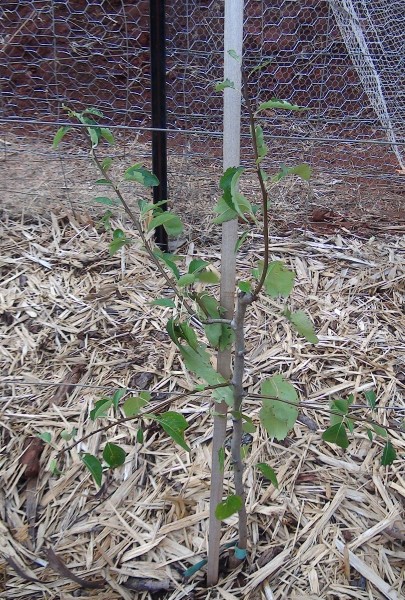
Pear 1
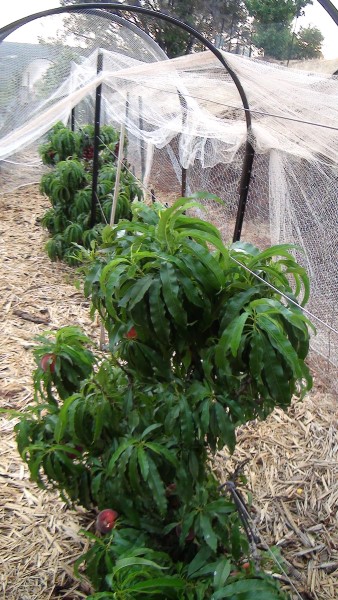
East part of row
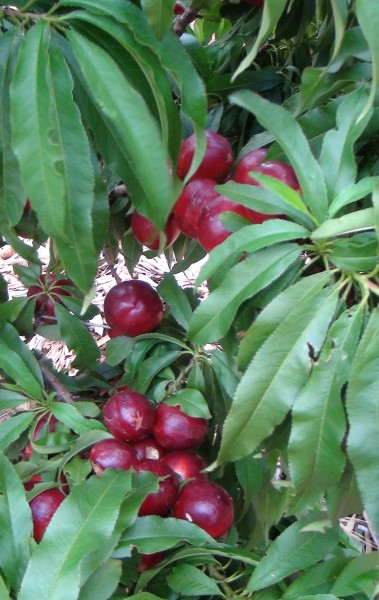
Nectarine
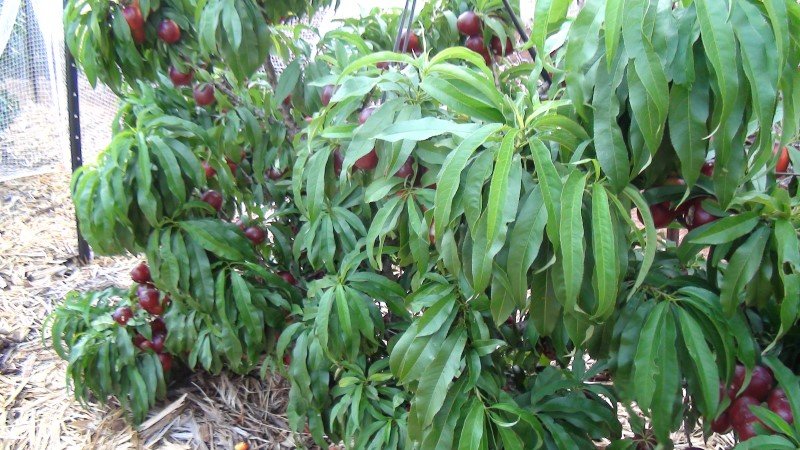
Nectarine
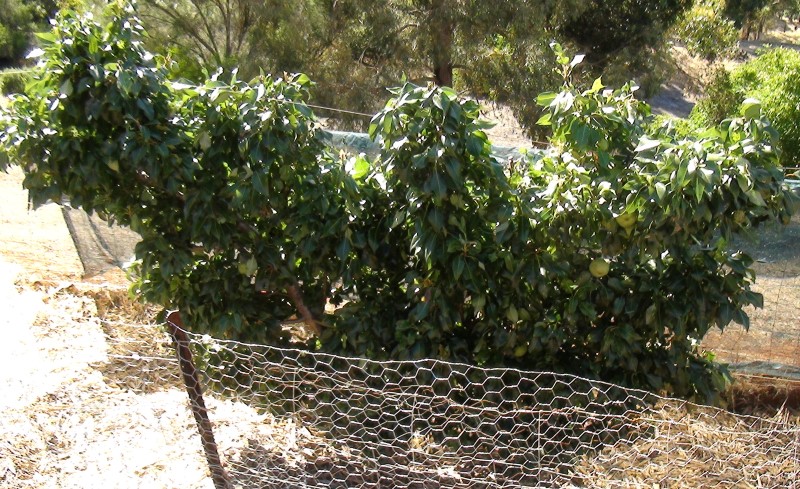
Pear 2
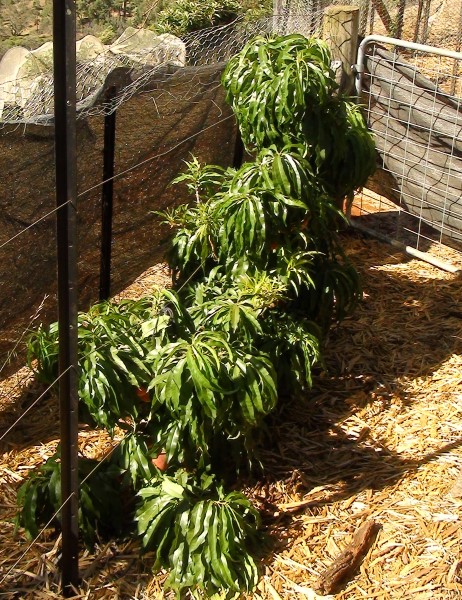
Peach 2
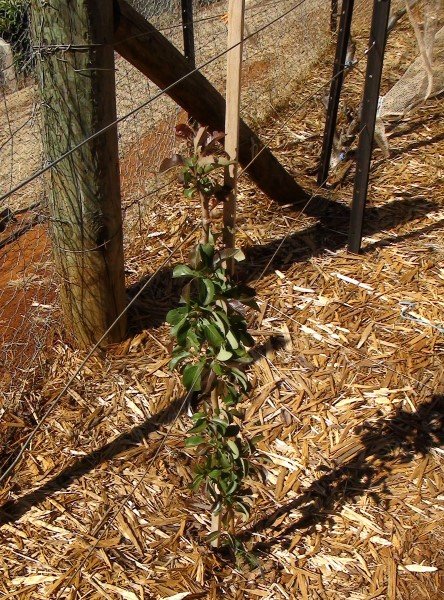
Pear 3
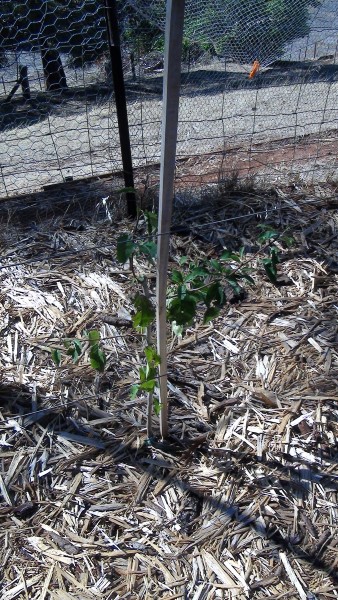
Pear 1
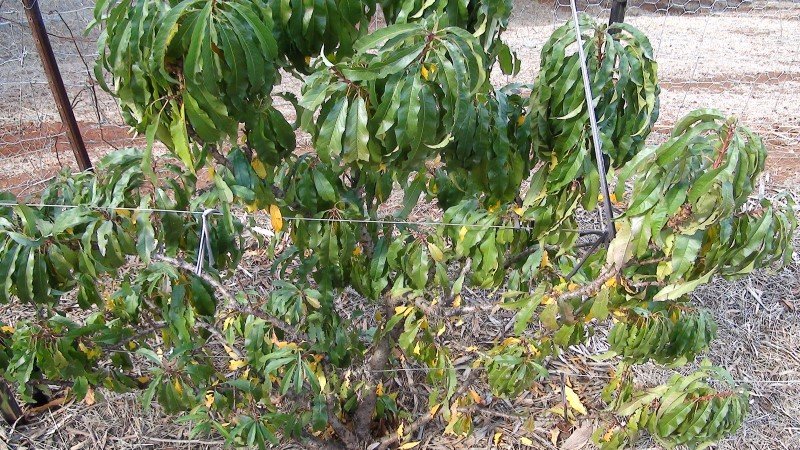
Peach 1
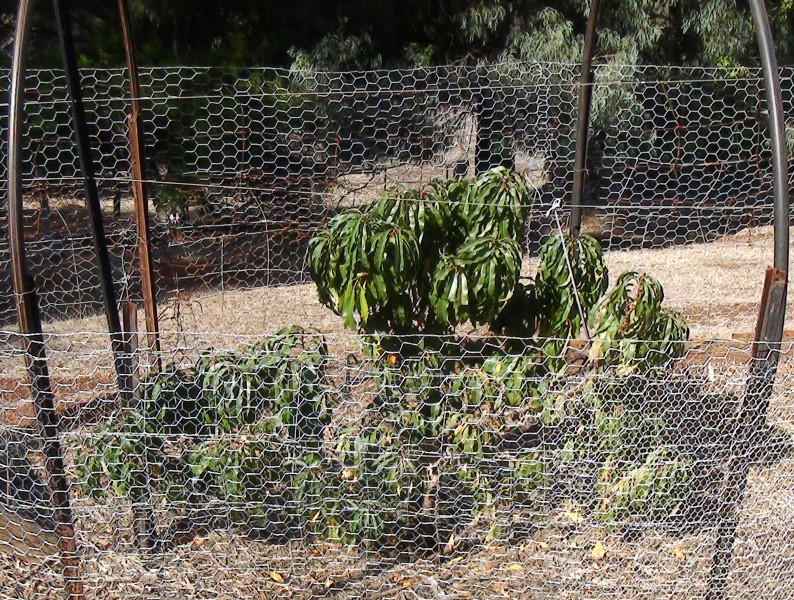
Peach 1
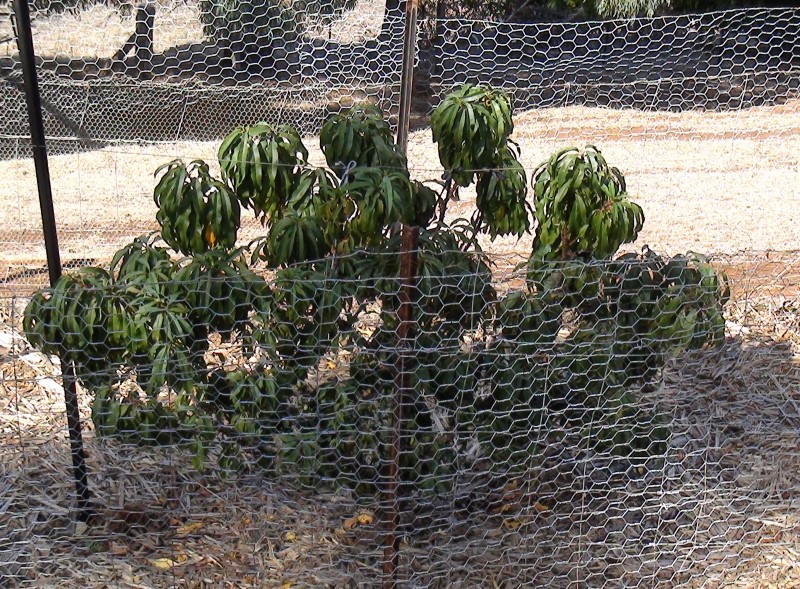
Nectarine
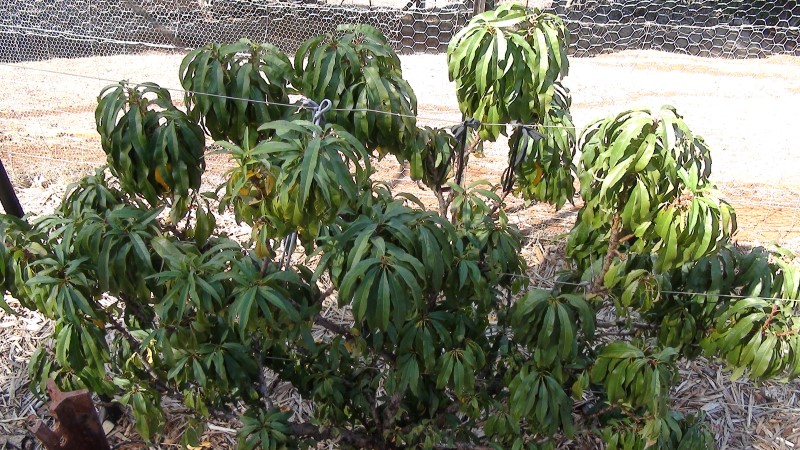
Nectarine
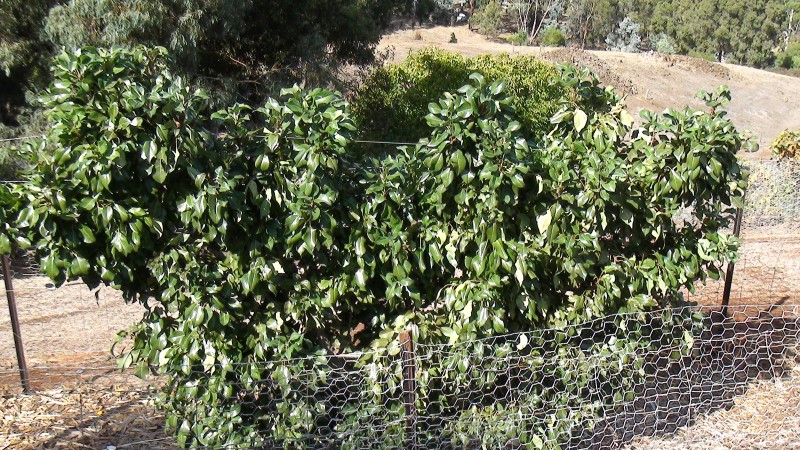
Pear 2
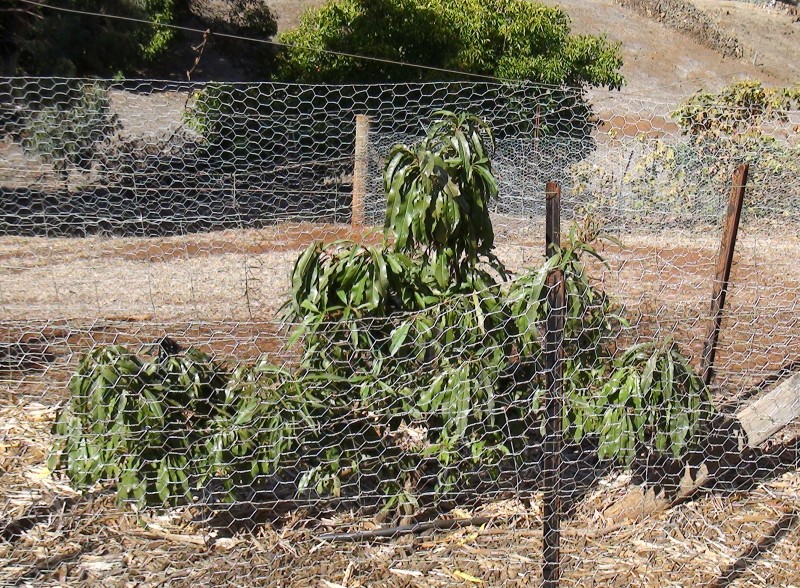
Peach 2
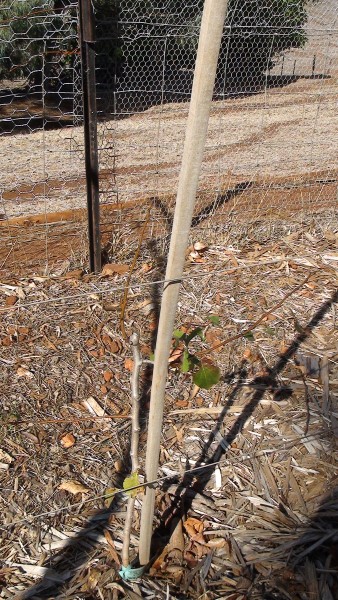
Pear 1
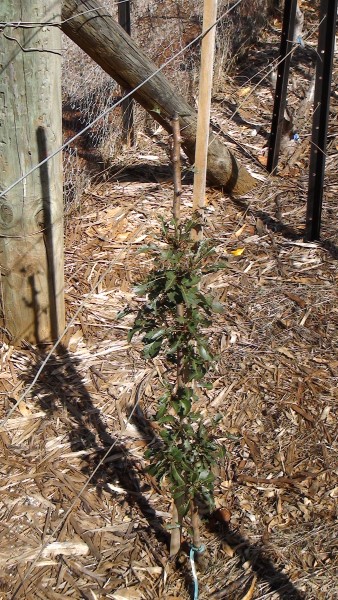
Pear 3
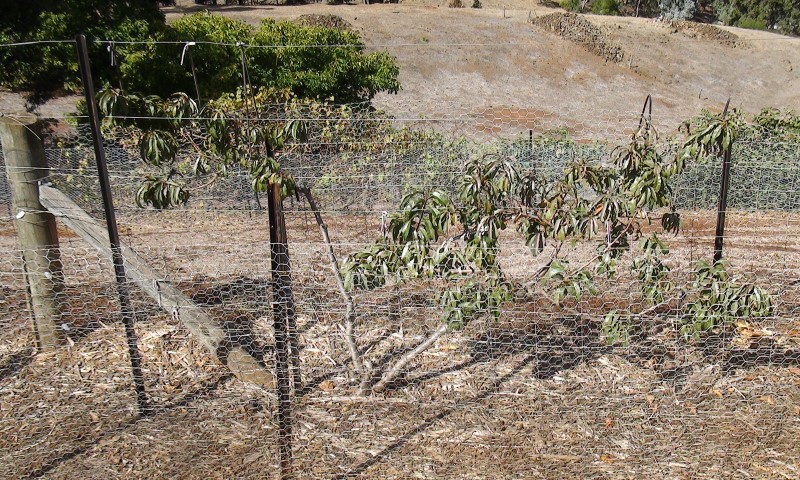
Graft
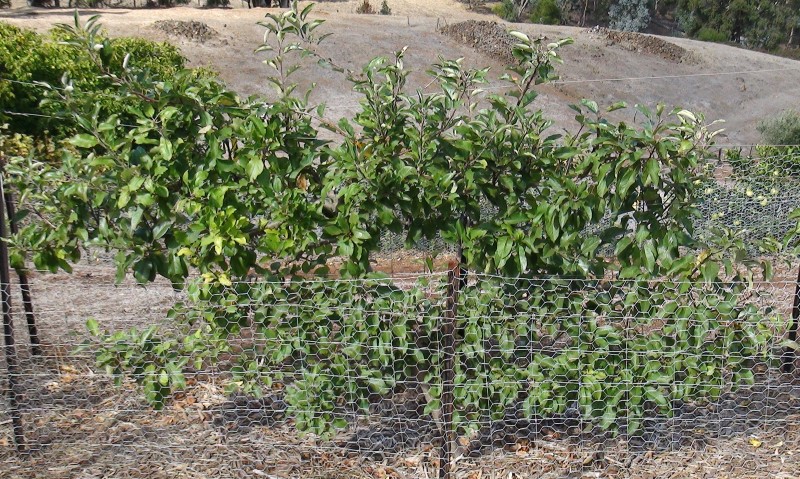
Title
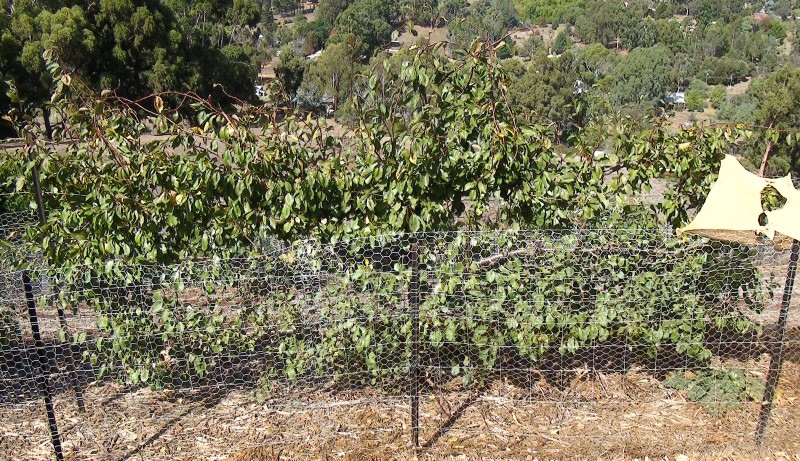
Prune
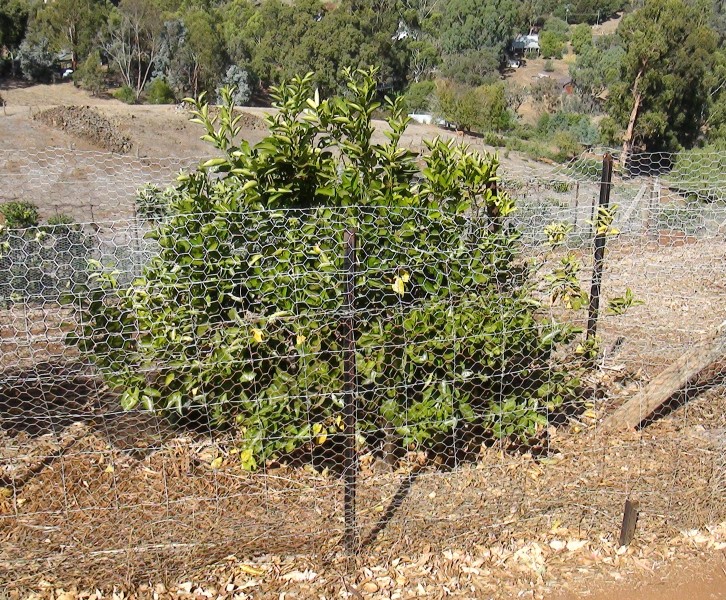
Mandarine
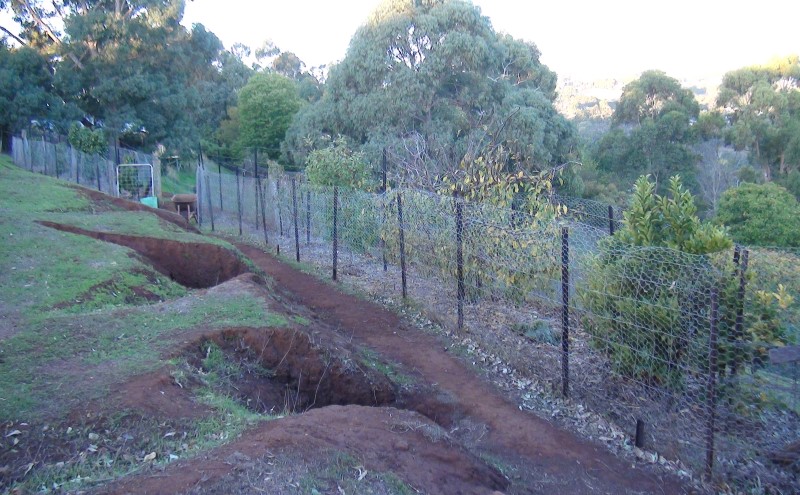
Whole row
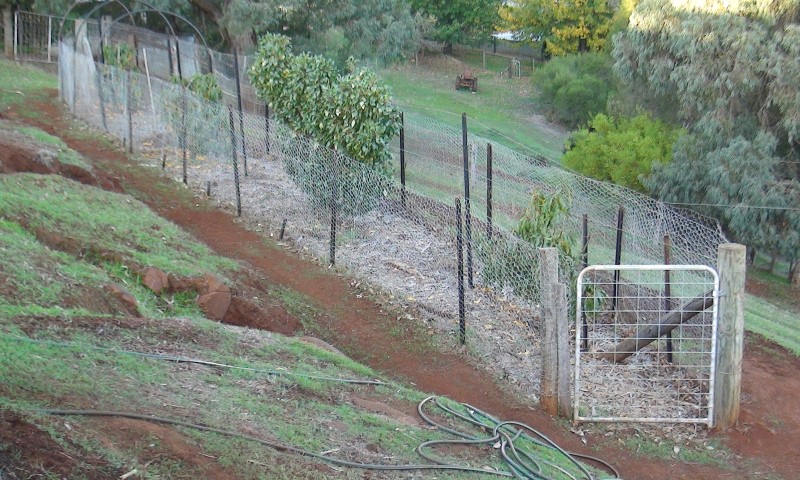
East part of row
Row 3
- Plant 1 Grape
- Plant 2 Grape (Red Globe)
- Plant 3 Grape
- Plant 4 Fig (White Genoan)
- Plant 5 Grapefruit (Sweetie)
- Plant 6 Loquat (Eriobotrya japonica)
- Plant 7 Cherry (Trixzie ‘Cherree’)
Defining row
Planting trees
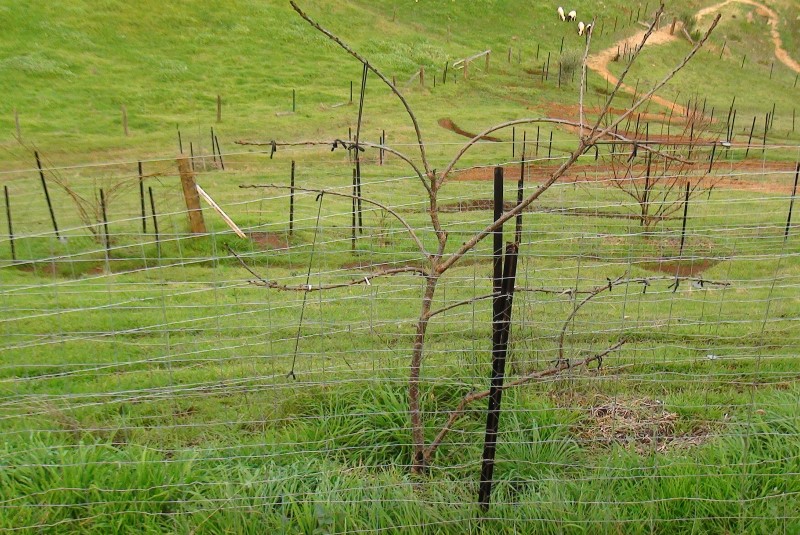
Cherry
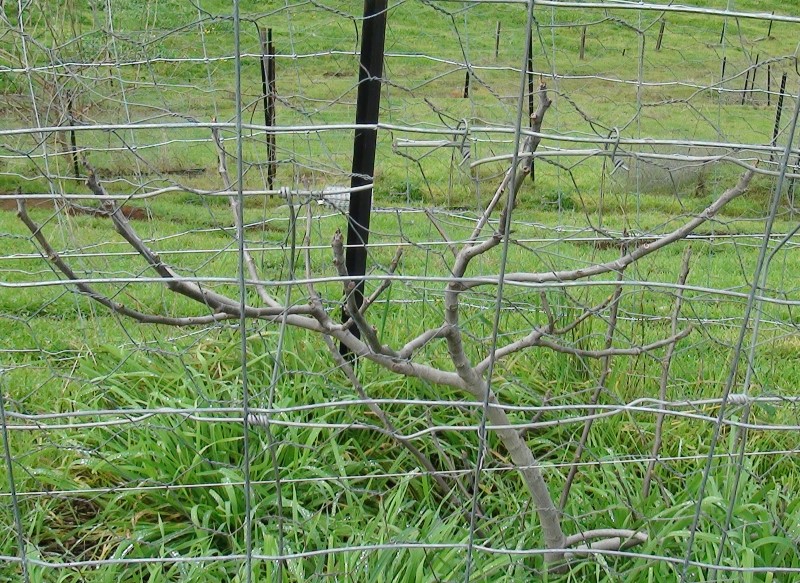
Fig

Row 3 - Fig4
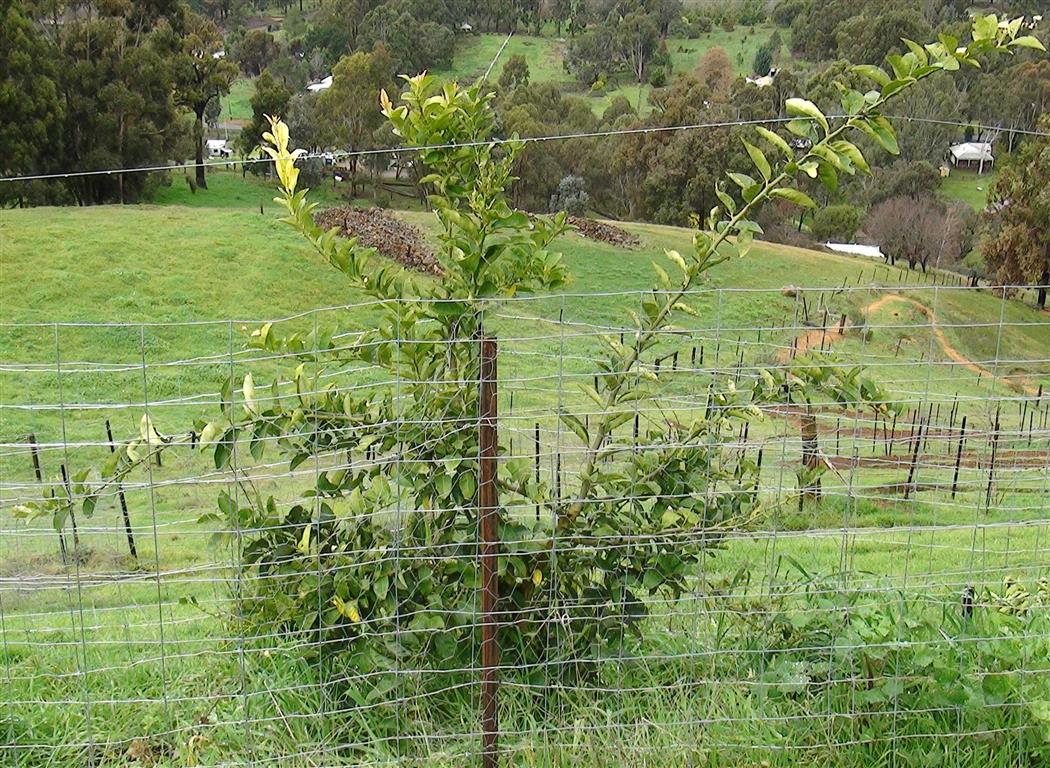
Row 3 - Grapefruit2
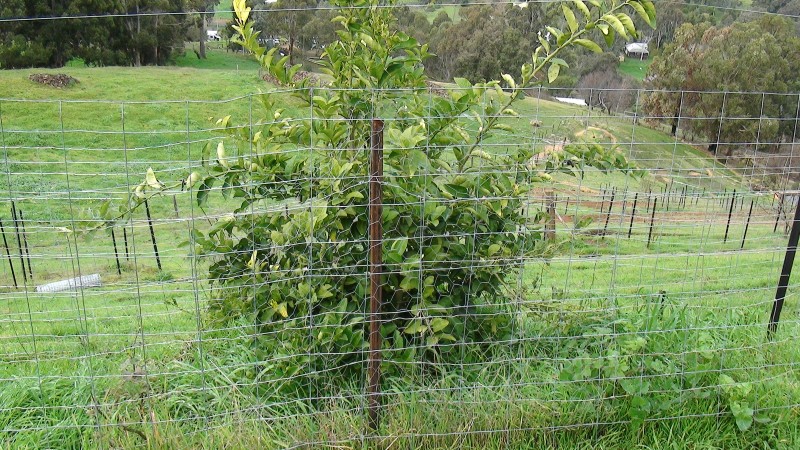
Grapefruit
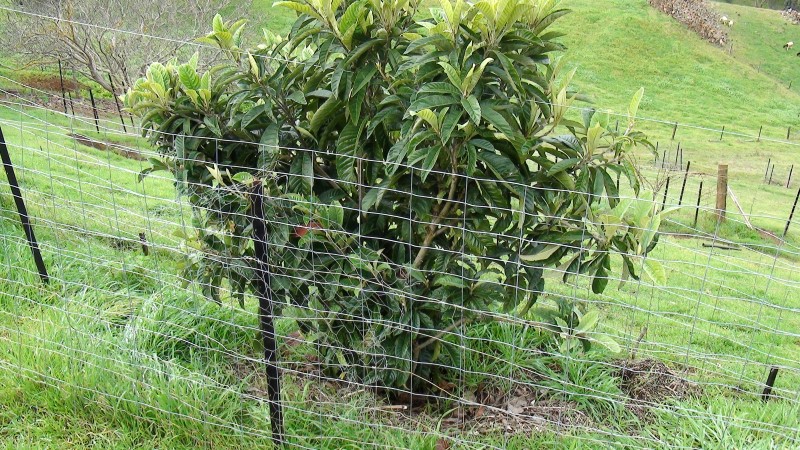
Loquat
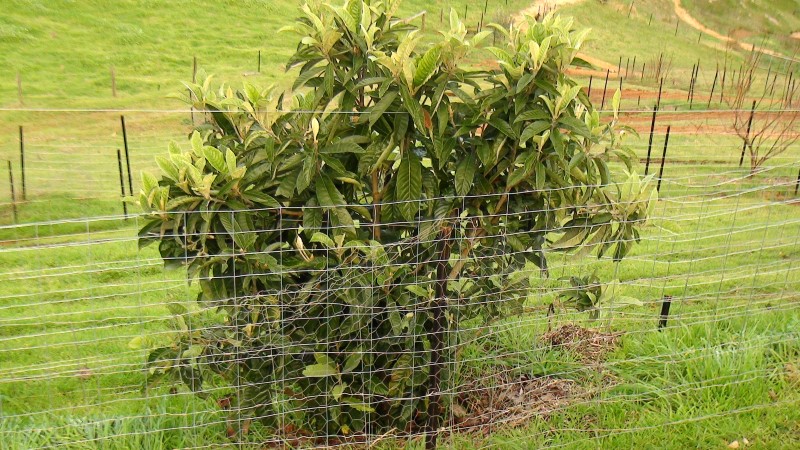
Loquat
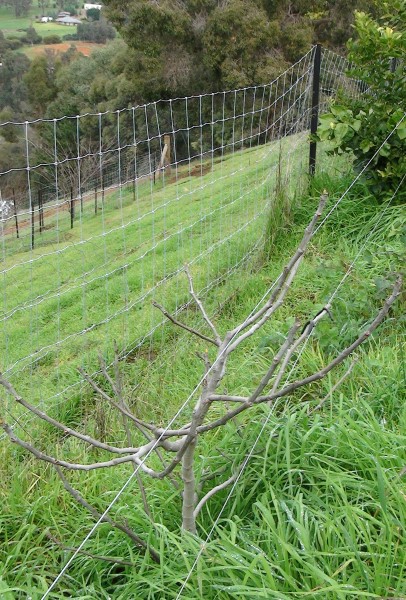
Fig
Row looking east
Grapefruit
Grape
Fig
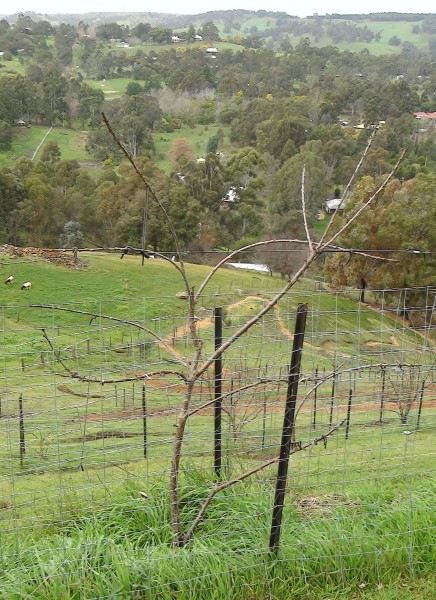
Cherry
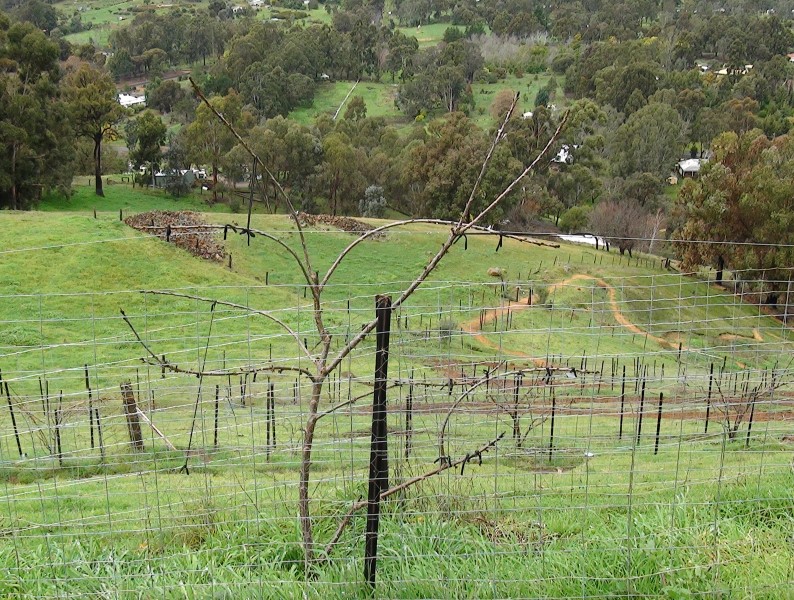
Cherry
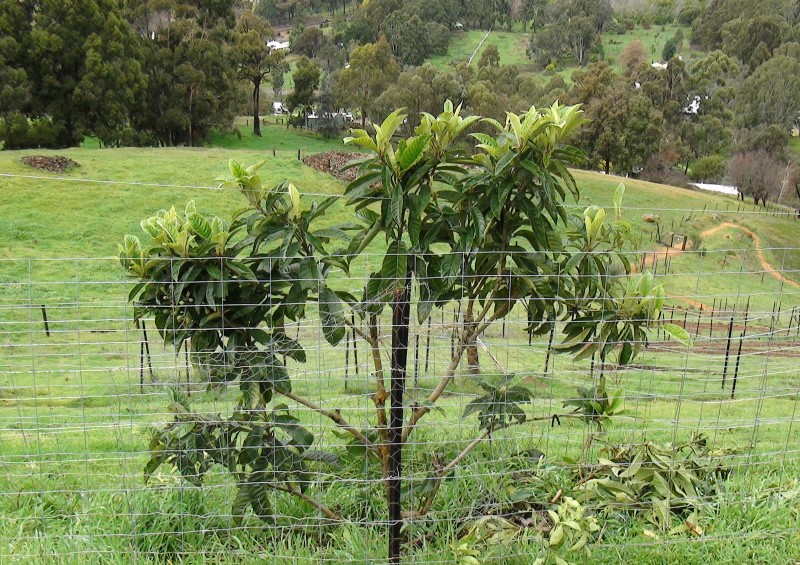
Loquat
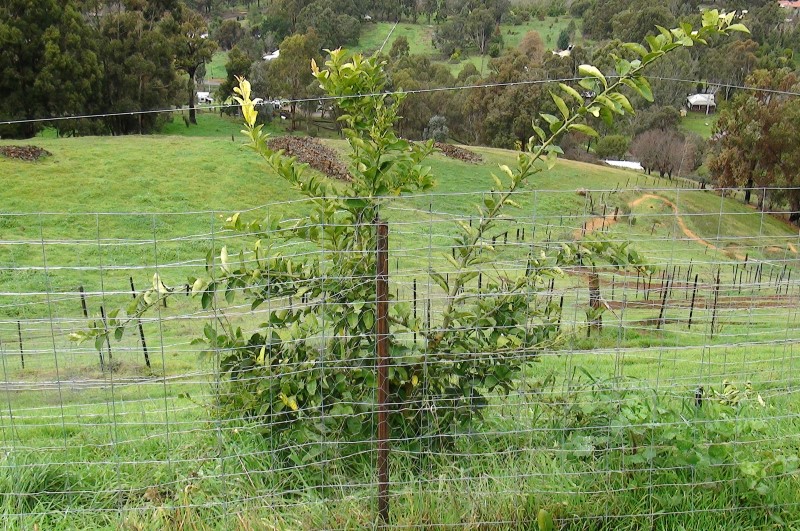
Grapefruit
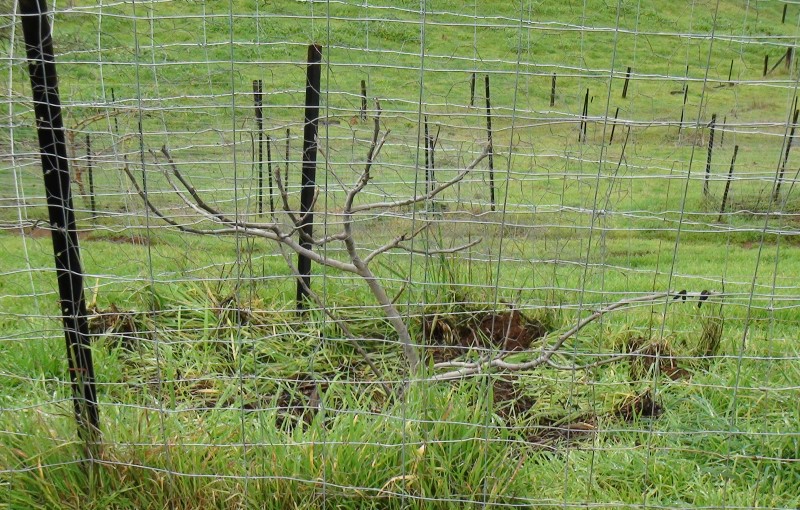
Fig
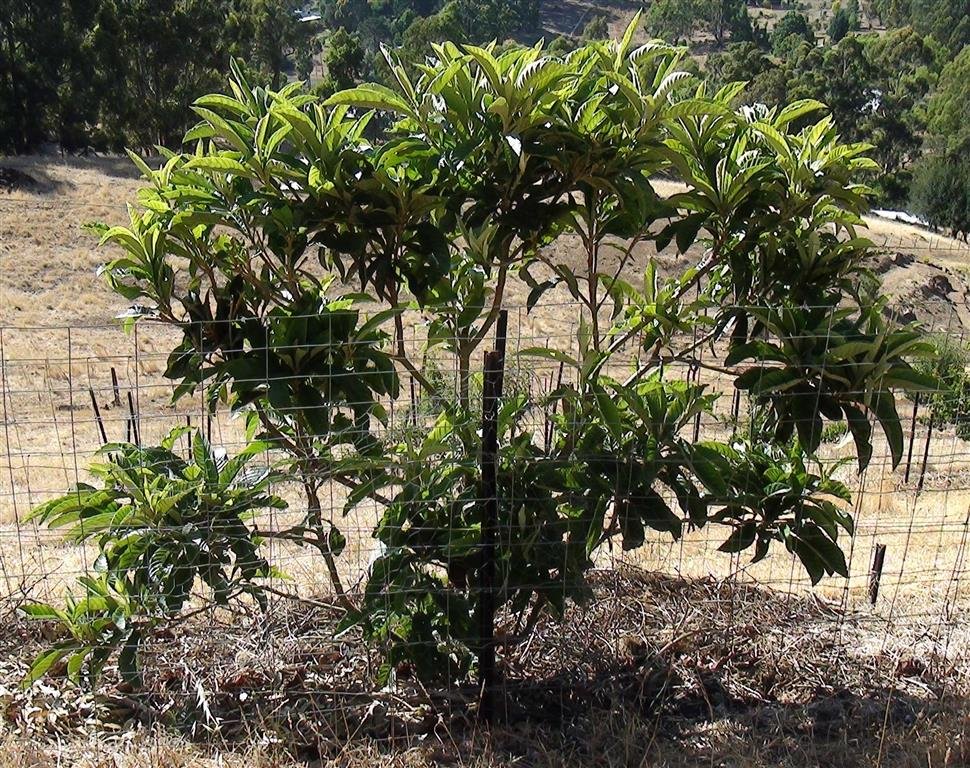
Loquat
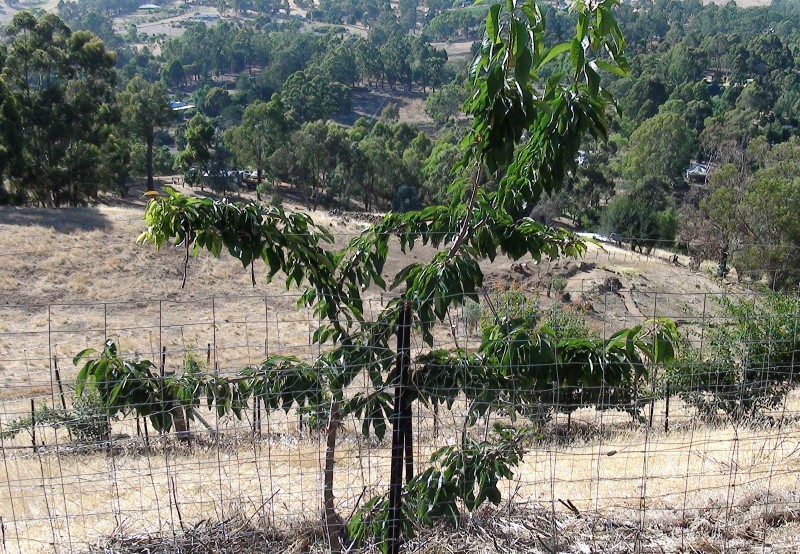
Cherry
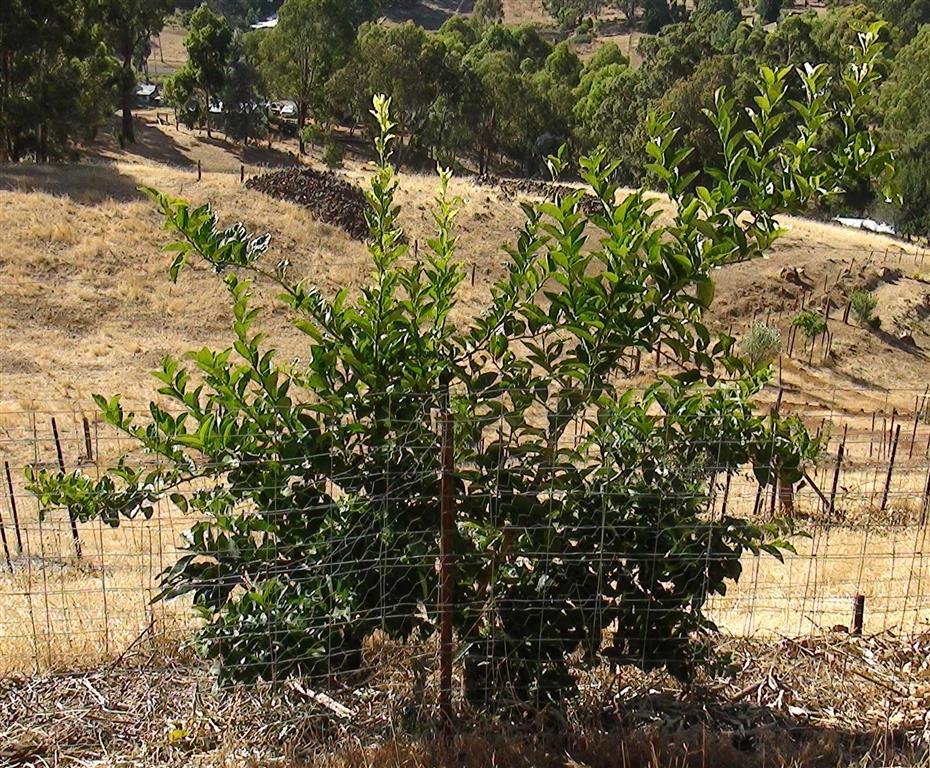
Grapefruit
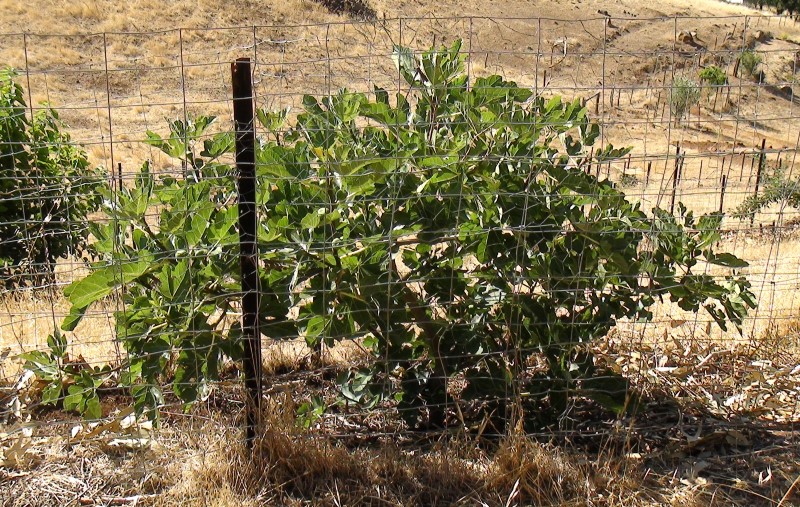
Fig
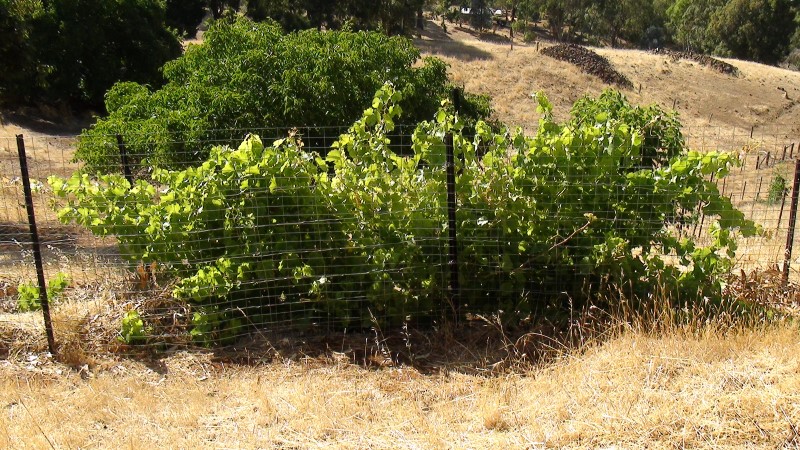
Grape
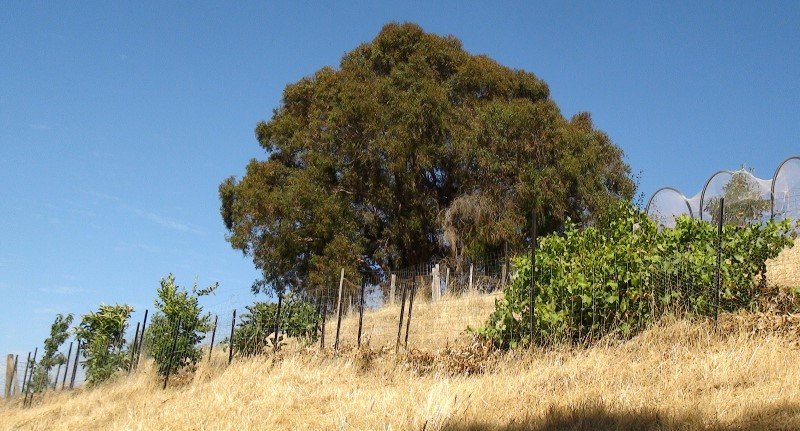
Row
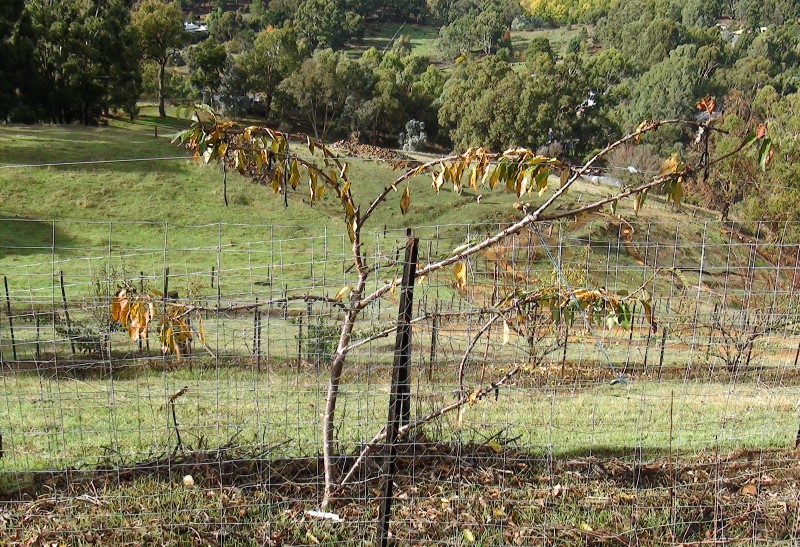
Cherry
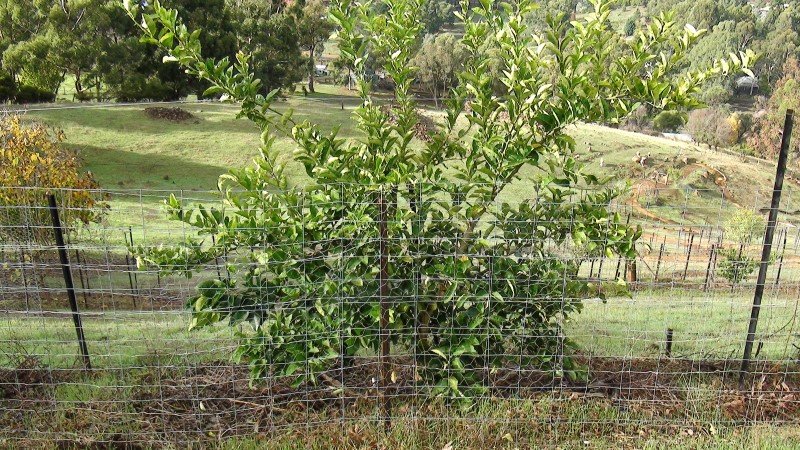
Grapefruit
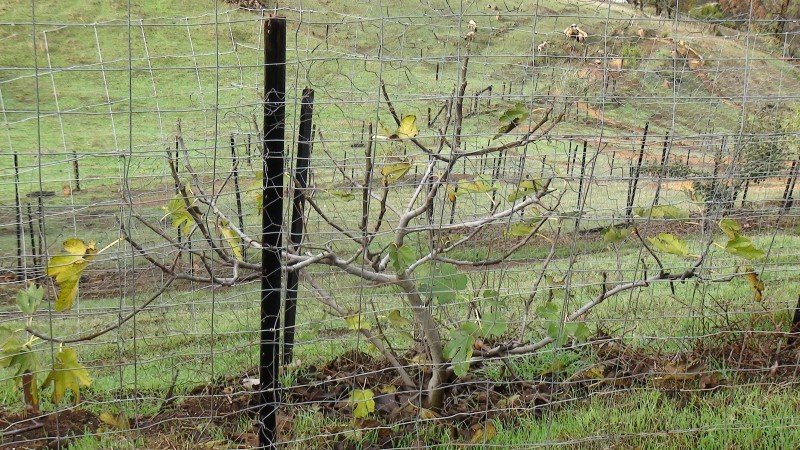
Fig
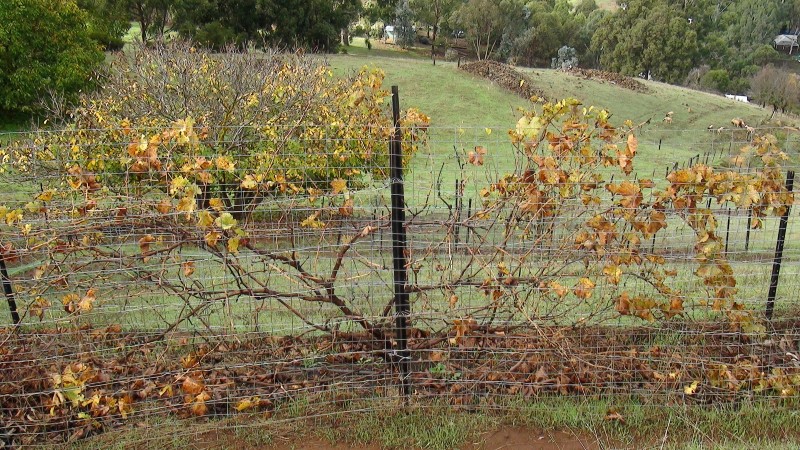
Grape
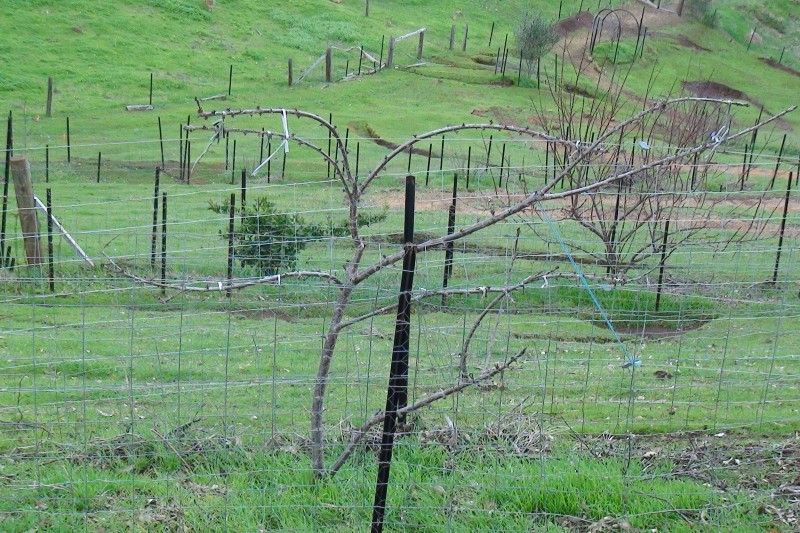
Cherry
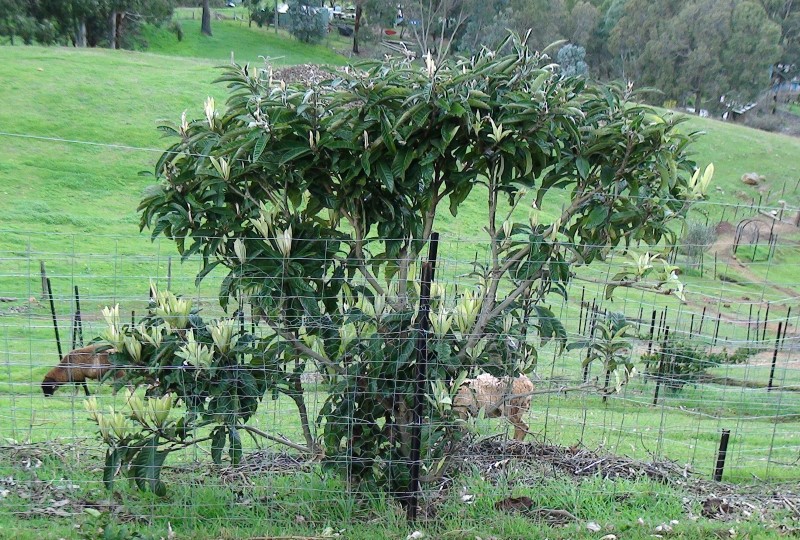
Loquat
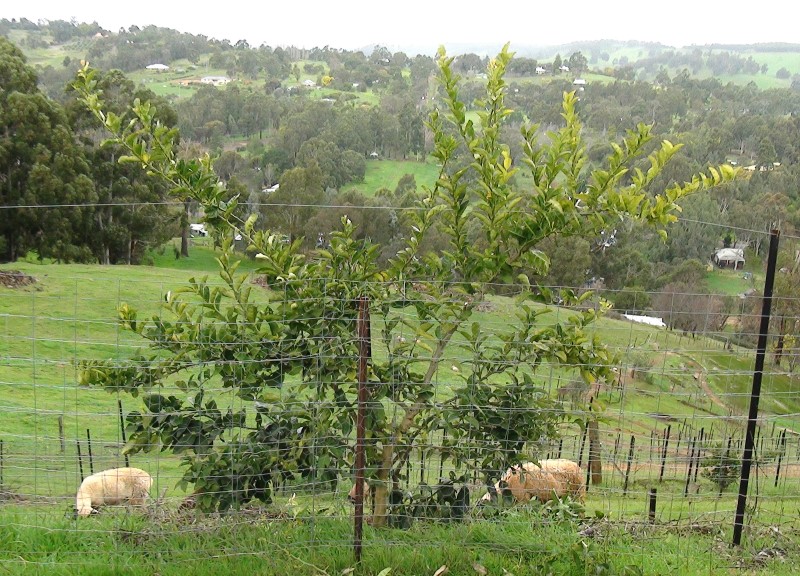
Grapefruit
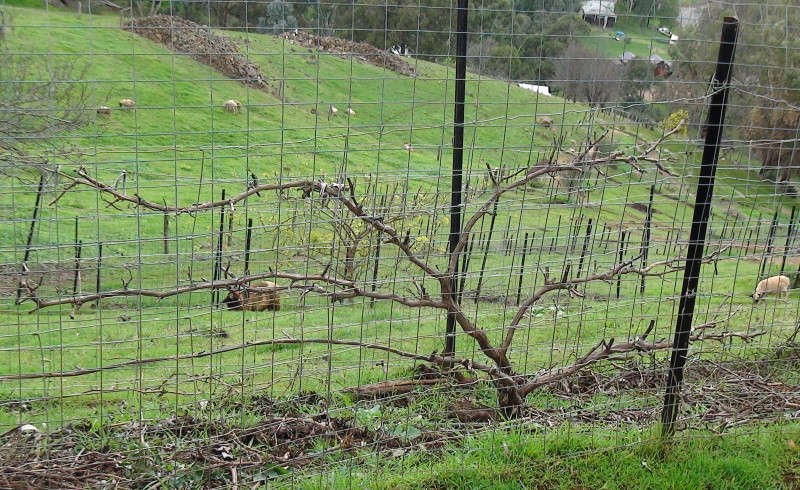
Grape
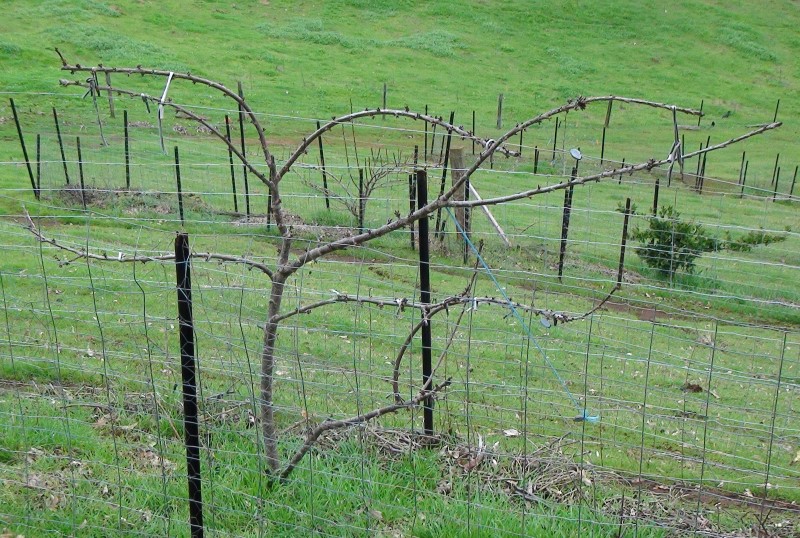
Cherry
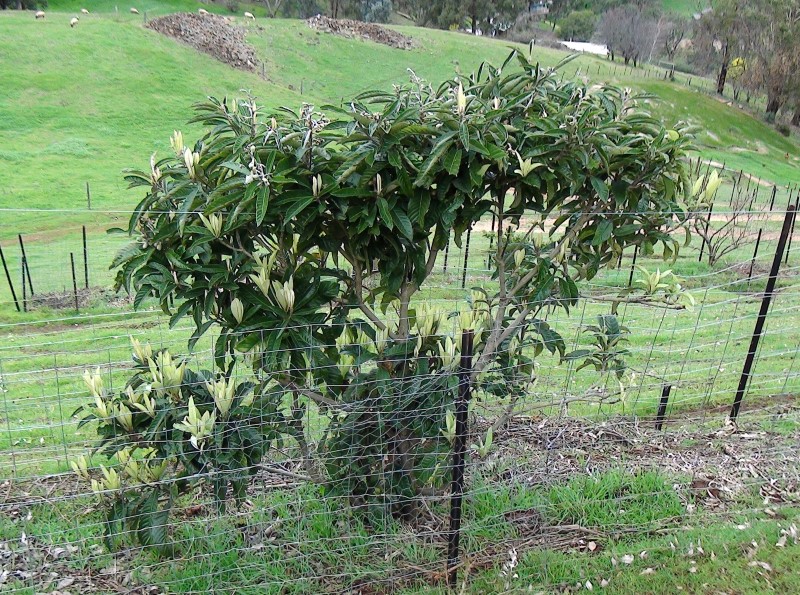
Loquat
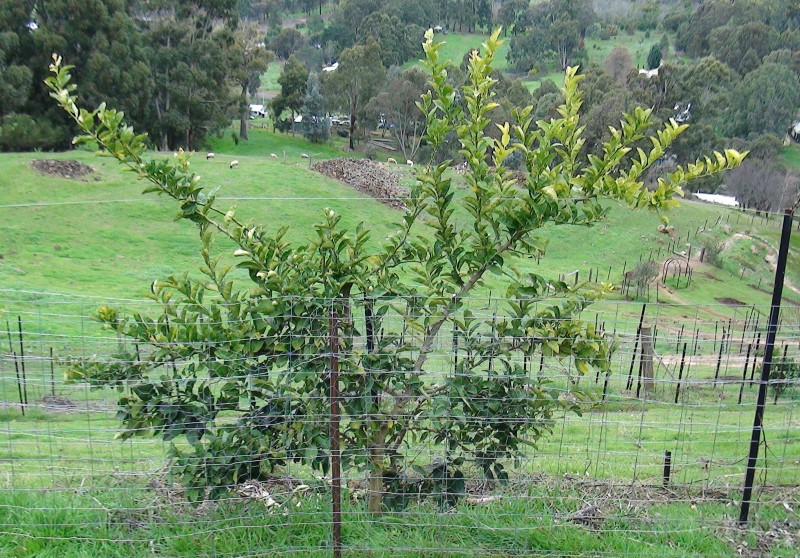
Grapefruit
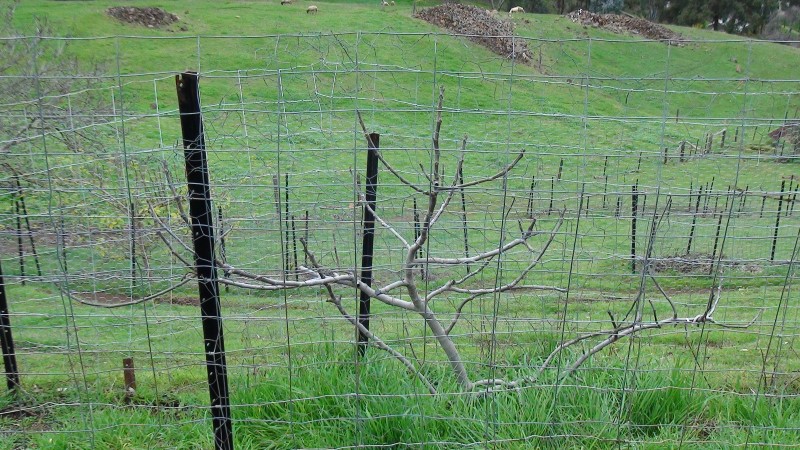
Fig
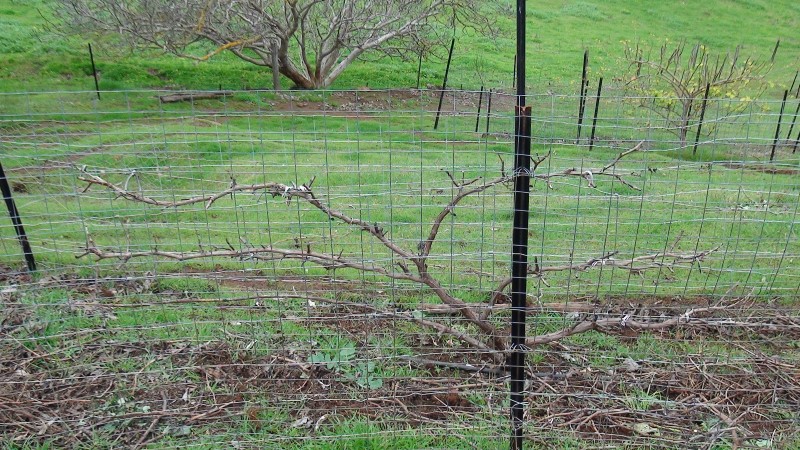
Grape
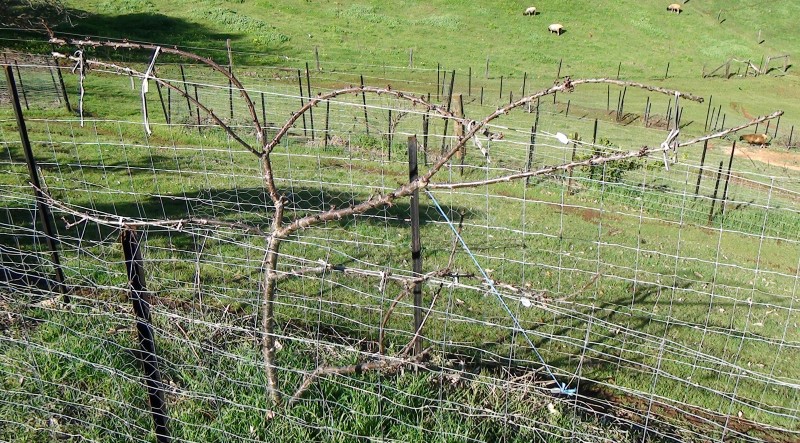
Cherry
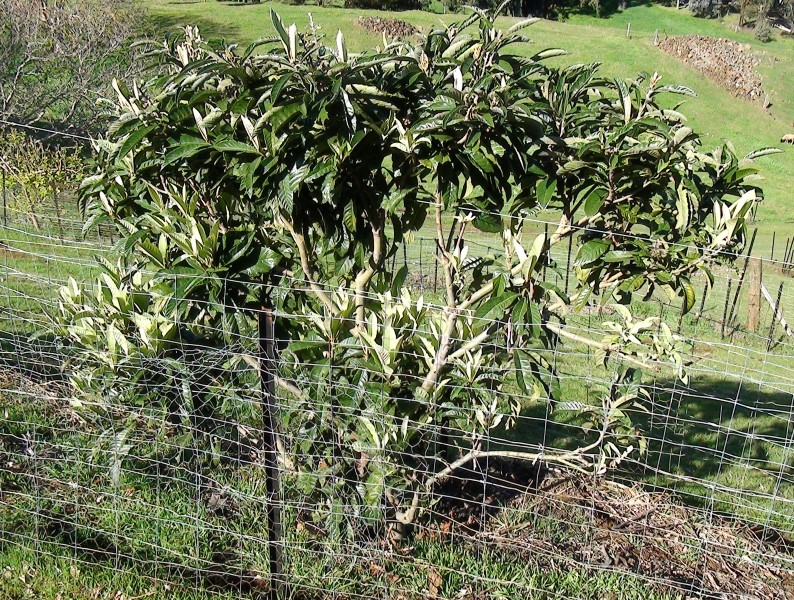
Loquat
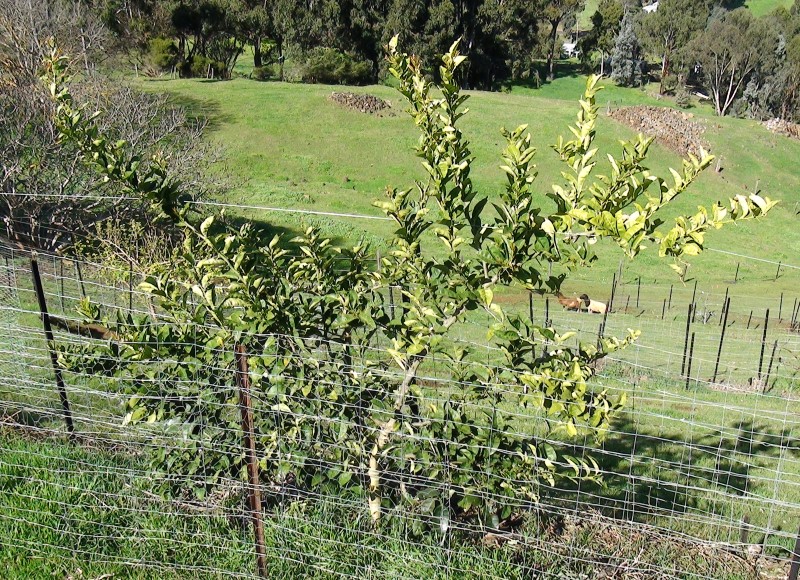
Grapefruit
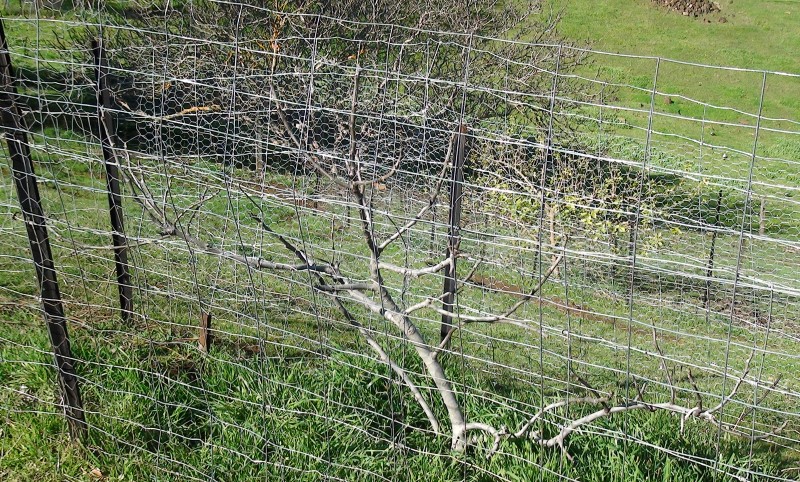
Fig
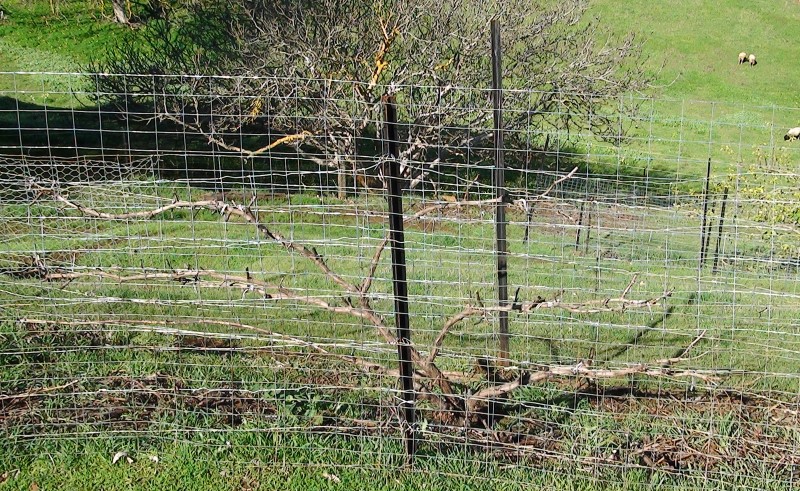
Grape
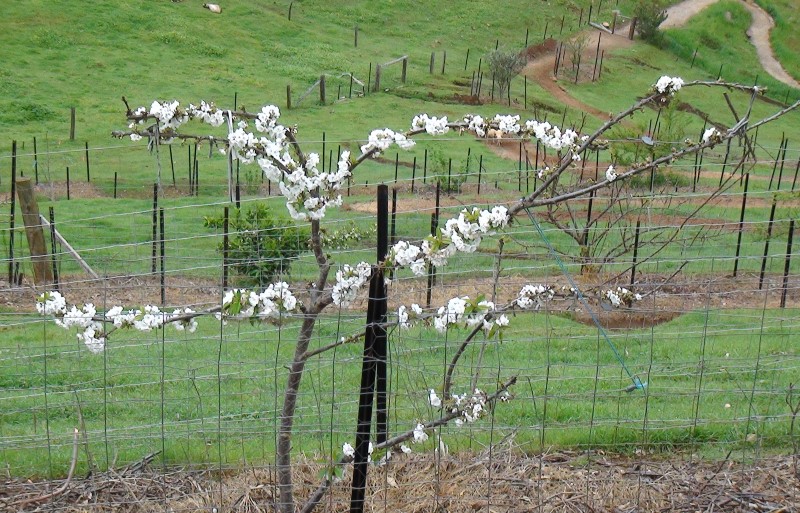
Cherry
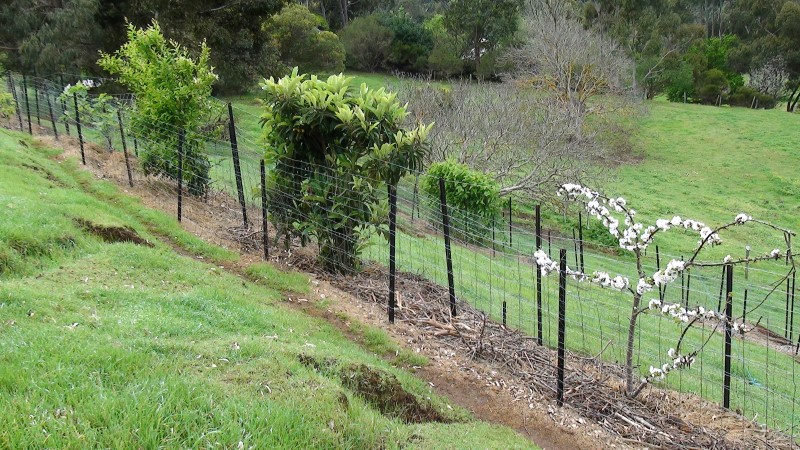
Row
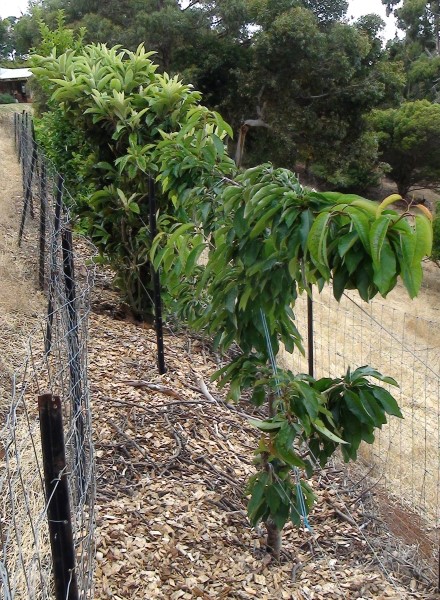
Row
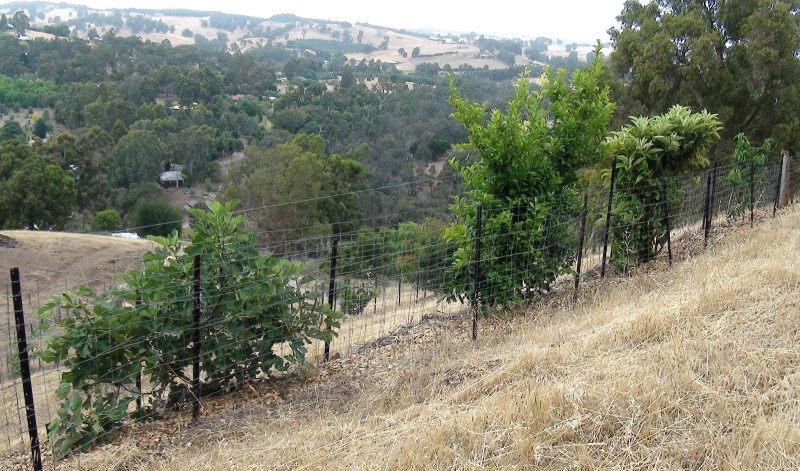
Row
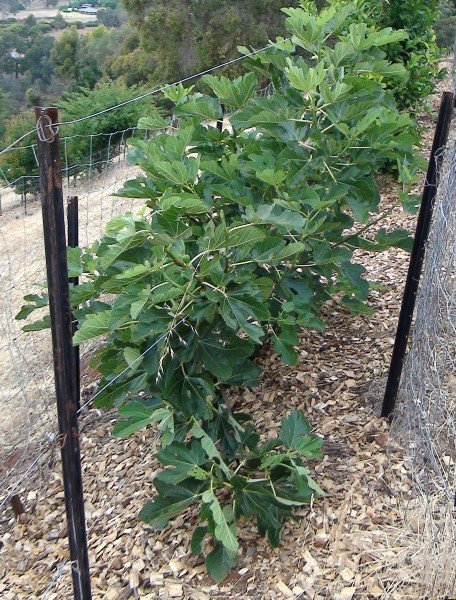
Fig
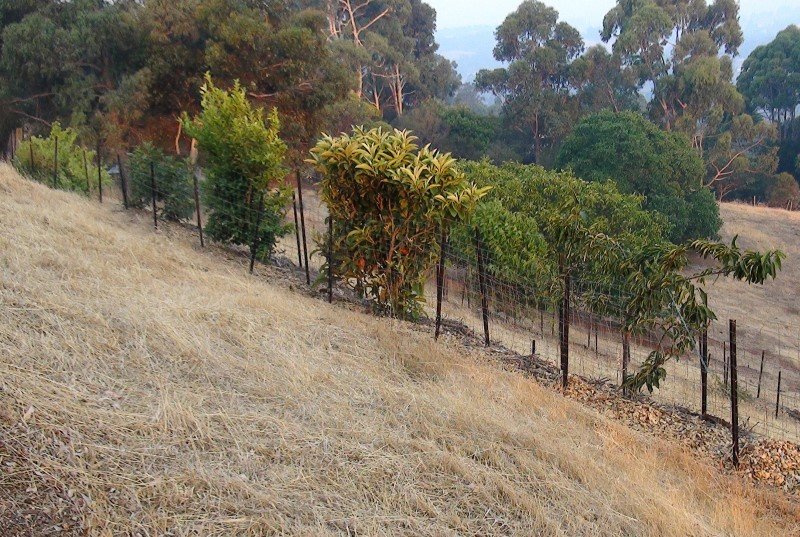
Row
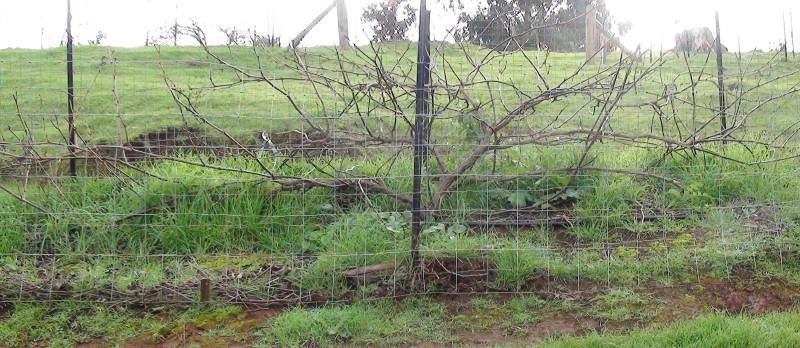
Grape
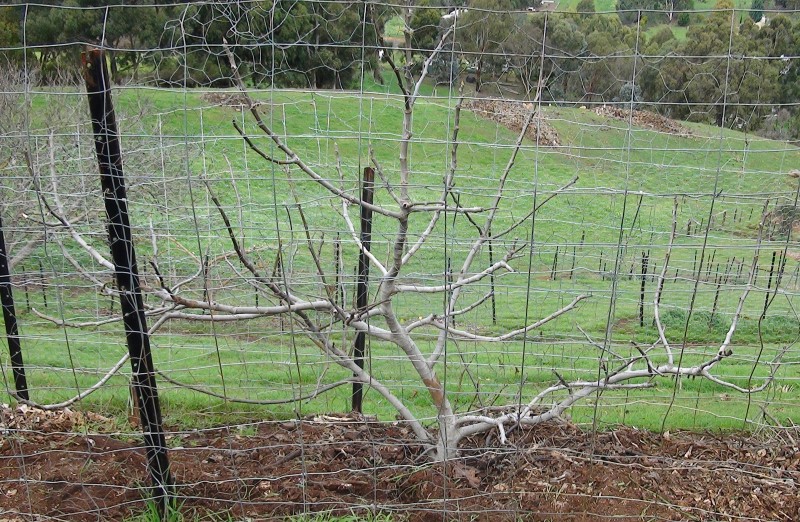
Fig
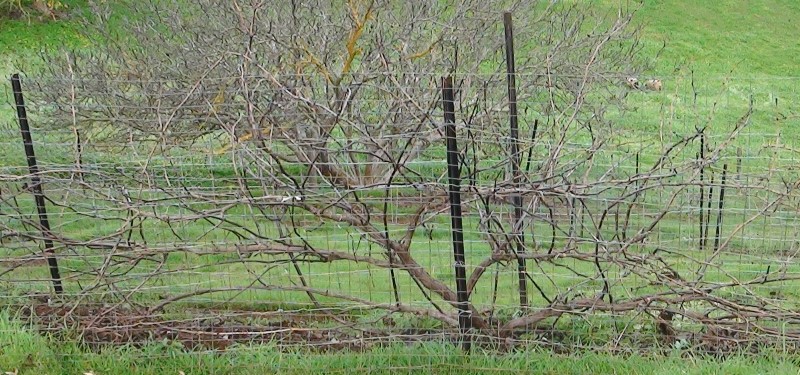
Grape
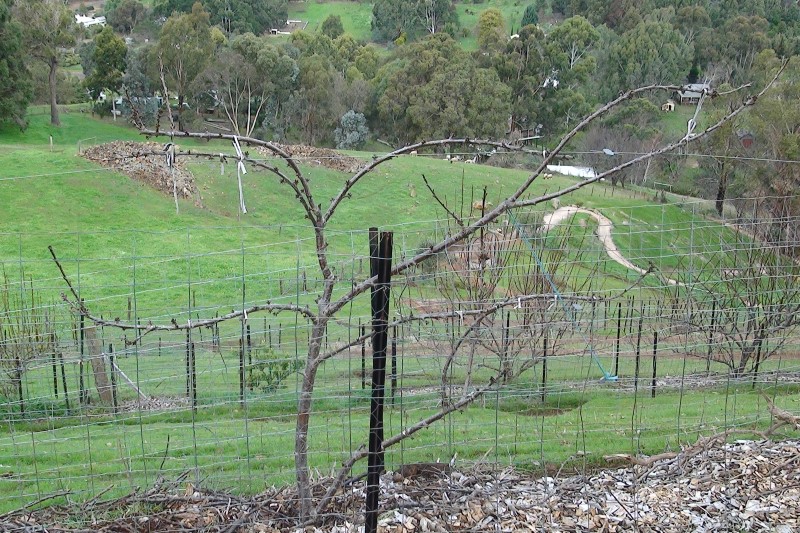
Cherry
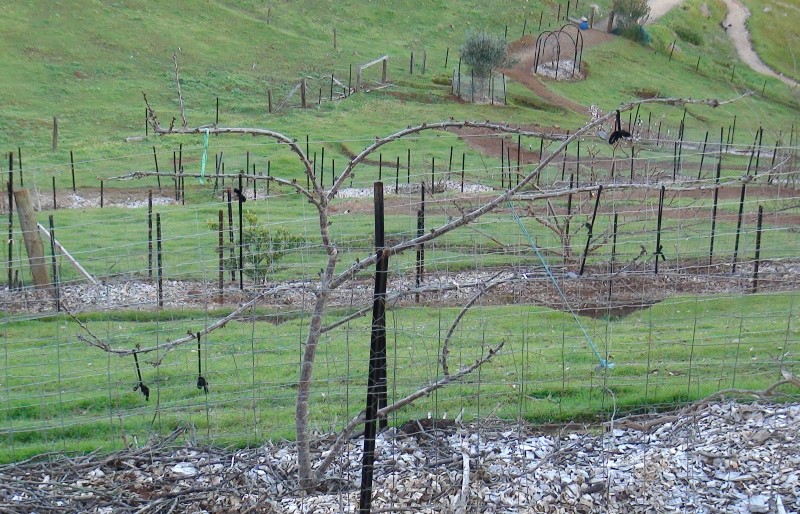
Cherry
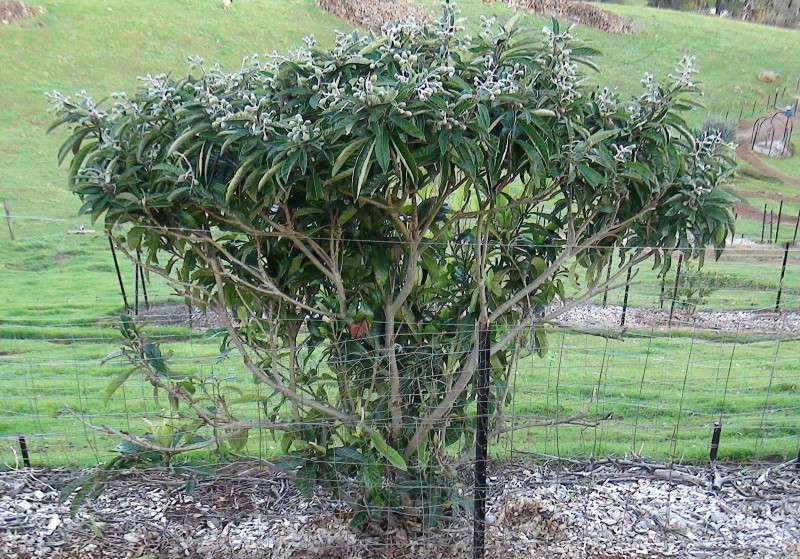
Loquat
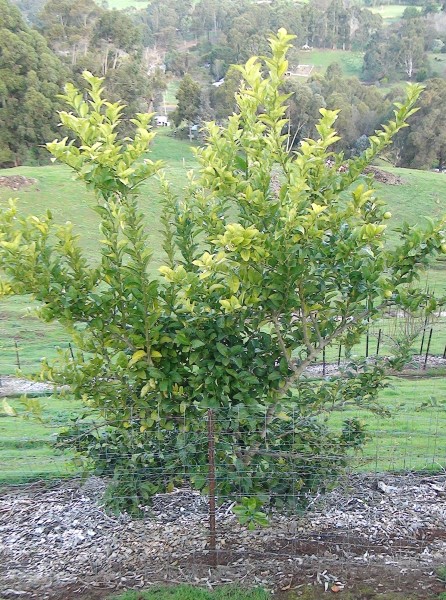
Grapefruit
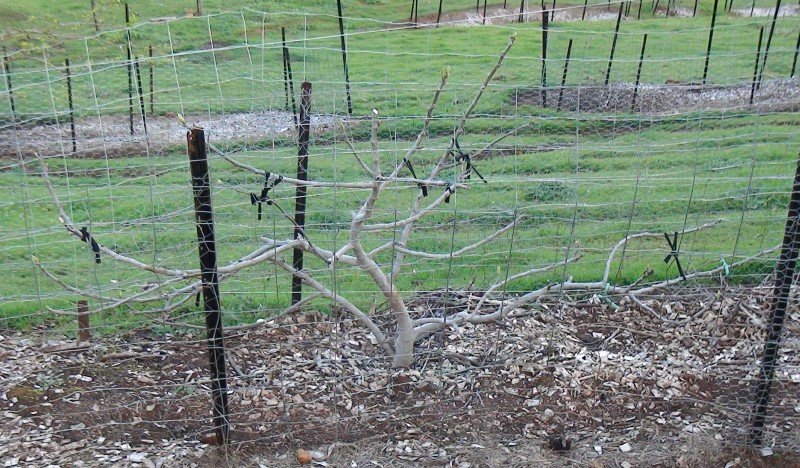
Fig
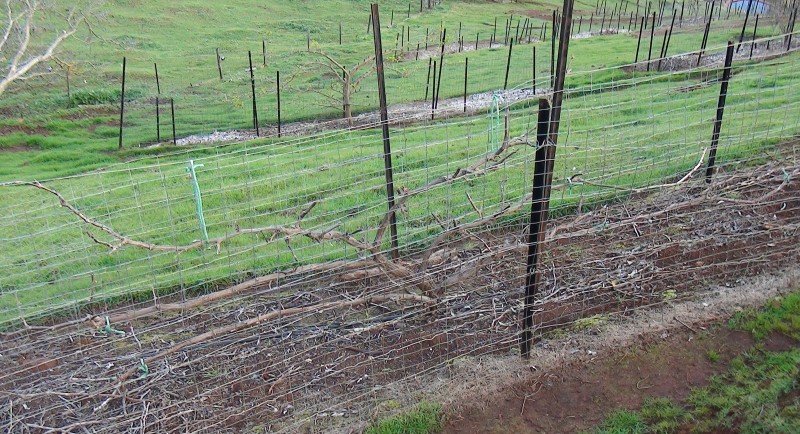
Grape
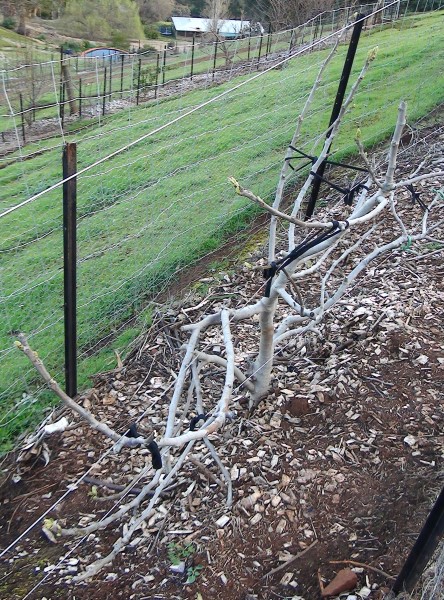
Fig
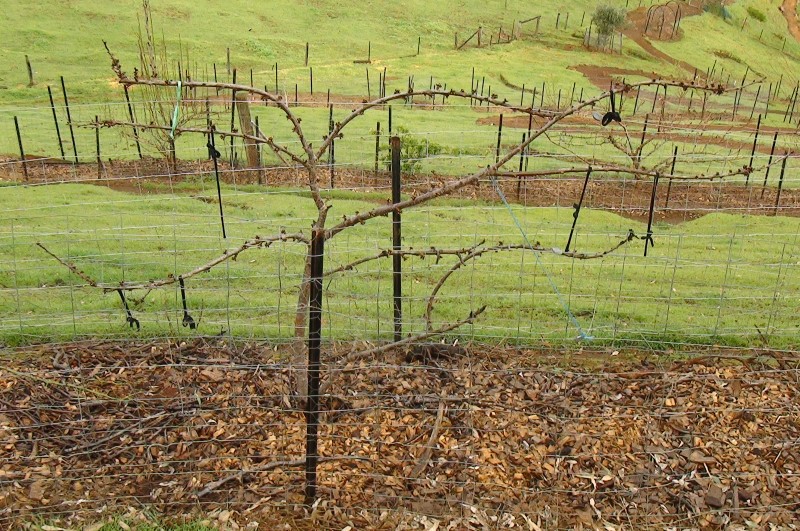
Cherry
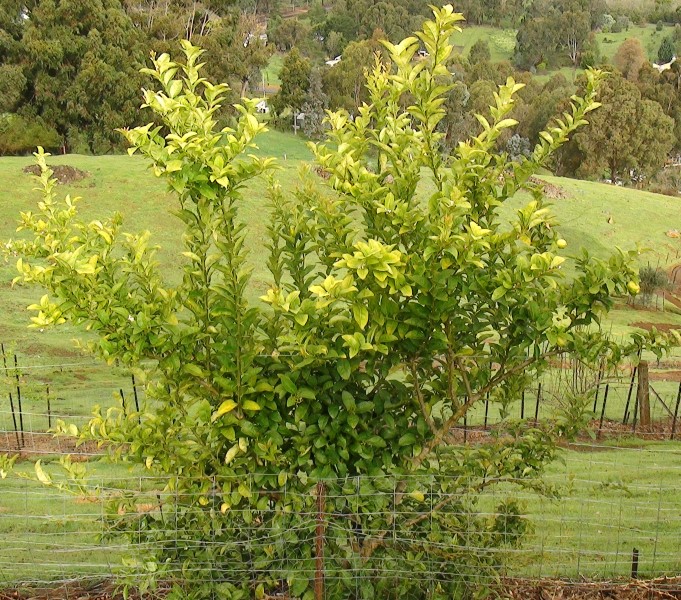
Grapefruit
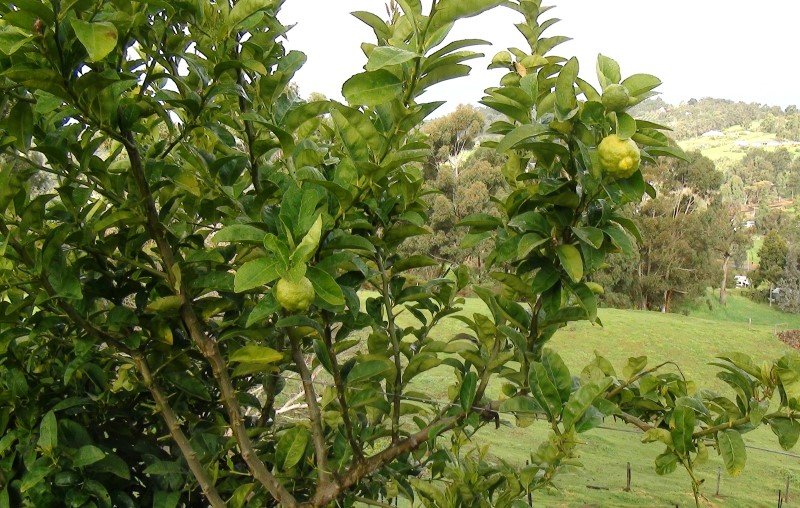
Grapefruit rootstock
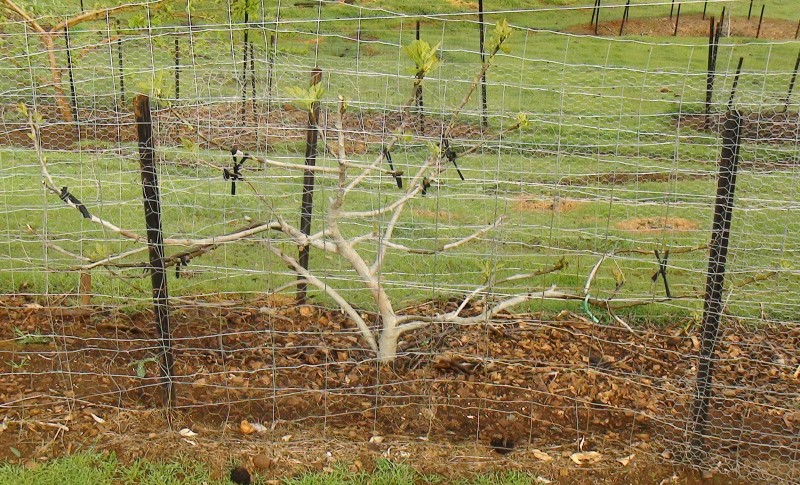
Fig
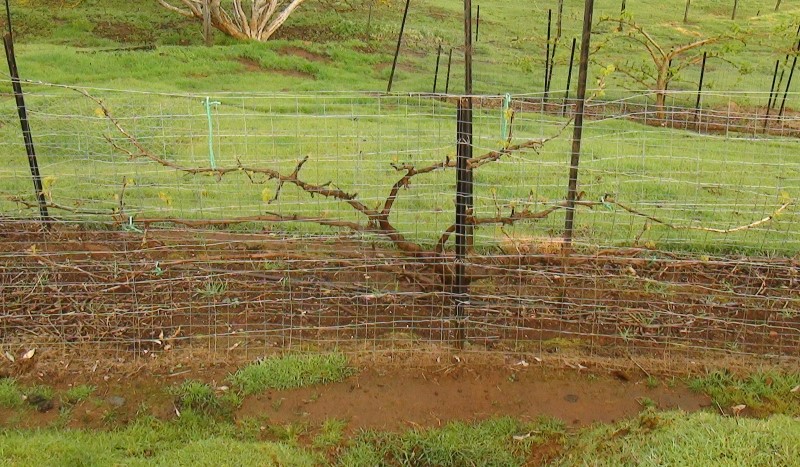
Grape
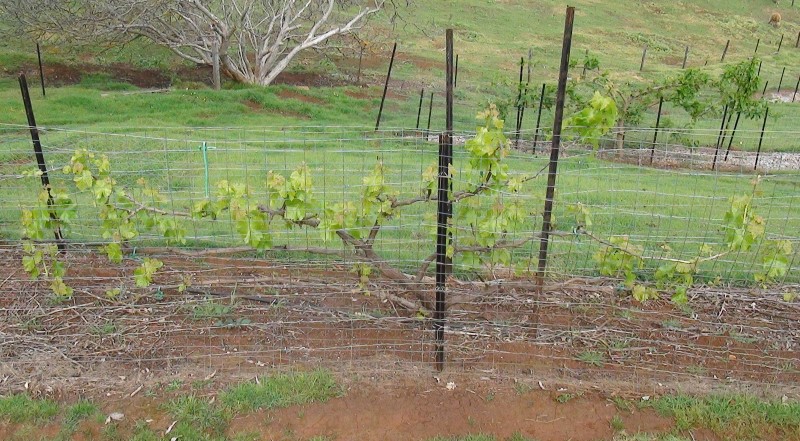
Grape
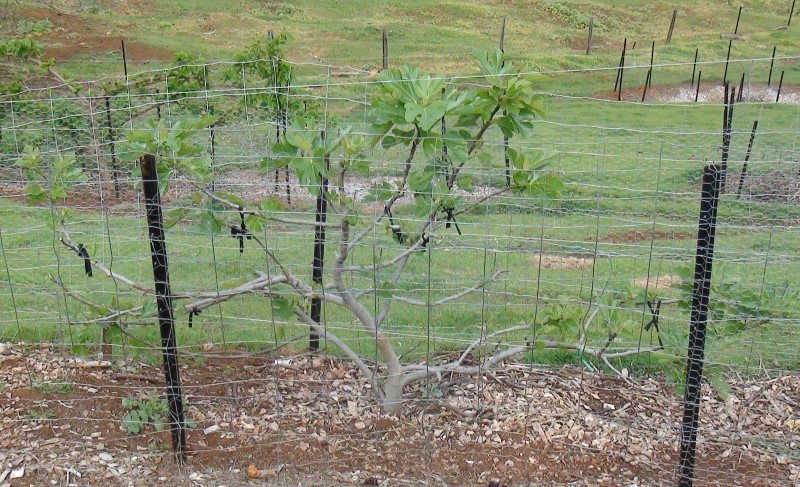
Fig
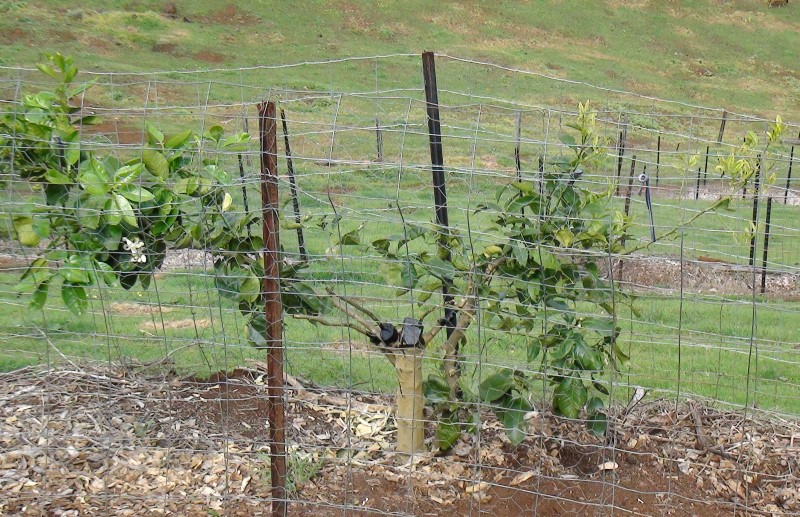
Grapefruit - rootstock removed
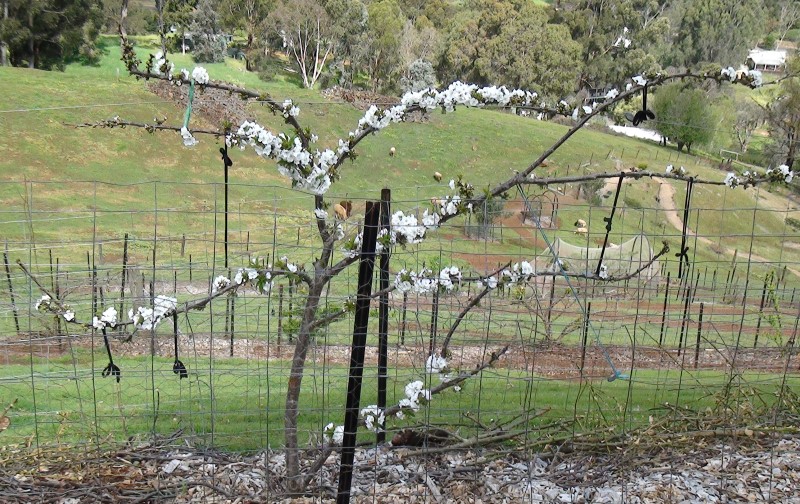
Cherry
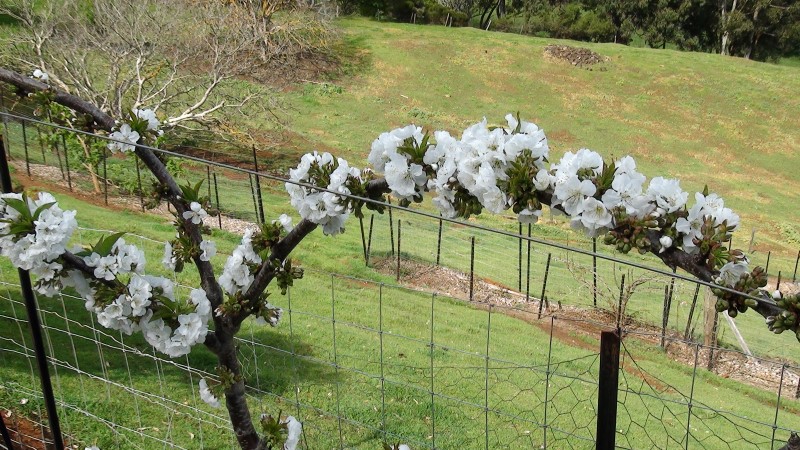
Cherry blossom
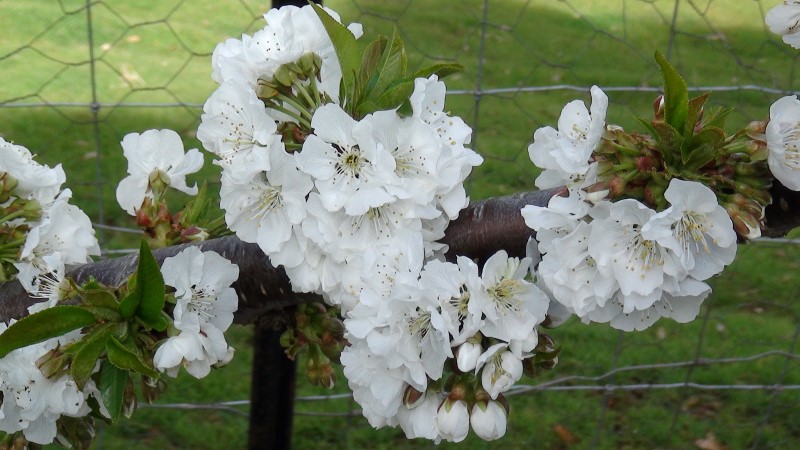
Blossom
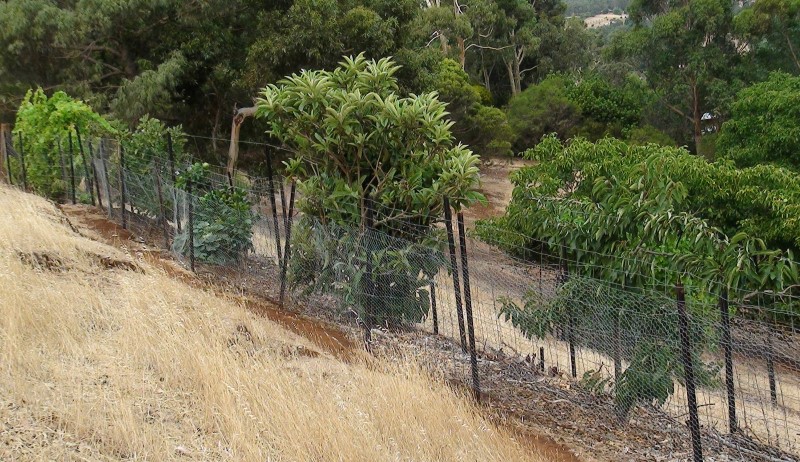
Row looking east
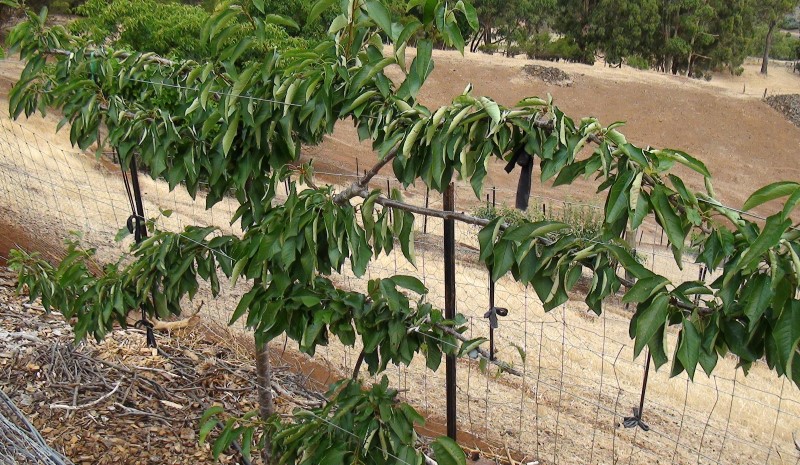
Cherry
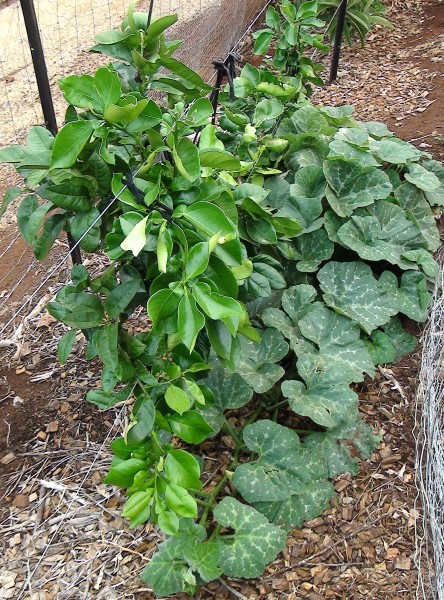
Grapefruit with pumpkins
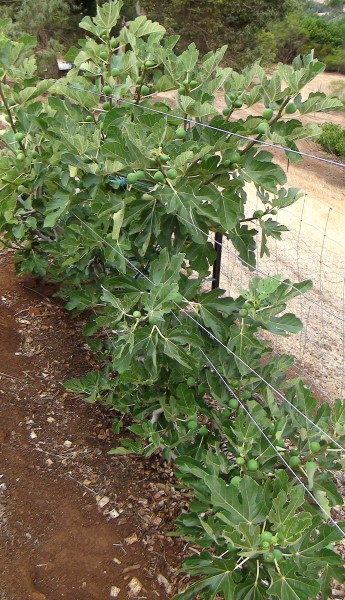
Fig
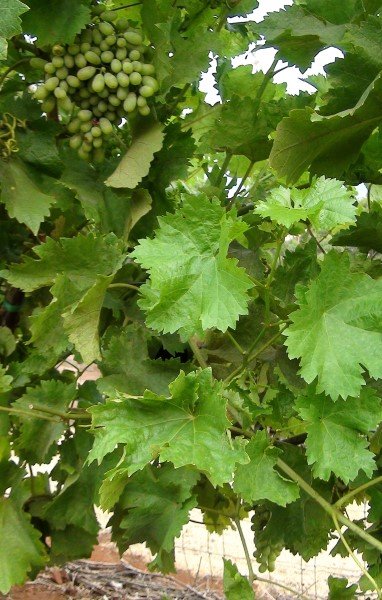
Grapes
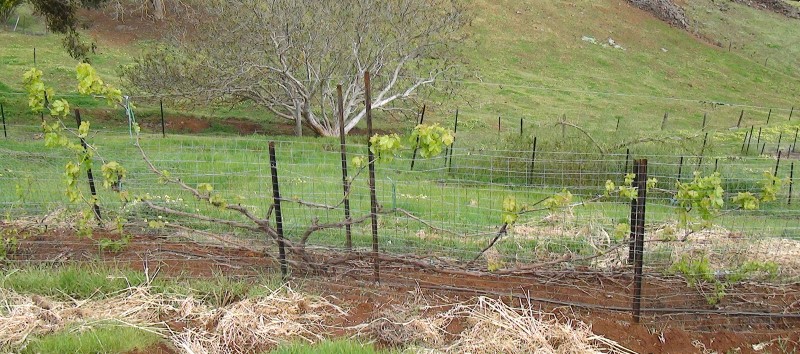
Grape
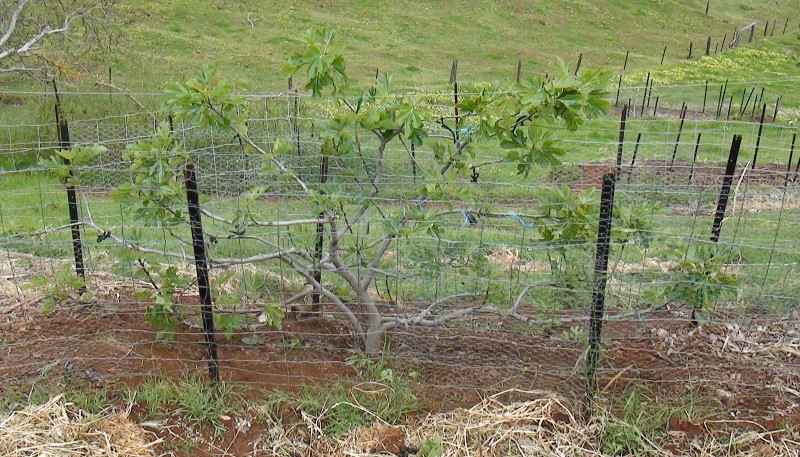
Fig
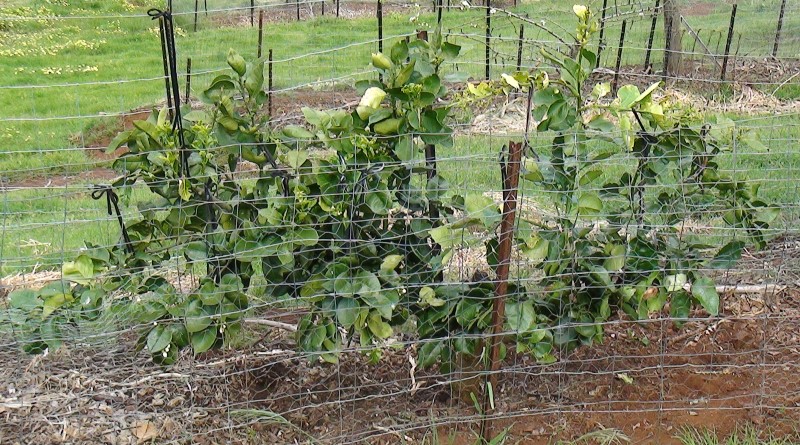
Grapefruit
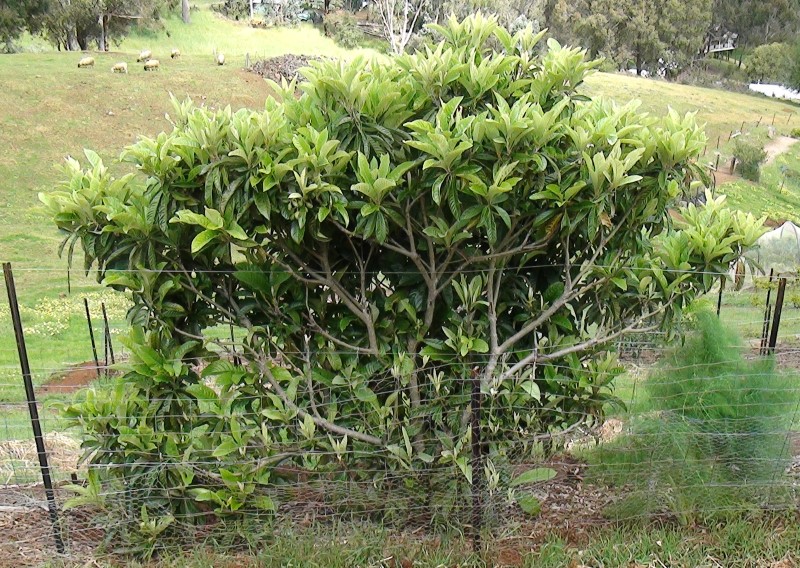
Loquat
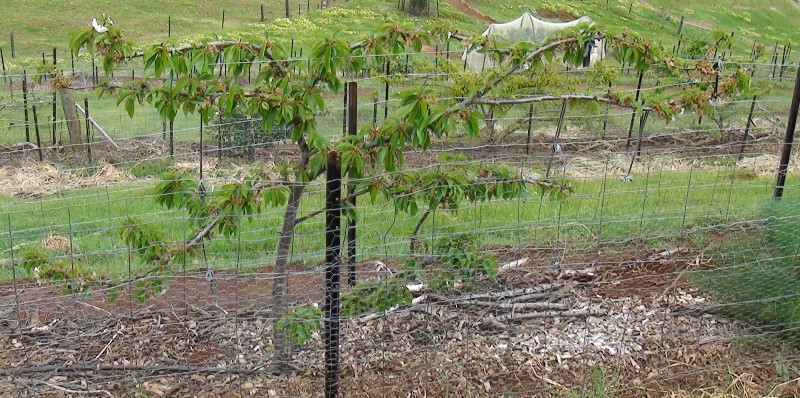
Cherry
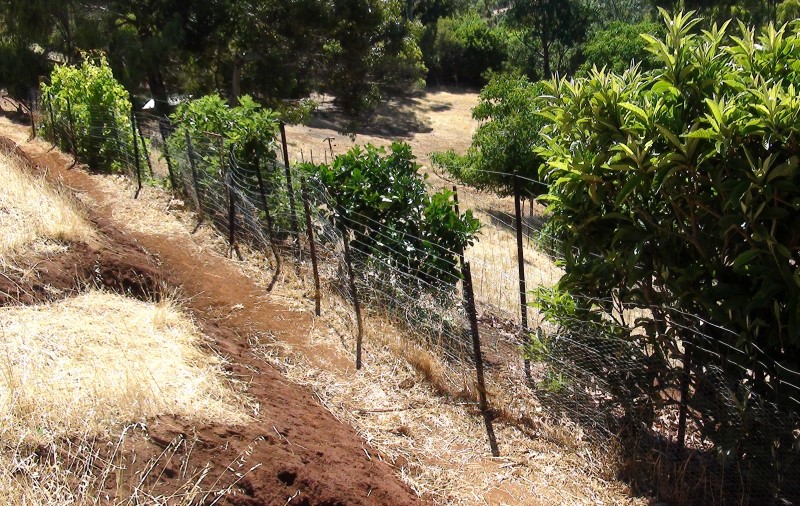
Row
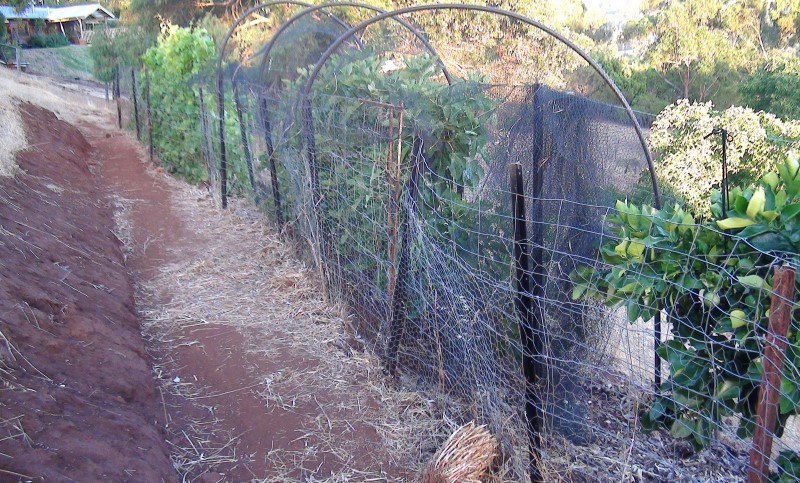
Row
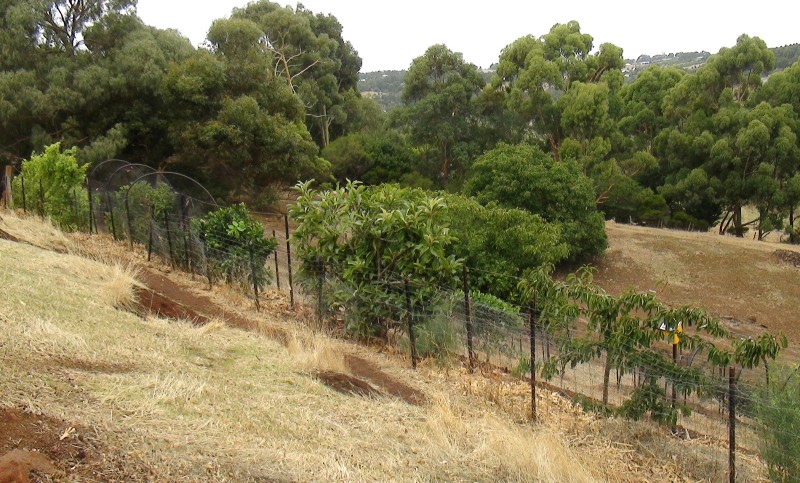
Row
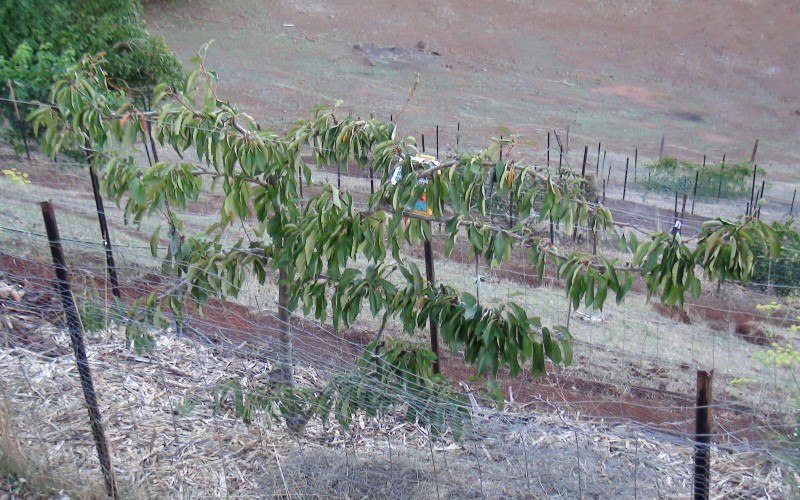
Cherry
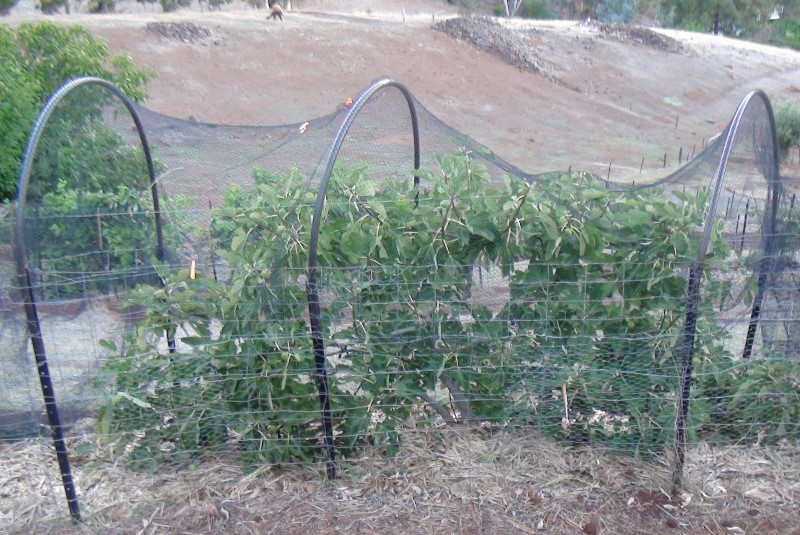
Fig under bird net
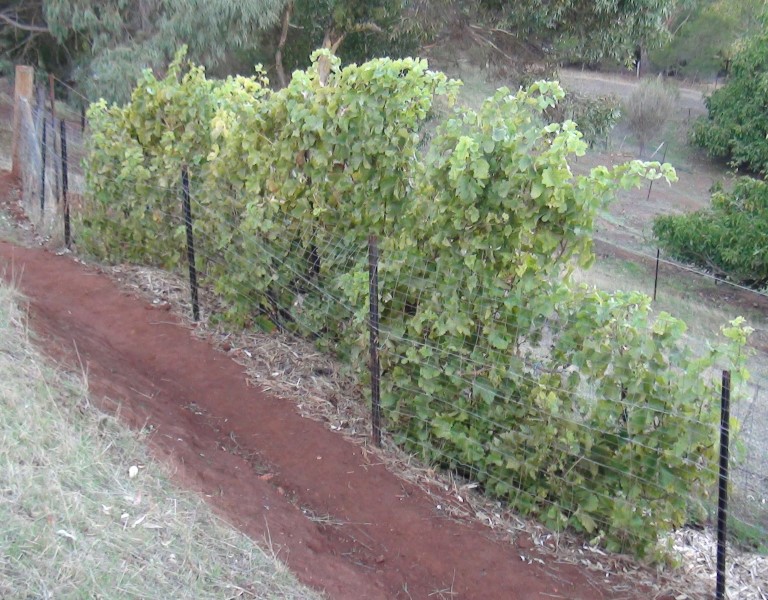
Grapes
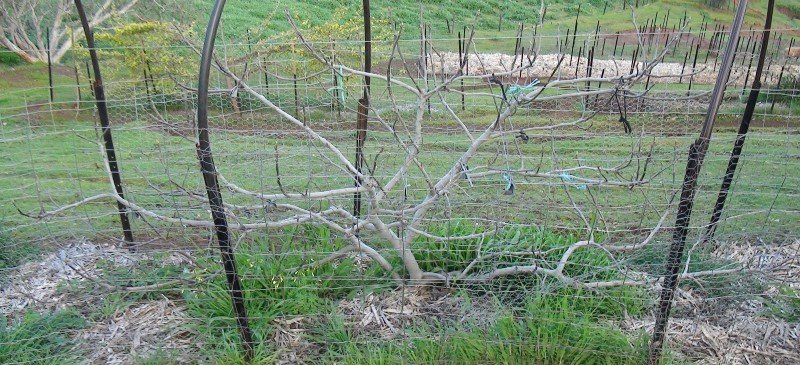
Fig
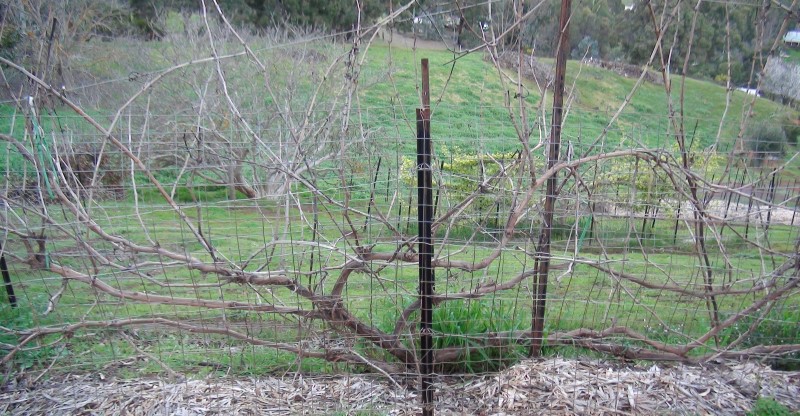
Grape 2
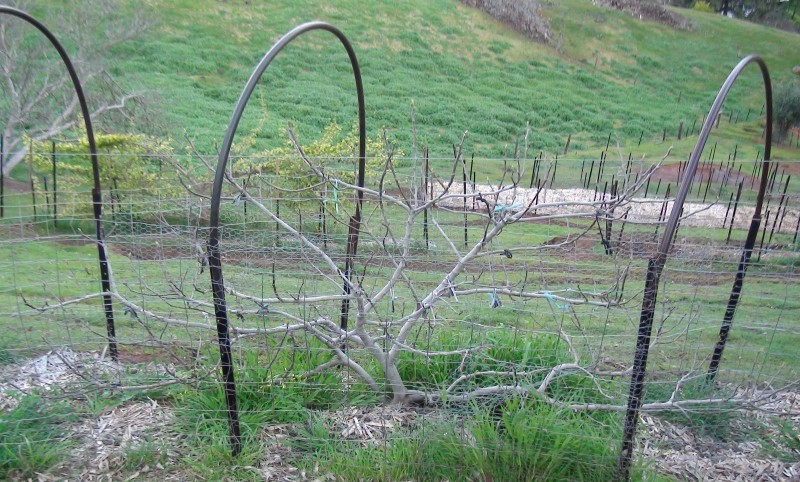
Fig
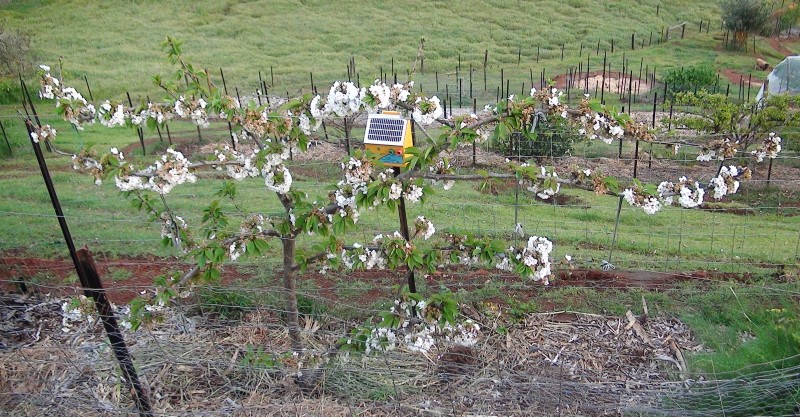
Cherry
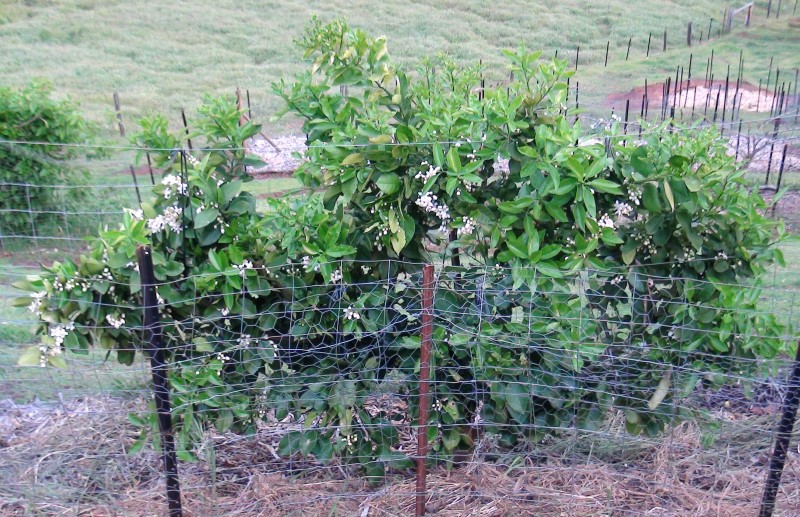
Grapefruit
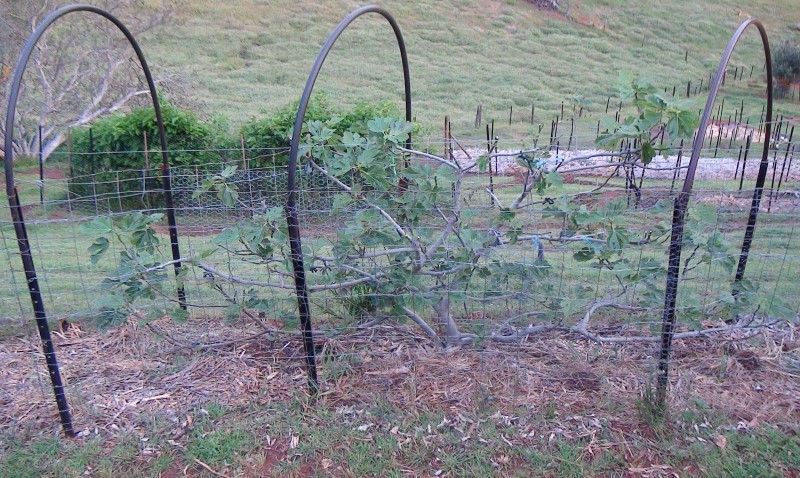
Fig
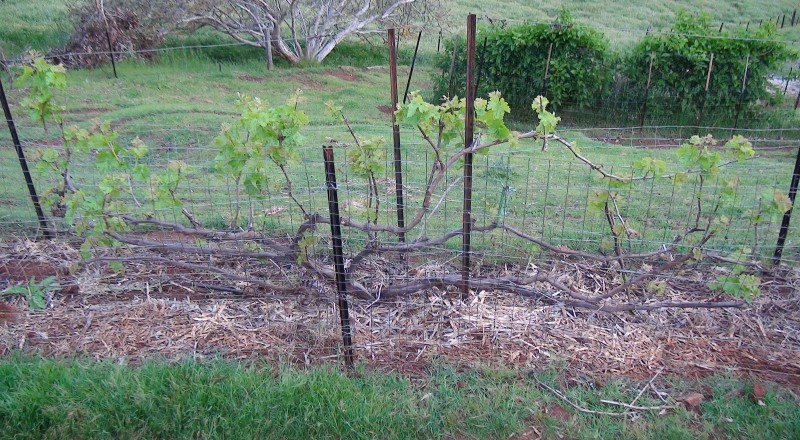
Grape
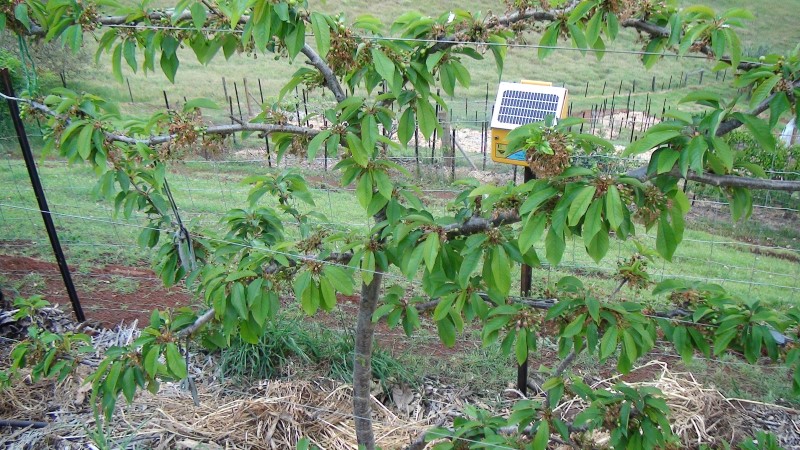
Cherry
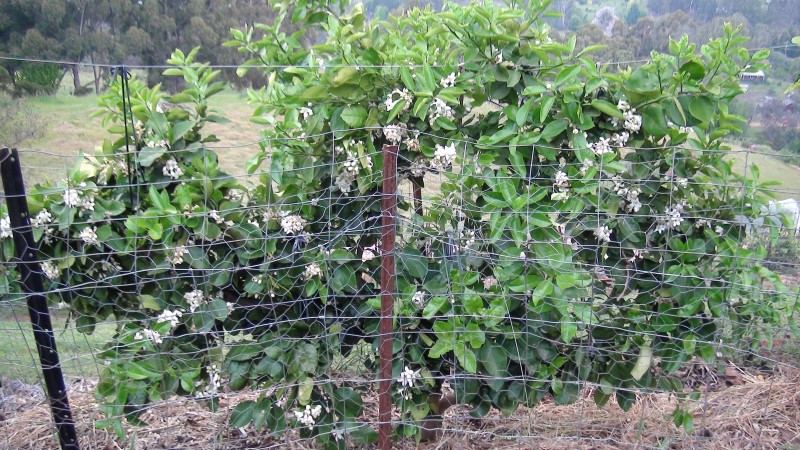
Grapefruit
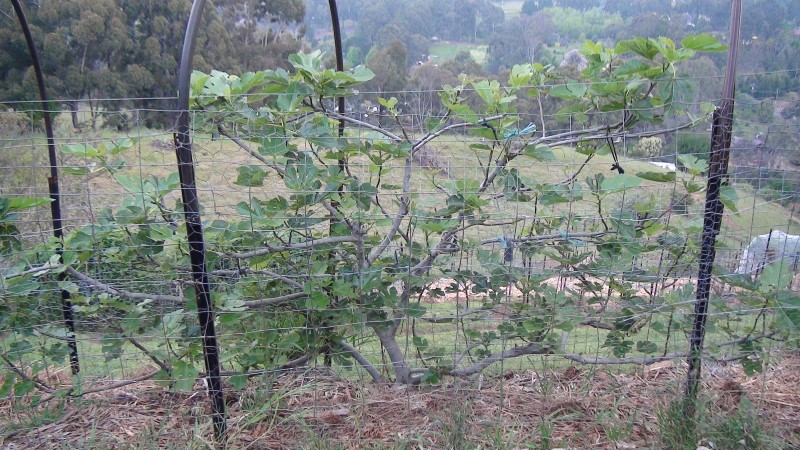
Fig
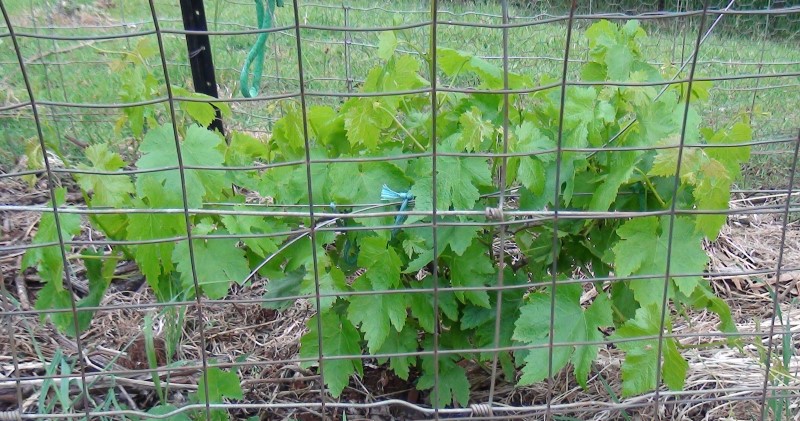
Grape 3
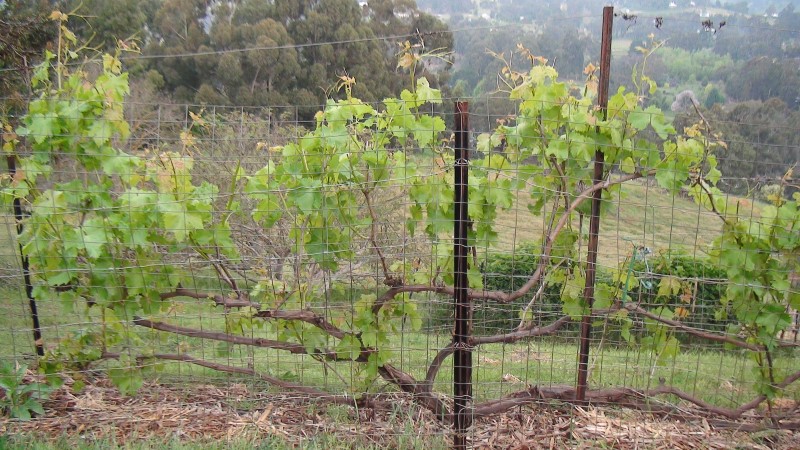
Grape 2
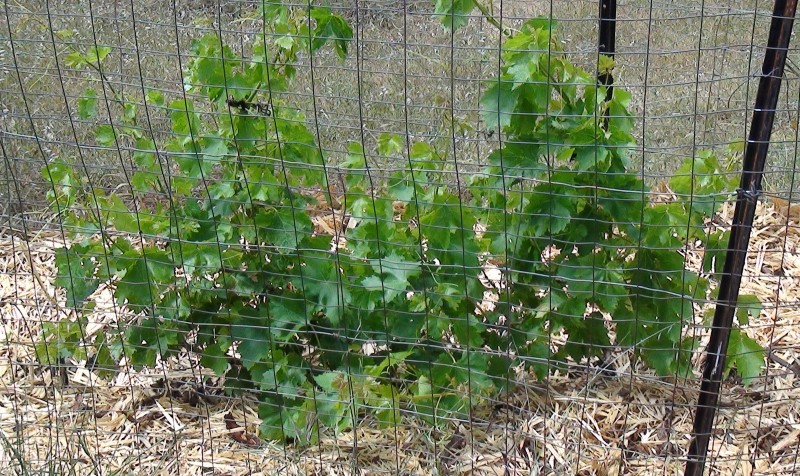
Grape 1
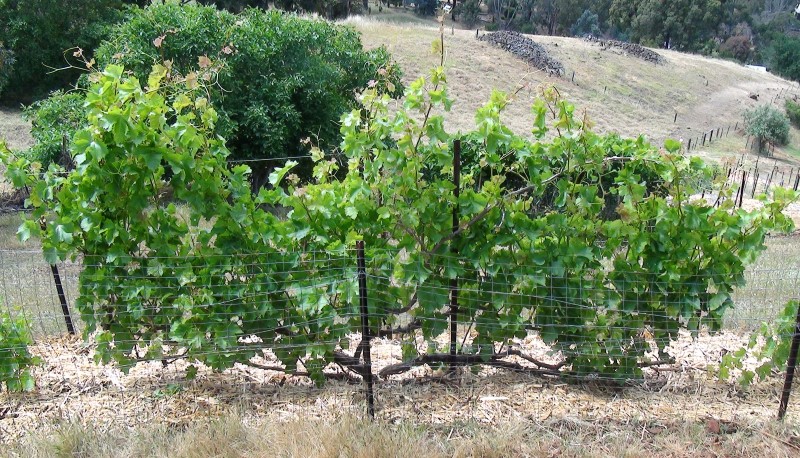
Grape 2
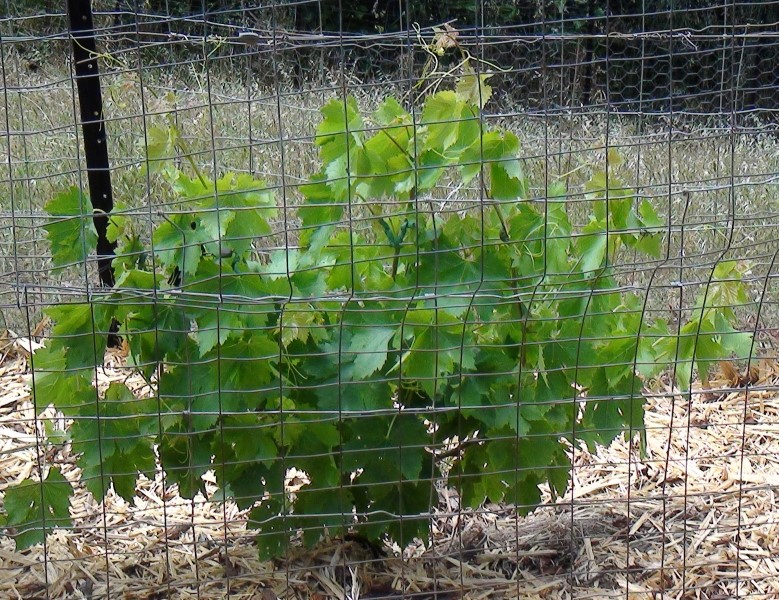
Grape 3
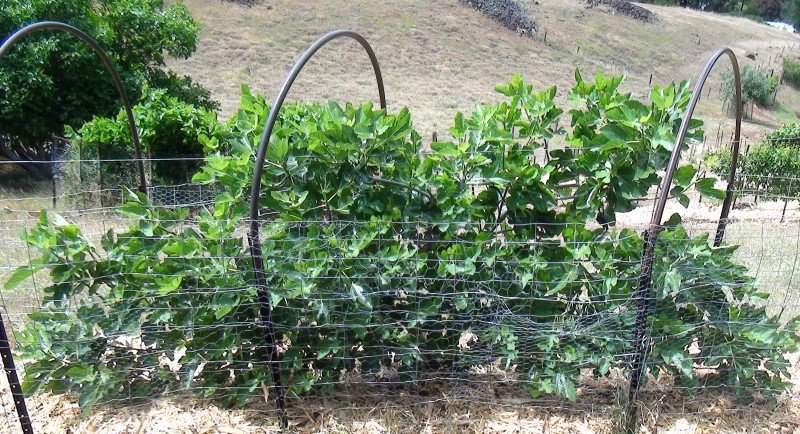
Fig
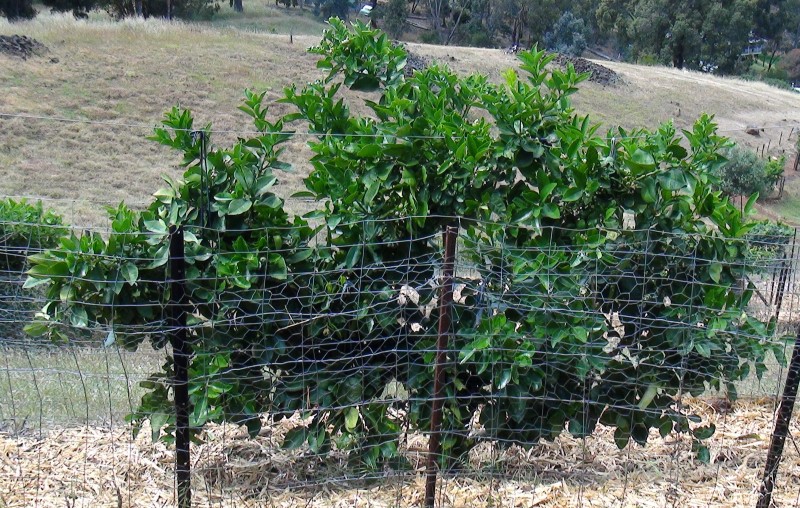
Grapefruit
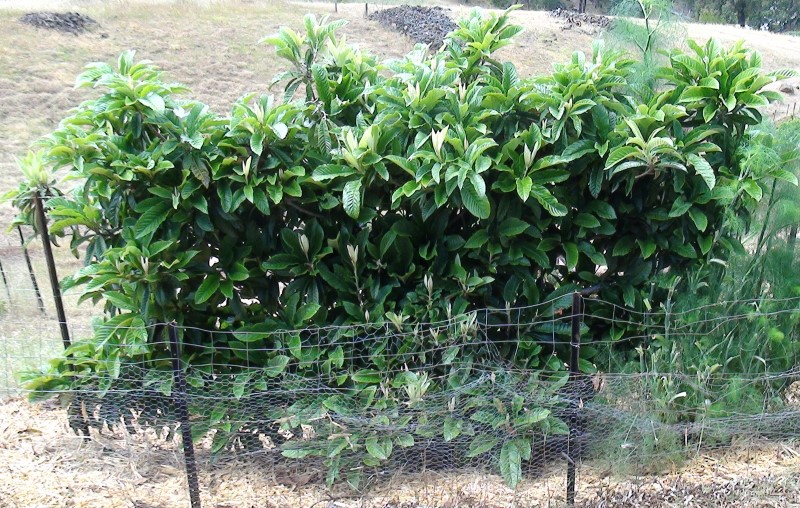
Loquat
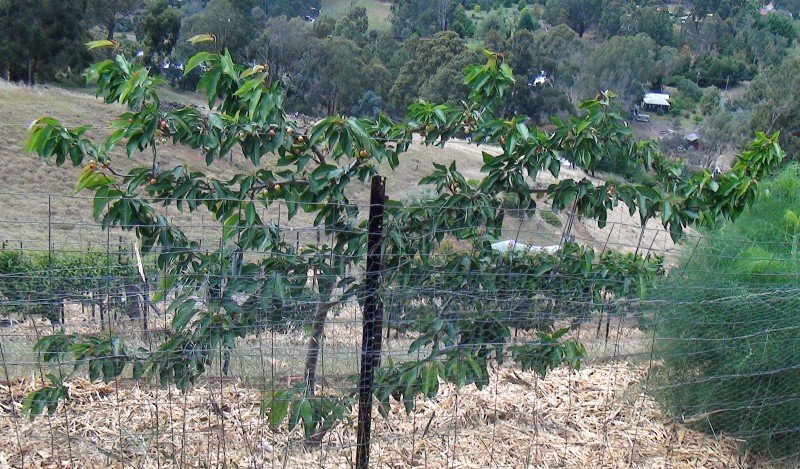
Cherry
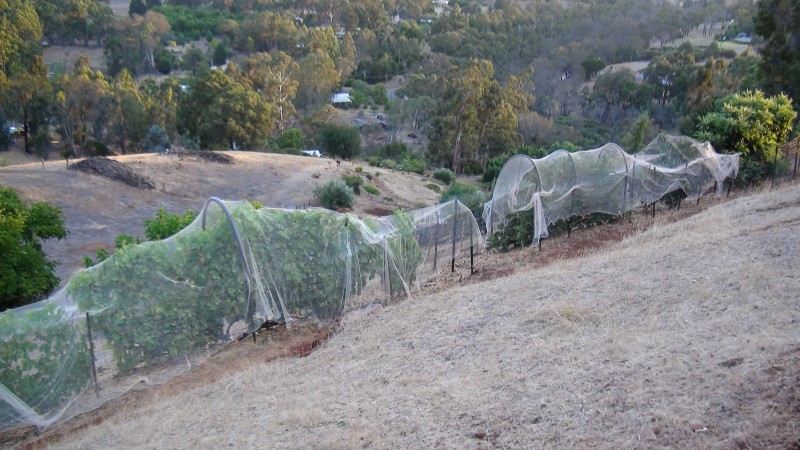
Row covered with net
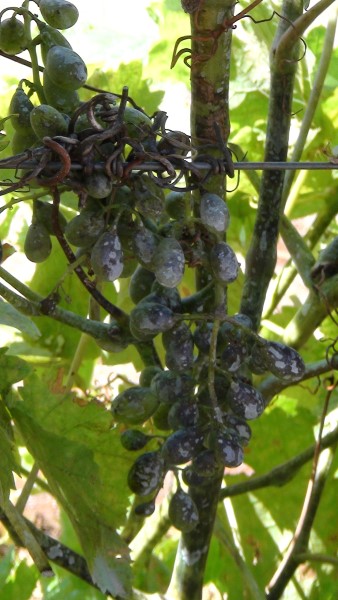
Grapes attacked by mildew
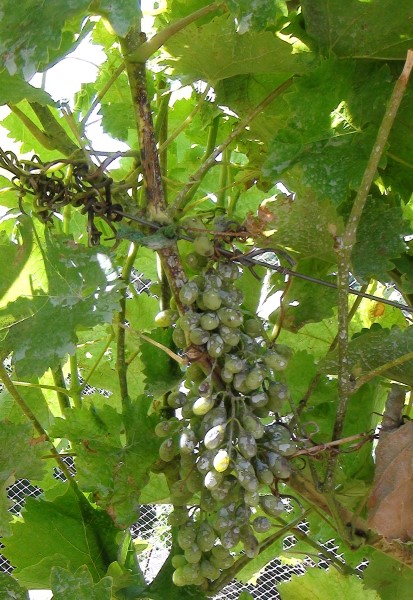
Grapes with mildew
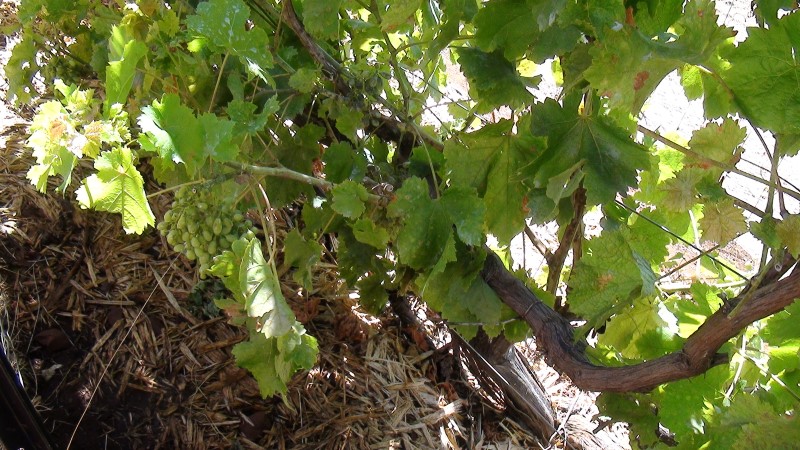
Grapes
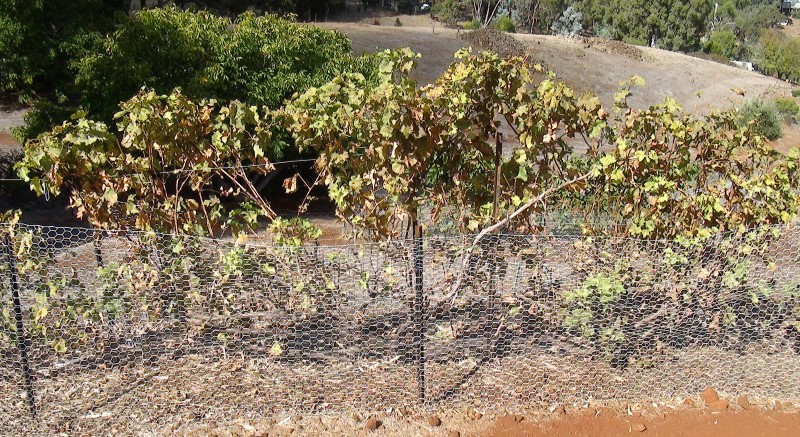
Grape
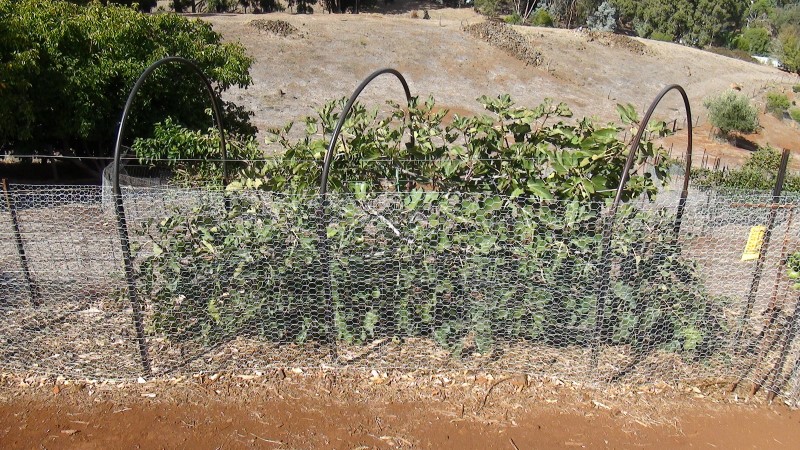
Fig
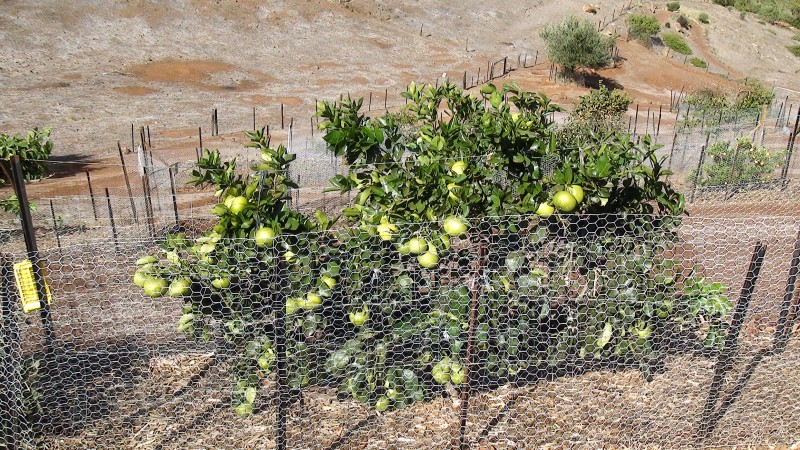
Grapefruit
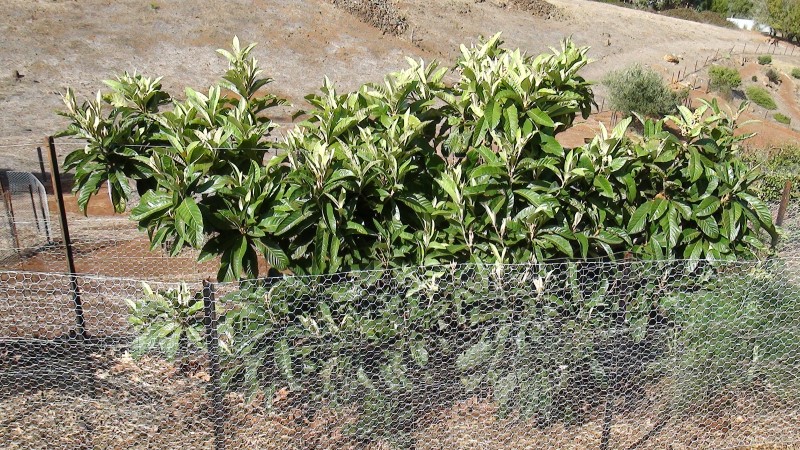
Loquat
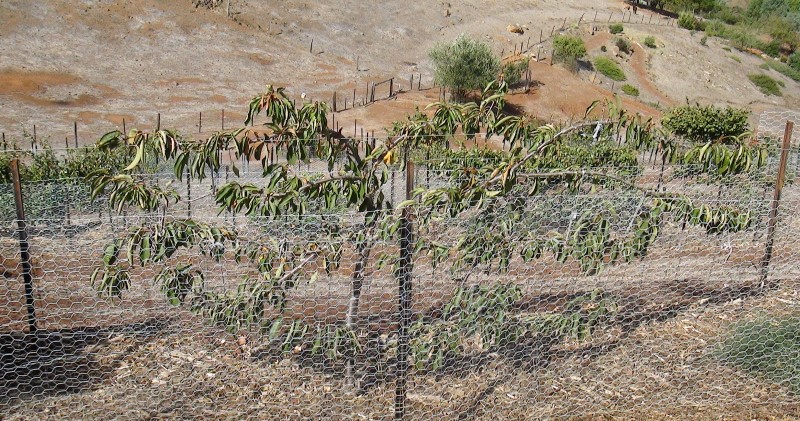
Cherry
Row
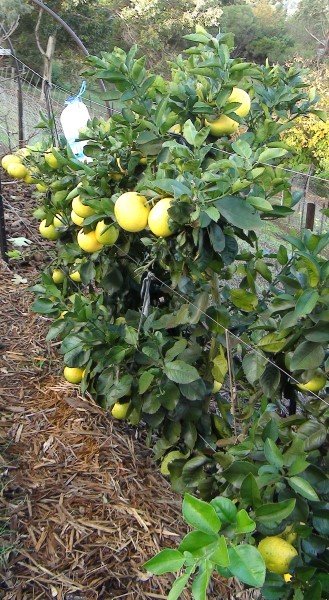
Grapefruit
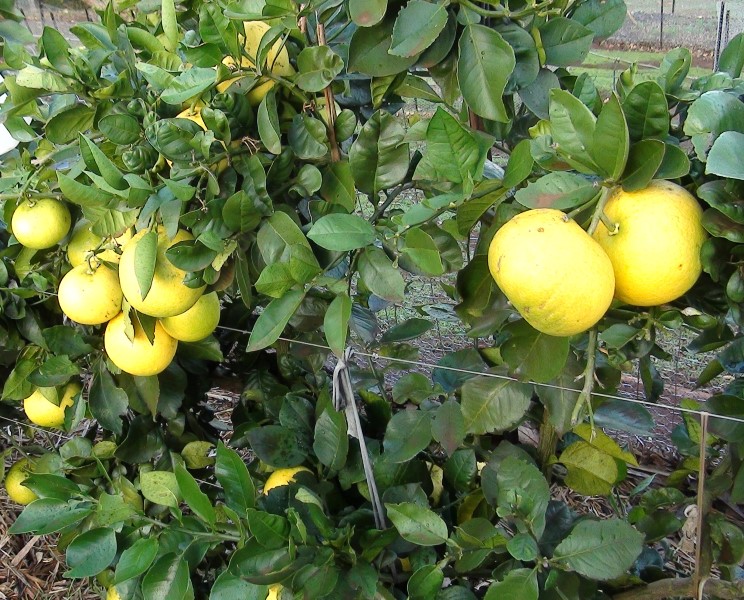
Grapefruit
Row 4
- Plant 1 Mulberry
- Plant 2 Pear (Corella/Paradise Mini Pear)
- Plant 3 Orange (Navelina)
- Plant 4 Apricot (Moorpark)
- Plant 5 Plum (Japanese Tegan Blue)
- Plant 6 Apple (Dwarf Pink Lady ‘Pinkabelle’)
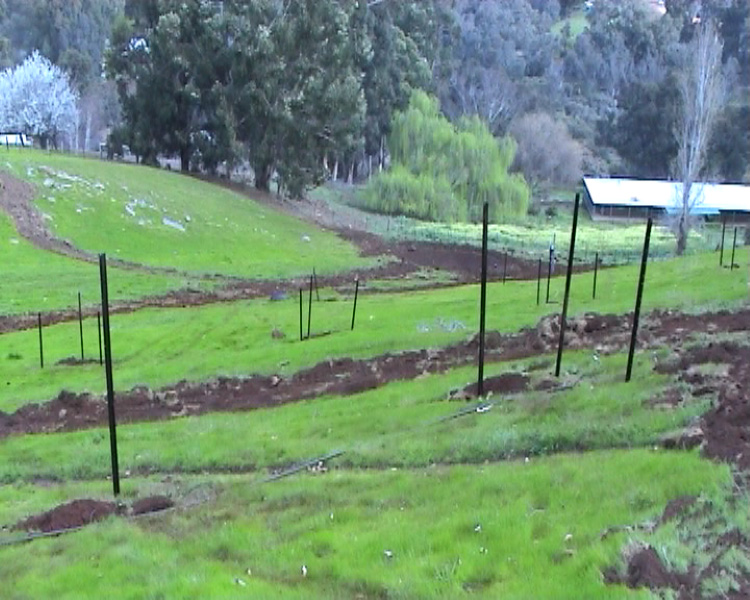
Row planning
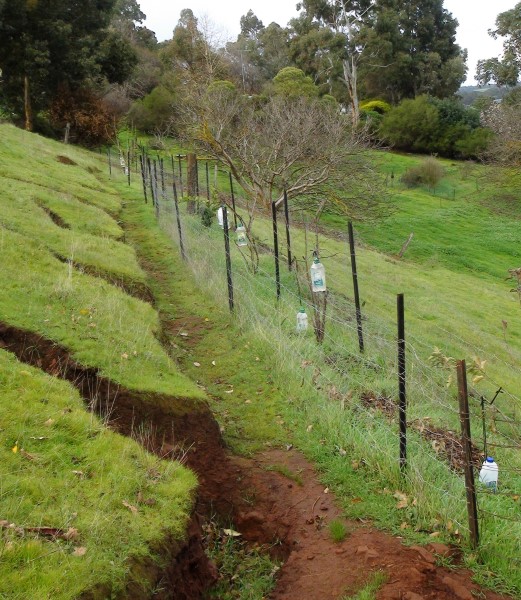
Row - shaping trees with weights
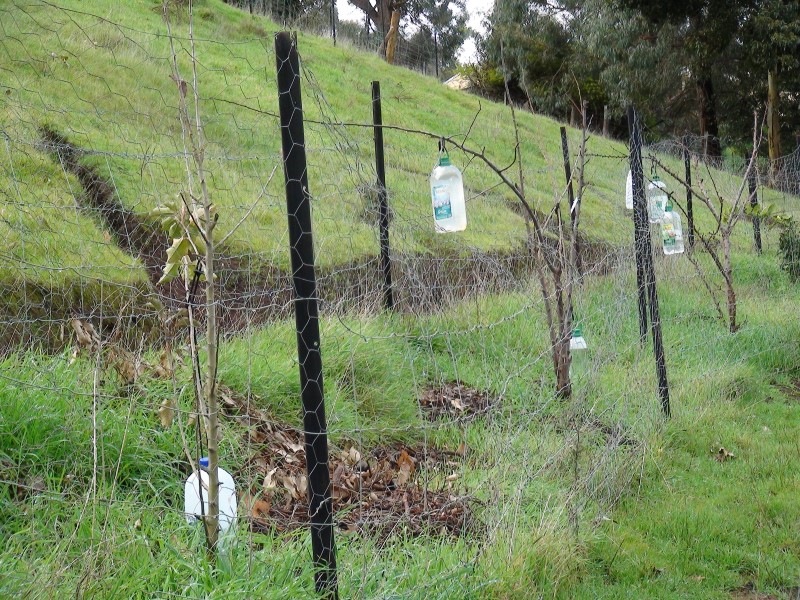
Bending branches
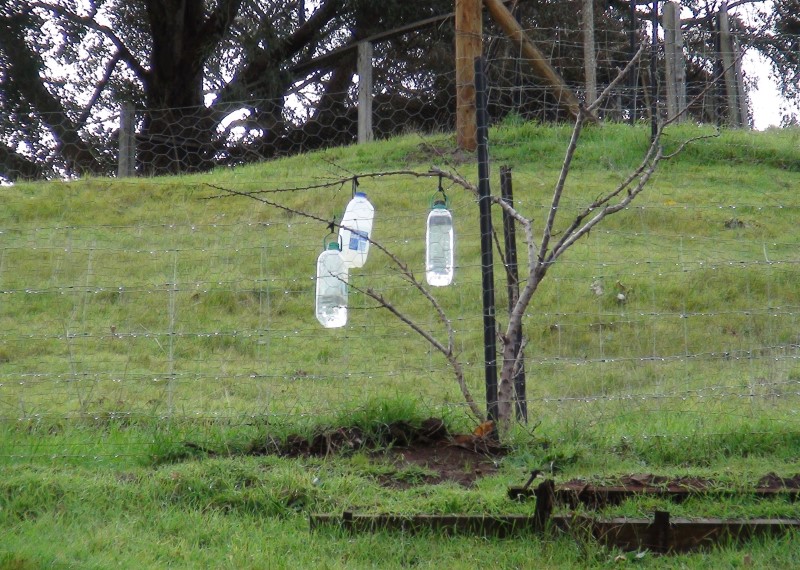
Apple espalier shaping
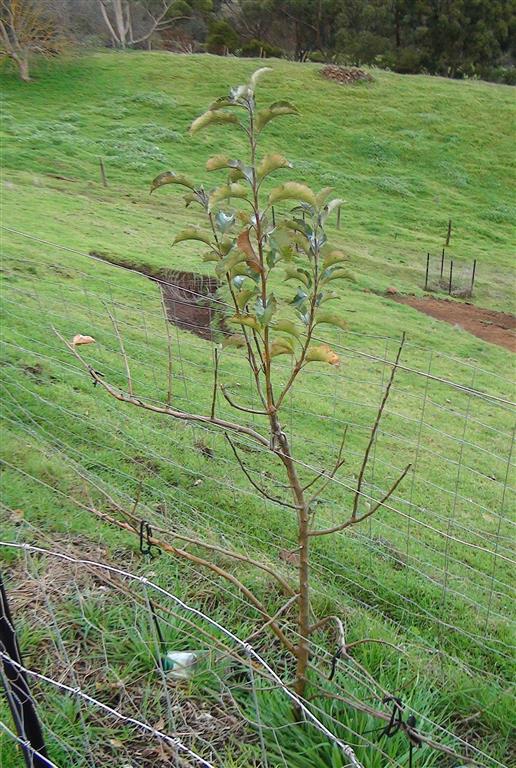
Apple
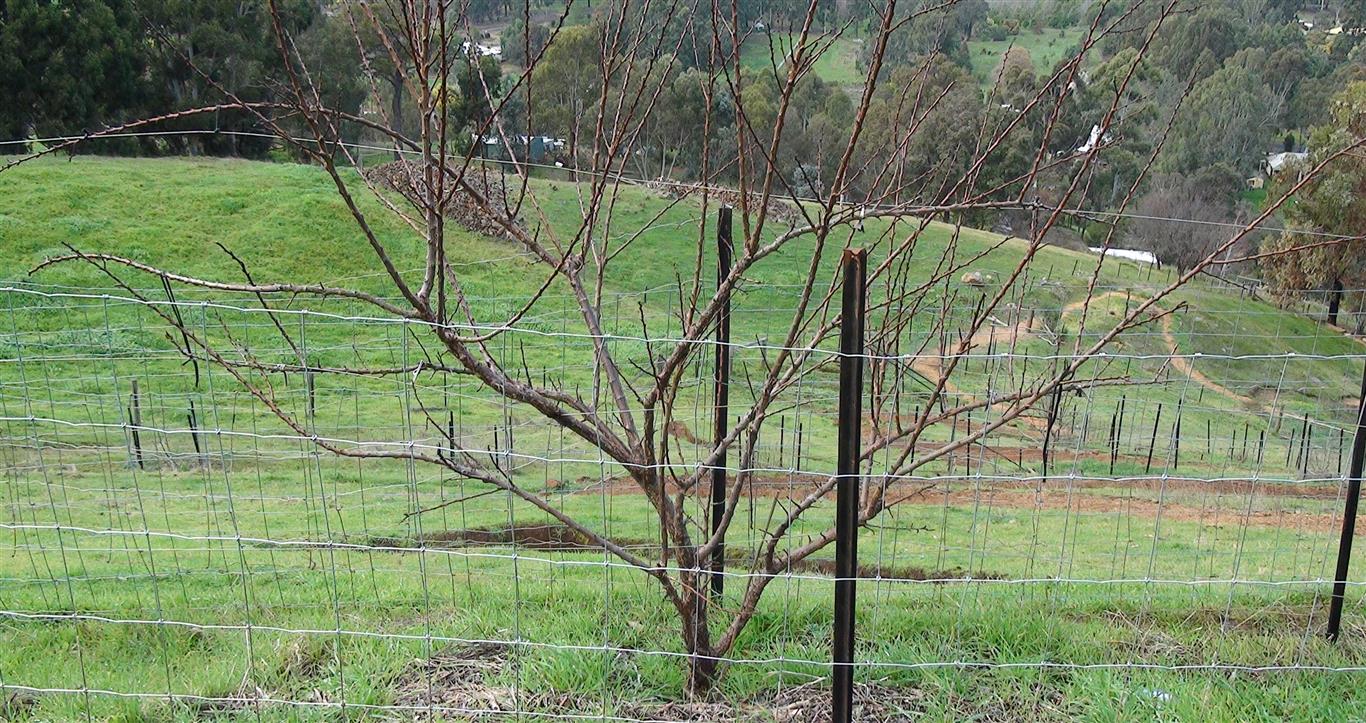
Row 4 - Apricot
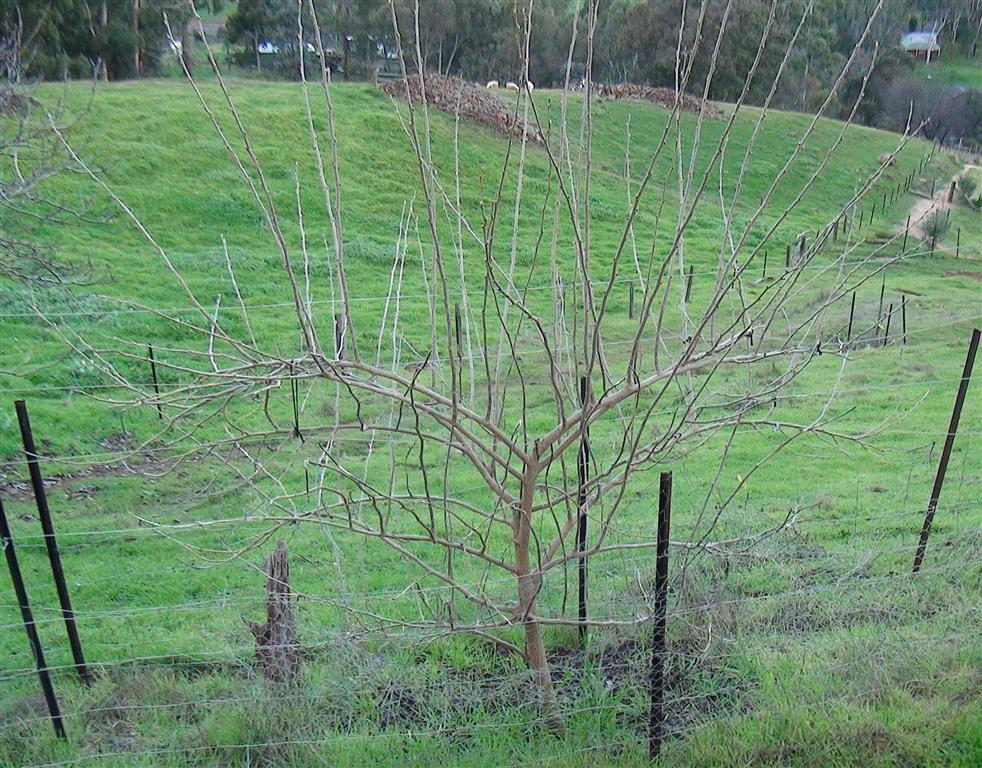
Row 4 - Mulbery

Row 4 - Mulbery2
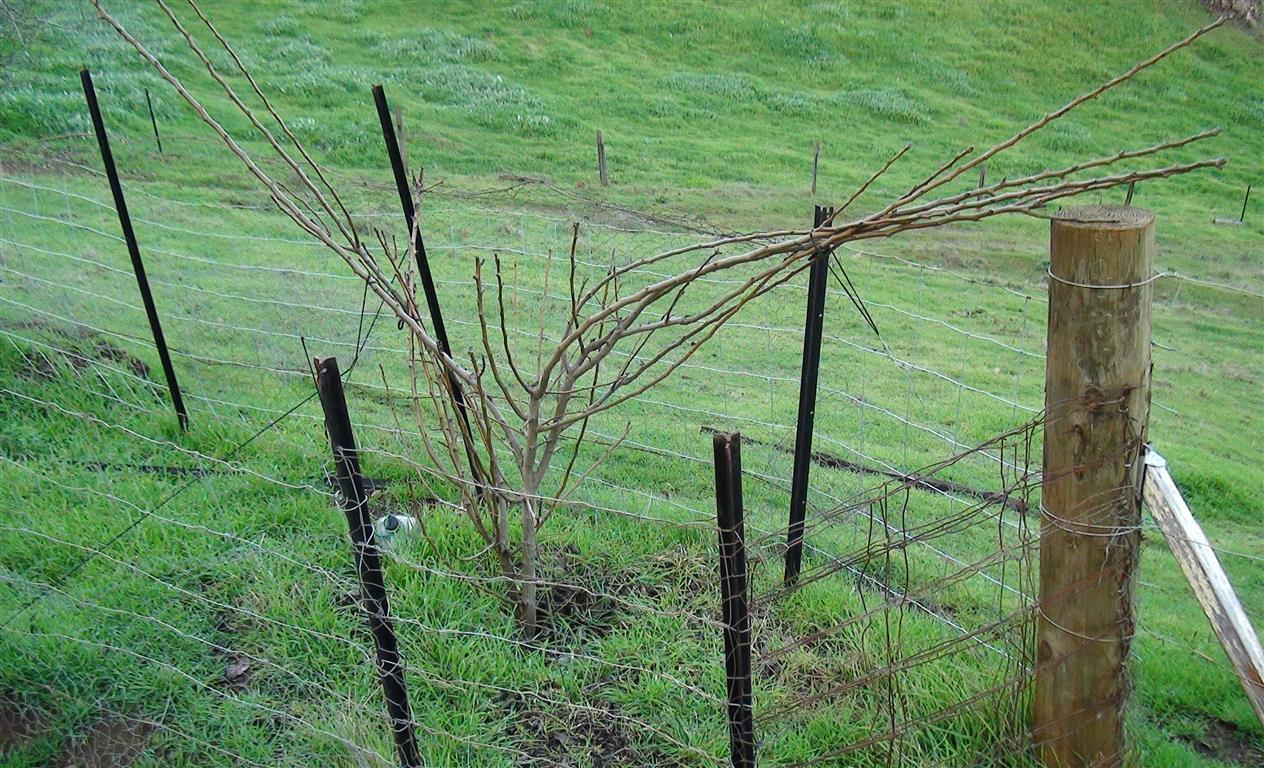
Row 4 - Pear
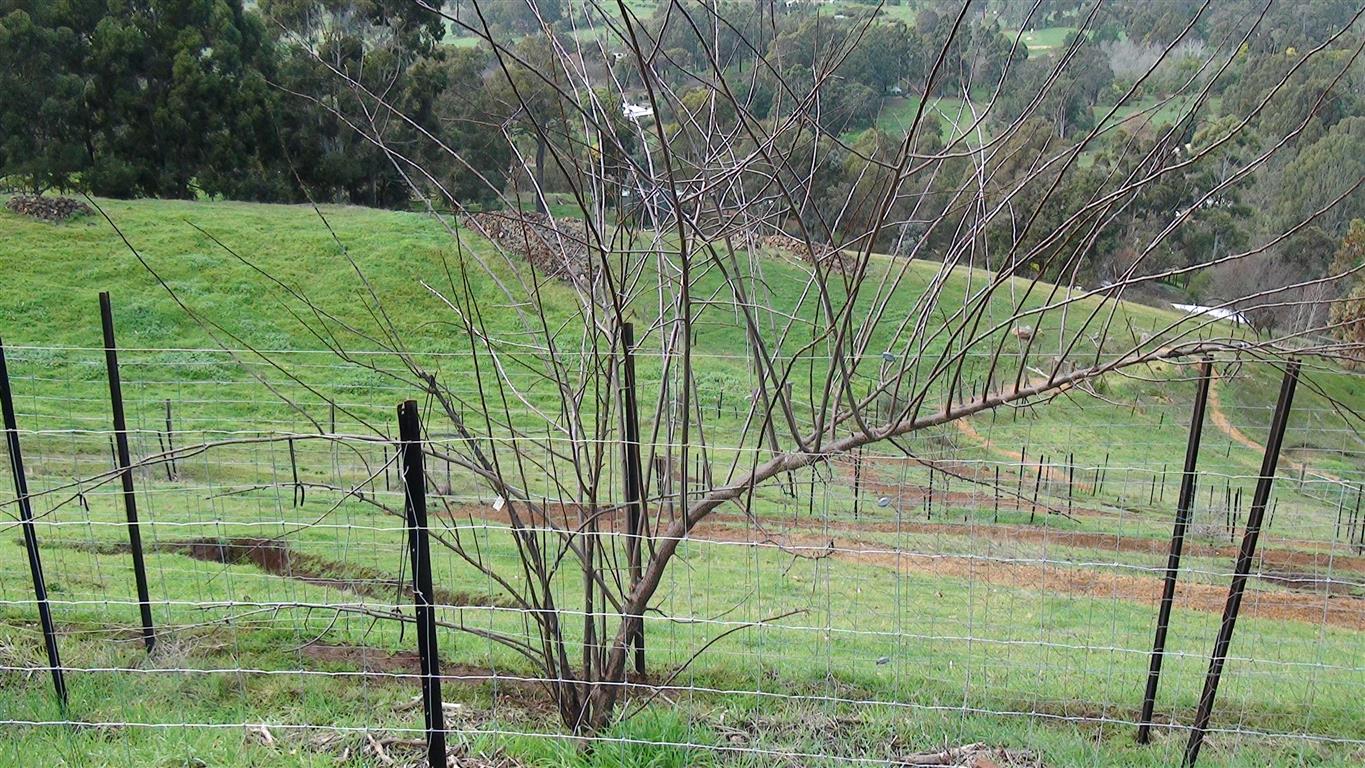
Row 4 - Plum
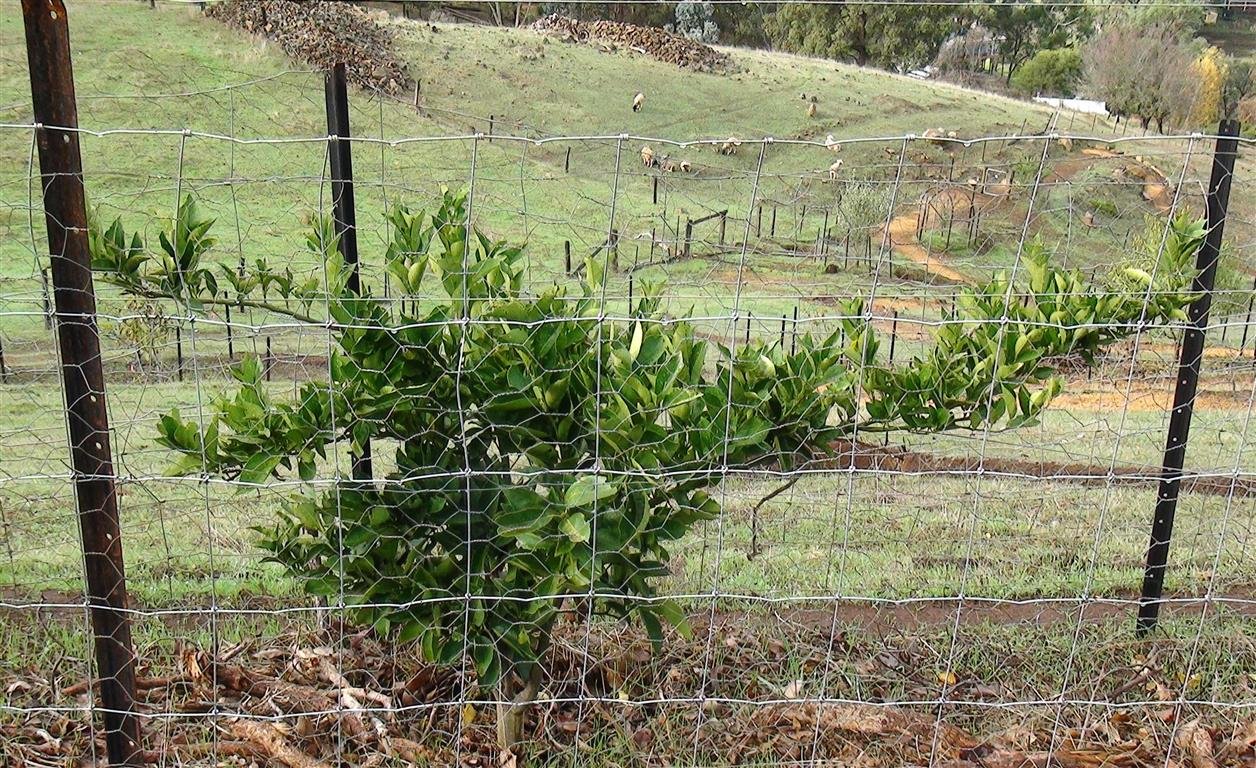
Row 4 - Orange
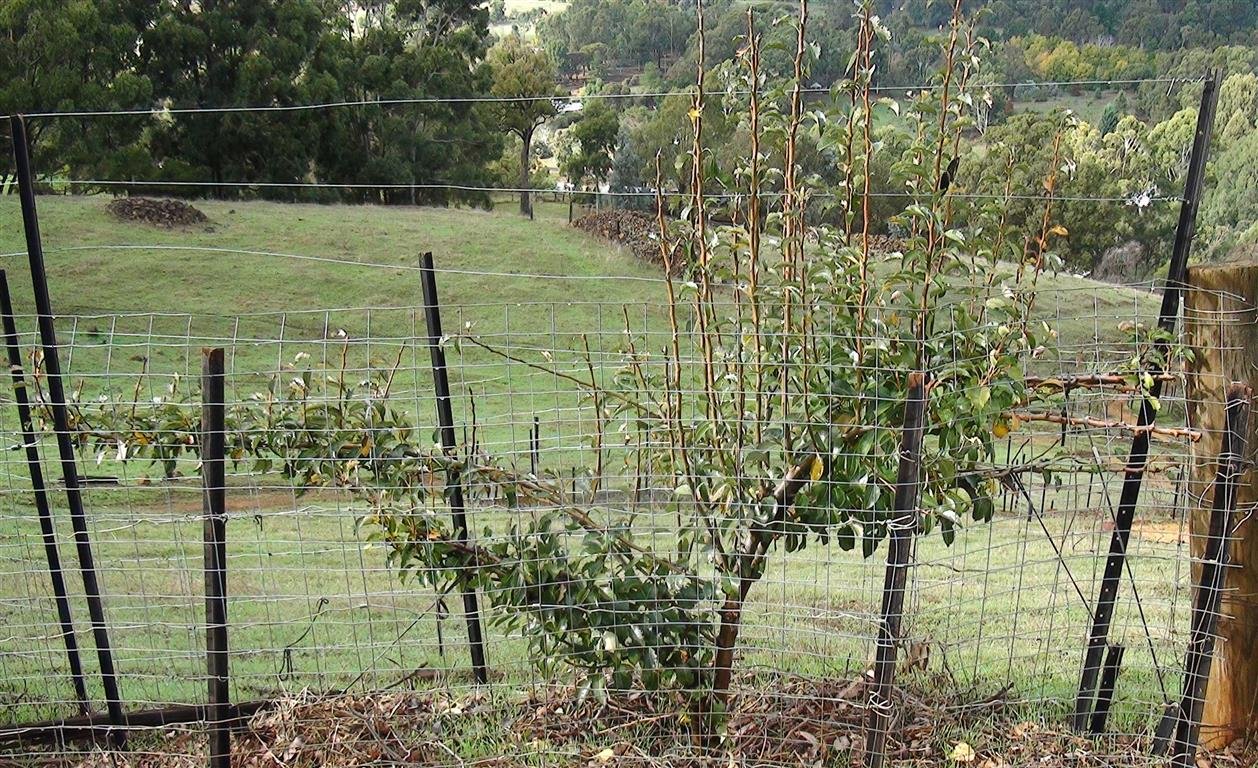
Row 4 - Pear
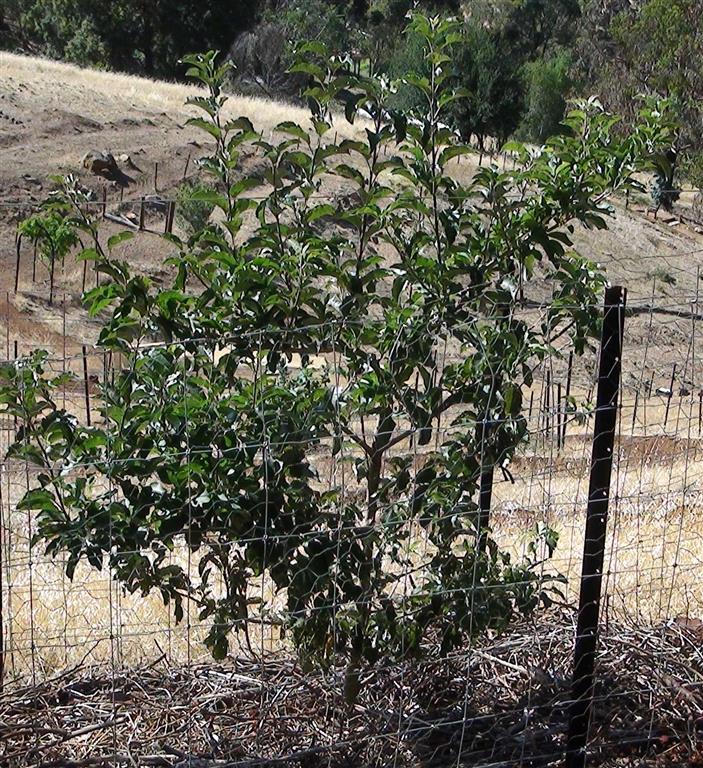
Row 4 - Apple
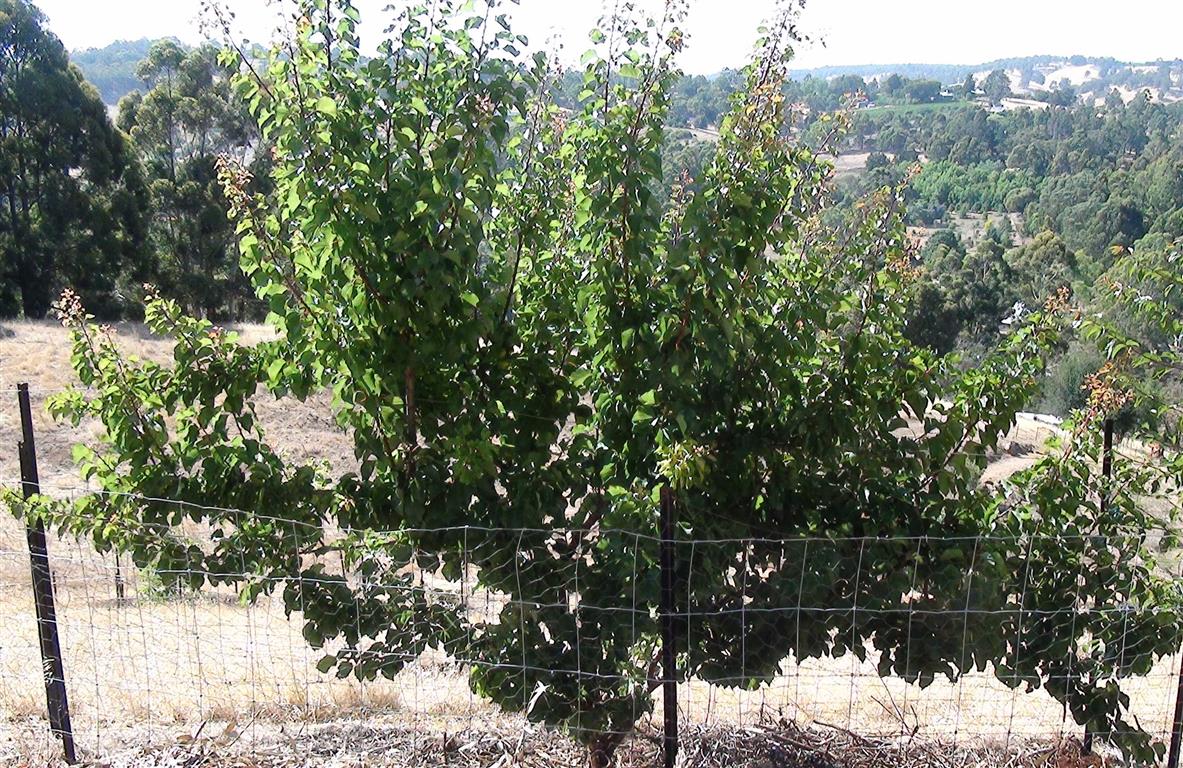
Row 4 - Apricot
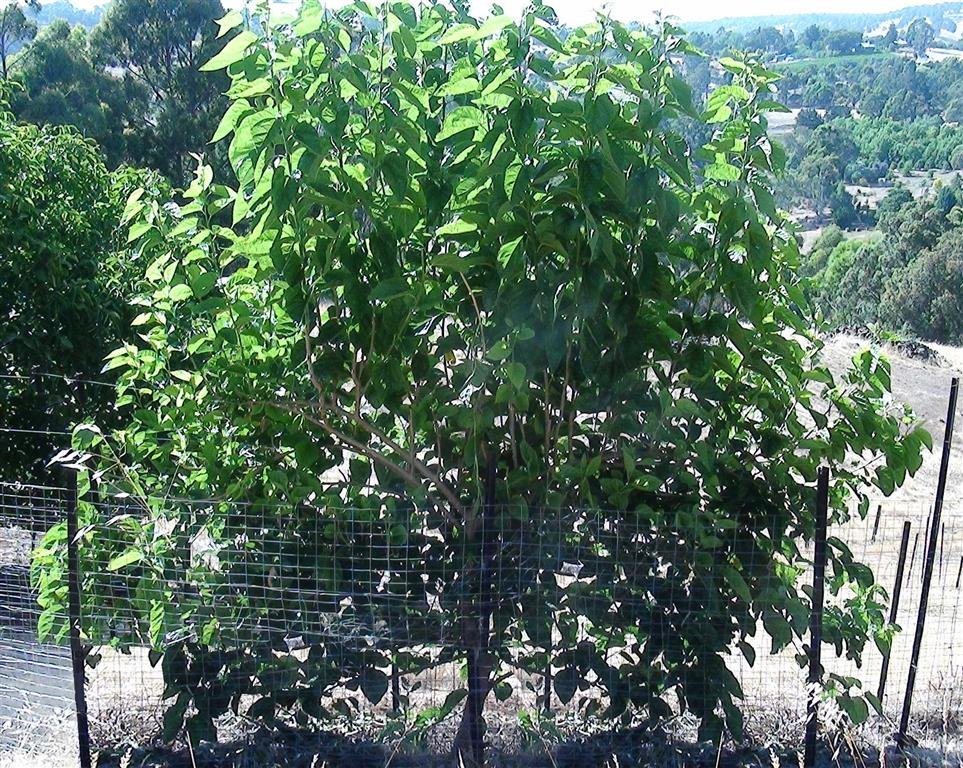
Row 4 - Mulbery
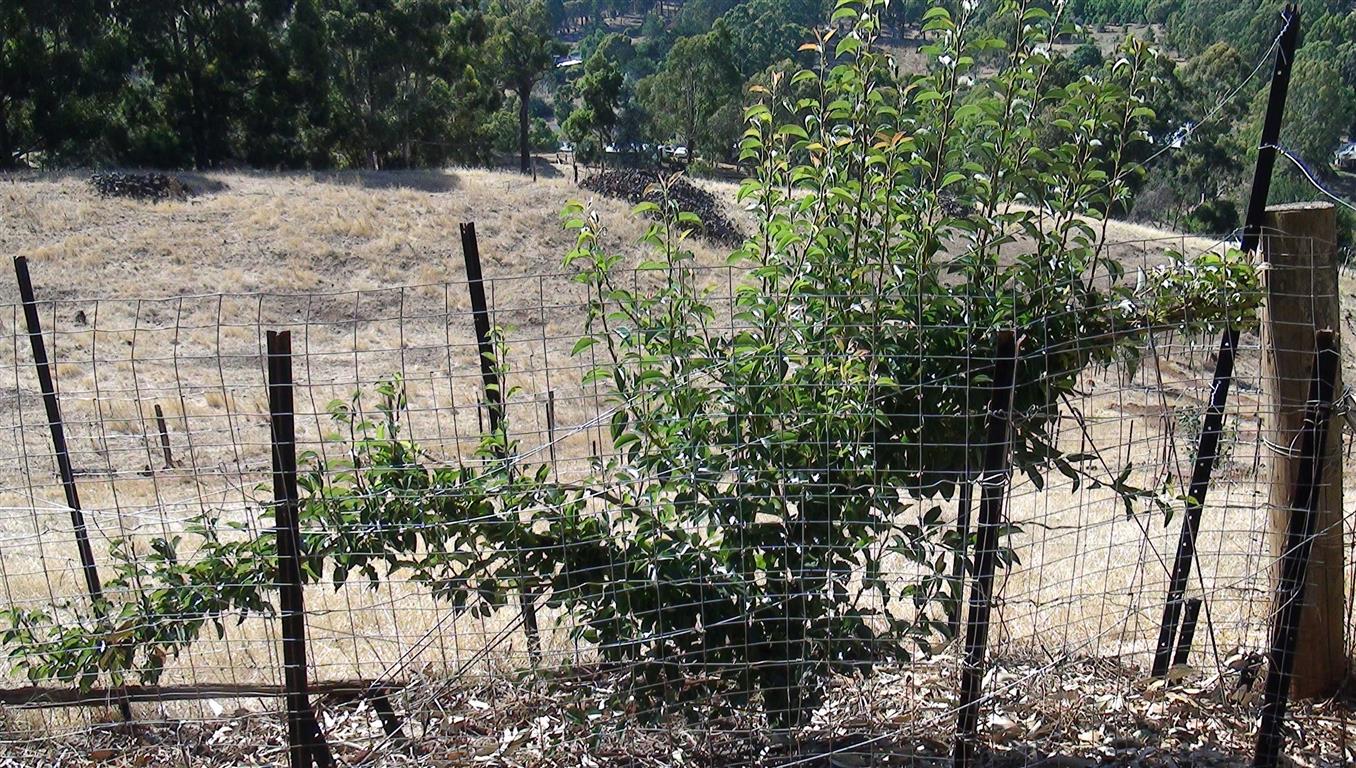
Row 4 - Pear
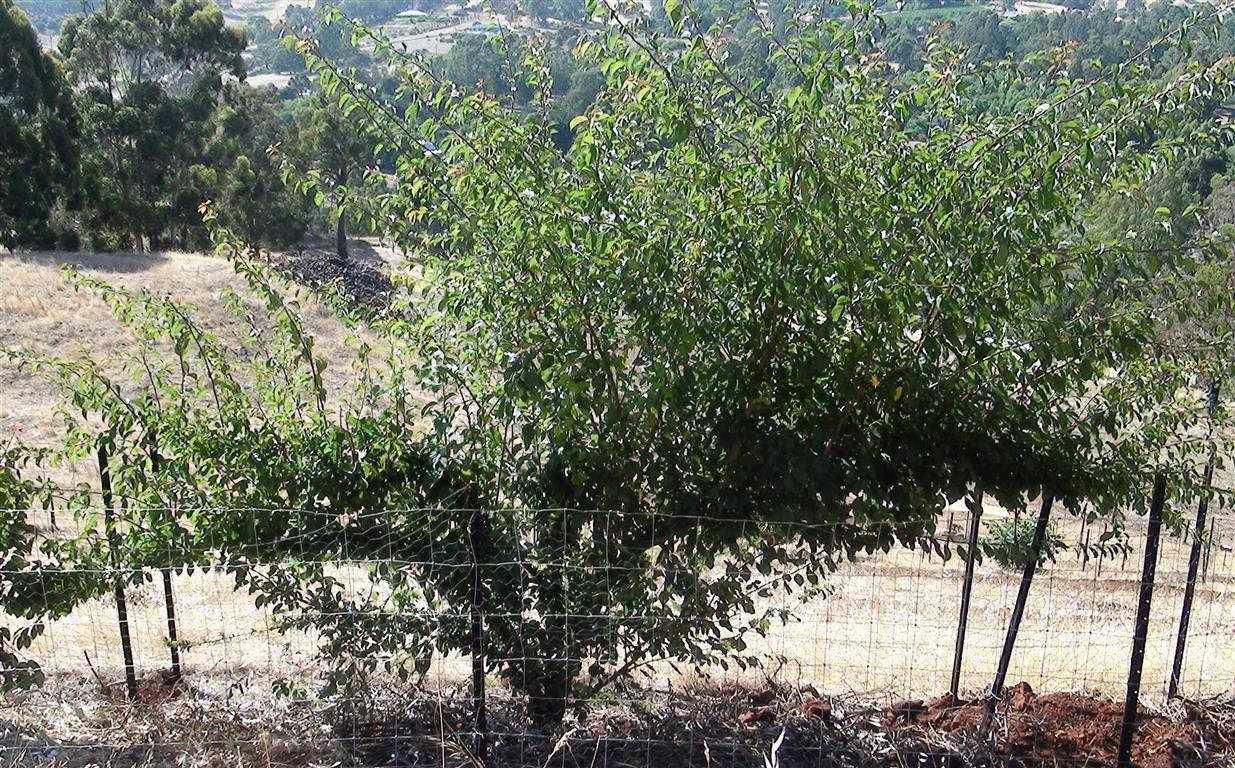
Row 4 - Plum
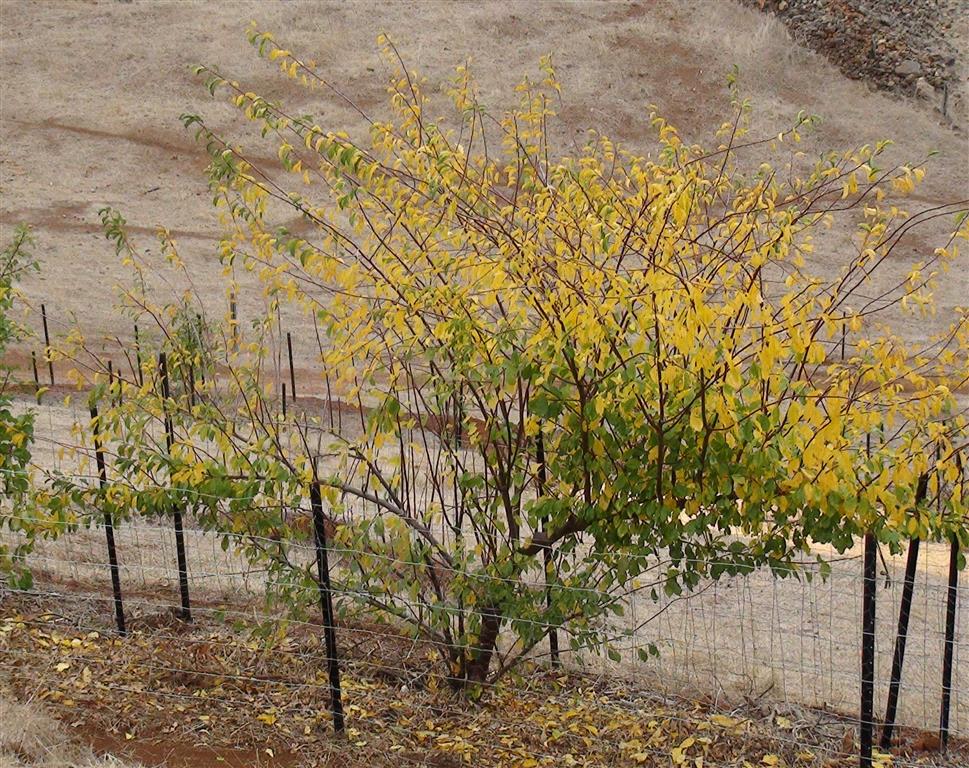
Row 4 - Plum2
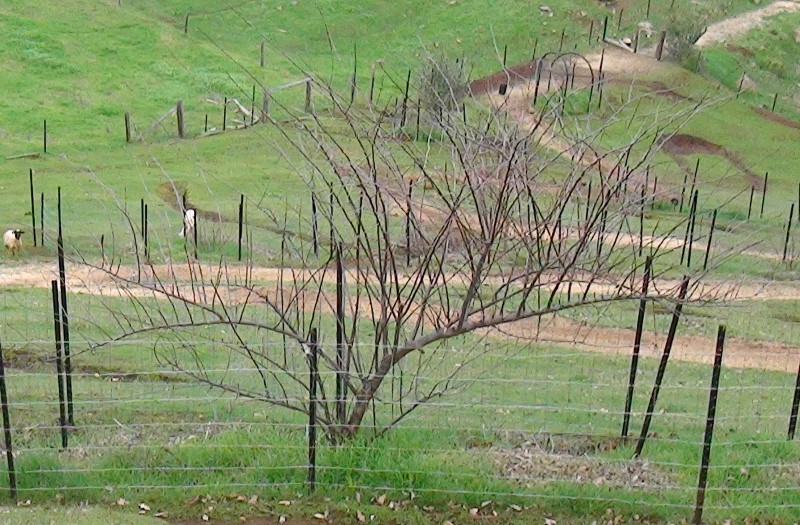
Plum and rootstock
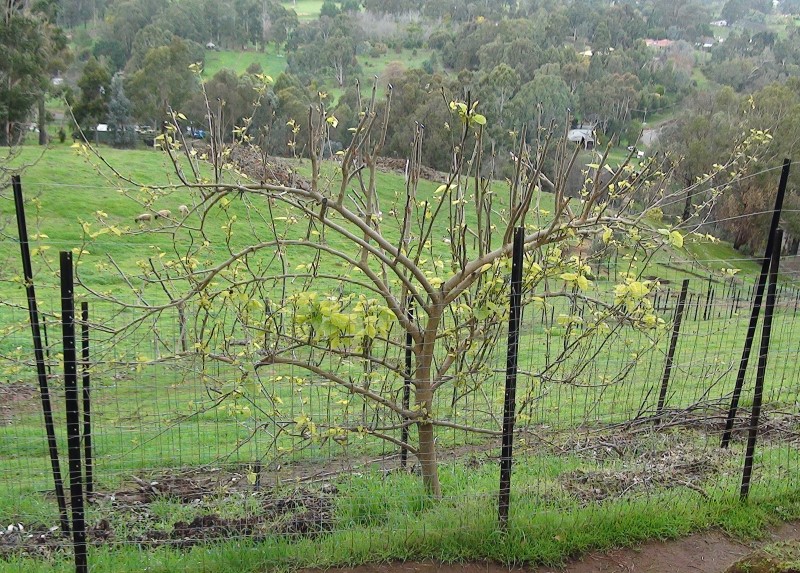
Mulberry
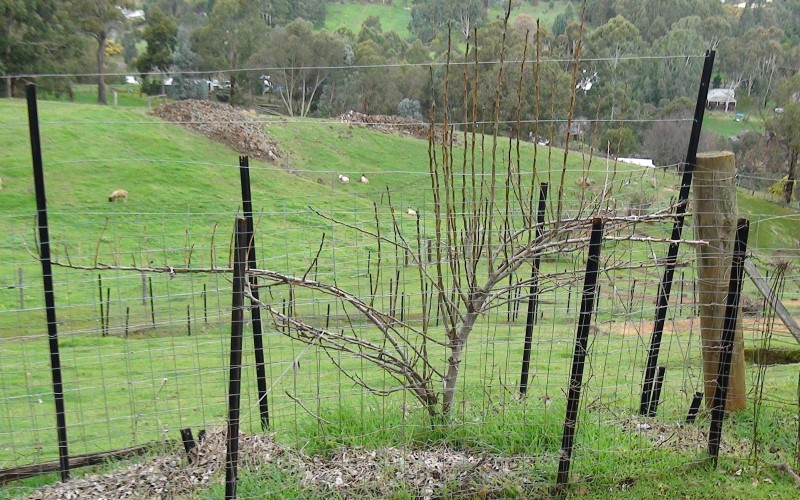
Pear
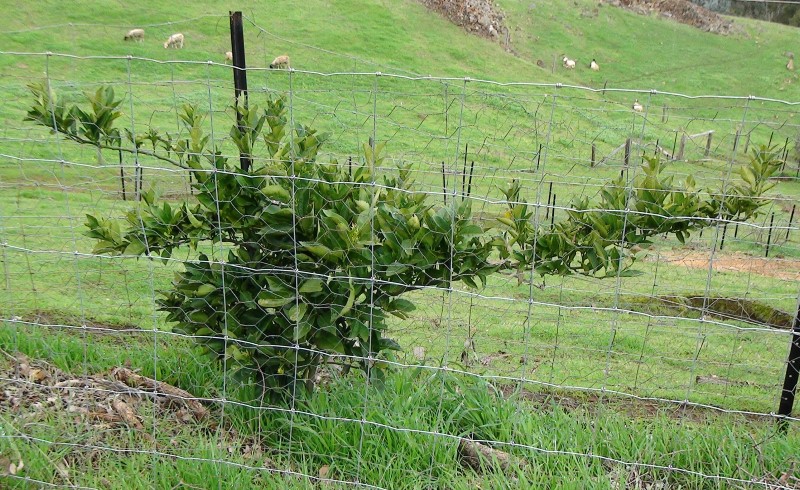
Orange
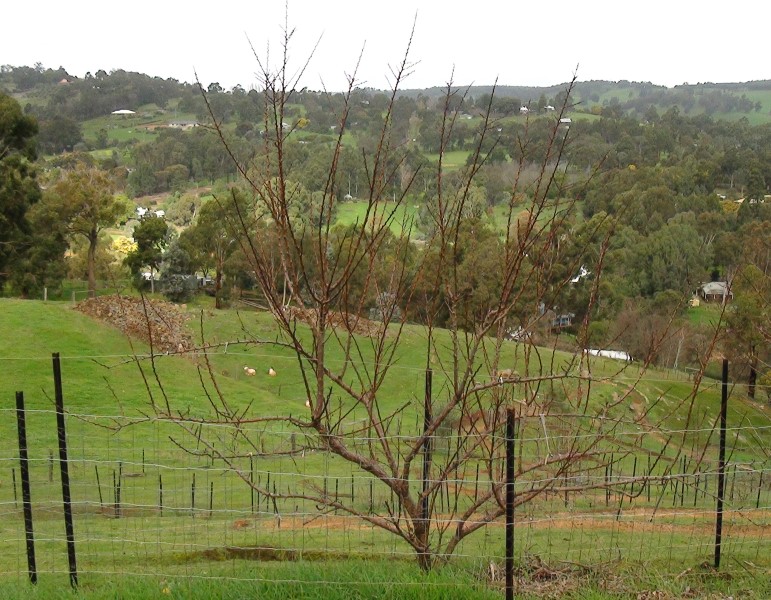
Apricot
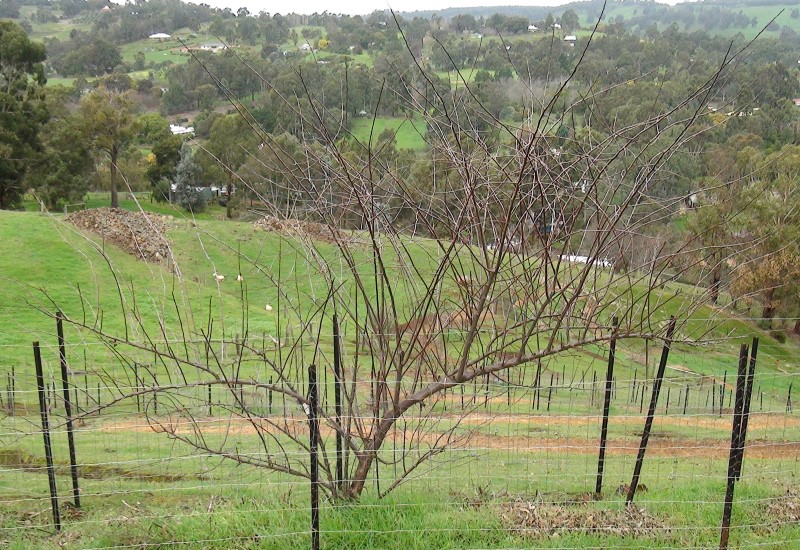
Plum rootstock
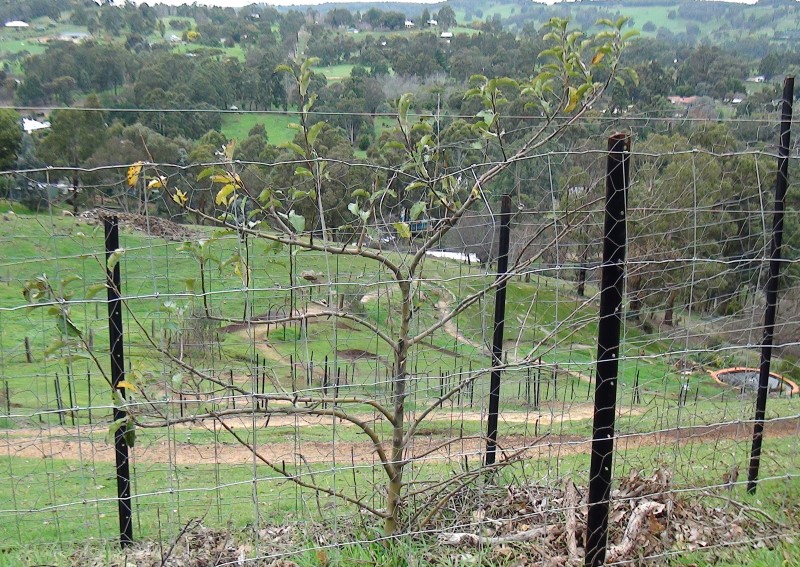
Apple
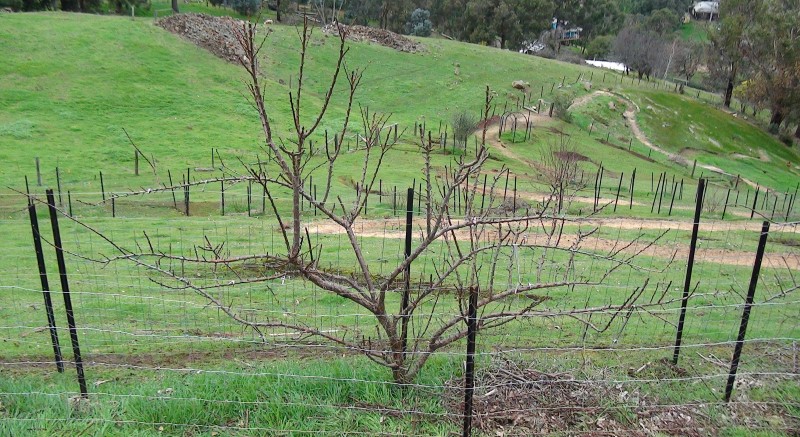
Apricot
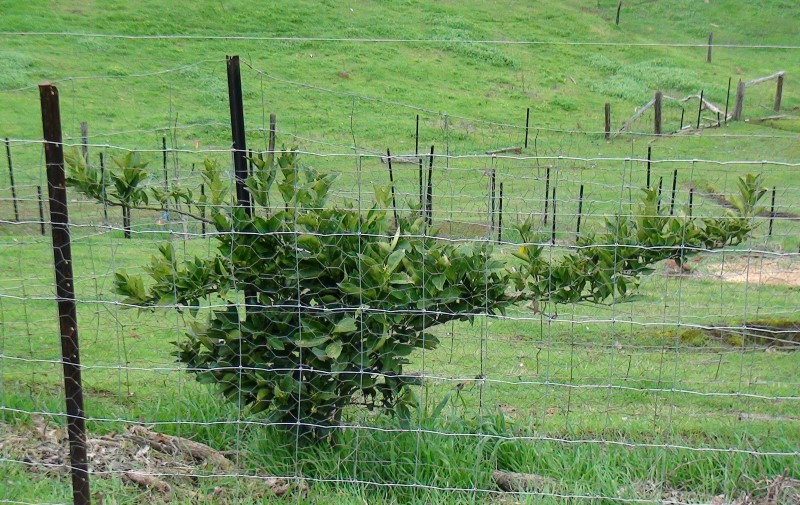
Orange
Row 5
- Plant 1 Pear (Corella/Paradise Mini Pear)
- Plant 2 Quince (Smyrna)
- Plant 3 Plum (Rootstock)
- Plant 4 Apple Redlove
- Plant 5 Apricot (Trevatt Dwarf Apricot)
Row 6
- Plant 1 Walnut (Franquette)
- Plant 2 Berries (1 Sivanberry, 6 Boysenberries, 1 Jostaberry, 1 Loganberry & 1 Boysenberry)
- Plants 3 Hazelnuts (1 Cosford, 1 American White & 1 Lambert)
- Plant 4 Almond
- Plants 5 Hazelnuts (1 Lambert, 1 American White & 1 Cosford)
- Plant 6 Astro/Bush Snack/ Midgen/Midyim Berry (Austromyrtus dulcis)
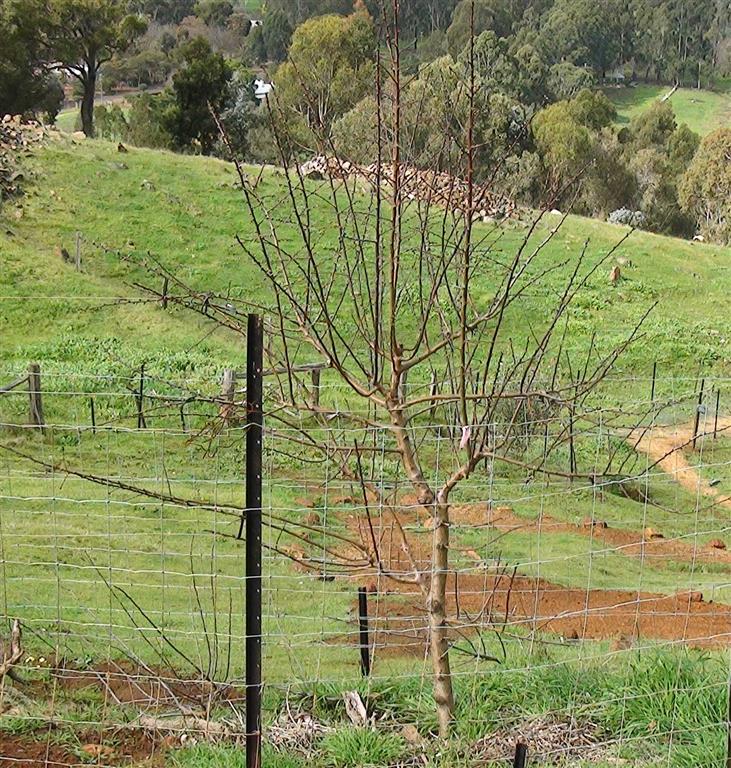
Row 5 - Almond
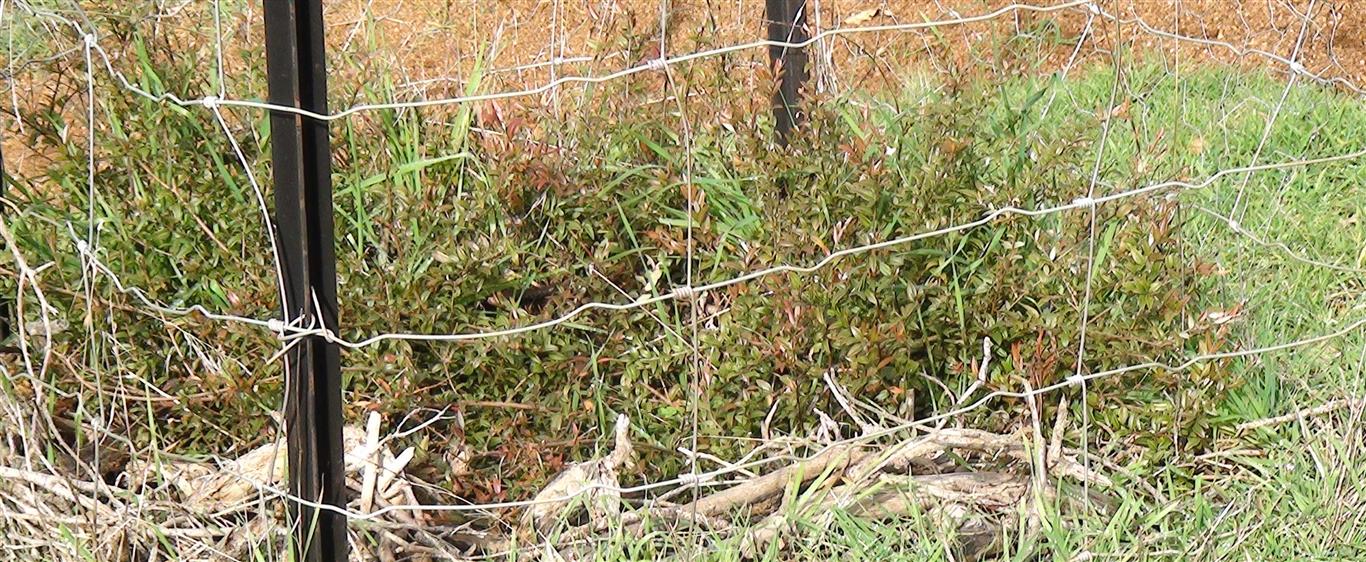
Row 5 - Astro
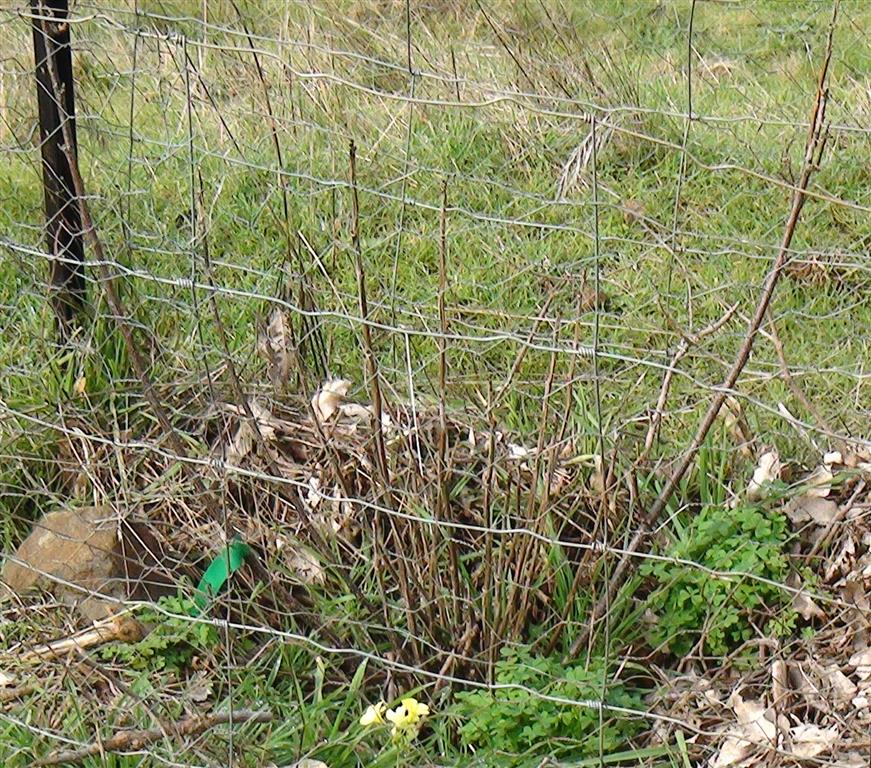
Row 5 - Currant
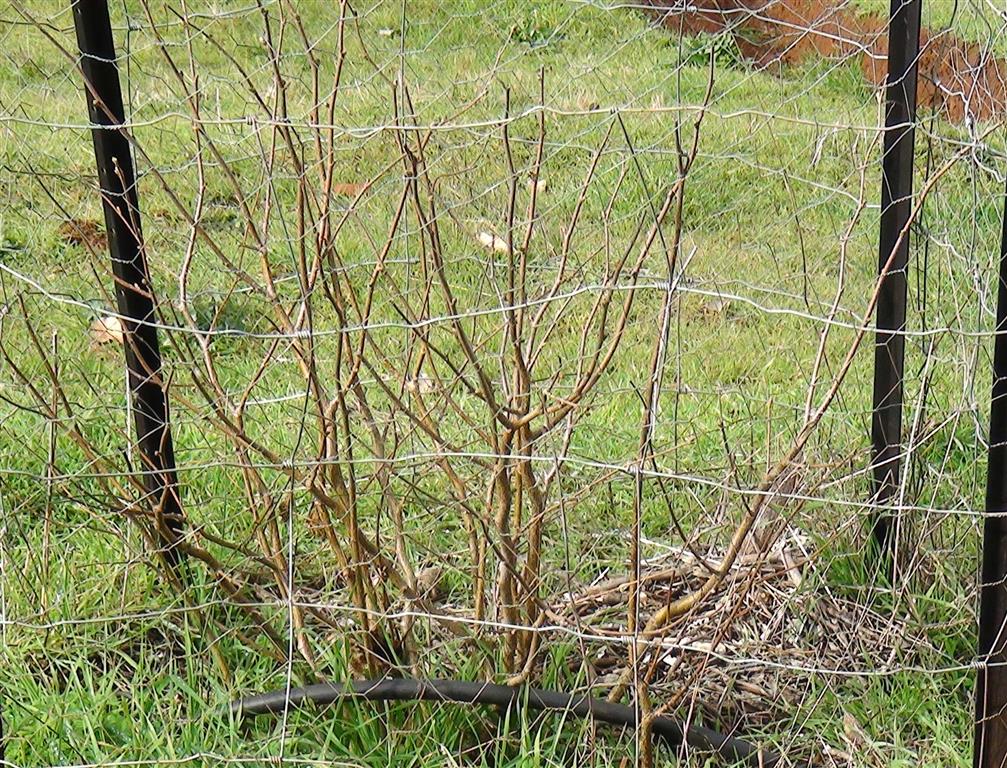
Row 5 - Hazelnut1

Row 5 - Hazelnut2
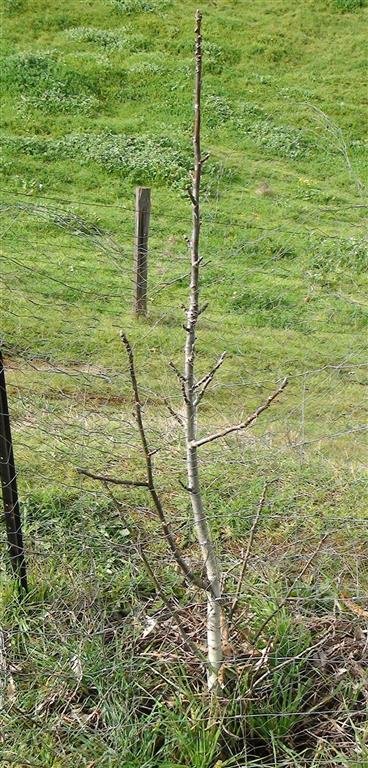
Row 5 - Walnut
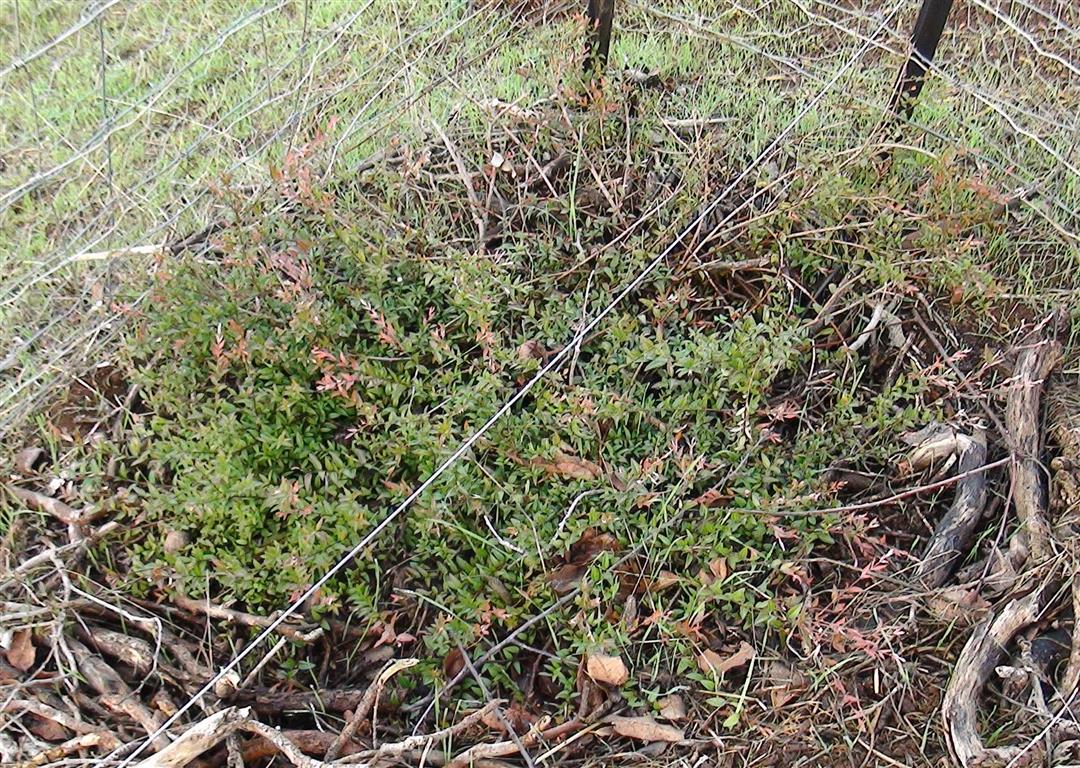
Row 5 - Astro
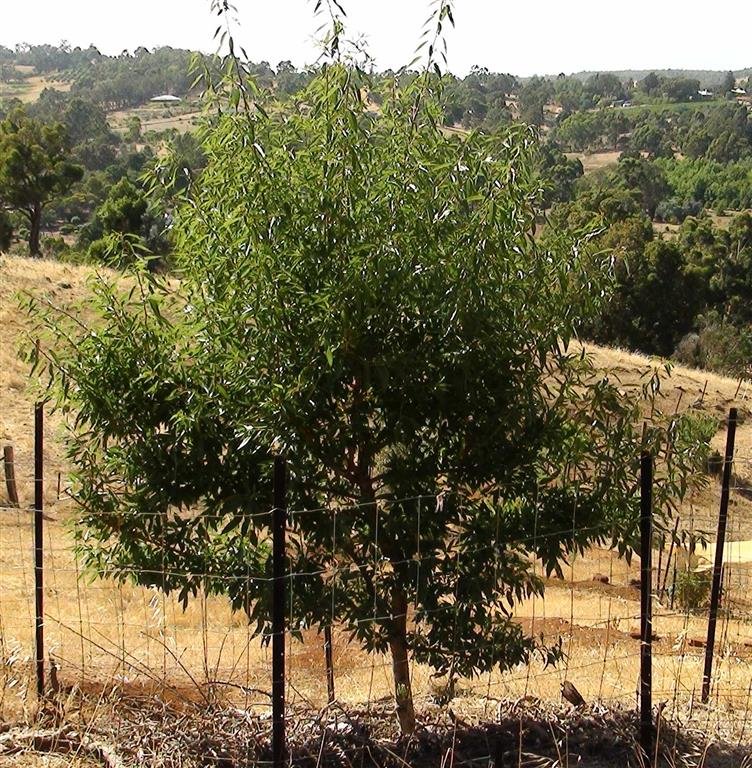
Row 5 - Almond
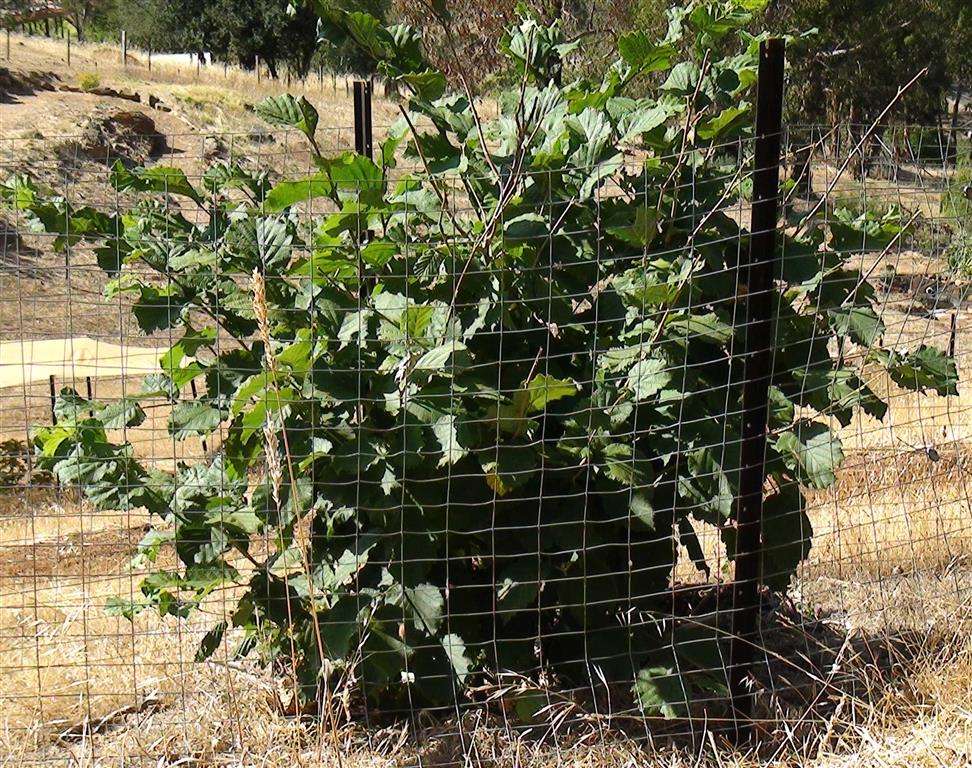
Row 5 - Hazelnut
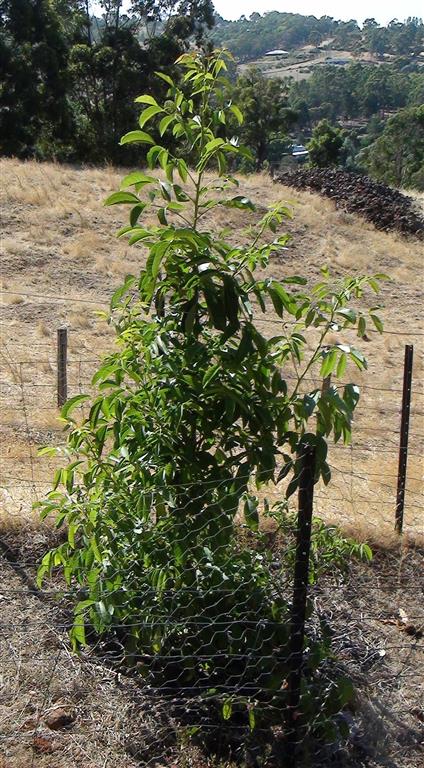
Row 5 - Walnut
Row 7
- Plant 1 Olive (Olea europaea)
- Plant 2 Peach
- Plants 3 Redcurrant, Blackcurrant (Baldwin), Blackcurrant (White bud), Raspberry (Autumn & Summer Fruiting varieties)
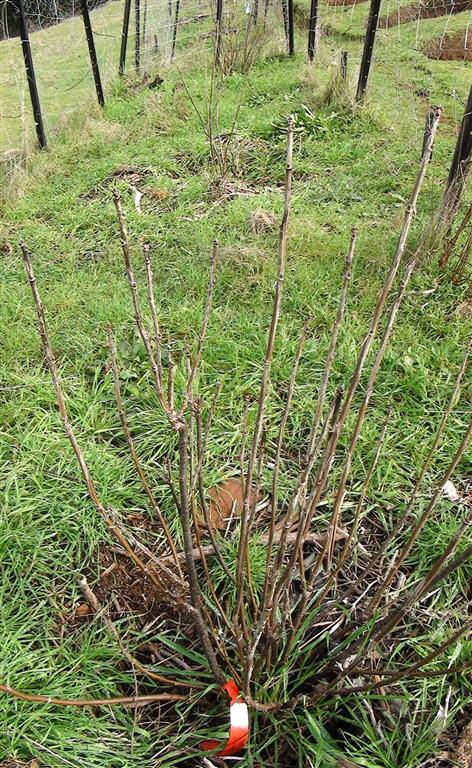
Row 6 - Berries
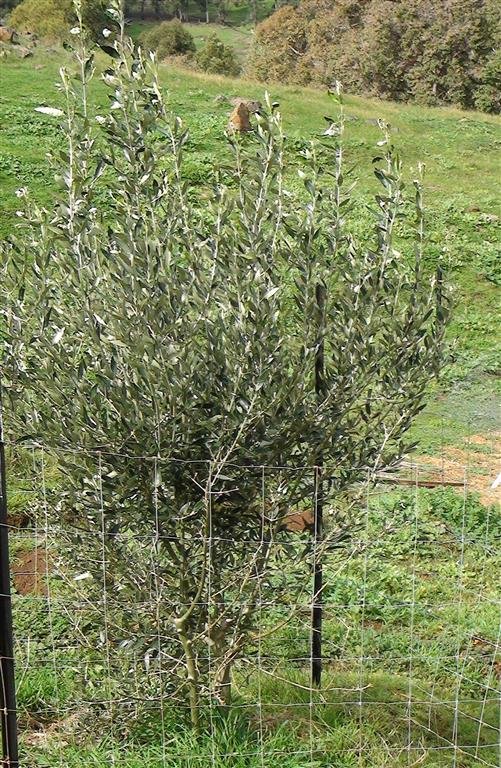
Row 6 - Olive
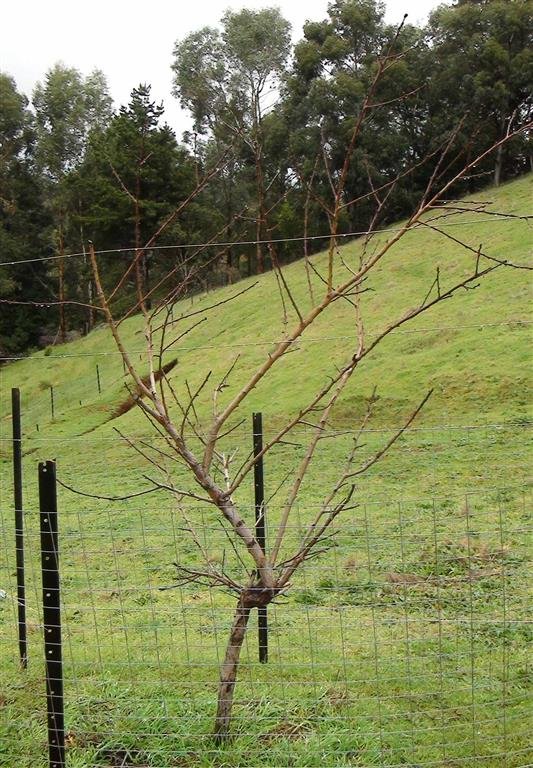
Row 6 - Peach
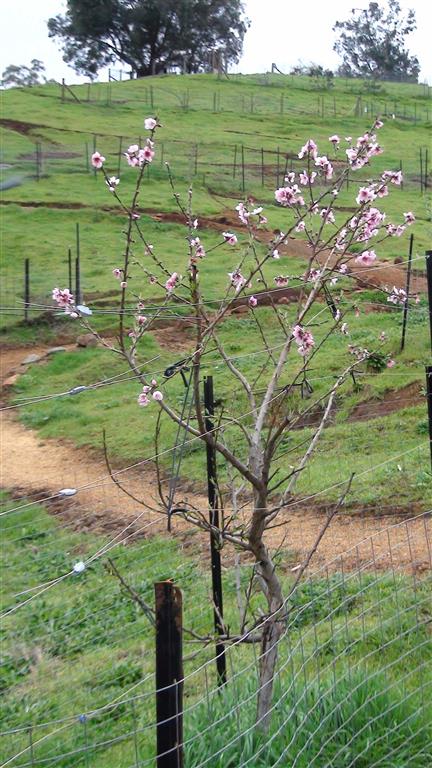
Row 6 - Peach2